Day old Quail Chicks


During the Dunedin Science Festival my eye caught a title while briefing through the program “Quails and Plastic Bottles”. I obviously was immediately interested and booked my ticket for the 1 hour lecture. The talk was a big disappointment as it discussed quails for about 10 seconds, in which some very inaccurate and irrelevant information was conveyed. The talk about plastic bottles, which was not quail related at all, lasted for another 10 seconds. With this in mind, I am giving you another look at Quails and Plastic Bottles. Needless to say that recycling old plastic bottles is the correct thing to do and it makes me tremendously happy to do my bit in limiting the carbon footprint and plastic pollution of our dysfunctional world. The alternative is to purchase some poultry feeders. at exorbitant prices, from companies here in New Zealand that import vast quantities of more Chinese plastics and the irony is that these purchased feeders are by no means so effective as the home made ones.
I use 2 liter used plastic milk bottles to make my quail water drinkers and feeders. Once the quail chicks reach another stage of maturity and size I introduce a new drinker and feeder to suite their needs until fully grown.

I start off by giving them open feed and water covered by a wire mesh to teach them to eat and drink.

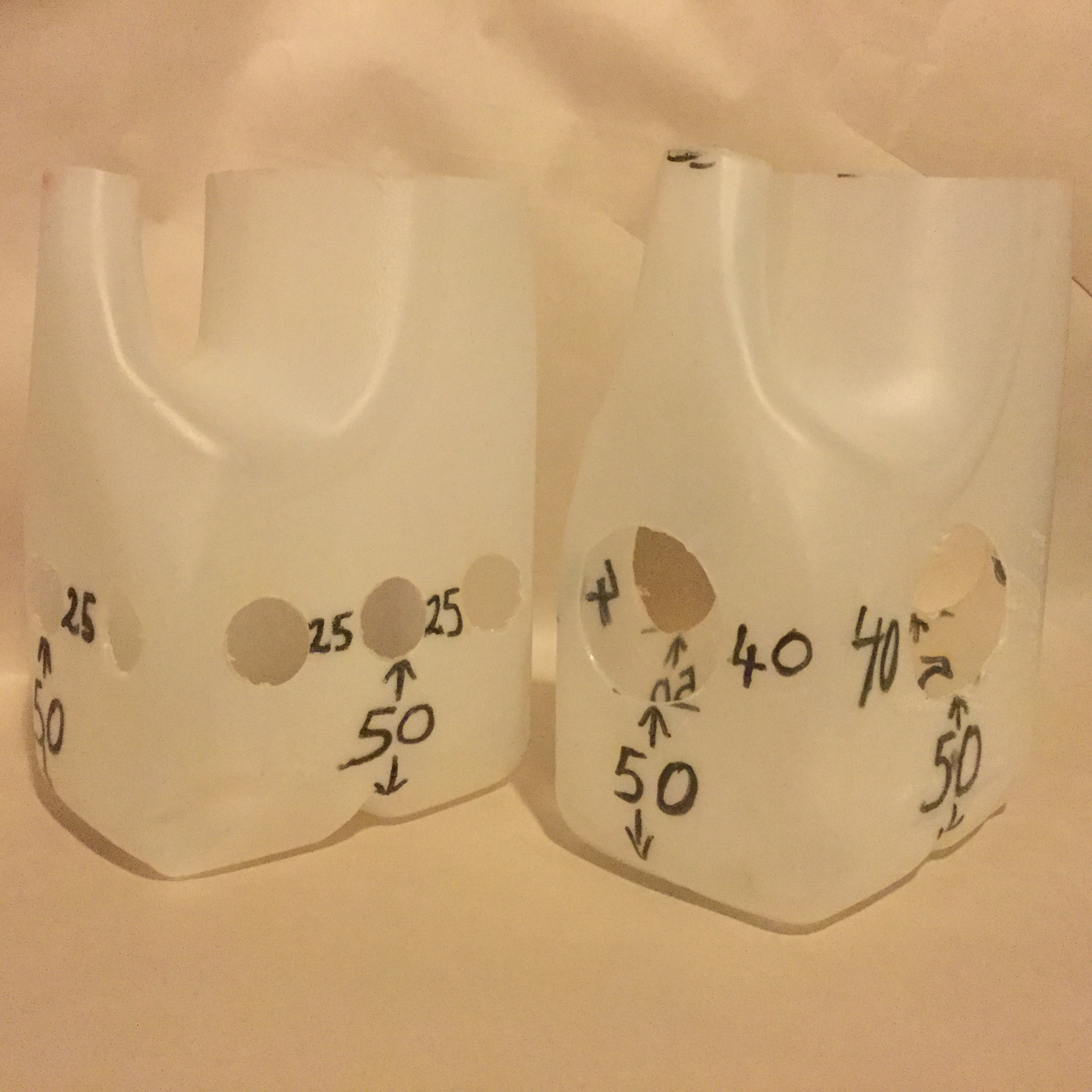
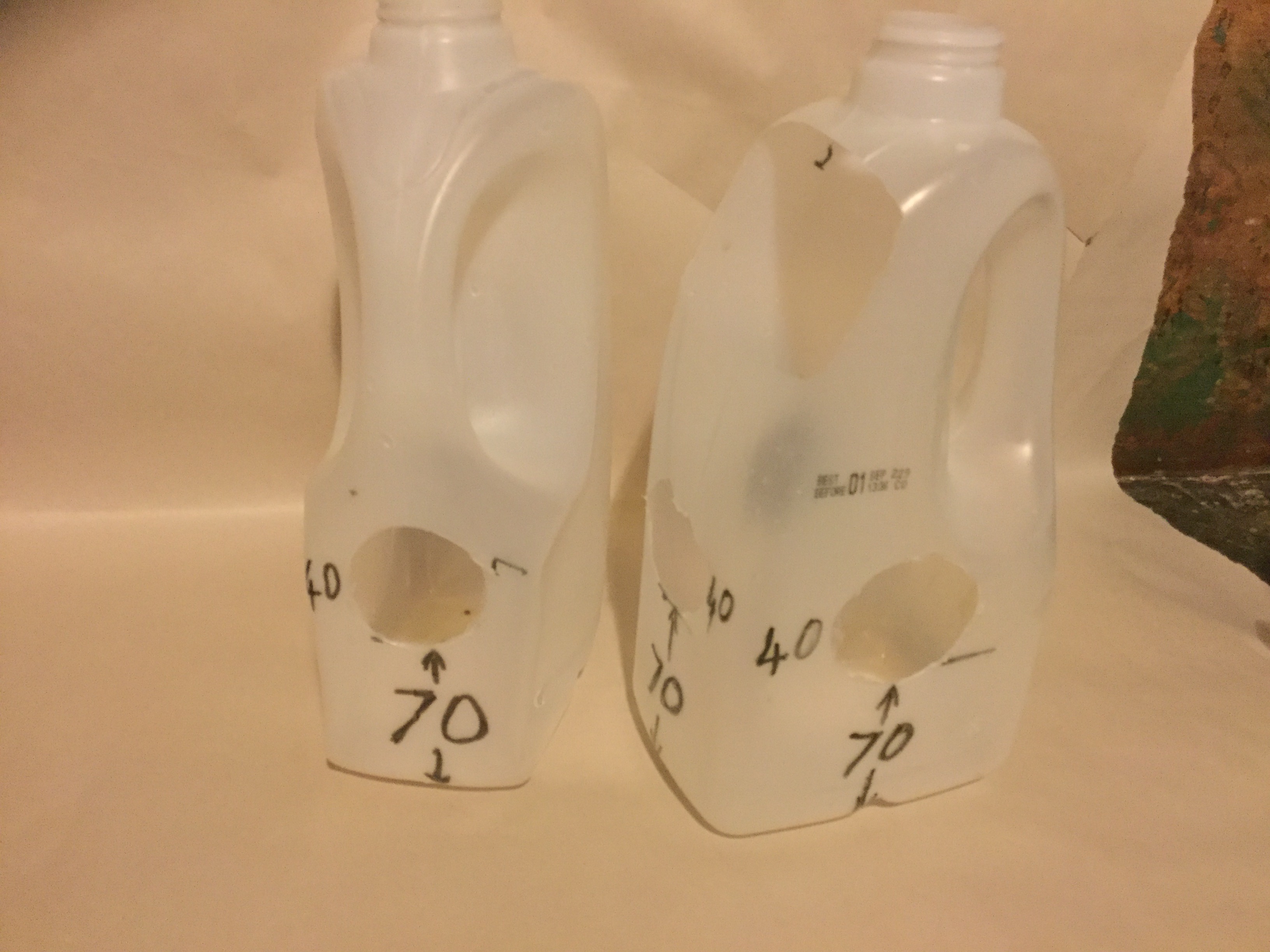
At 7 days of age I introduce the next drinkers and feeders. The water drinker with the 25 mm openings, 50 mm of the ground, on two sides of the bottle (it stands in a corner) allows them to investigate and mostly by accident have their first drink. For the first few hours I drip water in the drinkers from above so the little quails come and investigate the noise and water sound and find themselves drinking by surprise. It only takes them a few hours to be master the water drinkers. It is however important to not have these drinkers before 7 days of age as the little quails are too small and fit through the hole and drown. If the hole is exactly 25 mm and round , not oval, the chicks will not fit through at 7 days of age and you will have 100% success. The feeders have 50 mm holes and the quails can eat from the outside, or get themselves into the bottle and eat inside. This teaches them where the food is and soon enough they will be too big to fit through the hole and only eat from the outside, like the mature quails do.
I cut the tops of the bottles in the beginning stages so they can fit into the brooders which is only 200 mm high. It is important to cut the height such that their is very little space between the top of the drinker and the roof of the brooder so the little quails cannot jump into them, which is a trick they learn early in life.

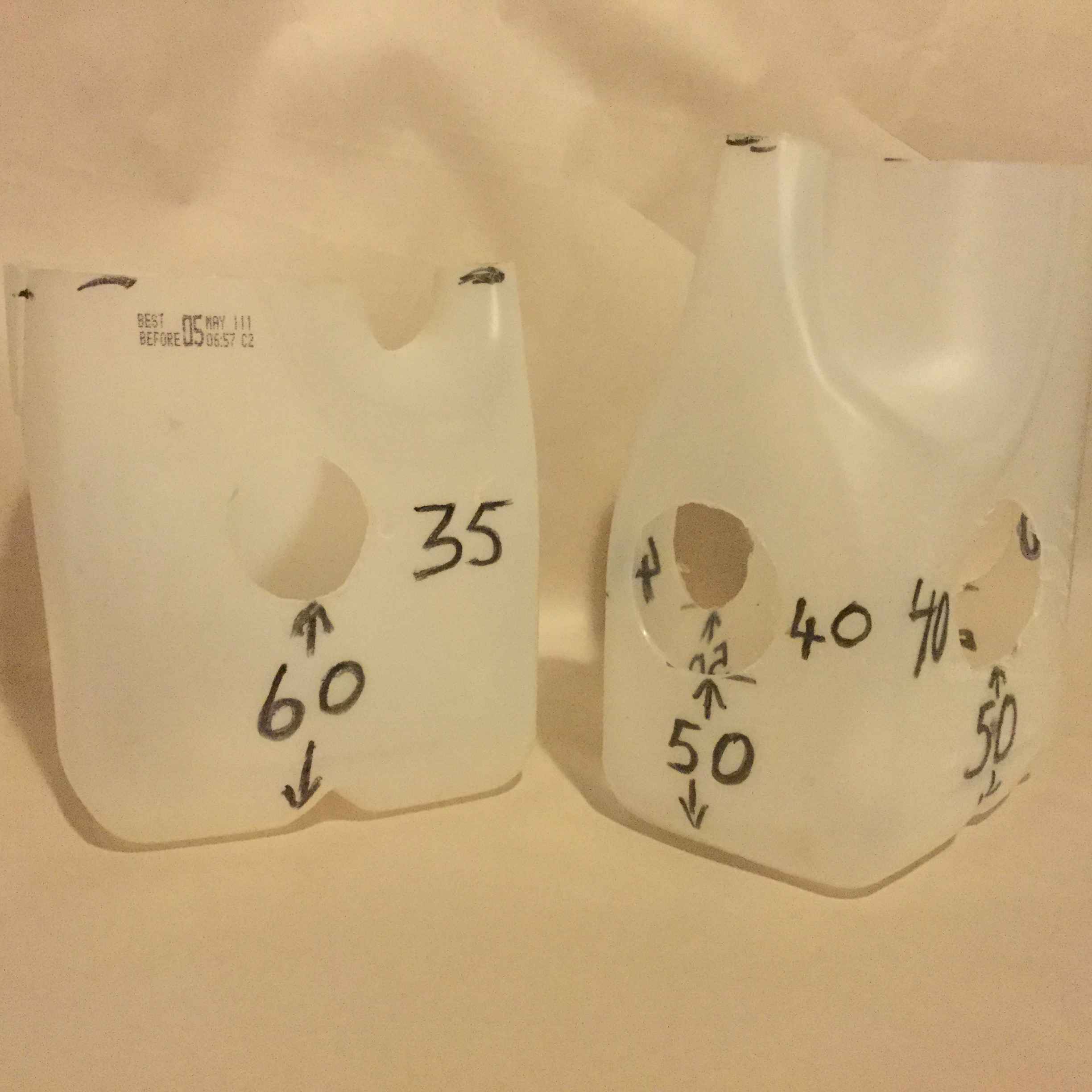
At 14 days of age, I change the water drinkers to a 35 mm hole and 60 mm of the ground as their heads are getting too large for the 25 mm hole. I now also switch to only one water hole which makes it easier to fill to the rim without water flowing out of one of the other holes. Use the 35 mm 70 mm off the ground if the bedding becomes too high. The feeder remains the same.

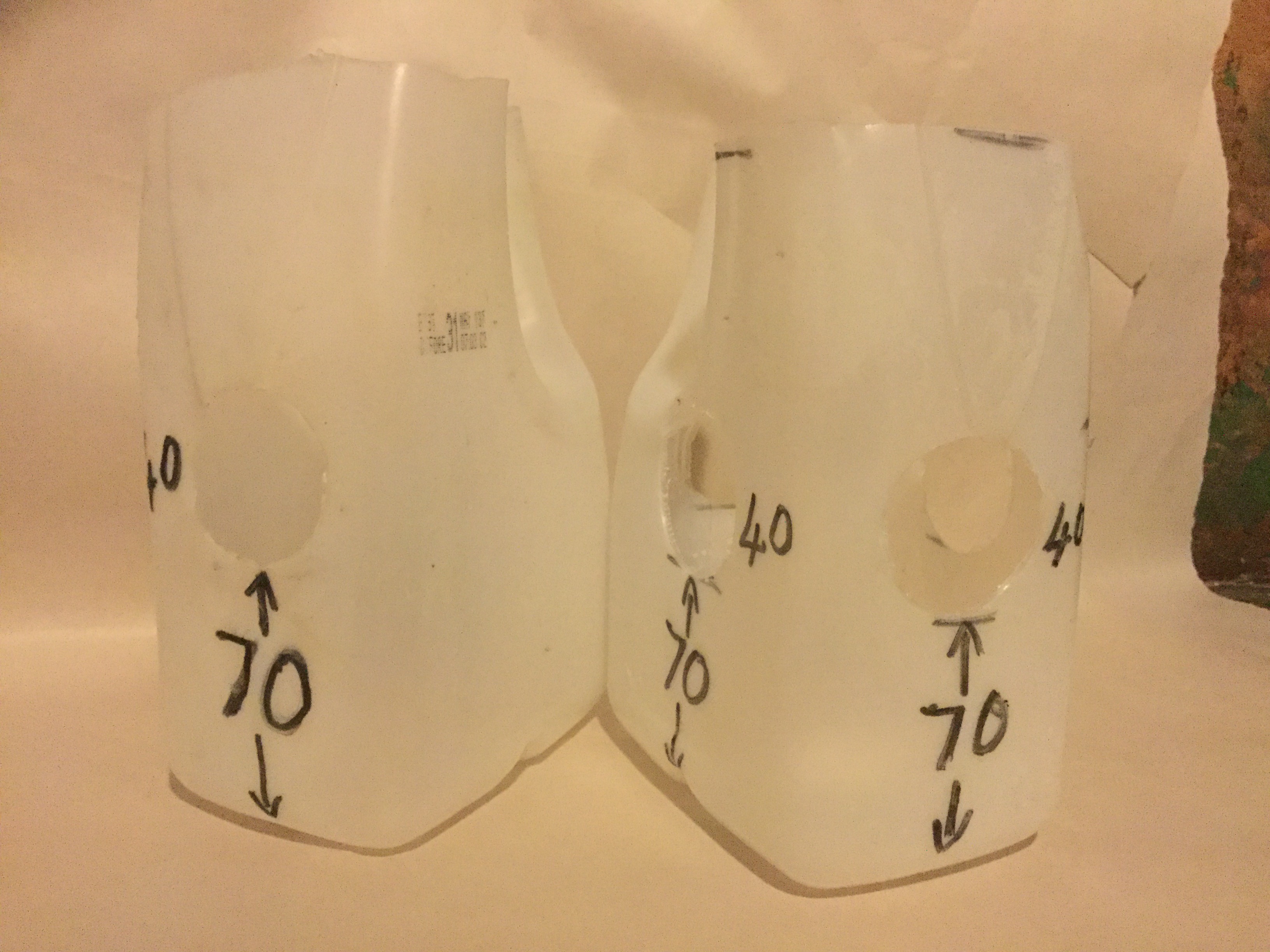
At 28 days of age I change to adult feeders and drinkers with 40 mm holes and 70 mm off the ground.

At 49 days of age when I take them from the brooders to the breeding pens outside, they stay on 40 mm holes and 70 mm off the ground, but have a section at the top cut out to make feeding and washing of the feeders easier. I do not top up the feeders, but dump and refill. The water feeders are without the opening to prevent birds landing in the water as my cages are 600 mm high and they can fly and land in the water if open. These feeders hold about two days of feed and water for a breeding group of 5 females and a male which make it easy to go away for a weekend without having to feed.

All the water drinkers you will require

All the feeders you would require


NEW FEEDING REGIMES
For Coturnix coturnix and all other Wild Birds
Combining my experience in animal nutrition and husbandry with extensive reading regarding the latest nutritional developments I am now manufacturing feeds that are very advanced in approach. These feeds benefit high performing quails as well as all other wild birds. My birds are performing so well on these feeds that I have included these formulas in all the feeds I offer for sale.
My strategy is to maximise digestibility using the simplest and best combination of materials and feed additives. I also utilise proven probiotics / prebiotics to stimulate and enhance the naïve gut, creating a favourable environment for good gut flora to proliferate and keep cell junctions tight. The rations also assist gut enterocytes with function and repair, while there are some elements in the feeds that help the modulation of immune responses.
I have formulated to specifications for Quail Starter, Grower and Layer feeds as top of the range diets by introducing new additives in addition to the present Vitamin and Mineral Pre Mix. These additives contain extra Lysine, Methionine, Threonine , Isoleucine and Valine which is intended to fully balance all the digestible amino acid ratios. These additions also lift the protein and energy digestibility beyond their stated levels on paper by using 4 separate and specific feed enzyme activities. The extra additives contain bioactive Vitamin D (Hy-D), Vitamin C, and Calcium Carbonate for bone modelling and antioxidant properties. Kelp meal, minerals, electrolytes and some sources of protected Butyrate, Carvacrol and Thymol steer good flora and discourage overgrowth of pathogenic bacteria and organisms. These new additions also contain a Mannosidase enzyme to aid the digestibility of various materials with proven Phytase, beta Glucanase, Xylanase and Protease enzymes.
My new feed formulations are the ultimate diets for quail and wild birds. All the above inclusions are essential and unique and take care of all amino acid balances using standard materials, supercharging the opportunity across all fronts for the birds to start well, grow well and produce well. There is plenty here to give bumble bee sized chicks, as well as mature birds, every chance to thrive without antibiotics, which is a big plus. These feeds are not only essential for wild birds, but give all poultry that extra boost when under stressful conditions.