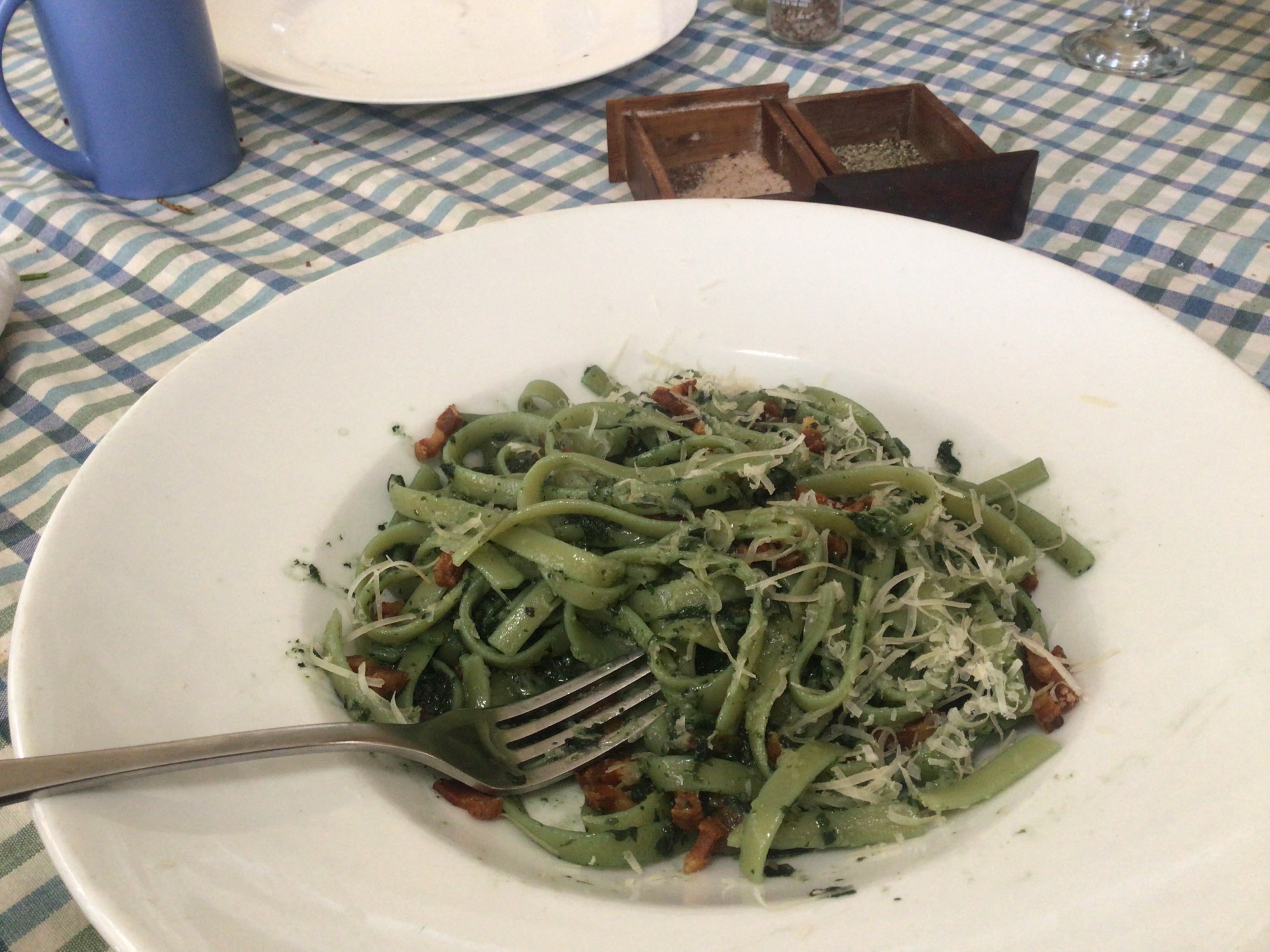
Tagliatelle con salsa di ortiche / Stinging Nettle Tagliatelle

Ingredients (4 Primi Piatti)

  • 100 g Guanciale (or Pancetta), diced into small cubes
  • 3 cloves garlic, finely chopped
  • 1 fresh chilli (pepperoni), finely chopped (add to taste)
  • ½ glass good-quality dry white wine
  • 1 cup blanched stinging nettles, well drained and roughly chopped
  • 100 g freshly grated Parmigiano Reggiano
  • Salt
  • Freshly ground black pepper
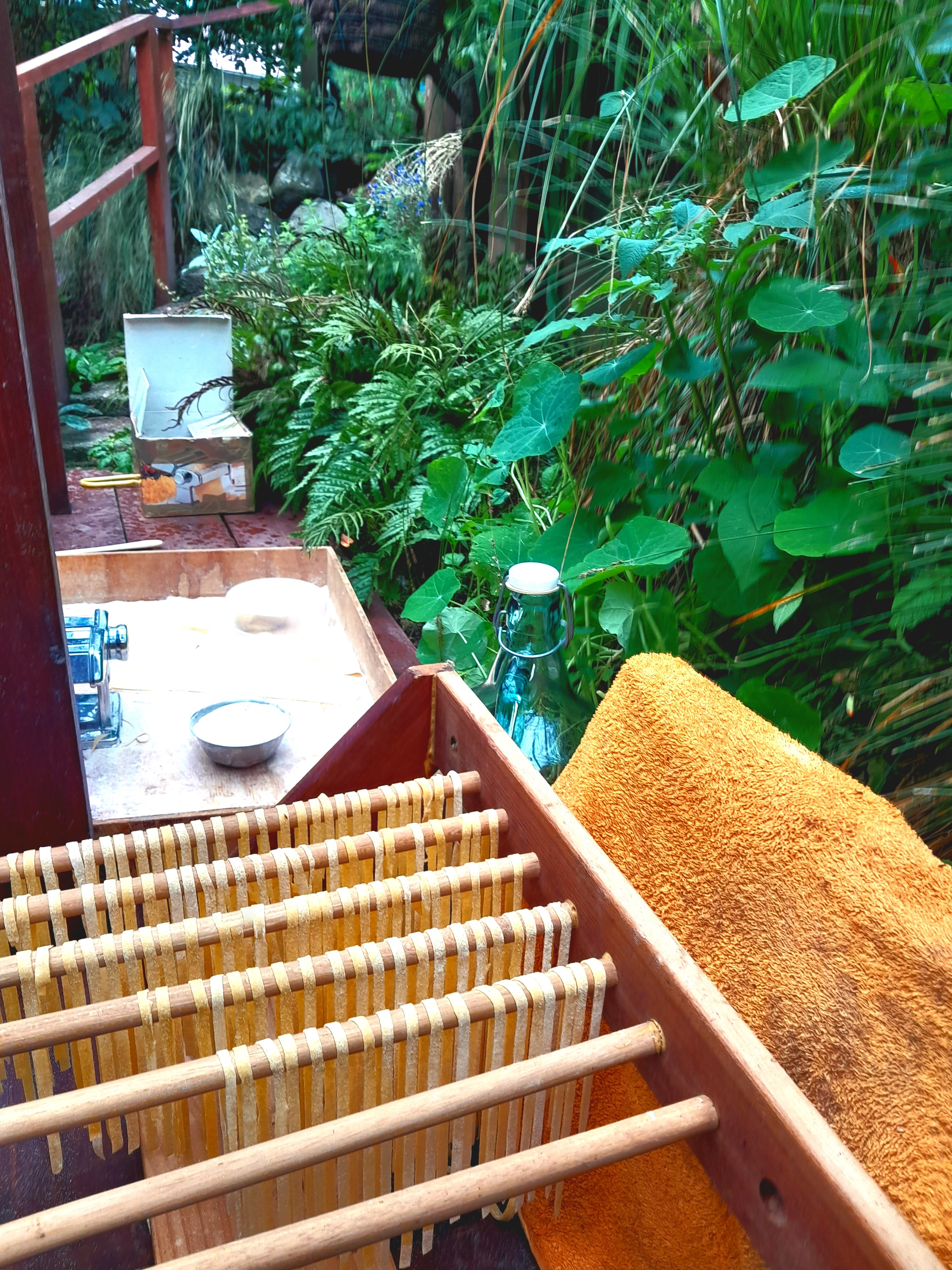
  • 500 g fresh tagliatelle

Method

  1. Bring the pasta water to the boil.
    Fill a large pot with plenty of water, add a generous amount of salt and bring it to a rolling boil while preparing the sauce.
  2. Cook the guanciale.
    Place the diced guanciale in a heavy-bottomed frying pan large enough to hold the finished pasta. Fry over medium heat, stirring frequently, until the guanciale is golden brown and crispy. Remove the crispy guanciale with a slotted spoon and set aside, leaving the rendered fat in the pan.
  3. Prepare the flavour base.
    Add the garlic and chilli to the guanciale fat and cook gently until softened and fragrant, taking care not to brown the garlic. Pour in the white wine and simmer until almost all the liquid has evaporated.
  4. Add the stinging nettles.
    Stir the blanched, chopped stinging nettles into the pan and cook for about one minute, allowing them to absorb the flavours. Keep the mixture warm over very low heat.
  5. Cook the pasta.
    Add the fresh tagliatelle to the boiling water and cook until about 1 minute short of al dente. Before draining, reserve about one cup of the hot pasta cooking water.
  6. Combine everything.
    Return half of the crispy guanciale to the pan with the nettles and toss together. Add the drained pasta and gently toss over medium heat. Add a little of the reserved pasta water as required to keep the pasta moist and begin forming a silky sauce.
  7. Mantecare – the Italian finishing touch.
    Remove the pan from the heat and add half of the grated Parmigiano Reggiano. Toss vigorously, adding a little more pasta water if necessary, until the cheese melts and emulsifies with the pasta water to create a rich, creamy sauce.This traditional Italian technique is called mantecare—creating a beautifully creamy sauce without using cream.

To Serve

Divide the pasta among pre-heated serving plates.

Top with the remaining crispy guanciale, a generous sprinkle of the remaining Parmigiano Reggiano and a few twists of freshly ground black pepper.

Serve immediately.

Buon Appetito!

Enjoy with a generous glass of home-made red wine, good friends and plenty of conversation.
Ragù di Quaglia (Quail Pasta Sauce)

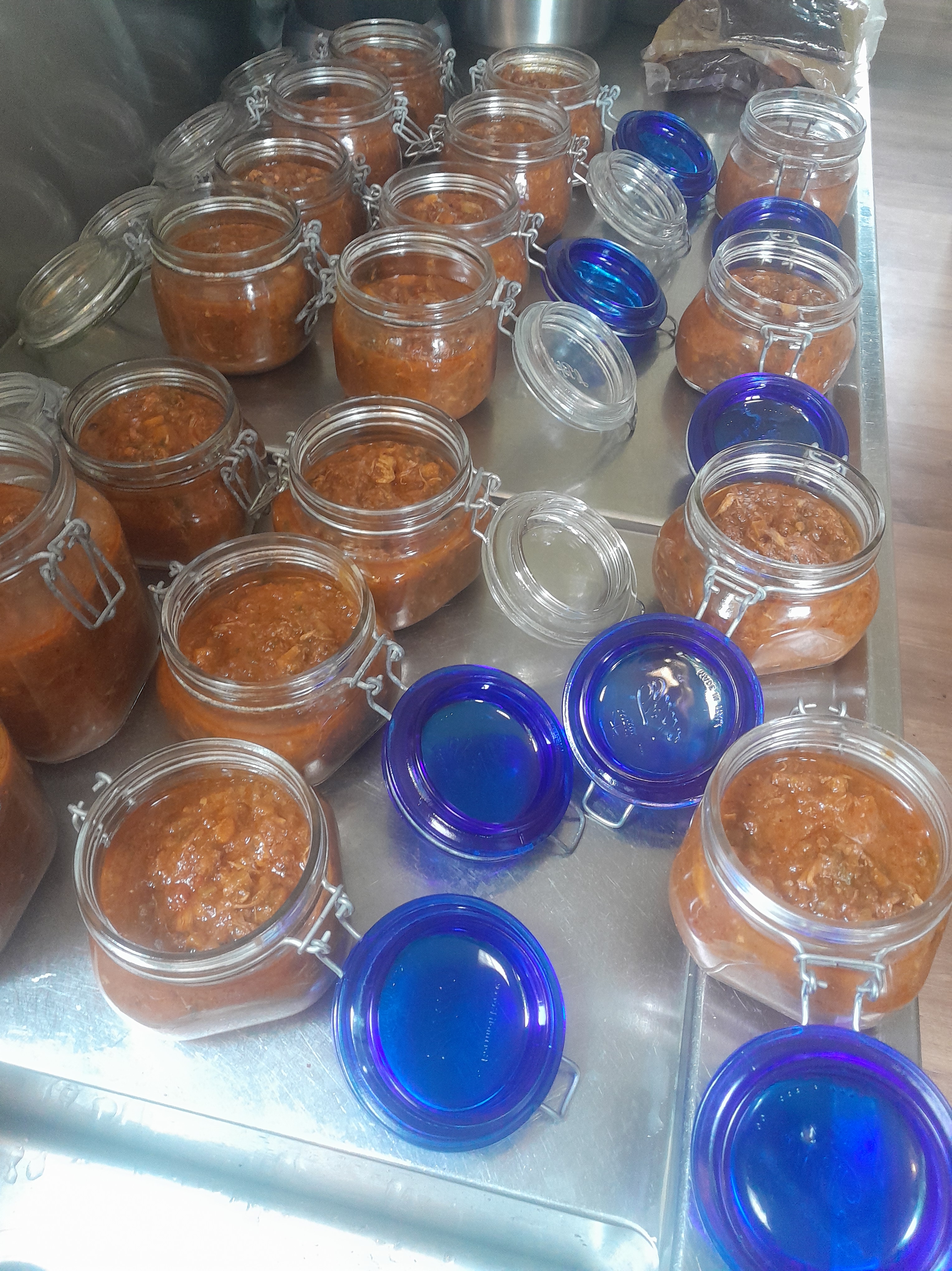
Every so often the freezer fills up with mature, processed quails, and the best solution is to turn them into something truly special : a slow-cooked ragù. On this occasion, I pulled 40 frozen quails from the freezer and spent most of Sunday afternoon transforming them into a rich, deeply flavoured sauce that can be enjoyed for months to come.

This is a labour of love, but one that rewards you generously. This is not just a sauce – it’s a celebration of North Italian tradition, where time, patience, and respect for every ingredient create something unforgettable. Cooked slowly, bottled carefully, and served with fresh pasta, it brings the warmth of our kitchen straight to your table.

Ingredients

  • 40 deboned quails
  • 2 kg finely chopped onions (50% brown, 50% red)
  • 250 g extra virgin olive oil
  • 250 g butter
  • 200 g finely chopped celery
  • 200 g finely chopped carrot
  • 50 g salt (adjust to taste)
  • 50 g freshly ground black pepper (adjust to taste)
  • 250 ml full-cream milk
  • 500 ml white wine
  • 500 ml stock (quail stock preferred)
  • 500 g tomato purée
  • 1 kg tinned tomato passata
  • 100 g finely chopped garlic
  • 50 g finely chopped fresh hot chilli (optional)
  • 5 g freshly grated nutmeg
  • A handful of hand-shredded fresh basil
  • 2 Cups Grated Parmigiano Reggiano Cheese

Method

In a very large, heavy-based pot (large enough to hold all the ingredients), add the olive oil, butter, and chopped onions. Sauté gently over medium heat until the onions are soft and translucent, but not browned.

Add the celery and carrot and cook gently for a further 5 minutes.

Add the quail meat, season with salt and pepper, and cook until lightly browned. Stir in the tomato purée and cook for a few minutes to deepen the flavour.

Pour in the white wine and cook until it has completely evaporated. Add a portion of the stock and stir frequently.

Reduce the heat to medium, then add the garlic, chilli (if using), milk, and nutmeg. Cook until the milk has fully evaporated, stirring regularly.

Stir in all the tomato passata. Once the ragù begins to bubble, reduce the heat to low and cook uncovered for 4–5 hours. Stir often and do not let it burn. As the ragù thickens, add more stock, as needed to maintain a rich, slow-simmering consistency.

Once cooked, bottle the ragù, seal, and pasteurise.

Storage & Yield

The great advantage of this method is longevity : the bottled ragù can be stored in the pantry for a very long time and provides an exceptional, ready-to-use meal at any time.

This batch yielded approximately 50–60 meal portions. For a family-sized version, simply divide all quantities by ten.

If quail is not available, a combination of beef and pork makes an excellent alternative.


Pasta al Ragù di Quaglia

While the pasta cooks in ample salted water – fresh pappardelle is my preference – open a bottle of ragù and transfer it to a pan large enough to accommodate both the pasta and sauce.

Gently heat the ragù. Drain the pasta while it is just shy of al dente and add it directly to the pan. Toss the pasta and ragù together over low heat until fully cooked, stirring and lifting constantly (Mantecare).

If the sauce becomes too thick, add a little stock, or some of the salted boiling pasta water. Finish with fresh basil, give it one final toss, and serve immediately topped with ample grated Parmigiano Reggiano Cheese.

Pasta al Ragù di Quaglia should be served piping hot – and enjoyed without haste.

Do not forget the bottle of home made red wine to finish it all !

Amatraciana

Spaghetti with Amatriciana Sauce close-up on a plate. Horizontal Spaghetti with Amatriciana Sauce close-up on a plate on the table. Horizontal amatriciana stock pictures, royalty-free photos & images

Today I had an early brunch dictated by my daily work schedule and at about 19H00 I was ravenous. I fortunately was working the preserved meats from the curing room and noticed a very attractive piece of GUANCIALE (cured pork cheeks) , which off coarse called for Bucatini all’amatriciana. What a wonderful recipe for a delicious pasta with only a few ingredients. Fry the finely chopped guanciale with a few cloves of garlic. Add Passata and cook for about 20 minutes. Also add black pepper, but no salt as the guanciale is quite salty. Keep the sugo moist be adding water from the pasta pot. Boil bucatini pasta in lightly salted water and when al dente, drain and add to the sugo. Cook and toss for another few minutes, then add shredded fresh basil. Toss and serve hot. Add a lot of grated parmigiano reggiano and ENJOY !!!

Do not forget the home made red wine to wash it all down !!!!!

Pasta ai Pomodori Verdi – Green Tomato Pasta

We still have a lot of green tomatoes. They have kept well in a dark spot with the potatoes, but we do need to use them before they start spoiling. We have been eyeing this recipe from Abbruzzo for a while, and today Mrs BYF decided to give it a try.  Because this is lockdown cooking she did not have all the ingredients the real recipe required, so here is the make do one. It was a very nice, fresh tasting pasta sauce, almost spring like. 

4 or 5 medium sized green tomatoes, diced

1 onion chopped

1 big pinch of nutmeg

1/2 cup marjoram

1 stalk of celery, chopped

2 cloves of garlic, chopped

1 hot chilli. We like hot food so use less if you want

6 tablespoons cooking oil

Salt and pepper to taste

Rigatoni or other cut pasta

Soften the onions in the cooking oil. Add the garlic and the chilli, cook until garlic browns a bit. Add the tomatoes and cook covered to release the juices. Cook the pasta in boiling salted water. When the tomatoes have softened, add the marjoram and nutmeg. When the pasta is cooked ladle a soup spoon full of pasta water on to the sauce. Drain the pasta and add to the pan with the sauce. Mix and serve with plenty of grated parmigiano. 

ENJOY!!

Do not forget a glass of home made red!!

Zucchine

edge.bonnieplants.com/www/uploads/2018092000392...

We have a lot of zucchini, as has almost every one I know. There is quite a harvest of spring onions, too. We have used up all the garden’s onions, but Mrs BYF decided to combine the lot and to use it for pasta sauces, on pizza, in frittata and fritters. The discovery we made was that slow sweated spring onion sliced finely, including the green part becomes really soft and tasty. Add the slices zucchini to that and braise over very low heat. Then, create magic by adding fresh mint and basil! It tastes so good that it may be eaten straight out of the pot in stead of being a part of another dish.

20 Spring Onions

1 Kg sliced Zucchini

1 Hand full of fresh Mint leaves

1 Hand full of Basil

6 Tablespoons of Olive Oil

Cut about 1/3 off the top of the spring onions to get rid of the harder leaves. Slice the rest very finely. Fry the onions for about 5 minutes in the olive oil and then cover and sweat on very low heat until soft. Scrub the zucchini and slice very thinly. When the onion is soft add the zucchini and braise for about 10 minutes over very low heat . Add the shredded mint and basil, cover and cook on low until the flavours have blended. Add salt and black pepper to taste.