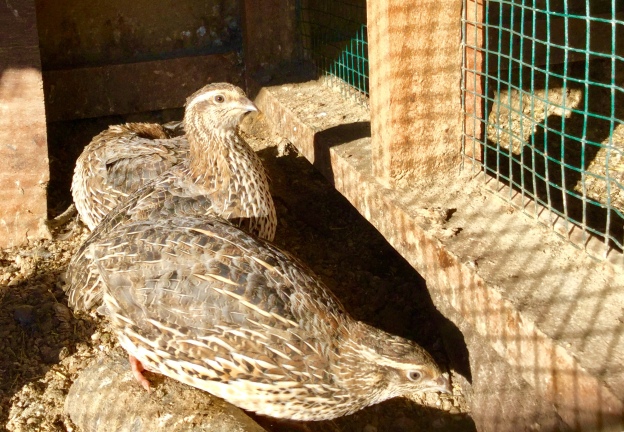
NEW QUAIL FEEDING AND BREEDING Coturnix coturnix

Every so often in the farming industry you realise that progress is slower than expected, which is where I am at present with my Quail Breeding Project. I have made substantial progress over the past three years breeding Coturnix coturnix Quails in New Zealand, but find it more difficult to keep the coefficient of inbreeding low whilst applying the same selection pressure. One of the problems is small numbers of animals and the second being the lack of similar, or better, breeding animal availability in New Zealand.

To maintain progress, I have decided on a two pronged approach for the immediate future:

1) I am going to amalgamate the four breeds I presently have into only two breeds. I am going to join the Pharoas and Tibetans (Back Yard Specials as I have been calling them) and call this my Back Yard Dual Purpose Bird and apply the same selection pressure on both egg production and body mass. Then amalgamate the Italians and Whites and call them my Back Yard Egg Laying Bird. This will give me larger numbers to use in each breed and as I am not going to select for colour any more, progress will hopefully be faster. I suspect the two breeds will eventually be a darker coloured bird for the dual purpose breed and a lighter coloured bird for the egg laying breed.

2) I have had a very close look at the latest developments in animal nutrition and have incorporated some very exciting new elements into the feed. For details about the feed developments I have adopted, see my next post on this matter.

Hopefully these two changes that I have adopted will enhance progress in my project.

Raising Californian Quails (Callipepla californica)

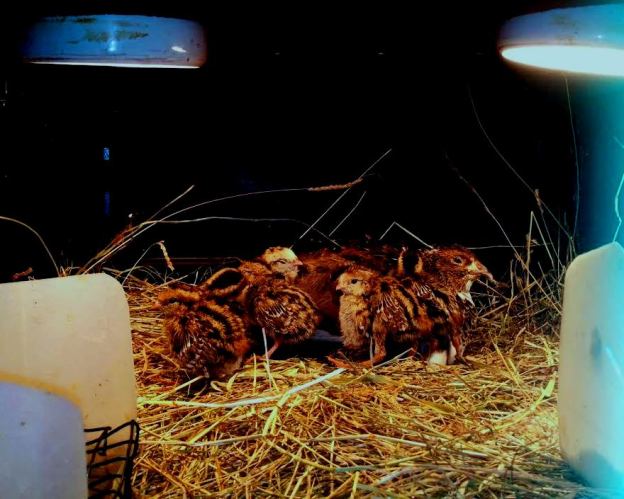
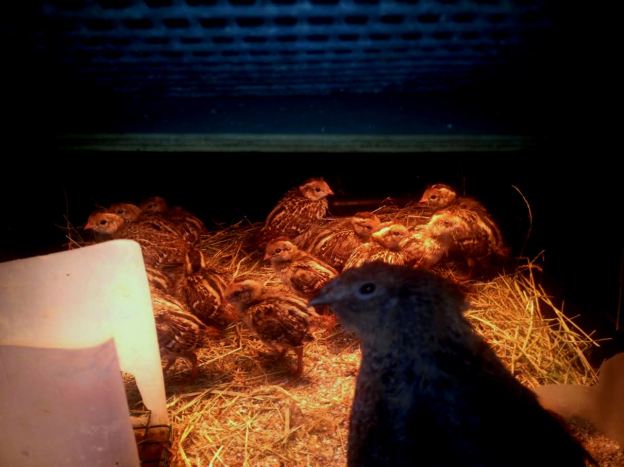
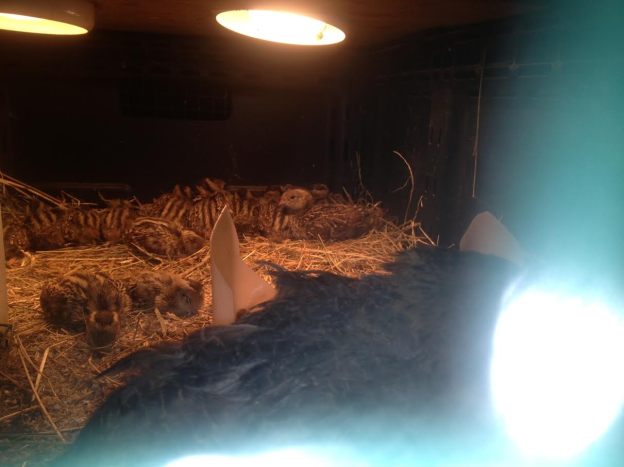
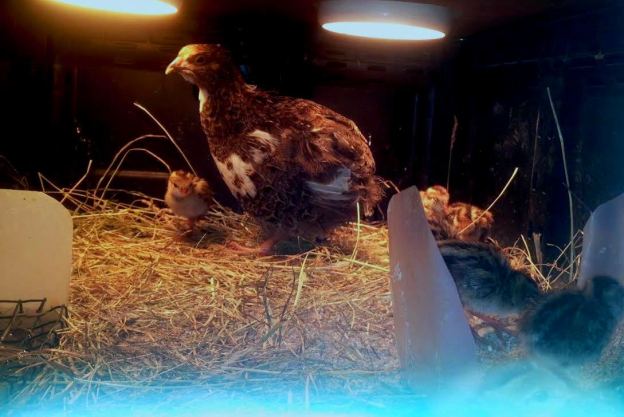
2017-01-19-californian-babies-and-mother-coturnix-162017-01-19-californian-babies-and-mother-coturnix-112017-01-19-californian-babies-and-mother-coturnix-42017-01-19-californian-babies-and-mother-coturnix-5

Raising Californian Quail in captivity has never been, and never will be easy. Their nervous character and wild instincts make them very unsuitable to captivity. Unfortunately, because of their disappearance from the wild in New Zealand, they will have to be multiplied in caged conditions, should we want to preserve this pretty little bird. The cavalier attitude of New Zealanders regarding nature will probably prevail and our efforts for conservation would have limited success – I know I am going to get a lot of criticism because of this statement, but with New Zealand and Australia being the number one countries in the world causing species loss, my argument is more or less proven.

Survival rates of Californian Quail during their first few weeks seem to be abnormally low, and I have adopted a number of strategies and designs to try and overcome this problem – all with varying levels of success, but none solving the problem entirely.

My latest survival strategy however seems to have addressed many of the problems. Instead of sending my old Coturnix coturnix quail hens to the stock pot, I selected a number the  calm and motherly ones  as foster mothers for the Californians. I put the mothers into the brooders a few  days before the Californian chicks hatch so they can get acquainted with the environment and the warm conditions. When the chicks hatch I place them straight into the brooder with their new mother. Her presence seems to have multiple positive effects on the chicks – i.e. she teaches them to eat and drink immediately, calms them down and also broods them. The end result is that the little chicks have shelved their desire to become Kamikaze Pilots every time I want to change food or water. Everybody seems calm and happy and mortality for the last four groups, at five weeks of age, each with their own foster mother, has been almost zero (lost one).

There are a number of younger groups at present, each with their foster mothers and they are  very calm and doing well. I do notice that some foster mothers are better at the job than others and will continue selecting the better ones, even though their has been no difference in mortality rate between the groups.

Going back to nature can teach us a lot!!


Micro Nutrient Supplementation

I thought it appropriate to post some conversation about this topic I have had with a client

2014-03-16 - Street Accident

Hi there,

I’m new to your page and website but am excited to read all about your Vitamin, Mineral, Amino Acid and Enzyme Pre-Mixes for chickens.
I have six chickens I’ve had since one day old with their Mum, (there was 11 but now minus the rosters) they have not started laying yet, they must be six months now and I’m wondering if I’m just not giving them the right balance of feed. The Mum started laying again awhile back but then stopped.
I like to try to keep it organic and gm free, could you please advise if your mixes are natural and where you source everything from??
And also I’m unsure if i buy from you what and how much i should get, my chickens have not been eating much feed but rather enjoying free ranging.
How much for six chickens and to be sent to whakatane please and thank you for your time.
Dear Client
Thanks for the Email. As you can see from the analyses of the product we supply a wide range of micro nutrients in the product. These are formulated and mixed according to specifications for the specific animal and production stage, by using a combination of up to thirty different ingredients (raw materials). These ingredients are sourced from all over the world and some, like the methionine and lysine are synthetic. I also cannot specify that these are organic or non GMO. Most chickens would at present not be in production as result of the short day light lengths and will come into production after 21 June when the days are getting longer (day length being the stimulus for the birds to either produce eggs or molt and stop laying). Should you want to use the product, it has to be mixed with other food the chickens eat on a regular basis, such as a laying mash or pellet, as it is not water soluble and the birds would not consume it on its own. Mixing instructions could be provided at the appropriate time. Inclusion rates should be such that each mature bird takes about 2 g per day to provide for all the mikro nutrients required.  Whatever they then consume of these while free ranging is a bonus and will keep them more healthy – over consumption of these mikro nutrients is very rare, if not impossible. It is off coarse difficult to balance the diets of free ranging animals — the only solution is to endeavor to provide what you suspect they might be rquiring – in free range chickens probably first and foreost is Ca, P and Mg and thereafter some quality mikro nutrients. This will again depend on how “free range” your animals rally are and what is their available for them to eat.

Miniature Feed Mixing Plant for Health and Profit

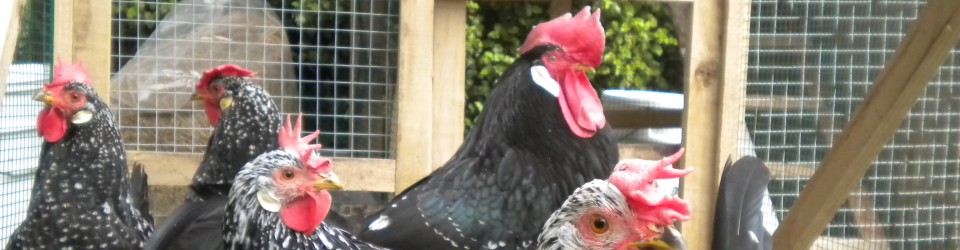
Anconas 053

Feeding is such an important component of any animal husbandry operation. Not only is it the single most expensive component, but it also effects the health and well being of each individual animal and therefore contributes to the profitability and success of the whole operation. Research has been done over the years indicating exactly what any animal requires in terms of nutrients for what ever system you follow, this information can be applied to the benefit of your farming operation. One fact cannot be argued away – no animal can produce optimally without a balanced diet. 

In my own case, I have set up a small blending plant with great success. I do not process any raw materials, as I buy every ingredient in ready to use format, but purely blend it in the right ratio and consistency.

SELECT QUALITY INGREDIENTS

I use an average of about eight dry raw ingredients, depending on the final product, and have sourced regular,  suppliers who offer high quality  products and are reliable for these. After the initial blending, I add either molasses or oil, both adding mainly energy to the finished product and helps make the product virtually dust free. This method prevents the product from separation and finer ingredients such as limestone, diatomaceous earth and vitamin / mineral premixes from segregating and moving to the bottom of the container. All of this makes it easier and more enjoyable for the animal to consume. Also, each and every mouthful supplies a balanced diet with the required nutrients in place to be healthy and produce optimally.

MEASURING ACCURATELY AND BLENDING DRY INGREDIENTS WELL

2015-03-20 - Feed Mixing Plant - Ingredients - 12015-03-20 - Feed Mixing Plant - Wisk 1

I use a large number of two liter plastic containers to accurately weigh each ingredient  to make up a batch which is around 1.25 Kg in total. I do this product by product, which eliminates confusion and limits  possible errors. In other words, I would weigh in all the wheat, then all the blood meal, etc,etc always ending with the diatomaceous earth and lastly the vitamins and minerals. As soon as I have about twenty buckets each containing all the raw materials, I would  blend the contents of each one using a food blender / wisk, blending for about ten seconds.

ADDING  GREENS

2015-03-20 - Feed Mixing Plant - Wonderful Cardoon - 1

Even though I do not formulate to have green material into the ration, I always have a surplus in the garden and mix about 50 – 100 grams into each batch, hoping that it may supply some natural ingredients over and above what I have already catered for (I of course  do not do this for my free ranging animals). I only take the finer and softer parts of the plants and feed the more fibrous parts to the rabbits.  Cardoon has stood me well here in Dunedin as it grows vigorously and even though I eat the best part of the cardoon, it still leaves enough for the rabbits and poultry. If I have other surpluses like cabbage, salads, spinach, etc I would use that instead.

2015-03-20 - Feed Mixing Plant - Mix in Greens - 1

As soon as I have blended the dry ingredients I add the greens and blend everything for another 20 seconds, chopping and mixing the greens well into the dry mix.


ADDING MOLASSES OR OIL

2015-03-20 - Feed Mixing Plant - Molasses - 1

After the greens are mixed into the feed, I ad the molasses or oil and blend for another 10 seconds. The feed is now complete and ready to use

SCREENING

2015-03-20 - Feed Mixing Plant - Screening 1

Screening the final mix is very important as a last mixing exercise  to ensure there are no large parts that may be inedible. The final feed must be an even bite size  and well mixed together in  a uniform consistency that would not separate easily.

CAPACITY OF MIXING PLANT

Once you are in operation and all your ingredients and final feed containers are all close and within easy reach, it is very easy to weigh out new batches while, at the same time, mixing the feed of the already weighed ingredients. Mixing cycles are about two minutes and doing 30 Kg per hour is relatively easy. A morning session of four hours delivers 120 Kg plus, depending on how often you break for coffee. This is enough for a reasonable sized operation, like my own, for one week.

The advantage here is  that you have a well mixed feed, you know that all the essential ingredients are in the product and the feed is always fresh.  By mixing your own feed you   are assured that your animals are always well fed enabling them to produce optimally and make money for you.