Stock

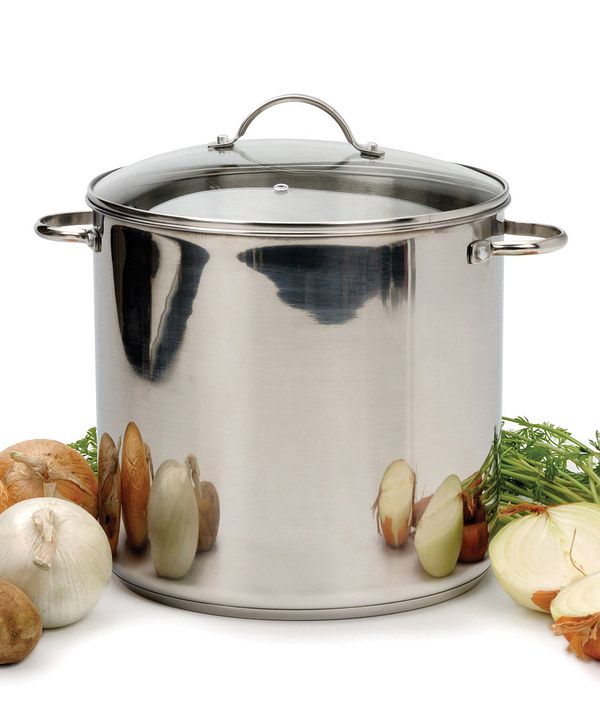
2014-0318 - Stock Pot

Good stock is the one ingredient a kitchen should never be without.

INGREDIENTS

Chicken bones or (quail back bone, neck, wing tips and excessive skin) – About half a Kg in total or more if you want to make a stronger stock.

2 onions (No need to skin) – Washed and roughly cut up. Could be replaced with Leeks

2 large carrots leaves and all) – Washed and roughly cut up

half a bunch of Celery (Leaves and all) – Washed and roughly cut up. You could add celeriac leaves if you have any

salt lightly to taste

8 Liters of water

I often buy chicken frames from the supermarket (sorry, but sometimes I have to go there) or use the back bones and necks of the quails, when I slaughter, which are both good for stock even though different. Quails make a much stronger stock than chicken. You can also do a fish stock, by replacing the meat with fish heads and frames. I keep the stocks separate so I have different flavours for different dishes.  Put all the ingredients, including the water (cold) into a meat stock pot and boil over a low heat for at least two hours, but preferably more. Let the liquid reduced by about one third and keep topping it up with more cold water to keep it at this level. Stir every so often to prevent it from burning and sticking to the bottom.

Strain the liquid from the solids using a colander and return the liquid to the stock pot and heat until boiling again. Immediately pour into clean containers and seal immediately (I use 2 liter plastic buckets). Should the lids fit properly, the reduction in product temperature will form a very effective vacuum seal. If you have maintained a high level of cleanliness and your containers were  clean, the stock will remain good for months in the pantry, even though I normally keep mine in the fridge. Once opened it should be kept in the fridge and used within a couple of days. The vegetables  are good to feed to your Chickens and Quails.

With home made stock, soups are delicious and easy, pasta sauces and stews shine and you cannot make risotto without it. Braising meat and keeping it moist with the correct stock also ad complexity and additional flovour.

QUAIL PETS

2014-03-14 - Quil Pet House2014-01-07 - Rosetta Male2013-10-24 - Tibetan Coturnix 21

As result of many requests for Quails as pets, I have designed and built a Quail Pet House, which comes complete with four Quails ready to start laying eggs.

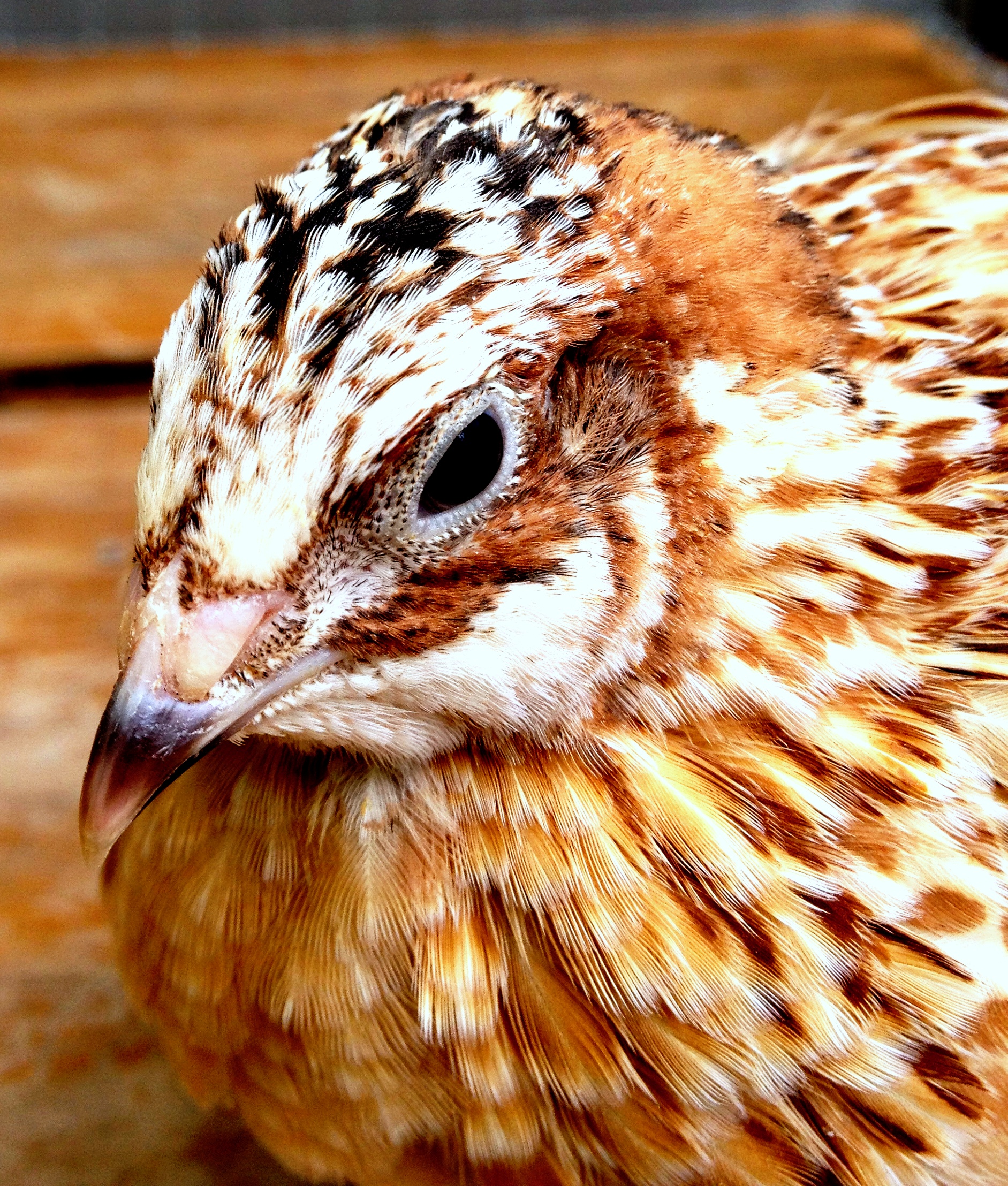
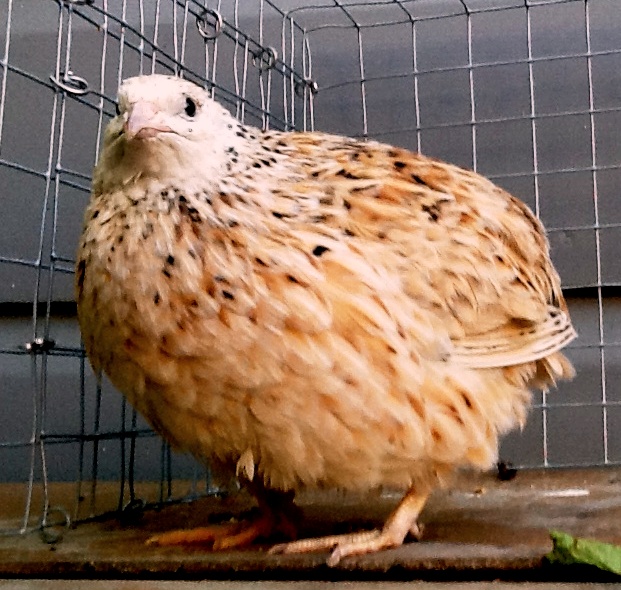
Quails (Coturnix coturnix) make the perfect pet. Not only are they docile, quiet, inquisitive and clean, but each quail will also give you a delicious egg every day, so they pay for their own upkeep;  how many pets can claim that!  Quails become very tame and by nature are relaxed and adaptable little animals. They are amazingly efficient and incredibly interesting little creatures.

Small incubators for people that are interested in hatching their own quail babies are available, which is an excellent child project that teaches them the basic principles of breeding and rearing, apart from just looking after and enjoying a pet.

This little Quail House ( under 1 x 1 meters) fits into any small area and can stand in a bedroom, in the garage, on the veranda or  under a tree in the garden. They are  strong and built to withstand all weather conditions. Made from tanalised and double oiled wood, this pet house is durable and will last for a long long time. A roof door and easily replaceable floor (extra floor included) makes cleaning an easy and quick task.  Also included is a sand bath and water and food feeders.

The ideal pet accommodation for all needs. The ideal mini aviary.

Pappardelle Verde al ragu d’Anatra – Green hand made pasta with Duck sauce

2014-02-26 15.07.30 2014-02-26 16.02.52

We had a couple of friends over for dinner and decided to make Green Pappardelle wit Duck Ragu.

Pappardelle

Pasta is one of those wonderful products where with just two or three ingredients many different products can be created, and it should always be the pasta that is the prominent component of the dish and not so much the sauce. The sauce and the type of paste needs to match in such a way that they both compliment each other. In this case Pappardelle and Duck Ragu is the ideal match

When making fresh pasta you need about 100 g of flour per serving, if you are not having a dish to follow after the pasta as many people do. We however always have the pasta as a first coarse (Primi Piatti) after the Antipasto and before the second coarse (Secondi Piatti), finishing off with a salad, and in this case 60 g flour per serving should suffice.

500 G Plain Flour

5 Eggs lightly beaten

15 – 20 Fresh Spinach leaves

Mix the flour and eggs and knead until smooth. This should be a hard dough, but should it be too difficult to work, add a small bit of water. Leave it covered to rest in the fridge for one hour. Take small quantities (about 50 g) at a time, flatten it out by hand and then roll it out with a pasta machine on the thickest setting. Fold it over, turn it 90 degrees and put through the machine again. Do this a couple of times until the pasta is smooth and homogeneous. Use enough dry flour during this process to avoid stickiness. Lay the pasta sheets out on a floured surface and repeat with the rest until all the dough has been used. On half of each sheet of pasta, lay out the fresh spinach leaves and fold the sheet over to make a sandwich. Now repeat the process of putting it through the pasta machine, folding over, turning 90 degrees and putting it through again, until the pasta and spinach are well mixed and smooth. Once all his is done, put every sheet gradually through a thinner setting of the pasta machine, until the finest setting ( 7 ?) is achieved for each sheet. Remember to use flour to make it all run smoothly.  Cut the pasta sheets with a knife or pizza cutter in about 20 mm strips. The pasta is now ready to cook or dry, for later use. I normally make this in the morning , or day before, and let it dry for use when required. Fresh pasta cooks very quickly (about 5 minutes) and it is very important not to over cook it (Pasta al dente) otherwise it will be soggy.

Make the sauce of choice to suite Pappardelle and once cooked, drain and mix with the sauce in the sauce pan, heat through while mixing gently and serve immediately.

CIAO!!
COTURNIX BREEDING PROJECT (MAKING GREAT STRIDES)

2013-10-24 - Italian Coturnix Male No 1 2013-10-24 - Italian Coturnix Female No 2 2013-10-24 - Italian Coturnix Female No 3 2013-10-24 - Italian Coturnix Female No 1 2007-01-03 - Italian Group of Babies 2014-02-24 - Italian Coturnix Group of young Males

CAN IT GET ANY BETTER?

I am engaged in this project to improve the Coturnix Quail, consequently, I  monitor a lot of production parameters. One of my groups of Italian females has been in production  for 13 weeks now and has laid 100% eggs per day –  637 eggs in thirteen weeks from 7 hens – PHENOMENAL – and they are still going. (I commence recording egg production at 10 weeks of age). Above are photographs of three of the hens in this group as well as the male, which is from another high performance line I have (all the information at my disposal shows that these two lines are not closely related). I have also included a photograph of some of the chicks hatched out of this group, and young males from the same group at 28 days of age (average mass per bird at 28 days of age is 133 g -range between 123 and 165 g). Out of this group of young males I have selected only two outstanding males for future breeding. All the hens from this hatching are obviously going into the production unit.

I am again inviting breeders who would like to participate in this project to contact me. I am prepared to ship one of these young males FREE to a BREEDER in exchange for some offspring, or alternatively, should you have a phenomenal female of two, I would be interested to breed them at my place, again in exchange for offspring.

QUAIL BREEDING PROJECT

2014-01-07 - Rosetta Male 2013-10-24 - Italian Coturnix 2 2013-10-24 18.09.15 2013-10-24 - Tibetan Coturnix 21 2013-10-24 - White Coturnix 13 2014-01-07 - Tuxedo


After arriving in New Zealand mid 2013, I immediately commenced with my hobbies, i.e. Coturnix Quail and Ancona Chicken breeding. I was a bit disappointed in the genetic material available and the absence of any controlled national breeding project for any of these animals.

I am an animal scientist with  post graduate qualifications and have therefor engaged in a breeding project trying to re-establishing the phenotypical and production traits of the Coturnix coturnix Quail strains in New Zealand (I am doing the same for Ancona chickens, but more about that later).  New Zealand Authorities do not allow the importation of new birds or poultry into the country and with a very small gene pool (gene puddle), uncontrolled “breeding” , inbreeding, etc, the variation between strains that is normally detected in other countries does not exist in New Zealand.  Most birds, apart from color appear to have the same  traits, are very inbred, with low production ability and fecundity.

I have initially limited the project to four strains, but after some breeding and further investigations, have unwillingly expanded it to six strains – the more strains I try to breed and improve successfully the slower my progress will be. After only eight months of breeding some performance results already been achieved and established, because of the short life cycle of these amazing little animals.

If there are any New Zealand Breeders who would like to participate in this project, you are most welcome to give me a call. I am specifically looking for that very special animal you may have bred, which we may like to breed with in this project, in exchange for some of the offspring.

Back Yard Farmer

Tel – +64 211 34 14 52

byf@backyardfarmer.co.nz

www.facebook.com/backyardfarmernz

http://www.backyardfarmer.co.nz

Dunedin – New Zealand