Rabbit Coratella with Artichokes

2016-01-13 - Rabbit and Artichoke Coratella


Old recipes that use meats that are these days regulated to the garbage or pets abound in Italy. The problem is that offal is not generally obtainable. Slaughtering my own animals has huge advantages!

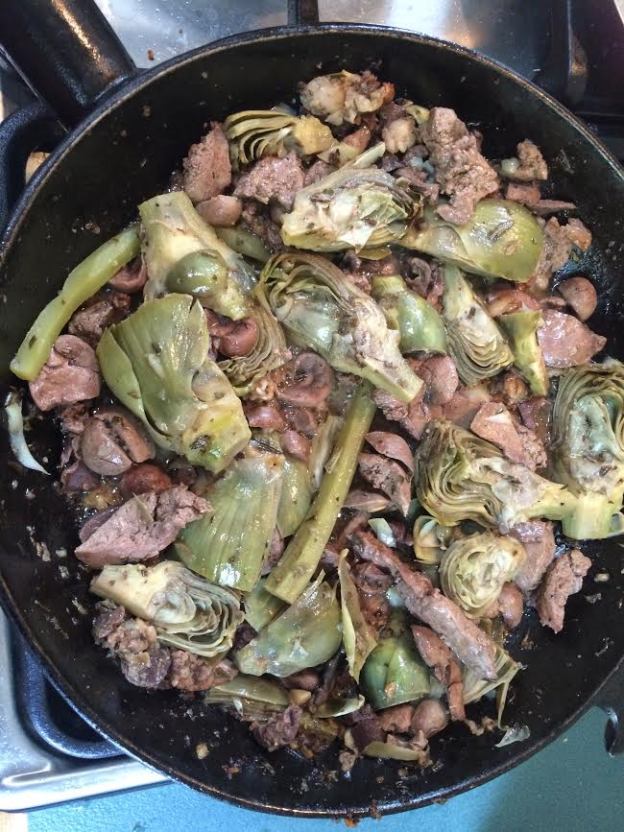
With a few rabbit carcasses in the freezer, we decided to make a dish with the coratella (heart, liver, spleen, kidneys and lungs) incorporating some of the artichokes that we now have in abundance. Mrs BYO created the dish and did the cooking, serving it with the staple of the North, polenta. It was a delicious meal and we have all of the rabbit left to feed the more fussy members of the tribe.

CORATELLA CON CARCIOFI

As many cleaned rabbit offals as you can get your hands on, but at least 4, cut in small pieces

1/2 cup rabbit fat. The fat surrounding the kidneys are the best. alternatively use 1/2 cup olive oil

4 large garlic cloves roughly chopped

2 tablespoons of finely chopped rosemary

white wine

4 or 5 artichokes, cleaned and prepared, cut into 4 sections. All the green leaves of the artichoke must be snapped off and the choke removed, leaving only the tender white parts of the leaves and the heart

salt and pepper

Heat the fat in the pan on a low heat until the fat runs clear and only small bits of browned fat remains in the pan. Saute the garlic and rosemary in the fat until the garlic is golden. Add the rabbit, season with salt and pepper and brown everything quickly over a high heat. Sprinkle with a bit of wine. Lower the heat and cook the rabbit for about 10 minutes, regularly sprinkling the meat with wine, then add the artichokes. Sprinkle wine generously and cook uncovered, turning the artichokes often. When the artichokes are tender, serve  hot with polenta or bread.


Coratella

2015-11-27 - Coratella

Coratella is the Italian name for all the organs in the thoracic (chest cavity) and the dish includes the heart, lungs, liver, spleen and kidneys of either a young lamb, chicken or rabbit. We were fortunate to obtain a suckling Boerbok lamb from a farmer close to Dunedin and I went to the farm and slaughtered it myself, hence had access to all the organs normally discarded and seldom eaten in New Zealand. Coratella is also the name of the resulting dish.

Clean the organs making sure that all the blood is washed off, then cut it into cubes about 2 cm square. Dice two onions and two cloves of garlic and fry in some butter and olive oil until well soft. Ad all the organs, except the liver, and fry well over medium to high heat. While frying, ad a chopped red chili, two bay leaves, salt and pepper. When the meat is almost done ad the liver and turn the heat to high. Ad a handful of chopped parsley and fry for three to four minutes until livers are done, but still pink on the inside. Ad one glass of dry white wine and let it evaporate. Serve immediately with polenta.

Do not forget the good home made dry red wine!

ENJOY!!

Calabrian Stewed and Roasted Hare – Liepru all’Antica

2014-03-04 - Stewed Rabbit

Rabbit is another of my favorites and fortunately readily available if not farmed yourself, and though Artusi mentions a well-to-do person’s being put off by the latter, they have always been popular out in the country because they’re easy to catch or raise. This recipe for stewed and roasted hare is Calabrian, but works equally well for rabbit, chicken or even quail

1 hare, chopped

2 Sweet Red onions, sliced

3 bay leaves

4 sprigs mint

Marjoram to taste

Thyme to taste

Flour

Slices of toasted bread

1/4 cup olive oil or rendered lard

A bottle of Ciró Rosso or any other good red wine

Salt

Marinate the hare in the wine with the onions and the herbs for two days, turning the meat occasionally.

Pat the meat dry, flour it, and brown it in the fat, using an oven-proof pot. Once the pieces are all browned stir in the marinade, bring to a simmer (you may want to heat the marinade separately while the meat is browning), and transfer the hare to a preheated 350 F (175 C) oven. Roast until done, spooning the liquid over the meat occasionally to keep it moist.

When the meat is done remove it to a platter and keep it warm – strain the liquid and reduce it over medium heat until it is quite thick. Spread it over the toasted bread, and serve it with the meat.

A wine? Another bottle or two of Ciró Rosso.