KENTUCKY FRIED RABBIT

New Zealand has far too many rabbits. They are eating their way through the countryside ruining the pastures so we decided, as payback, that we would eat them! There are many ways to cook this lovely, lean meat and ‘Kentucky Fried Rabbit’ is the best when one has had too many stews or roasts

Even though I am not a loyal KFC customer, I know lots of people who are (Obviously not close friends of mine). When I stumbled upon an Italian food site claiming to have “acquired” the famous KFC recipe (tongue in cheek off course from the Italians) and disclosed it all on their page, I was interested. I am often asked how to cook rabbit as I have AMPLE supplies in my freezer, my standard answer always is that you can cook it in any way you cook chicken. Having made the connection between chicken and rabbit and having the secret recipe at hand, I was determined to try some KFR (Kentucky Fried Rabbit) or DFR (Dunedin Fried Rabbit) in my mission to eat every one of these NZ PESTS!!!

It was my turn to cook Saturday lunch and I thought I may as well try my new adventurous recipe on Mrs BYF. Weighing out the ingredients to the closest gram and carefully following the intricate steps of the recipe, I had some food on the plates about two hours later and to my BIG SURPRISE it was very good. Some of my regular KFC muncher “friends” even seriously commented it to be better than the famous KFC!!! Watch out Colonel here comes New Zealand!!

Recipe

1 large wild rabbit

Cut the rabbit up in portions

Use a pan big enough to fit all the rabbit pieces in a single layer

2 cups of vegetable oil for frying

1 cup potato flour for the first drenching

2 cups flour for the second drenching

1 tablespoon of smoked paprika

1 teaspoon cardamom

1 teaspoon salt or more to taste

1 teaspoon powdered ginger

1 tablespoon powdered garlic

3 eggs beaten

Method

Because one can never be sure of the age of the rabbit I steam it until it is soft but still firmly on the bone. It takes about 20 – 30 minutes for an old rabbit. This step is not required if you know it to be a young rabbit and the results are always better than cooking an older rabbit

When the steamed rabbit has cooled, pat dry and drench with the potato flour. Whisk all the dry ingredients together. Dip the rabbit pieces individually first in the egg and then in the flour mix, then dip the pieces in the egg and flour again. Heat the oil in the pan. Slip the pieces into the hot oil (the rabbit should sizzle) and fry for about 10 minutes on a side, controlling the heat so that the rabbit becomes golden brown and not burnt

One probably should have this with mashed potato and gravy but I served it with steamed broccolini and polenta.

ENJOY with a glass of GOOD HOME MADE RED WINE
PANCETTA

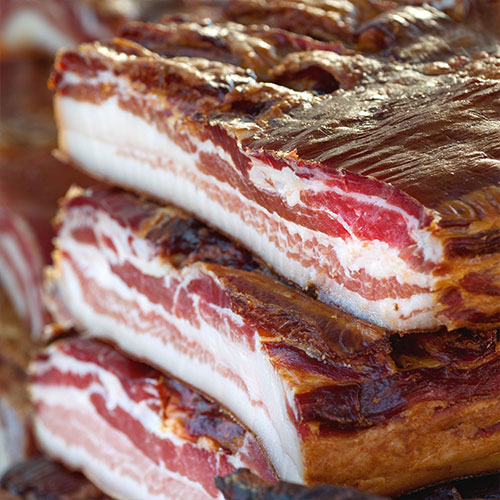
By this time of the year Pancetta stocks are almost depleted in the BYF pantry and the wheater being kind, new stock will be made soon

Get some nice thick pork belly (skin off and fat on!) hopefully raised free range and chemical free, or you may be lucky enough to shoot a nice young and fat wild pig

Trim the edges so as to have an almost uniform, in thickness, belly. Now cut the belly in managable sizes of about 300 mm X 200 mm

Mix the following ingredients per Kg of meat

2 Cloves Garlic – finely chopped

1 small sprig of Rosemary – finely chopped

3 g grated Nutmeg

3 g ground Black Pepper

1 g fresh Chilli (optional) – finely chopped

Mix the spices well and thoroughly rub it into the belly, covering all the cracks and crevices

Get a container large enough to lay out the pieces of meat in a single layer. Spread a thin layer of sea salt covering the bottom of the container, then lay the pieces of meat onto the salt and cover them completely with more salt in such a way that no meat is exposed. Place the container with meat in the fridge at about 3 – 5 C for 2 days. After 2 days, remove the salt, turn the meat over, drain off any fluid and cover with the same salt and return it to the fridge. If the belly is thin (about 25 – 30 mm) remove from the fridge and discard the salt after day 3. If the belly is thicker than 30 mm, leave for another day and remover from the fridge and discard the salt after day 4

Now rinse the bellies very well with cold running water and then wash with good red or white wine

Your Pancetta are ready to commence the curing process now by hanging them in such a way that they do not touch each other. Conditions must be about 15 C for the first week and then about 7 – 10 C until ready to use. Make sure the area is well ventilated, but NO DRAFT on the meat. The Pancetta should be rotated in such a way that uniform drying is achieved

After about 30 days, depending on the thickness, ventilation and temperatures of the Pancetta, they should be ready to taste and eat when you think they are ready and of the correct consistency – no harm in eating them too soon. Always remember to slice your Pancetta VERY thin. An old hand can tell when the Pancetta is ready by just feeling them

Once the consistency and moisture content is acceptable, vacuum pack and store in the pantry

The Pancetta can be enjoyed as is or in any cooking or fried, like bacon

Another version of pancetta can be made with the skin on and the pancetta rolled and tied

ENJOY and do not forget the home red wine to compliment the good Pancetta

LA PORCHETTA

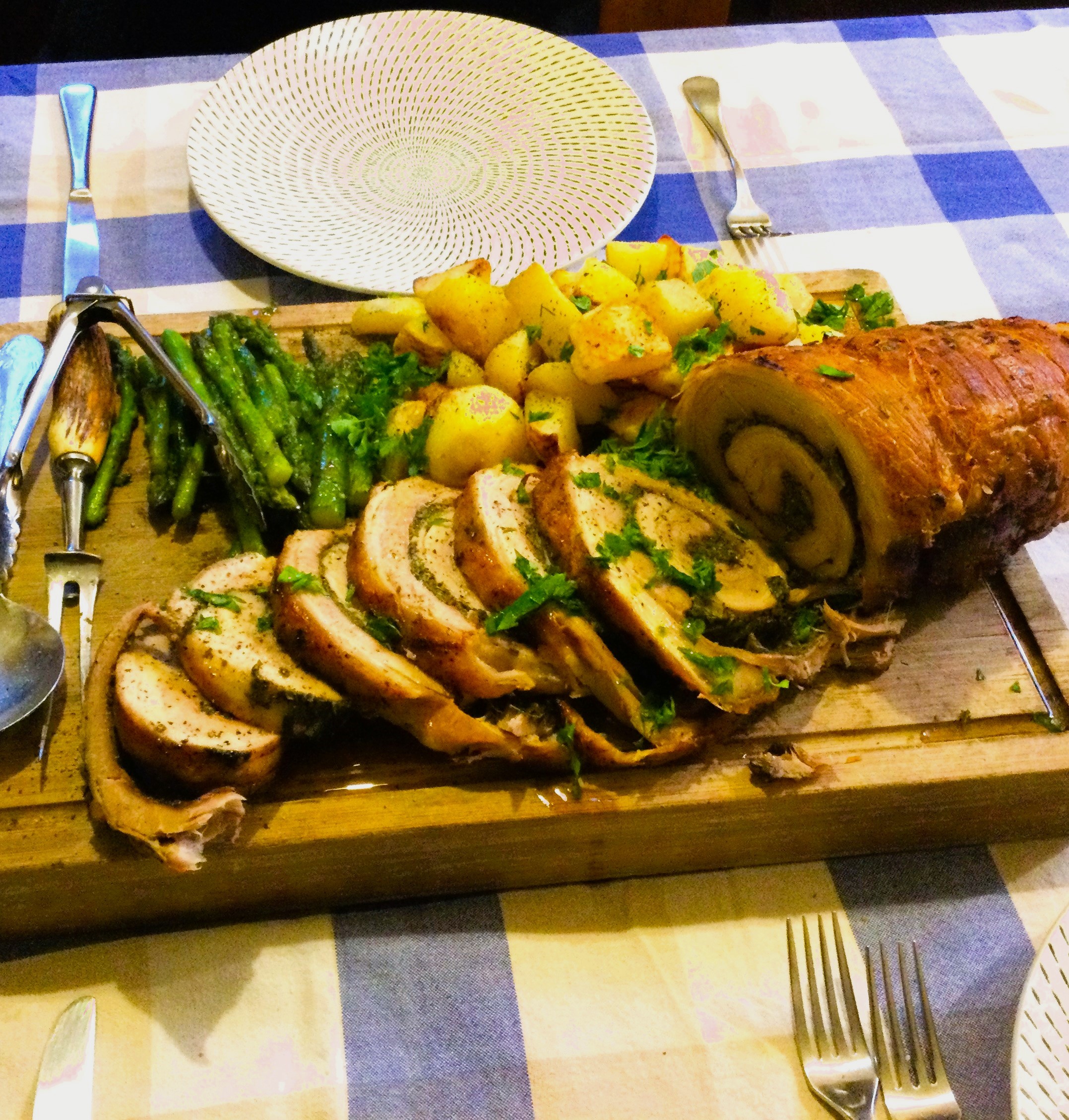
La Porchetta is a popular pork roast in Italy and one I enjoy doing every so often

RECIPE

Use a whole pork belly, the easiest way to make a good Porchetta. Use one with either skin off or on, whatever your preference is.

Mix a handful each of chopped Rosemary and Parsley

Half a handful of chopped fresh wild Fennel fonts and seeds

6 – 8 chopped Cloves of Garlic

Salt and Pepper to taste

Chilli if you like

Mix all the above ingredients and layer it evenly on top of the flat pork belly. Roll it tightly and bind well with string and then slip it into tight fitting netting

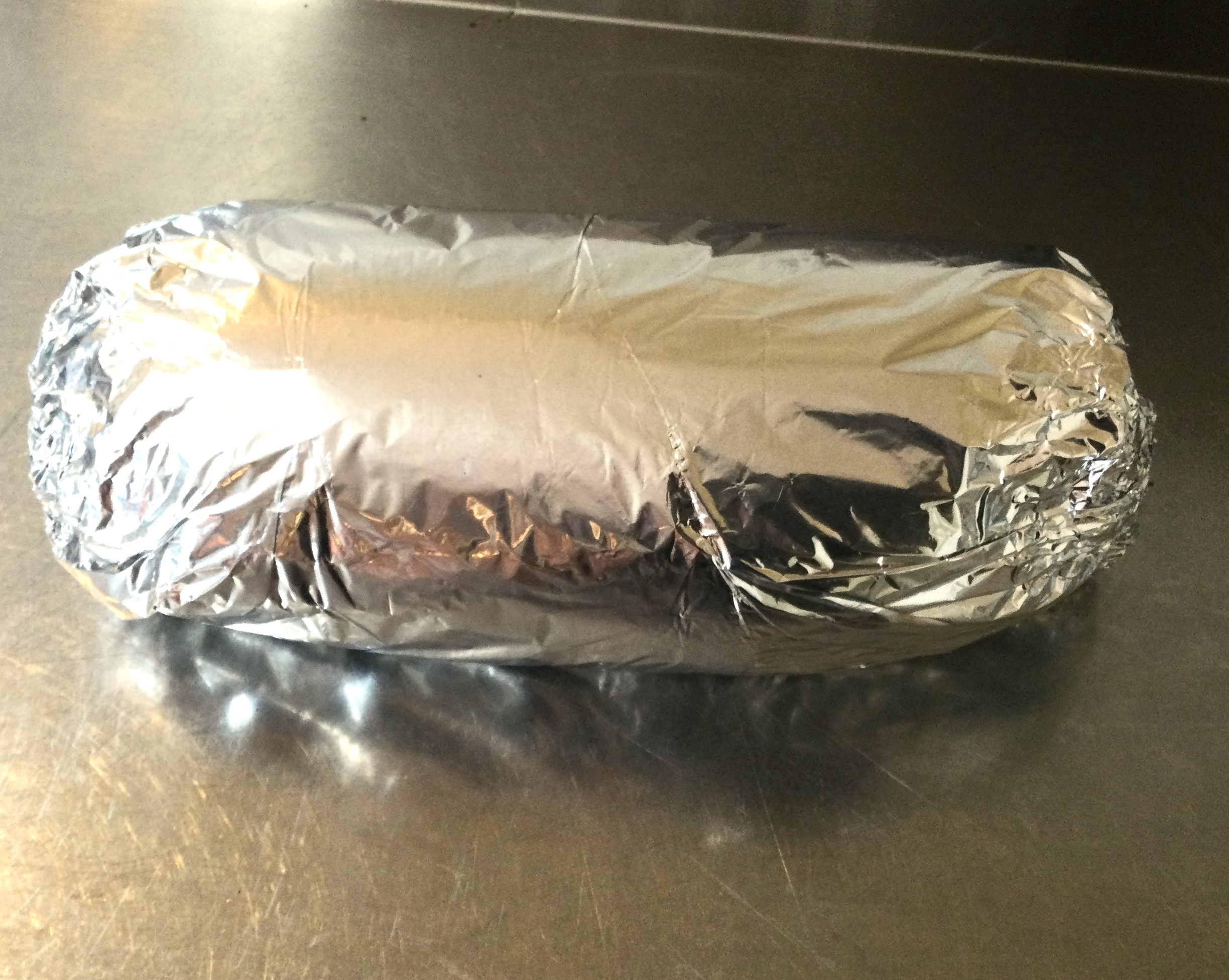
Cover with baking paper and then with aluminium foil. Make sure the foil is well closed, including the ends. Poke holes through the wrapping which will allow he fat to escape when roasting.

Lay the wrapped Porchetta on a wire rack which sits over a oven pan. Put water in the pan, but it should not touch the Porchetta. Place this into a pre heated oven at 250 C and bake for 3 hours without touching the Porchetta, but make sure there is always water in the tray

After three hours, remove the Porchetta from the oven and carefully unwrap it and cut and remove the strings and netting

Now place it back in the preheated oven at 250C with the oven’s airflow turned on. Watch it carefully forming a crust / crackling which should take 10 – 15 minutes. Turn it over and do the same on the other side.

You can either use a belly with the skin removed which obviously will not have the skin crackling, or you can use it with the skin on, which will give you wonderful crackling

ENJOY !!!

Do not forget a few glasses of home made RED WINE to wash it all down!!

BRESAOLA

Bresaola and Biltong are the two pure beef Salumi I regularly make. Winter is always busy, getting enough Salumi processed for the rest of the year. This week I made both Bresaola and Biltong

RECIPE

Get yourself a good quality Beef Silverside and cut decent chunks of steaks for the Bresaola (About 250 mm long and 100 mm in diameter). Remove all sinew and fat and leave clean cut surfaces on all sides. Dry the meat well.

Mix the following spices together (Quantities for 1 Kg of meat)

28 g Salt

7 g Brown Sugar

3 Juniper Berries – Crushed

1 Glove – Crushed

2 Cloves of Garlic – Finely chopped

2 Dry Bay Leave – Crushed

3 g Black Pepper – Ground

1 g Nutmeg – Grated

1 g Cinnamon – Crushed

Mix the spices well and rub thoroughly into the meat. Place the spiced meat covered in the fridge for 5 days and turn and rub twice daily. You can also use a food bag for this as it allows for easy mixing and the meat is always covered.

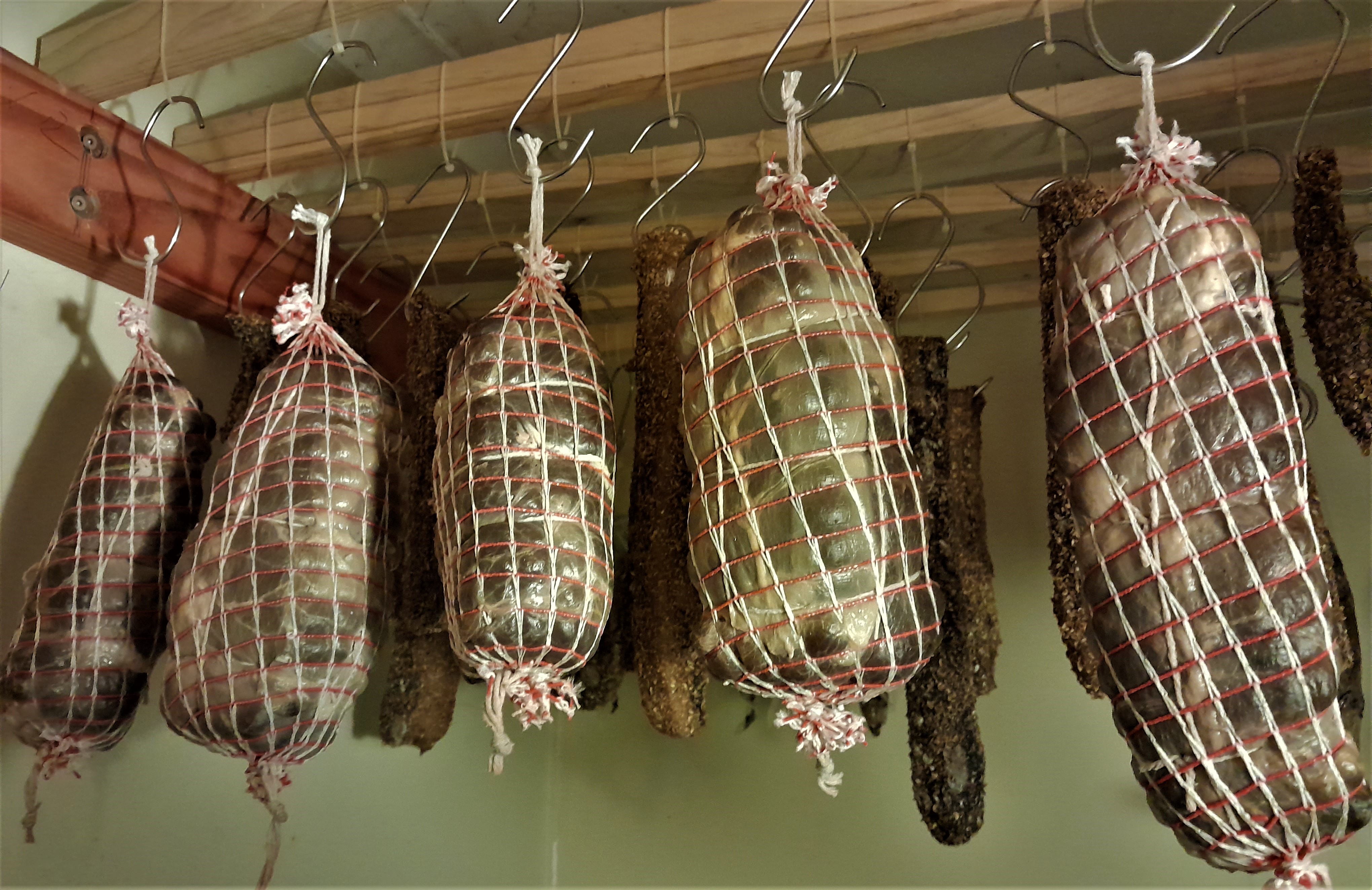
After 5 days, remove the meat from the fridge and wash thoroughly in cold running water and then rinse with a good white wine, then dry the meat properly – The photo above is at this stage of the processing.

Now comes the fun part. Wrap the meat in natural sheep casings. If you are lucky enough, you may find a large enough Salame casing and you can just slip it inside, provided it is a tight fit. I cut the casings open and carefully wrap it around the meat and tie it down with string. Make sure there are no exposed meat. You can now either tie it down further or slip it into a stretchable meat netting, which I did.

Prick very well on all sides and hang the Bresaola in a cool place of about 15 C for 3 days and then hang inside the fridge until ready to use, which may be about 100 days. I am fortunate that my pantry is well ventilated and always a couple degrees lower than the ambient temperature and I hang my Bresaola there and not wasting fridge space. Dunedin being cool during June, July and August and my well ventilated pantry with average temperatures of less than 10 C at all the times, which is ideal, makes the perfect curing house. As my curing temperatures are about 6 C, my Salumi cures a bit faster than in the fridge. Make sure you do not have wind (draft) over the meat as it will cause case drying and rotting in the core. Well ventilated without drafts is very important.

I made 5 Bresaola, starting with 11 Kg meat in total and after cleaning the 5 was 7Kg in total. The 4 Kg meat, not used for Bresaola, was well used for minced meat and the sinew, excess fat and poorer quality cuts made wonderful beef stock

Bresaola is more than often part of my antipasto platters and goes down very well with a glass of HOME MADE RED WINE !! ENJOY !!

RABBIT PIE

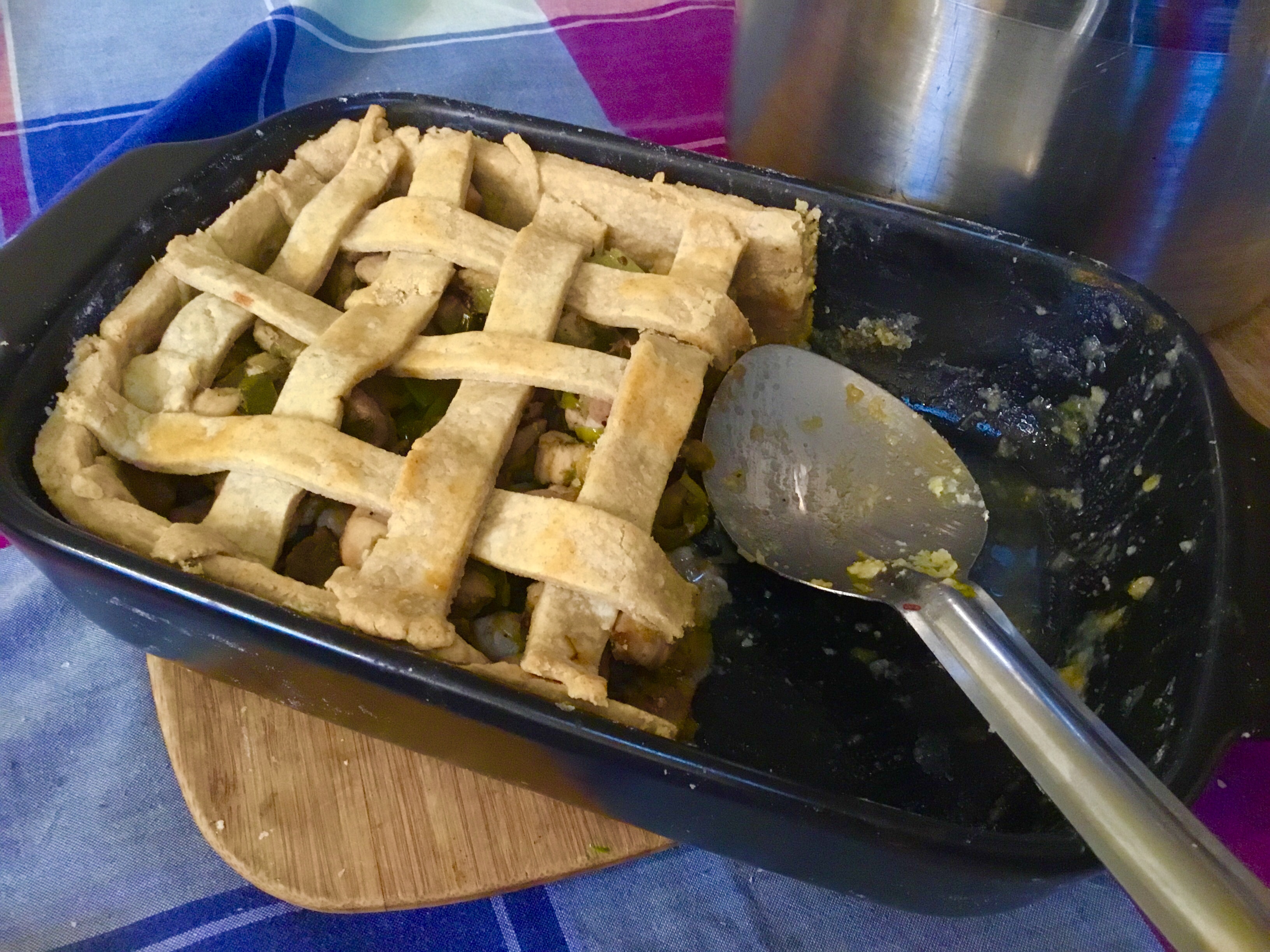
Another day, another rabbit. Discovering new, tasty ways to prepare this tasty kitchen staple of ours is a joy. Today Mrs BYF made rabbit pie. 

INGREDIENTS

Heat the oven to 180C 

For the crust she made a short pastry using a few handfuls of flour, maize  meal fines and a bit of bran. A good rule of thumb is 400g flour to 150g butter. Use more butter if you like the pastry ‘shorter’.  You can buy puff pastry, it works just as well. Halve the pastry. Line the pie dish with half of the pastry and put the dish and leftover pastry in the fridge. 

2 large rabbits, meat cut from the bones and chopped. Use the bones for stock

1 Large leek or 2 smaller ones

2 cloves of garlic, crushed

2 tablespoons of olive oil, butter or other plant oil is also good

1 tablespoon of fresh tyme 

1 teaspoon of fresh marjoram

1 teaspoon of fresh chopped sage

1 cup of white wine

A bit of stock  if needed

Salt and pepper to taste

METHOD

Put the oil or butter in a pan big enough to take all the rabbit pieces in a single layer. Brown the rabbit well and then remove the rabbit, keep aside. Cook the leek and garlic in the same pan you browned the rabbit until translucent. Deglaze the pan with the wine. Add the rabbit and the herbs and cook over medium heat for about 20 min, stirring well to coat the rabbit in the herbs. Season with salt and pepper 

Put the rabbit in the pie dish roll out the other half of the pastry and put the pastry ‘lid’ on the pie. Cut slits in the middle of the pie to let the steam out.  Bake at 180 C until well browned – about 30 minutes