We Slaughtered the Pig

IMG_0055

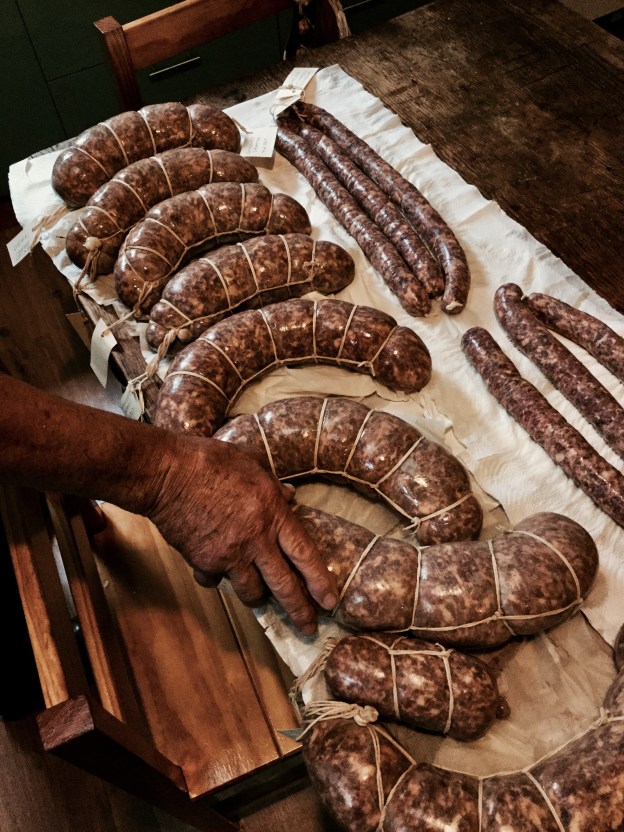
It is Italian tradition to slaughter at least one pig once per year so as to make all the salumi required for the rest of the year. I have made some pork liver salami and sausages (Salsiccia di Fegato di Maiale) on the day the pig was killed while waiting for the pig to cure for a week.  Today we made some Salami and Cacciatori sausages. Tomorrow it will be Pancetta, Coppa and Prosciutto. In the mean time we make stock from all the bones and rendered the fat from the skins and small off cuts to either use for cooking or to make soap with.

The Italians are very generous and seldom do your friends leave your home without some of your home produce for them to try at their own place. Likewise you never leave a friends home without more gifts than what you brought. Every Italian province, district and town have their own food and recipes. It goes so far that every family and family member has their own special way to prepare a dish, which obviously is better than anybody else can dream to make it. Food is often the main talking point around the table and when somebody asks you for a recipe, you know that they know you can prepare the specific dish better than what they can. You always oblige and provide them with the recipe, minus a few essential ingredients and omitting at least one of the important steps – this way you can stay as the master of that specific dish.

So please do not ask me for a sausage recipe!

Coniglio a Porchetta (Rabbit with Wild Fennel)

In the Italian Viterbo area where this recipe stems from, the term “porchetta”, which means roasted pig, is applied to any dish that use wild fennel, being it fresh or dried flowers. The wild flowers should not be confused with fennel seeds.

I am fortunate to have access to hunting areas and friends that hunt rabbits with me. I also breed rabbits for the table on a regular basis. Last week, I could not make it to the hunt and my friend was good enough to bring the only Hare they shot for me to cook. I also have a good friend across the road that showed me the wild fennel growing in the old quarry across the road, so I had assembled all the ingredients for my dish of wild hare with wild fennel!

Wild Hare with Fennel

Ingredients

One large Hare, cleaned, gutted and washed
Heart, liver and kidneys of the Hare (Coratella) – Cleaned, washed and cubed or minced
Extra Virgin olive oil
Six large sage leaves
4 Garlic cloves – cleaned and crushed
1 Cup dry white wine (the best is  from Orvieto)
2 Medium potatoes peeled and cubed
2 Slices of Prosciutto or Pancetta (home made if possible)
1 handful of rosemary leaves
Half a handful of fresh Fennel Flowers
12 Black Olives – pitted
Salt and pepper

Heat the oven to 150C. Heat some olive oil in a heavy pan and ad the coratella, sage, half the garlic, salt and pepper. Brown the coratella, add the wine  that you have not drunk yet and allow it to evaporate. Ad the potatoes and mix through, then take it off the heat. Wrap the coratella mixture in the prosciuto. Stuff  the hare with the fennel, rosemary and wrapped coratella. Sow the rabbit up so the stuffing would not fall out. Put some olive oil in a heavy oven pan large enough to take the whole hare. Add the hare to he pan with the rest of the garlic, salt and pepper. Roast the hare about two hours. Halfway through the roasting process, add the olives  and the rest of the wine you have not drunk. Turn it once or twice and baste it every so often. If the rabbit legs look dry, wrap the leg ends in aluminium foil.

ENJOY!!

Do not forget the home made red wine!

Swan Sausages

2016-05-29 - Black Swan

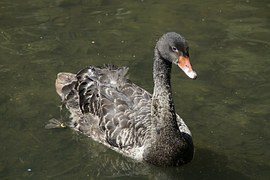
Following another successful day of hunting ducks, I returned home not only with a few ducks, but also with some swans. Being a keen sausage maker, I thought it appropriate to make my first ever swan sausages. After spending considerable time “hunting” through all of my cook books, it was not a huge surprise to come up empty handed for swan sausages. I adapted some wild duck recipes and made a few kilograms each of basil and sun dried tomato, sage and swan and pork sausages. After tasting all of these, which are all very delightful, I came to the conclusion that the swan taste is very strong and over powering camouflaging the subtle tastes of the spices and next time I shall have to blend it with some milder meats.  Overall a very interesting and delightful experience.

Duck Hunting in Middlemarch

I was very fortunate to be invited for my first New Zealand duck hunt last Saturday. We prepared our Maimais on Friday and was out before light on Saturday. Even if there were to be no ducks, the shear beauty and pleasure of being out in the wild was adequate compensation. We were fortunate to get our share of ducks early on Saturday and enjoyed the views, walks along the streams and fresh air for the rest of the day. Sunday was duck cleaning day and after a few technical hitches, everything went smoothly and soon we had enough duck meat to last a long time. I was fortunate as nobody was interested in the offal and had it all to myself. As soon as got home I made it all into coratella, ate some and packed the rest into about 30 portions for the freezer – wonderful. The ducks were cut into portions, vacuum packed and frozen. I gave some meat to a few close friends and my neighbor across the road tried it the very next day and gave me the recipe for slow basted duck breast with dried figs, a recipe she created herself, which apparently was absolutely delicious.

RECIPE

Braise some onion and garlic in olive oil in a oven proof pot. Dust the duck breasts in flour and brown in a separate pan in olive oil. Now put the duck in with the onion and garlic and ad passata (tomato sauce) wine, chicken stock, dried figs, salt and pepper and bake in the oven for four to five hours at 120C. Turn and baste every so often.

Duck breasts and figs are on the menu for later in the week!

There were various hunting groups in the area and Saturday evening we all congregated to discuss the day and watch rugby together. I was disappointed to learn that many hunters would take breasts only and a few groups even discarding up to 60 entire ducks unused to only go out the next morning and kill some more. I am used to harvest for the pot only, waste nothing, and leave some for next year.

Coratella

2015-11-27 - Coratella

Coratella is the Italian name for all the organs in the thoracic (chest cavity) and the dish includes the heart, lungs, liver, spleen and kidneys of either a young lamb, chicken or rabbit. We were fortunate to obtain a suckling Boerbok lamb from a farmer close to Dunedin and I went to the farm and slaughtered it myself, hence had access to all the organs normally discarded and seldom eaten in New Zealand. Coratella is also the name of the resulting dish.

Clean the organs making sure that all the blood is washed off, then cut it into cubes about 2 cm square. Dice two onions and two cloves of garlic and fry in some butter and olive oil until well soft. Ad all the organs, except the liver, and fry well over medium to high heat. While frying, ad a chopped red chili, two bay leaves, salt and pepper. When the meat is almost done ad the liver and turn the heat to high. Ad a handful of chopped parsley and fry for three to four minutes until livers are done, but still pink on the inside. Ad one glass of dry white wine and let it evaporate. Serve immediately with polenta.

Do not forget the good home made dry red wine!

ENJOY!!