
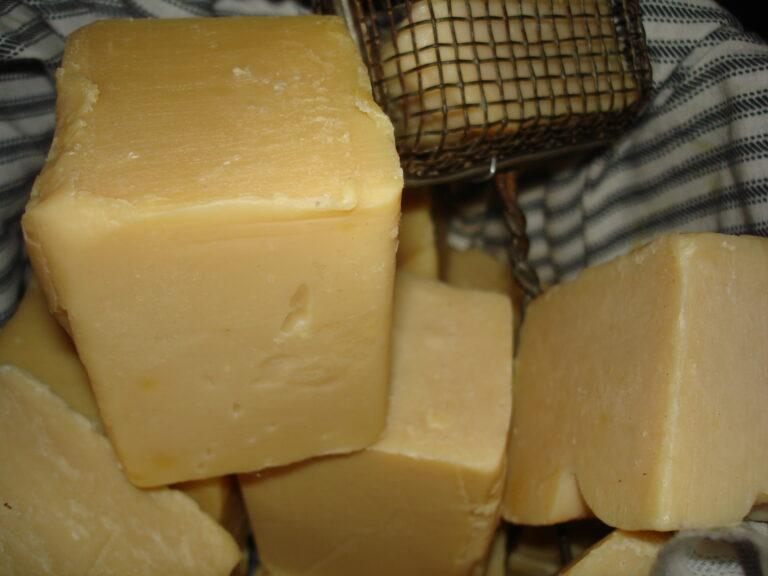
Before supermarkets, detergents, and plastic bottles, farm households had to make do with what was on hand. Cleanliness was still important, but it was achieved with simple materials, practical knowledge, and a lot of experience.
In rural Italy, farmers and shepherds relied on a basic homemade soap often referred to as pietra di sapone — literally “soap stone”. It was a hard, plain soap made from animal fat and alkali, produced in large batches and used for everything from washing clothes to scrubbing floors and tools.
This was working soap, not luxury soap.
Soap Making on the Farm
Soap making was usually done once or twice a year, often after pig slaughtering, when large quantities of lard were available. Nothing was wasted. Fat that was unsuitable for eating became soap, and the end product was stored and used until the next batch was made.
There were many local variations, most passed on orally. The recipe recorded below, of which I made a 5 Kg batch today, was already in use by around 1870, and likely much earlier. It is one of the simplest and most economical versions.
The Traditional Base Recipe (Historical Record)
Ingredients
- Pork lard – 5 litres
- Water – 10 litres
- Flour – 1 kg – (Use Whole Wheaa Flour for some texture and scrubbing effect – optional)
- Caustic soda (sodium hydroxide) – 1 kg
Basic Equipment
- Large plastic or wooden tub
- Wooden or plastic stirring utensil
- Protective gloves
Traditional Method (As Practised Historically)
The lard was first rendered until fully melted and clear. Water was placed in a large tub and the flour mixed in to form a smooth liquid with no lumps. The melted fat was then added and stirred until evenly combined.
Only at this stage was the caustic soda introduced. The mixture was stirred continuously until it thickened noticeably — what old soap makers recognised by eye and feel rather than measurement.
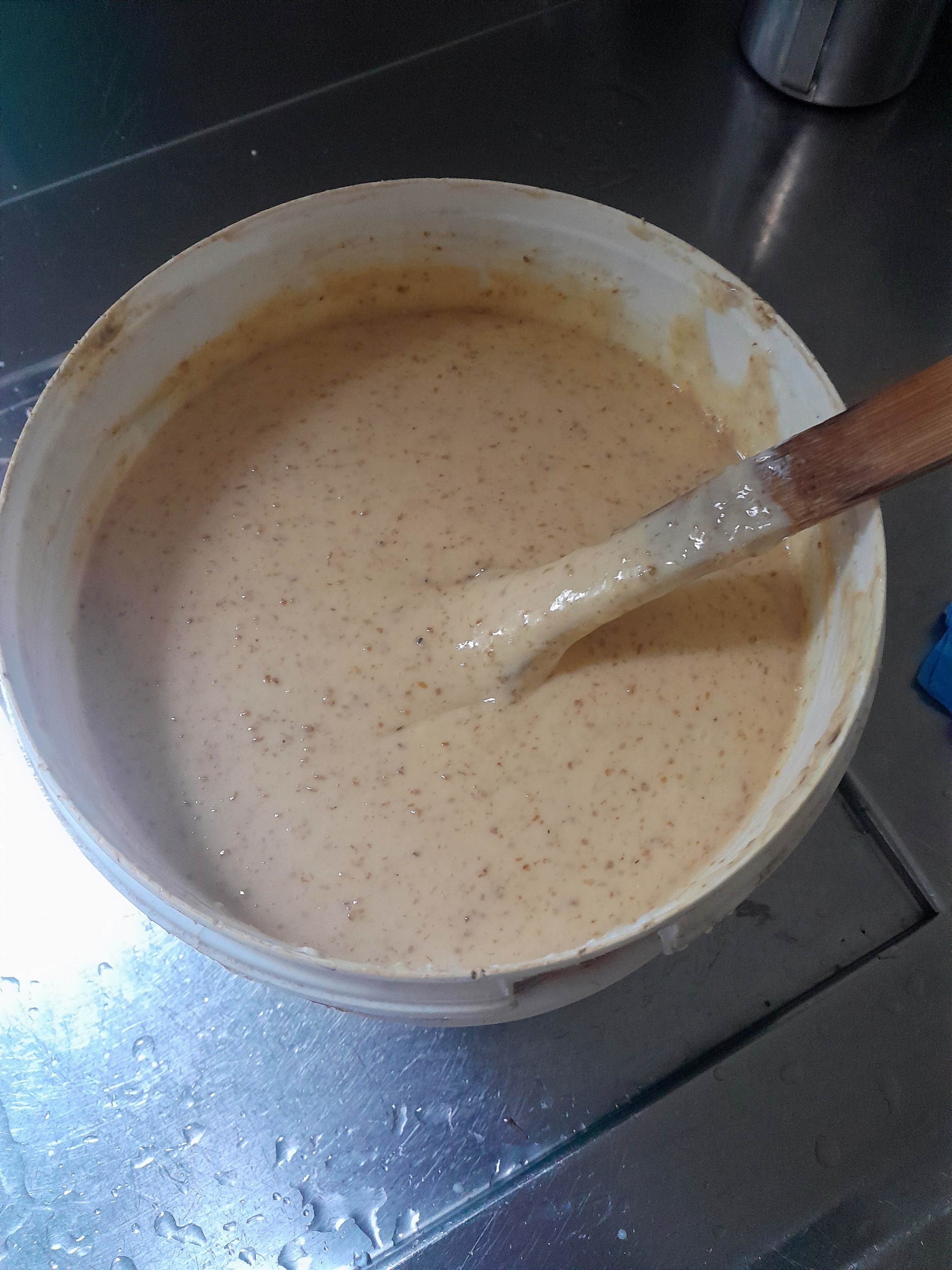
When ready, the soap was left undisturbed for several days to set.
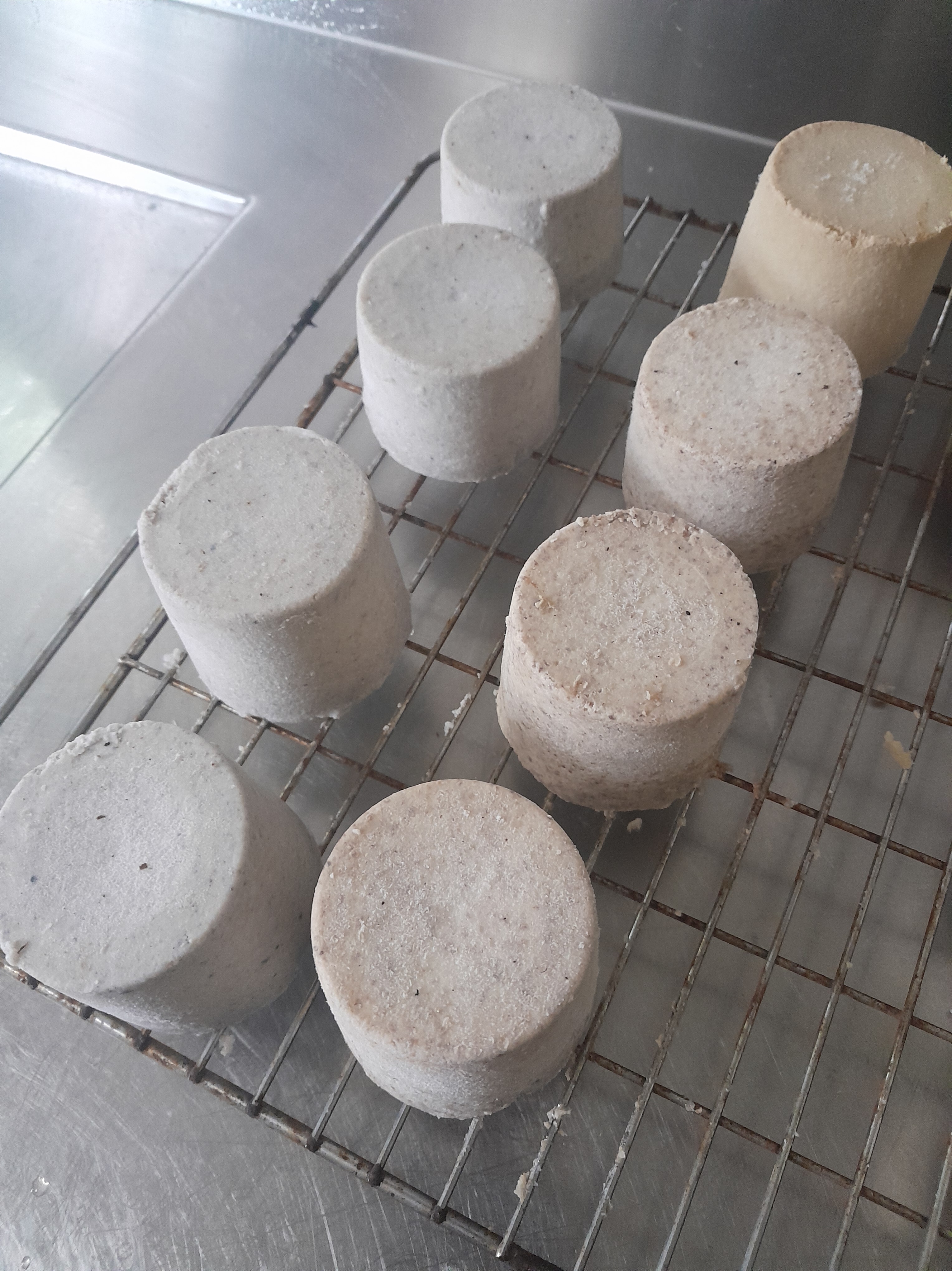
Once firm enough, the large block was turned out, cut into smaller pieces, and left to dry and harden in a well-ventilated place. Fresh soap was soft, almost butter-like, and became harder and more durable with time. Only useable after about 40 days.
What This Soap Was Used For
This was a strong, alkaline soap, intended mainly for :
- Washing heavy work clothes
- Cleaning floors and walls
- Scrubbing tools, containers, and equipment
It was not designed for comfort or fragrance. Effectiveness mattered more than gentleness. Some families later added herbs or scents, but the basic soap remained plain and functional.
I also made some Extra Virgin Olive Oil Soaps today, adding coffee grind and mint leaves for a scrubbing effect and flavour
Why Flour Was Used
The addition of flour may seem odd today, but it made sense at the time. Flour helped thicken and stabilise the mixture in the absence of scales, thermometers, or chemical calculations. Soap making relied on observation, experience, and repetition rather than precision.
A Lesson in Self-Sufficiency
Recipes like this are a reminder of how farm households once operated. Everyday necessities were made at home, using local resources and practical knowledge built up over generations.
This old farmhouse soap is more than a cleaning product — it is a small example of rural independence, thrift, and ingenuity. Understanding how it was made helps us appreciate how closely farming life was tied to basic chemistry and hands-on skill.






 Back Yard Farmer