Quail Giblet Risotto (works for chicken giblets too)

2014-03-12 14.45.43

We are used to this dish made with chicken giblets, but, as you know we also have quail! I make stock with the quail  bones, and this risotto, every time when I have to cull. Risotto involves standing and stirring the pot all the time – no  answering the phone, getting the door or visiting the bathroom! 😉 The consistency of the dish must be just right, not too wet, not too dry and al dente. It takes some work but is worth the trouble. My smallest grandchild is particularly fond of this dish, to the  point where his grandmother once told me to stop shoveling it in after the 3 rd bowl – she was afraid he may pop.

Quail Risotto 

2 liters of good chicken or quail stock stock. I make my own, it is simple and easy and makes all the difference to the taste

2 cups of Arborio or Carnaroli rice. Yes, it has to be Arborio or Carnaroli, the normal rice does not have enough starch

10 quail giblets  (or 400 g Chicken giblets). One can save quail giblets by freezing them until enough has been collected

1 medium sized onion finely chopped

1 Large clove Garlic (more if you like) finely chopped

1 tablespoon rosemary or sage finely chopped

4 tablespoons extra virgin olive Oil

3 tablepoon butter

pinch of dried chili flakes

1 cup of good white wine

salt andpPepper

Half a cup of grated parmigiano cheese ( stir it in at the end, or serve with cheese on top)

one bottle Sangiovese wine (to go in to the cook and the cook’s friends 😉 )

.

Heat the stock and keep it hot. Ad one table spoon of olive oil and one table spoon of butter, a quarter of the onions and a quarter of the garlic to a pan and saute until soft. Ad the giblets and brown slightly. Pour half a cup of white wine in and evaporate.  Turn the temperature down, ad the Chili, Sage or Rosemary, and braise in a drop of stock for about 30 minutes until tender. Use a pot big enough to hold everything with ample room for lots of stirring. Put the rest of the olive oil and one table spoon of butter in the pot and add the rest of the onion and garlic and saute over a gentle heat until the onion is soft but not coloured.  Add the rice to the onion mixture in the pot and stir a few minutes to heat through. Toast the rice and cover every grain in oil. Add a half a cup of good white wine and cook until the rice have absorbed all the wine. Turn the heat medium low and start adding a few ladles of stock, and stir constantly. Every time the rice becomes dry, ad a ladle of hot stock and keep stirring. When half cooked (ten minutes) add the warm giblets to the rice. Keep adding hot stock a ladle at a time and keep stirring until the rice is almost al dente.   The consistency should be very moist as the rice will still absorb moisture and dry out for some time. Taste and adjust for salt and pepper while cooking. Immediately take off the heat and stir in one tablespoon of cold butter and half a cup of grated Parmigiano (optional). Stir quite aggressively to make it creamy and smooth. Let it rest for about three minutes while the rice finisesh cooking in the residual heat and serve immediately. Top with grated Parmiginao cheese if not stirred in at the end. The rice must never be dry but must also never float in the stock. If you add the stock all at once you will end up with boiled rice, not risotto.  Each grain of rice should have its own glistening coating of stock, and should be chewy, not soft and soggy. In Veneto they serve risotto “all’onda” which means like the waves of the sea – very soft and they give  you only a fork to eat it – no spoon. This is also the way I like it, even though I am from Lombardy.

We often eat risotto as a main meal but it makes a great primi piatti if the main meal is  meat. I would serve a great Sangiovese red with this if there is any left after tasting the good wine while cooking.

Stock

2014-0318 - Stock Pot

Good stock is the one ingredient a kitchen should never be without.

INGREDIENTS

Chicken bones or (quail back bone, neck, wing tips and excessive skin) – About half a Kg in total or more if you want to make a stronger stock.

2 onions (No need to skin) – Washed and roughly cut up. Could be replaced with Leeks

2 large carrots leaves and all) – Washed and roughly cut up

half a bunch of Celery (Leaves and all) – Washed and roughly cut up. You could add celeriac leaves if you have any

salt lightly to taste

8 Liters of water

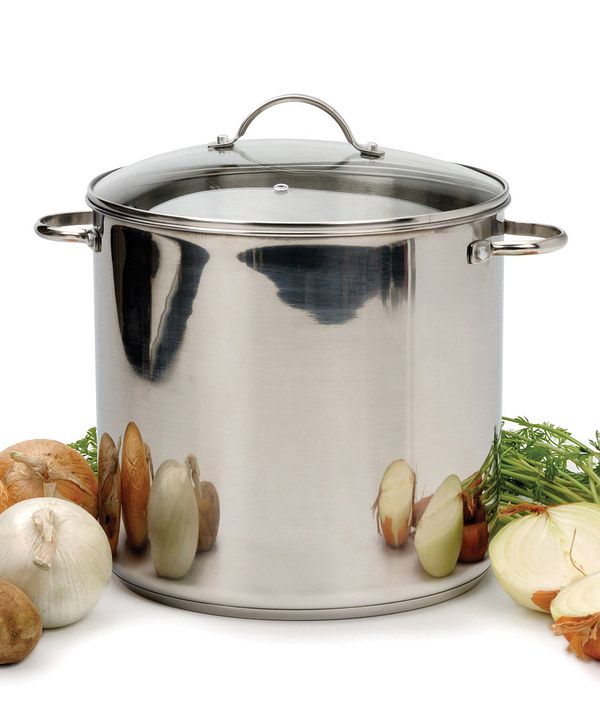
I often buy chicken frames from the supermarket (sorry, but sometimes I have to go there) or use the back bones and necks of the quails, when I slaughter, which are both good for stock even though different. Quails make a much stronger stock than chicken. You can also do a fish stock, by replacing the meat with fish heads and frames. I keep the stocks separate so I have different flavours for different dishes.  Put all the ingredients, including the water (cold) into a meat stock pot and boil over a low heat for at least two hours, but preferably more. Let the liquid reduced by about one third and keep topping it up with more cold water to keep it at this level. Stir every so often to prevent it from burning and sticking to the bottom.

Strain the liquid from the solids using a colander and return the liquid to the stock pot and heat until boiling again. Immediately pour into clean containers and seal immediately (I use 2 liter plastic buckets). Should the lids fit properly, the reduction in product temperature will form a very effective vacuum seal. If you have maintained a high level of cleanliness and your containers were  clean, the stock will remain good for months in the pantry, even though I normally keep mine in the fridge. Once opened it should be kept in the fridge and used within a couple of days. The vegetables  are good to feed to your Chickens and Quails.

With home made stock, soups are delicious and easy, pasta sauces and stews shine and you cannot make risotto without it. Braising meat and keeping it moist with the correct stock also ad complexity and additional flovour.

QUAIL PETS

2014-03-14 - Quil Pet House2014-01-07 - Rosetta Male2013-10-24 - Tibetan Coturnix 21

As result of many requests for Quails as pets, I have designed and built a Quail Pet House, which comes complete with four Quails ready to start laying eggs.

Quails (Coturnix coturnix) make the perfect pet. Not only are they docile, quiet, inquisitive and clean, but each quail will also give you a delicious egg every day, so they pay for their own upkeep;  how many pets can claim that!  Quails become very tame and by nature are relaxed and adaptable little animals. They are amazingly efficient and incredibly interesting little creatures.

Small incubators for people that are interested in hatching their own quail babies are available, which is an excellent child project that teaches them the basic principles of breeding and rearing, apart from just looking after and enjoying a pet.

This little Quail House ( under 1 x 1 meters) fits into any small area and can stand in a bedroom, in the garage, on the veranda or  under a tree in the garden. They are  strong and built to withstand all weather conditions. Made from tanalised and double oiled wood, this pet house is durable and will last for a long long time. A roof door and easily replaceable floor (extra floor included) makes cleaning an easy and quick task.  Also included is a sand bath and water and food feeders.

The ideal pet accommodation for all needs. The ideal mini aviary.

Goatherd’s Lunch

2014-03-10 14.57.572014-03-10 14.58.042014-03-12 10.50.28

Today’s lunch is unusual because nothing was from my garden apart from the apples. In Italy the herders travel  light, climbing up the mountains with their animals carrying  a lunch of cheese, bread, fruit and wine in a bag. I did not travel on foot, but, on my way to get fresh milk I passed the farm of a friend who makes delicious cheese from the milk of her own goats and sheep and brought some home.  All organic of course, from happy sheep and goats, and she learnt her craft in Switzerland so I could not miss. I rushed home, started my ricotta and spread my treasures on the table along with my own bread and apples, and the neighbour’s pears. A true feast!

I took pictures of the stunning scenery on the way there – it was a bit misty but beautiful still – and only about 10 minutes from my house. Dunedin surprises me every day, it certainly is not only a small university city, it has many talented and gifted residents that revel the lifestyle that can only be had in this rather isolated beauty spot.

Calabrian Stewed and Roasted Hare – Liepru all’Antica

2014-03-04 - Stewed Rabbit

Rabbit is another of my favorites and fortunately readily available if not farmed yourself, and though Artusi mentions a well-to-do person’s being put off by the latter, they have always been popular out in the country because they’re easy to catch or raise. This recipe for stewed and roasted hare is Calabrian, but works equally well for rabbit, chicken or even quail

1 hare, chopped

2 Sweet Red onions, sliced

3 bay leaves

4 sprigs mint

Marjoram to taste

Thyme to taste

Flour

Slices of toasted bread

1/4 cup olive oil or rendered lard

A bottle of Ciró Rosso or any other good red wine

Salt

Marinate the hare in the wine with the onions and the herbs for two days, turning the meat occasionally.

Pat the meat dry, flour it, and brown it in the fat, using an oven-proof pot. Once the pieces are all browned stir in the marinade, bring to a simmer (you may want to heat the marinade separately while the meat is browning), and transfer the hare to a preheated 350 F (175 C) oven. Roast until done, spooning the liquid over the meat occasionally to keep it moist.

When the meat is done remove it to a platter and keep it warm – strain the liquid and reduce it over medium heat until it is quite thick. Spread it over the toasted bread, and serve it with the meat.

A wine? Another bottle or two of Ciró Rosso.