About a year ago, I introduced Remote Control Automated Infrared Heating in my quail brooder houses with excellent results. Mortality is down from already low values and growth rates are up, which partially may be as result of the selection pressure I constantly apply towards growth rates. Best of all is that my electricity usage is down as the heating is applied only when and how much is required all the time, compared to the previous system where heating was applied all the time and only adjusted manually every few days, neither were there any adjustments for ambient temperature fluctuations.
I have seven of these units – basically one for every age group as I hatch a batch every week and move them outside when 7 weeks old.
Today the garden delivered a handful of parsley, a small fennel and a few spring onions, enough produce to inspire Mrs BYF to make lunch
Ingredients
1 small fennel or half of a big one thinly sliced
5 spring onions sliced, using the green leaves as well if they are young
Pinch of flaked chilli
6 anchovies – chopped
2 cloves of garlic – crushed
100g toasted breadcrumbs
50g chopped parsley
6 tablespoons olive oil
Boil the pasta water and add salt and pasta while making the sauce
Heat the oil in a large pan, big enough to contain the pasta and sauce. Cast iron is good for retaining the heat. Fry the onions until soft but not coloured, add the garlic. Add the sliced fennel and braise until slightly cooked, retaining some crunchy ness. Add the anchovy. When the pasta is cooked, sprinkle the chilli and parsley over the sauce, season with salt and pepper then add a few tablespoons of pasta water and stir. Drain and tip the pasta in to the pan with the sauce and mix well. Sprinkle the breadcrumbs over the pasta. Stir to combine, serve with a generous helping of Parmigiano cheese.
ENJOY !
Do not forget to compliment it with some homemade red wine
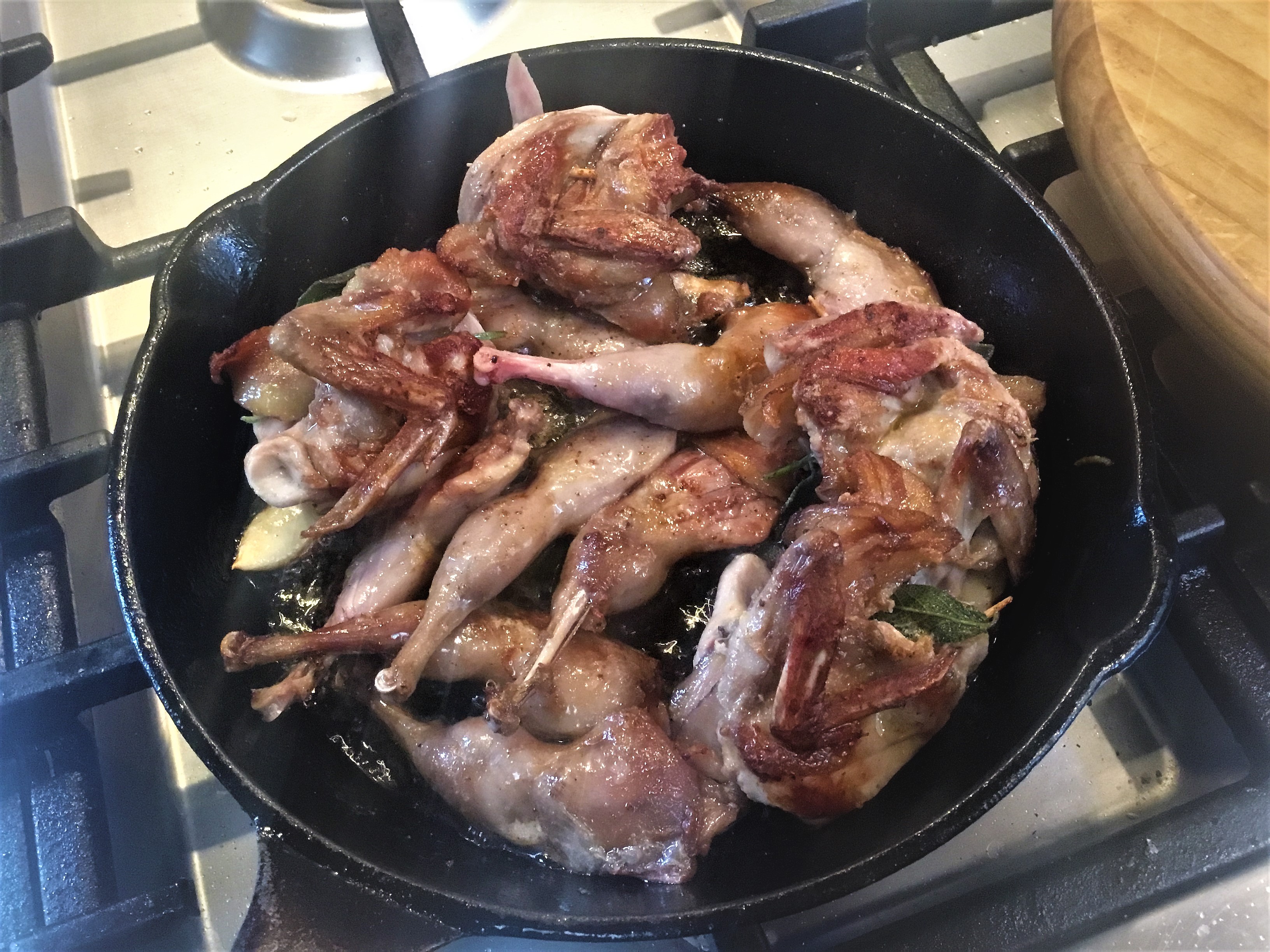
Mr BYF regularly has to cull young male quail. They are tender and very tasty without adding any flavouring to the meat. Mrs BYF tried something new and it is good enough to share.
4 Very young (seven weeks old) fresh cleaned and deboned quails. Salted a few hours before cooking
2 Tablespoons of butter
2 Cloves of crushed garlic
4 Large fresh sage leaves
4 Strips of pancetta (bacon can do)
Pepper
Extra salt if needed as the pancetta is slightly salty
Stuff a sage leaf and a strip of pancetta into the body cavity and close with a toothpick. Add pepper to taste. Use a pan that fits all the stuffed birds all in one layer, melt the butter and fry the garlic until light brown. Add the quails to the pan and fry for about 5 min per side until golden brown.
We served the dish with fresh salad from the garden and roasted new potatoes from our neighbour’s garden. For vegetables we had a friend of a friend’s pumpkin, roasted with garlic, cumin and chilli.
ENJOY and do not forget a glass of home made red wine !!!
A friend presented us with two lovely pheasants, not the normal, much appreciated rabbit. Mrs BYF found a recipe for chestnut dumplings, and decided to make a stew and use some of the foraged chestnuts to compliment the dish
RECIPE
2 pheasants – Plucked and cleaned. Keep the livers, hearts and giblets
150ml stock – Any kind will do but Mr BYF automatically makes stock out of the wings and backbone of any bird, so we used pheasant stock
150g butter
a few pinches of salt to taste
Black pepper to taste
4 cloves of garlic crushed
100ml white wine. I suppose you could use red or even Madeira. I used dry white because, again, the chestnuts are quite sweet.
Cut the pheasant in to serving portions. Season the meat, salting it well. The seasoning should ideally happen a few hours before cooking. In a lidded pan that will take all the pieces of the birds in a single layer (use two pans if needed) brown the pieces. Remove the pieces from the pan and keep them aside. Sauté the garlic in butter until fragrant and brown. Add the livers, hearts and finely sliced giblets and sauté until brown, remove from pan and keep aside with the rest of the bird. Turn the heat to high and deglaze the pan with the wine, boil for a few minutes. Return the pheasant to the pan and add the stock. Cover the pan and cook for 40 minutes, adding a bit of stock as needed.
Heat the oven to 180 C
Chestnut Dumplings
100g plain flour
50g butter
Pinch of salt
25g cooked and peeled chestnuts, mashed
Whisk the flour and salt together to mix. Rub the butter in to the flour until fine crumbs form. Rub the chestnuts into the crumbs and mix until combined. Roll small dumplings the size of a large walnut. Add more stock to the birds if the liquid has evaporated to make sauce. Put the dumplings on top of the meat, pushing them under the sauce. Cover the pan tightly and cook for 30 min without lifting the lid.
We served the pheasant with polenta
ENJOY and do not forget a good glass of homemade RED
A dear friend gave us four abalones. We have not often cooked this before but we knew that we could not mess this up. Many videos were watched, shockingly some recipes included so many additives that one could replace the abalone with just about anything and not notice. Mrs BYF’s simple effort was absolutely delicious so here is the recipe:
Firstly, lock all the doors so no one can come in and share. Then tenderise the abalone by beating it with as mallet or, go the dramatic African way by tying it in a tea towel and smashing it repeatedly on the back step. Both ways worked beautifully.
Recipe
Heat a large cast iron skillet
4 Abalones tenderised and sliced in 2cm thick slices
150g Butter
2 Cloves garlic chopped
Handful of parsley
No salt was needed, so don’t be tempted lest the abalone goes tough
Melt the butter in the hot pan and add the garlic, then the abalone. Stir the abalone turning it over a few times and fry for about 2 minutes. The result was lovely soft abalone that tasted of the sea. We like raw fish so if some of it was a bit underdone we were happy. We ate it sprinkled with parsley, on saffron rice and with a fresh salad from the garden.
We opened a bottle (or two) of wonderful Prosecco for the occasion. After lunch we had to have a nap.