LA PORCHETTA

La Porchetta is a popular pork roast in Italy and one I enjoy doing every so often
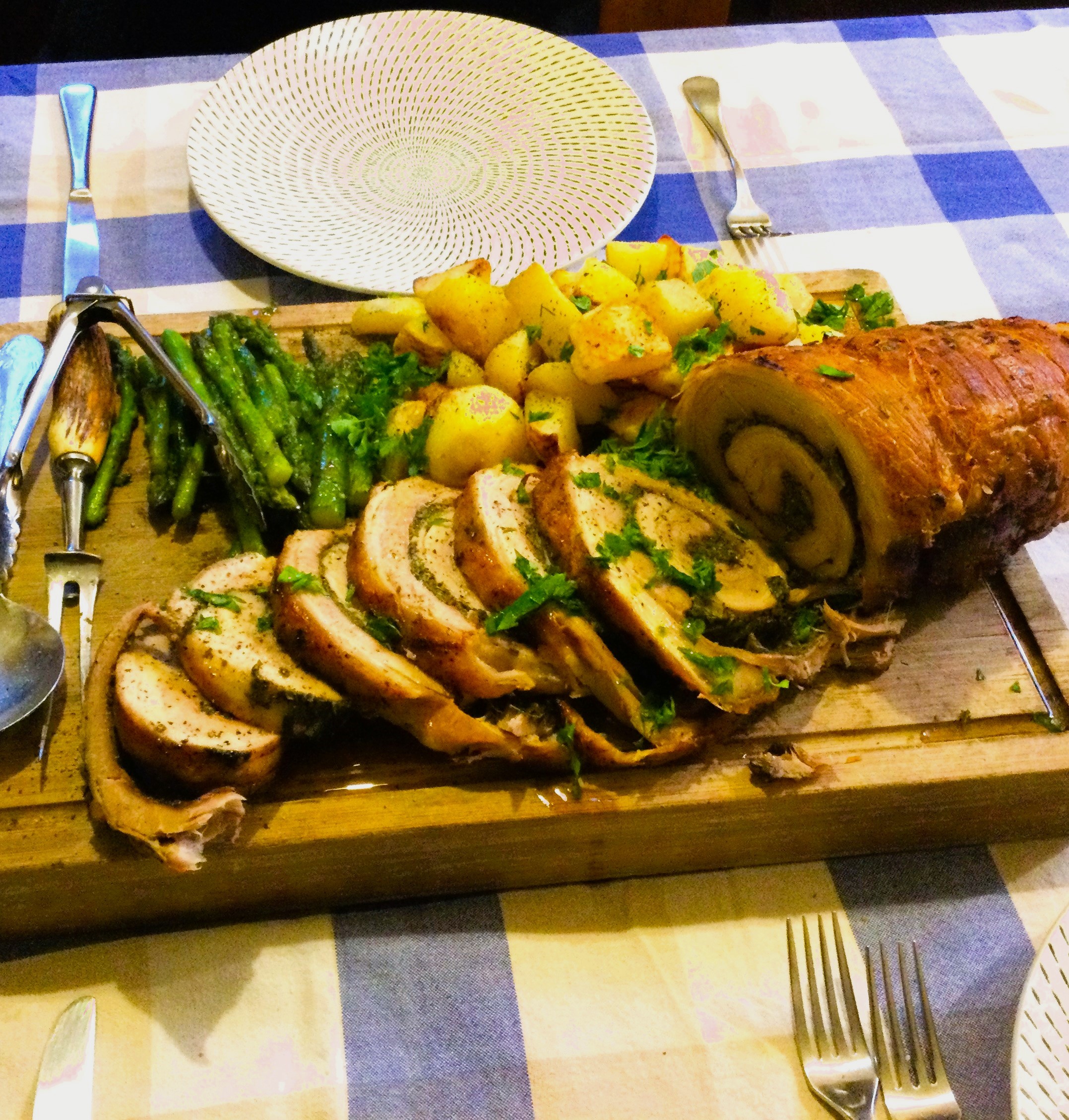
RECIPE

Use a whole pork belly, the easiest way to make a good Porchetta. Use one with either skin off or on, whatever your preference is.

Mix a handful each of chopped Rosemary and Parsley

Half a handful of chopped fresh wild Fennel fonts and seeds

6 – 8 chopped Cloves of Garlic

Salt and Pepper to taste

Chilli if you like

Mix all the above ingredients and layer it evenly on top of the flat pork belly. Roll it tightly and bind well with string and then slip it into tight fitting netting

Cover with baking paper and then with aluminium foil. Make sure the foil is well closed, including the ends. Poke holes through the wrapping which will allow he fat to escape when roasting.
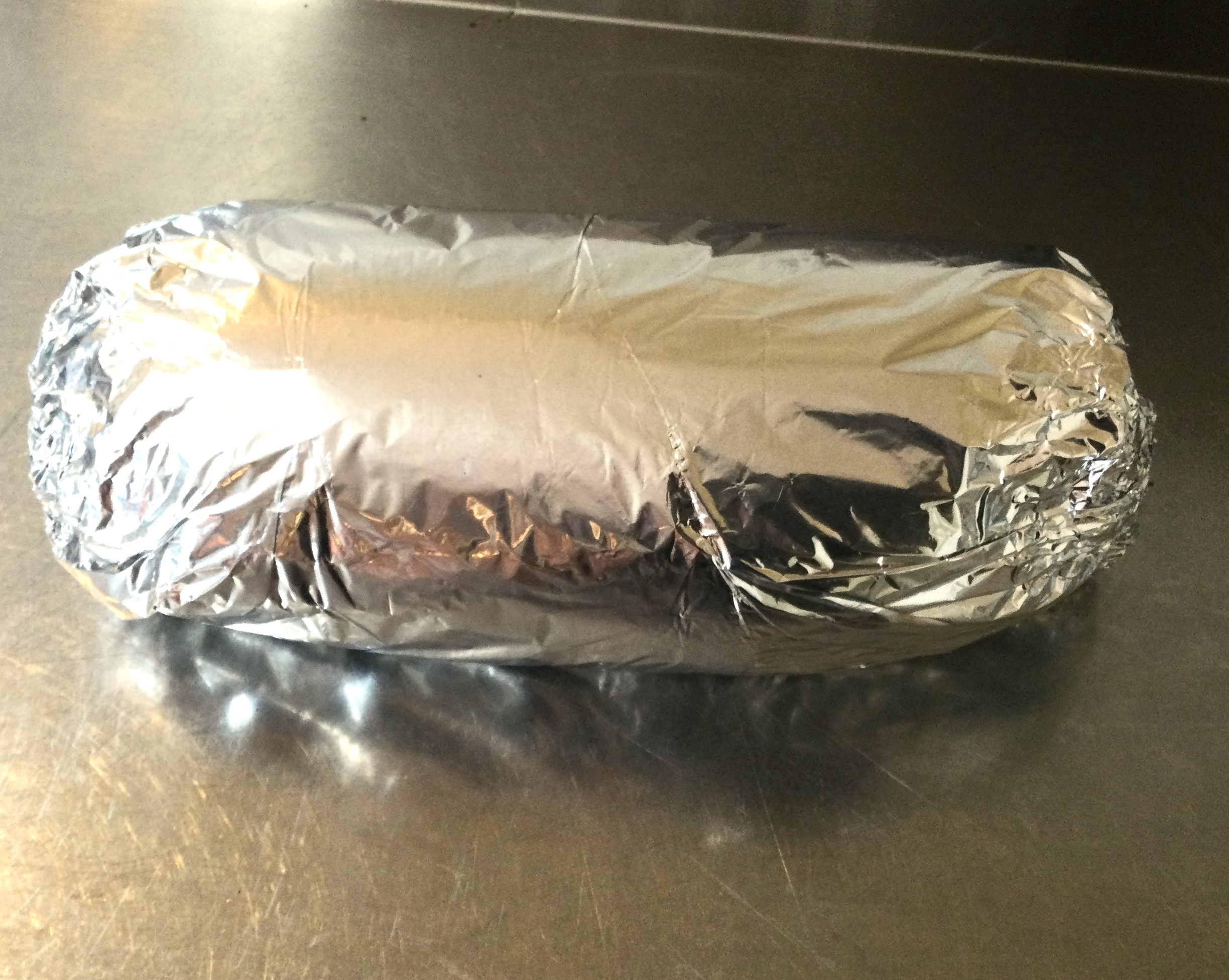
Lay the wrapped Porchetta on a wire rack which sits over a oven pan. Put water in the pan, but it should not touch the Porchetta. Place this into a pre heated oven at 250 C and bake for 3 hours without touching the Porchetta, but make sure there is always water in the tray

After three hours, remove the Porchetta from the oven and carefully unwrap it and cut and remove the strings and netting

Now place it back in the preheated oven at 250C with the oven’s airflow turned on. Watch it carefully forming a crust / crackling which should take 10 – 15 minutes. Turn it over and do the same on the other side.

You can either use a belly with the skin removed which obviously will not have the skin crackling, or you can use it with the skin on, which will give you wonderful crackling

ENJOY !!!

Do not forget a few glasses of home made RED WINE to wash it all down!!

DAILY BREAD

This image has an empty alt attribute; its file name is 2023-09-27-home-bread.jpg

The recipe that my family likes most is a combination of organic Wholemeal Wheat Flour and ordinary White Sifted Wheat Flour. Even though I mill both these products, I only sell the Organic Wholemeal Wheat Flour as the white sifted is too slow and laborious to make for selling and there are many good nutritious and healthy recipes for 100 % Wholemeal Wheat Flour 

350 g Wholemeal Wheat Flour

350 g White Sifted Wheat Flour

Mix well

or

What I use for every day bread

100 g Coarse Semolina

300 g Wholmeal Wheat Flour

300 g White Sifted Flour

Mix well

Take 450 g Luke Warm water and dissolve 25 g SUREBAKE Yeast and 20 g honey or molasses or sugar in it – mix well with a fork. Let it proof in a warm place for about 10 minutes

Mix about 25% of the flour mix into the water and yeast mixture and mix well with a fork. Let it proof in a warm place until double in size – about 90 minute depending on temperature

Now mix all the flour into the water and yeast mixture and start kneading – either by hand or machine, whichever you prefer. While kneading add 10 g salt and 50 ml olive oil. Knead VERY WELL until very elastic – add more flour or water to get the consistency just right (silky soft and shiny), even though in most cases it should not be required. If mixing by machine, knead for about 7 – 8 minutes. If kneading by hand it will take longer depending on your ability

Oil two standard size bread pans and put the kneaded dough into the pans, score the dough with a sharp knife and sprinkle with flour or brush with water or brush with egg

Let it proof until 3 times the size – about 2 -3 hours depending on the temperature

Bake in oven at 225 C for 20 minutes, turn the pans and bake at 190 C for 20 minutes, turn the pans and bake at 190 C (bottom element only this time) for another 10 minutes (adjust the times that suit your specific oven)

ENJOY !!!!

BRESAOLA

Bresaola and Biltong are the two pure beef Salumi I regularly make. Winter is always busy, getting enough Salumi processed for the rest of the year. This week I made both Bresaola and Biltong

RECIPE

Get yourself a good quality Beef Silverside and cut decent chunks of steaks for the Bresaola (About 250 mm long and 100 mm in diameter). Remove all sinew and fat and leave clean cut surfaces on all sides. Dry the meat well.

Mix the following spices together (Quantities for 1 Kg of meat)

28 g Salt

7 g Brown Sugar

3 Juniper Berries – Crushed

1 Glove – Crushed

2 Cloves of Garlic – Finely chopped

2 Dry Bay Leave – Crushed

3 g Black Pepper – Ground

1 g Nutmeg – Grated

1 g Cinnamon – Crushed

Mix the spices well and rub thoroughly into the meat. Place the spiced meat covered in the fridge for 5 days and turn and rub twice daily. You can also use a food bag for this as it allows for easy mixing and the meat is always covered.

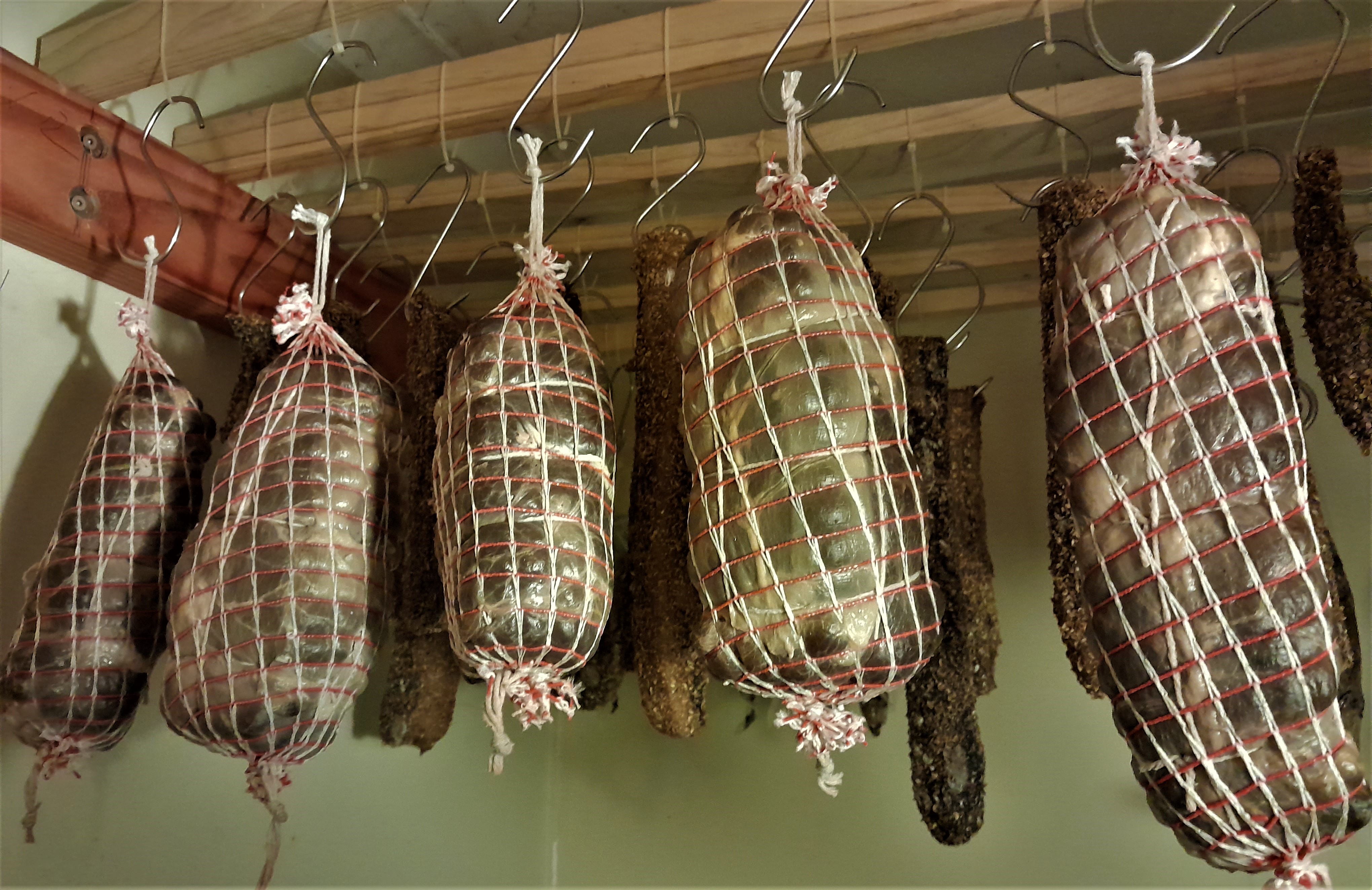
After 5 days, remove the meat from the fridge and wash thoroughly in cold running water and then rinse with a good white wine, then dry the meat properly – The photo above is at this stage of the processing.

Now comes the fun part. Wrap the meat in natural sheep casings. If you are lucky enough, you may find a large enough Salame casing and you can just slip it inside, provided it is a tight fit. I cut the casings open and carefully wrap it around the meat and tie it down with string. Make sure there are no exposed meat. You can now either tie it down further or slip it into a stretchable meat netting, which I did.

Prick very well on all sides and hang the Bresaola in a cool place of about 15 C for 3 days and then hang inside the fridge until ready to use, which may be about 100 days. I am fortunate that my pantry is well ventilated and always a couple degrees lower than the ambient temperature and I hang my Bresaola there and not wasting fridge space. Dunedin being cool during June, July and August and my well ventilated pantry with average temperatures of less than 10 C at all the times, which is ideal, makes the perfect curing house. As my curing temperatures are about 6 C, my Salumi cures a bit faster than in the fridge. Make sure you do not have wind (draft) over the meat as it will cause case drying and rotting in the core. Well ventilated without drafts is very important.

I made 5 Bresaola, starting with 11 Kg meat in total and after cleaning the 5 was 7Kg in total. The 4 Kg meat, not used for Bresaola, was well used for minced meat and the sinew, excess fat and poorer quality cuts made wonderful beef stock

Bresaola is more than often part of my antipasto platters and goes down very well with a glass of HOME MADE RED WINE !! ENJOY !!

HOW DO I SEX MY COTURNIX QUAILS

A question that I often get is “How do I sex my quails?”

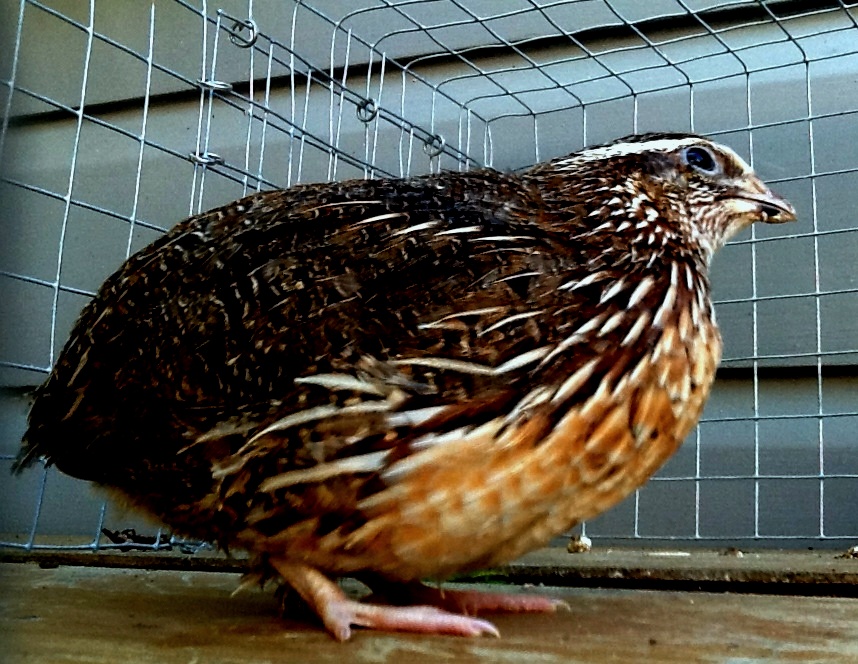
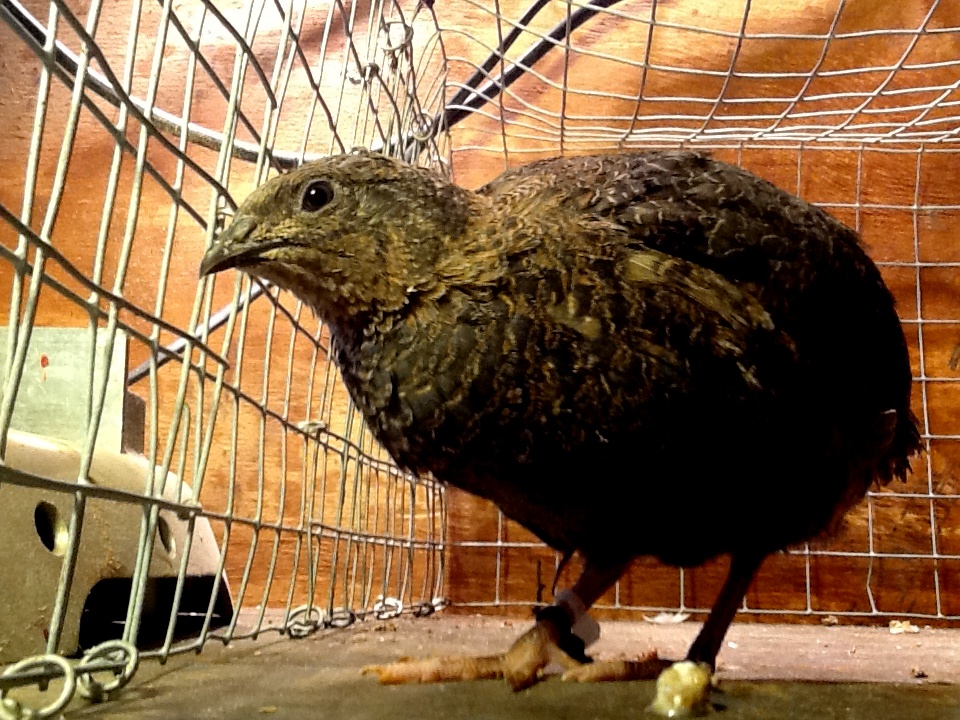
The easiest is that the male quails crow and the females do not. Should your quails be well housed and fed, the males will start crowing at about 3 weeks of age. I catch the crowing males and place them in a different brooder and come the time that they can go out to the breeding cages, or be sold, at 6 – 7 weeks of age, they are all sexed. Mature male quails only crow when sexually active during the breeding season and not so much when molting and not producing. Secondly the Pharoah colour and Italian colour can be feather sexed in that the males have brown feathers on the chest where the females have black spotted chests. The problem comes with the Tibetan colour and White colour where you cannot feather sex them as males and females look alike. All birds can be vent sexed though. The cloaca opening in the female is larger and more plump. In the males the cloaca opening is more tight and they also have a red swollen gland on the top end of the cloaca opening and when pressed a white substance appears, which is lubricant and not semen. The females do not have this gland. This gland in the males is also very depressed when not in the breeding cycle and it is more difficult to distinguish then.

Italian Coturnix coturnix Male with brown feathers on the chest

Italian Coturnix coturnix Female with black spotted chest feathers

Pharoah Coturnix coturnix Male with brown chest feathers

Pharoah Coturnix coturnix Female with black spotted chest feathers

Tibetan Coturnix coturnix – Males and Females look alike

White Coturnix coturnix – Males and Females look alike