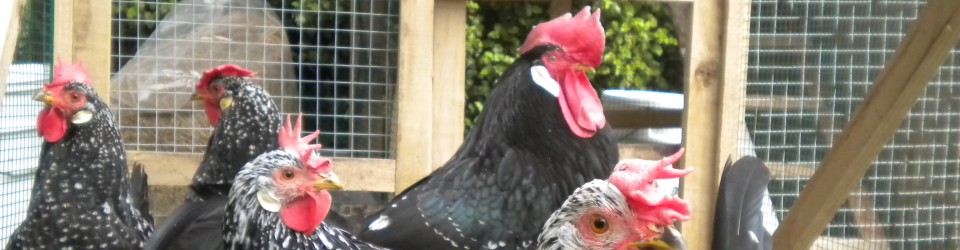
This short reply was written by me as result of a Facebook discussion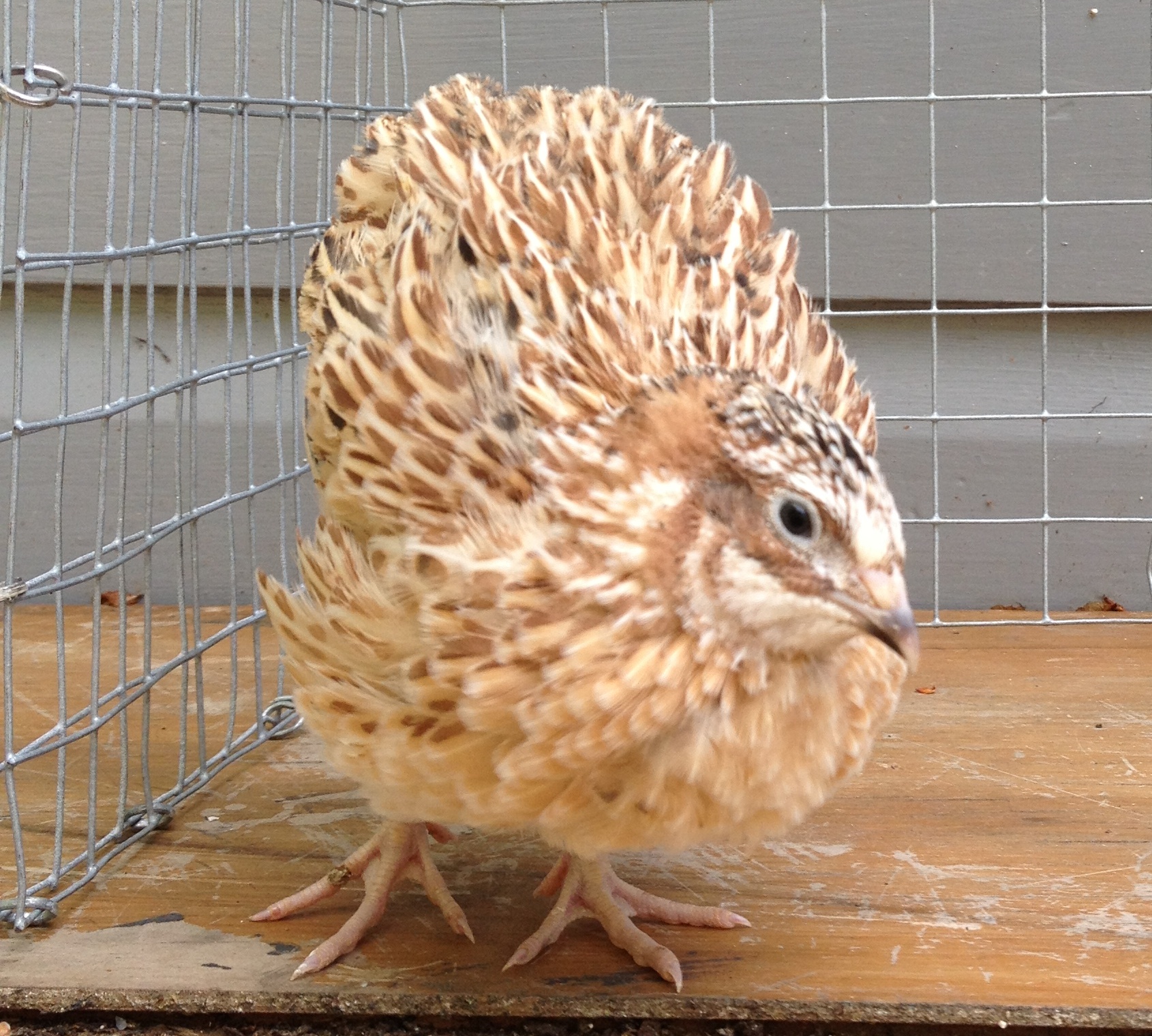 ll my life, not only in breeding my own animals but also when involved in establishing new cattle and horse breeds in the past, as well as advising Governments, large International Organisations and many thousands of Farmers around the world. I breed with poultry as they come out of the egg, without having to interfere with them to be able to survive and breed. I select and cull heavily, especially when the gene pool is as limited as it is in New Zealand for the breeds I am interested in. As for the Lethal homozygous Y gene associated with Golden Italian Quails, I failed to have read any article reporting hatchability between strains under the same commercial conditions and report on comparable results, nor have I found any reputable body advising to never breed Golden Quails to Golden Quails. In my own case, over a period of three months, using 480 quail hatching eggs (120 from each of the four strains I breed at present – All purebred) I quote the following results for animals alive after 24 hours of terminating the hatch : Golden Italian – 74.3 % (Variation 66.7 % to 83.1 %) ; Tibetan – 83.2 % (Variation 79.1 % – 90.0 %) ; Pharoah 75.0% (Variation 73.3 % – 76.7 %) and White – 68.9 % (Variation 56.7 % – 76.7%). I do not for one moment doubt the work that has been done in identifying and mapping the genetics of the Golden Italian Quail, but clearly there is more to it than say you have 25% embryo mortality and that is it. As an example there exist a plumage color mutation Yt2 that is dominant over the yellow (Y) gene and produce fawn or yellow birds almost exactly like the heterezygous Y, but is not lethal. There are also many other malformations and abnormalities controlled by one or few genes, as well as many other lethal genes in Quails. I am aware of a number of commercial operations using purebred Golden Italian strains of Coturnix coturnix japonica with great success. There are also some reports quoting 100% hatchability in purebred Golden Italian strains of quail. Any poultry will experience embryo mortality at some level and the results I have achieved with Golden Italians prove that I am on the right track and there is no real difference at present with the strains available to me in New Zealand. Inbreeding, indiscriminate breeding and failure to identify and eliminate hereditary defects are doing the damage to poultry breeds in New Zealand. I am also not against breeding fancy breeds – it is a lot of fun, but do it sensibly.
Monthly Archives: January 2014
One more thing to do with Beetroot Tops
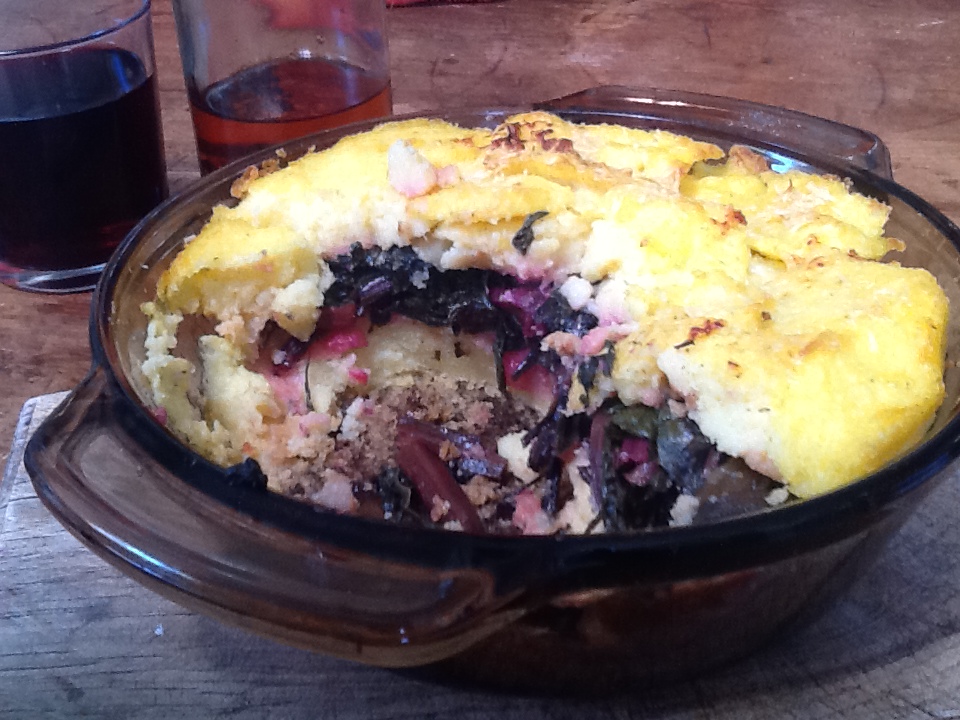
I love greens and have no problem with eating vegetarian meals, providing I have a bit of Parmigiano to sprinkle over the top. This recipe has it all, as far as I am concerned. I have polenta, bechamel sauce and beetroot leaves fresh from my garden. Using my beetroot and turnips as dual purpose plants give me great satisfaction.
Baked Beetroot Tops and Polenta
Pre heat the oven to 200 deg
Prepare and cook the beetroot leaves. See link
Cook the polenta. see link
Make the bechamel sauce according to your favourite recipe.
While still warm, layer the bottom of an ovenproof dish with polenta. Sprinkle parmigiano liberally. Spread the greens over the polenta and top with bechamel sauce. Repeat the layers until the dish is full. Drizzle sparingly with olive oil and sprinkle with more parmigiano.
Bake in the oven for 30 min until the top is golden and crispy. Serve immediately.
Raw Milk for Cheese Making
MESSING WITH A HEN’S HEAD
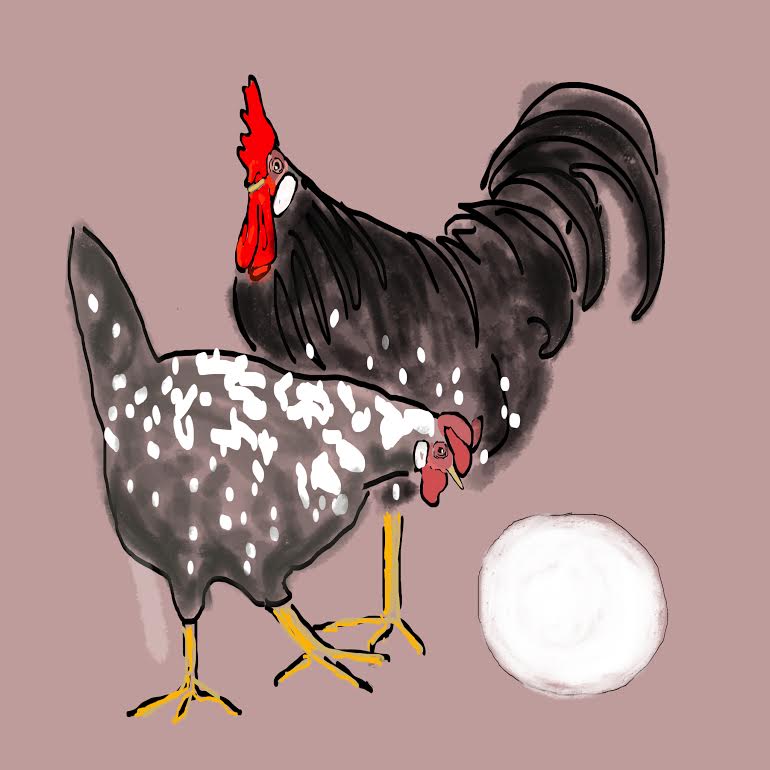
” Off course he is not going to replace you with an ostrich. Besides, that is a Puffball mushroom, not an egg”
Turnip Leaves Pasta Sauce (you will never throw the leaves out again)
I did not take a picture but before you throw out your turnip leaves, try this:
Spaghetti con le Cime di Rapa
800g Fresh turnip leaves washed
6 Anchovie fillets (the salty ones packed in oil) use more if you love anchovie
2 Cloves of Garlic
i pinch of dried chili or a bit of fresh, not too hot
Dash of olive oil
Blanch the leaves in boiling salted water until the leaves have wilted. Chop the leaves and stems in to bite sized pieces. Drop the pasta in to the pot of boiling salted water. Start the sauce by putting the olive oil in to a pan big enough to hold the sauce and pasta, add the chili and garlic . When the garlic is soft add the anchovies and stir until dissolved. Add the leaves, stir once or twice while cooking – about 5 minutes should do it. When the pasta is al dente (not sloppy) add the pasta to the sauce in the pan and stir once. Serve immediately with a bit of Parmigiano over the top.
We also eat this sauce as a side with meat.
 Back Yard Farmer