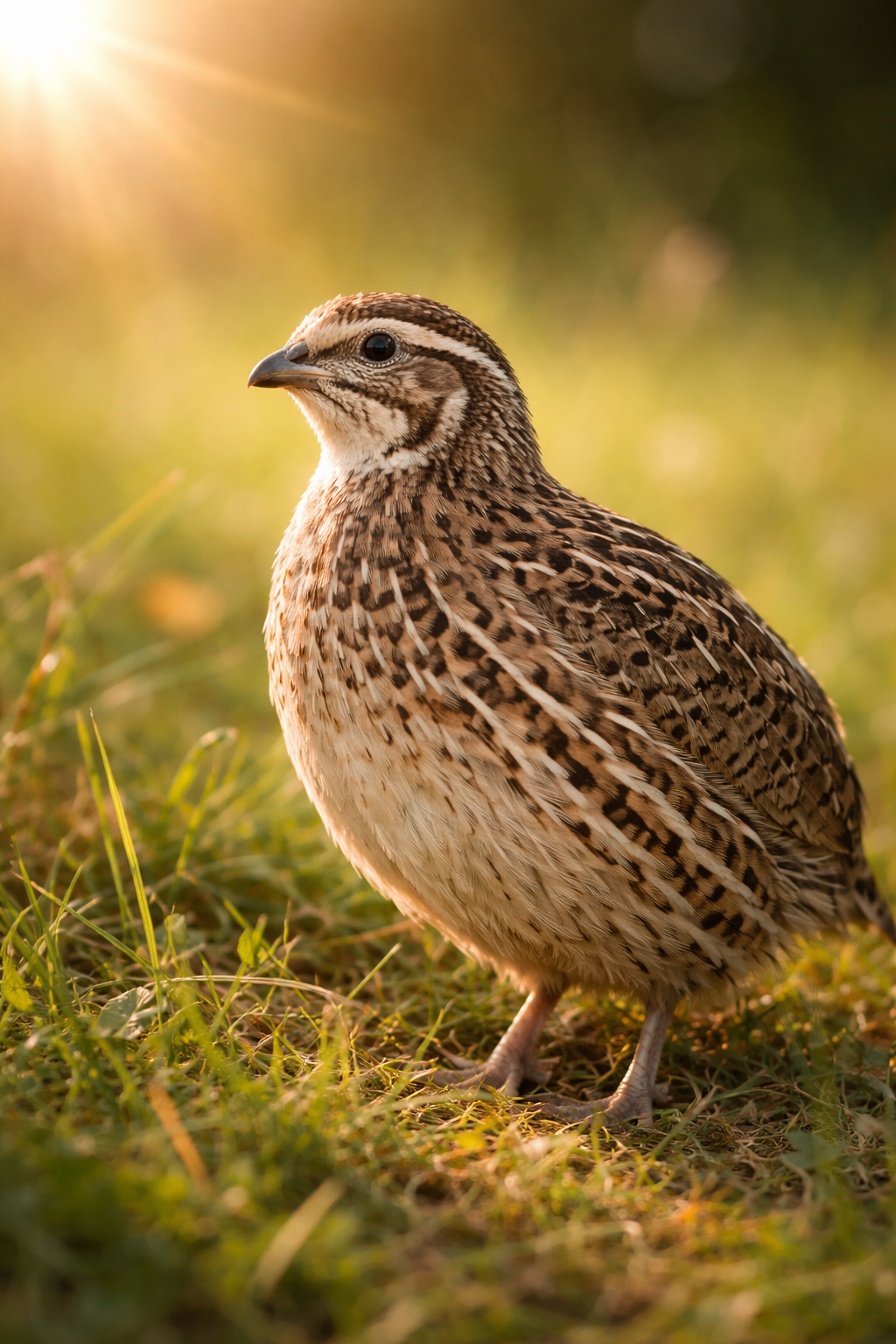
To maximise egg production in Coturnix coturnix Quails from 5 weeks of age through peak and sustained lay, lighting must be managed as a structured, consistent program – not left to chance
From 5 weeks of age, just prior to sexual maturity (first eggs typically appear at 6–8 weeks), gradually increase total day length to 15 – 16 hours per day. Extend light slowly, no more than 60 minutes per week, using timer-controlled supplemental lighting. Maintain moderate, even intensity at bird level (approximately 10 – 15 lux) – excessively bright lighting can trigger stress and aggression
Combine natural daylight with artificial lighting strategically. As natural day length changes seasonally, artificial lighting must be adjusted so total daily exposure stay on 16 hours. During transitional periods, light may need to be added both before sunrise and after sunset to “cap” the day length at a consistent 15 – 16 hours without overshooting as daylight expands.
Key principles for maximum production:
- Maintain a consistent 15 – 16 hours total light (natural + artificial)
- Never exceed 16 hours per day
- Provide at least 8 hours of uninterrupted darkness for proper rest and hormonal balance
- Never reduce day length once birds are in production, as this can trigger a drop in lay or induce molt
- Adjust lighting gradually as seasons change
- Use reliable timers to prevent sudden fluctuations
A stable, well-managed photoperiod stimulates ovarian development, supports early peak production, and sustains annual outputs of approximately 200–300 eggs per hen. Consistency in timing, intensity, and seasonal adjustment is the foundation of long-term, high-level performance
Alternatively, if you prefer, you can leave your quails to follow the natural seasons, but expect seasonal drops in laying during shorter winter days.
 Back Yard Farmer
No comments yet.