Micro Nutrient Supplementation

I thought it appropriate to post some conversation about this topic I have had with a client

2014-03-16 - Street Accident

Hi there,

I’m new to your page and website but am excited to read all about your Vitamin, Mineral, Amino Acid and Enzyme Pre-Mixes for chickens.
I have six chickens I’ve had since one day old with their Mum, (there was 11 but now minus the rosters) they have not started laying yet, they must be six months now and I’m wondering if I’m just not giving them the right balance of feed. The Mum started laying again awhile back but then stopped.
I like to try to keep it organic and gm free, could you please advise if your mixes are natural and where you source everything from??
And also I’m unsure if i buy from you what and how much i should get, my chickens have not been eating much feed but rather enjoying free ranging.
How much for six chickens and to be sent to whakatane please and thank you for your time.
Dear Client
Thanks for the Email. As you can see from the analyses of the product we supply a wide range of micro nutrients in the product. These are formulated and mixed according to specifications for the specific animal and production stage, by using a combination of up to thirty different ingredients (raw materials). These ingredients are sourced from all over the world and some, like the methionine and lysine are synthetic. I also cannot specify that these are organic or non GMO. Most chickens would at present not be in production as result of the short day light lengths and will come into production after 21 June when the days are getting longer (day length being the stimulus for the birds to either produce eggs or molt and stop laying). Should you want to use the product, it has to be mixed with other food the chickens eat on a regular basis, such as a laying mash or pellet, as it is not water soluble and the birds would not consume it on its own. Mixing instructions could be provided at the appropriate time. Inclusion rates should be such that each mature bird takes about 2 g per day to provide for all the mikro nutrients required.  Whatever they then consume of these while free ranging is a bonus and will keep them more healthy – over consumption of these mikro nutrients is very rare, if not impossible. It is off coarse difficult to balance the diets of free ranging animals — the only solution is to endeavor to provide what you suspect they might be rquiring – in free range chickens probably first and foreost is Ca, P and Mg and thereafter some quality mikro nutrients. This will again depend on how “free range” your animals rally are and what is their available for them to eat.

R.I.P Alvin

2014-02-08 - Alvin

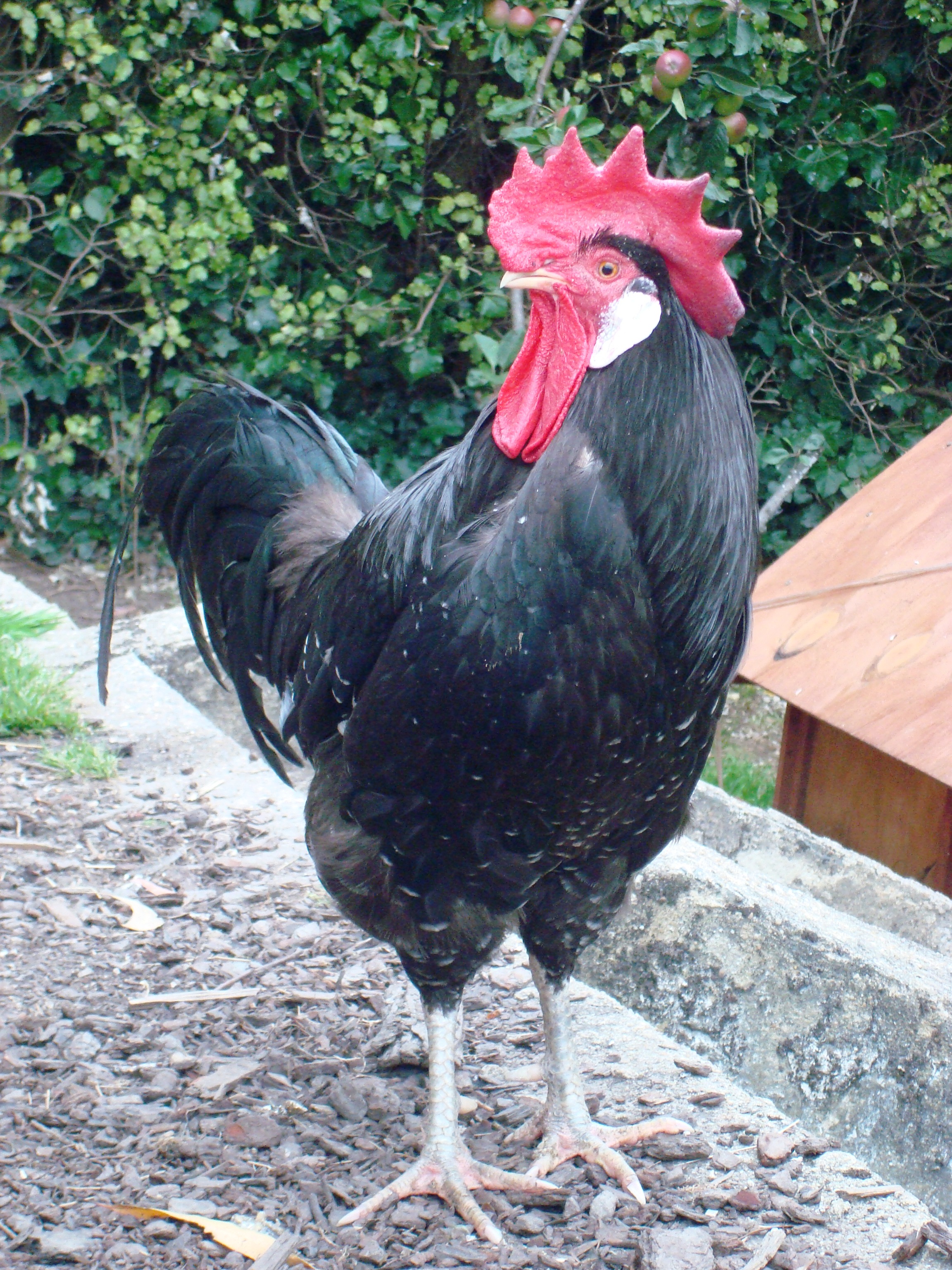
The Assistant Manager of the Backyard, the rooster named Alvin,  passed away today.  He was a great representative of the Ancona breed, and, above all he had personality and presence. He was like a friend and kept  me company as I toiled in the yard. I tried everything I could to save him – regular worming, the best food, fresh water, warm house, company and ……free range access to the garden during the day.  The last part is what did him in,  I think.  Alvin loved picking up every little thing he saw on the ground, working over the garden from end to end. In my efforts to establish a vegetable garden, turning over the soil to work in compost and lime as well as manure and I keep finding rubbish – bottles with dubious contents still in them, plastic, strange substances and whatnot. I cart everything away on discovery but that has not helped.

I have a lovely ngaia tree in the garden and know that the leaves are poisonous – that probably means that the berries and flowers are, too. I have not observed Alvin eating those, though. Some weeds are a worry and I shall have to check with neighbours to see which are poisonous. I still want to free range my chickens but fear for their safety.


Uova alla Fiorentina (Eggs Fiorentina)

2016-02-20 - Fiorentino

Breakfast cannot be more enjoyable than with fresh home grown free range eggs and organic spinach out of the garden. I am lucky enough to have a combination of quail and chicken eggs for breakfast.

Wash  two large bunches of spinach (beetroot or radish tops work equally well). Do not add water, the water clinging to the leaves from the washing will be enough. After a while press as much water out of the spinach as you can and put aside.  Add one tablespoon of extra virgin olive oil and one tablespoon of butter to a pan. Also add three large cloves of garlic and one small chili finely chopped, simmer for about two minutes on low heat.  Add the spinach to the pan and season with  salt and pepper to taste. Now break in as many eggs as required and cook until eggs are done to your liking. You can cover the pan for a while when cooking if you want the eggs hard. Sprinkle with grated parmigiano, black pepper, add a dash of olive oil and serve with home made bread.

ENJOY!!!


Coratella

2015-11-27 - Coratella

Coratella is the Italian name for all the organs in the thoracic (chest cavity) and the dish includes the heart, lungs, liver, spleen and kidneys of either a young lamb, chicken or rabbit. We were fortunate to obtain a suckling Boerbok lamb from a farmer close to Dunedin and I went to the farm and slaughtered it myself, hence had access to all the organs normally discarded and seldom eaten in New Zealand. Coratella is also the name of the resulting dish.

Clean the organs making sure that all the blood is washed off, then cut it into cubes about 2 cm square. Dice two onions and two cloves of garlic and fry in some butter and olive oil until well soft. Ad all the organs, except the liver, and fry well over medium to high heat. While frying, ad a chopped red chili, two bay leaves, salt and pepper. When the meat is almost done ad the liver and turn the heat to high. Ad a handful of chopped parsley and fry for three to four minutes until livers are done, but still pink on the inside. Ad one glass of dry white wine and let it evaporate. Serve immediately with polenta.

Do not forget the good home made dry red wine!

ENJOY!!

Cardi alla Parmigiana – Back Yard Farmer’s Lunch

2015-08-10 - Farmers Lunch 1


Today’s all home produced lunch was beautiful!. Firstly the Ancona cockerel that did not make the breeding pens was slaughtered at 12 weeks of age. At this young age the meat is soft and tender, but not as tasty as an old hen, which I prefer for slow cooked poultry dishes such as “Pollo alla cacciatora in bianco”. Nevertheless, it was very good. I vacuum seal the chickens (and all other animals) when slaughtered and keep them in the fridge for some three to four weeks to age – never frozen. The organic carrots were from a friends garden and I wish that I could have claimed origin as they were so tasty. The cardoons were from my garden and they grow so well in Dunedin that the rabbits have a serving every day. Whatever is left over, we eat.

Cardi alla parmigiana went well with the chicken and carrots and of course some home brewed wine. I am drinking from a damigiana of cherry wine which is dry and fruity and a good compliment to any meal. The only criticism may be that it lacks some body, but all the other wonderful attributes overrides any shortcomings.  The wine of the house is not always perfect!

Cardoon Recipe

Select the biggest outside leaves of the cardoon and strip the leaves of the stem and use  a potato peeler to peel the strings from the outside, (almost like preparing celery)  of the stem.  Cook in salt water and the juice of one lemon until tender. Drain and set aside. Dip the dried cardoon in flour and egg and fry until golden in a bit of olive oil. Prepare bechamel sauce and arrange the cardoon pieces in a baking dish, ( I use individual serve cast iron pots)  cover with bechamel, parmigiano and cracked black pepper and repeat the layers until the dish is full. Place some butter pieces on top and bake in the oven at 180 C for 20 minutes.

Do not forget the wine.

ENJOY!!!