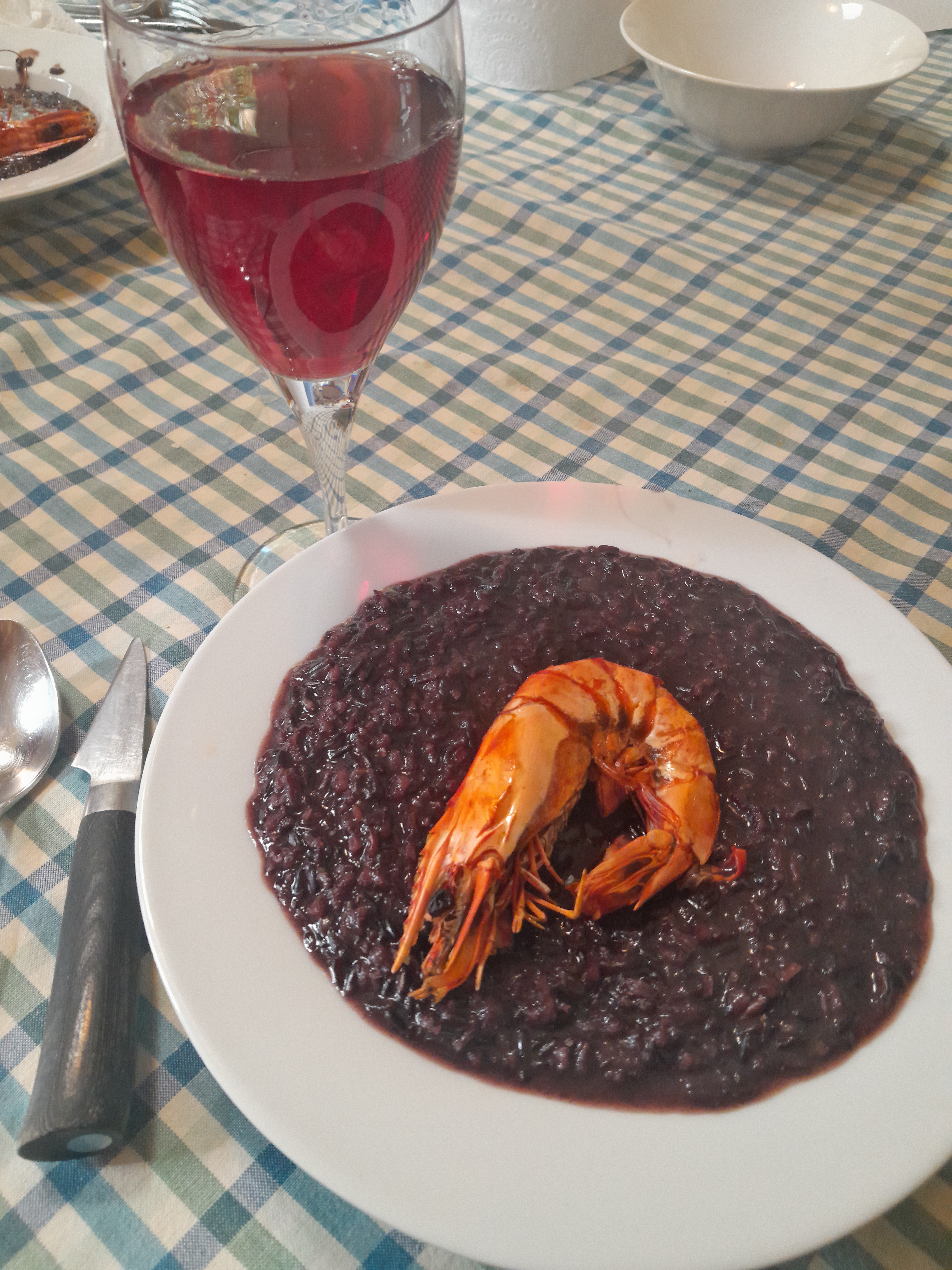
Riso Venere (Black Rice) con Gamberi alla Liguria

Liguria-Style Venere Black Rice with Prawns

As Lombardia (my region) does not have any sea access, we always look up to Luguria when it comes to seafood recipes. In Liguria, seafood is treated with great respect : simple preparation, excellent olive oil, fresh herbs, and bright citrus. This version reflects the coastal cooking of the Italian Riviera — clean, aromatic, and elegant, with no heavy sauces.

Ingredients (Serves 4)

  • 300 g Riso Venere (black rice)
  • 400 g raw prawns (preferably whole, shell-on for best flavour)
  • 3 tbsp high-quality Ligurian extra virgin olive oil
  • 1 clove garlic, lightly crushed
  • ½ glass dry white wine
  • Zest of 1 lemon
  • A few thin strips of lemon peel (no white pith)
  • Small handful fresh parsley, finely chopped
  • Small sprig fresh thyme or marjoram (optional but traditional)
  • Sea salt, to taste

Method

  1. Cook the rice
    Boil the Venere rice in abundant salted water according to package instructions (20–40 minutes). Drain well and spread on a tray briefly to steam off excess moisture.
  2. Prepare the prawns
    Peel and devein the prawns, keeping tails if desired. If using whole prawns, reserve shells to briefly flavour the oil.
  3. Infuse the oil
    Warm the olive oil in a wide pan over medium heat with the crushed garlic and (optionally) the prawn shells. Cook gently for 1–2 minutes to release flavour, then remove shells and garlic before they brown.
  4. Cook the prawns
    Increase heat to high, add the prawns, and sauté briefly — about 1–2 minutes per side.
  5. Deglaze
    Add the white wine and allow it to evaporate quickly, concentrating the flavour.
  6. Combine with rice
    Add the drained rice to the pan and toss gently so it absorbs the seafood juices and oil.
  7. Finish in the Ligurian style
    Remove from heat and add:
    • Lemon zest
    • Lemon peel strips
    • Chopped parsley
    • Thyme or marjoram (if using)
      Adjust salt and drizzle with a final thread of excellent olive oil.

To Serve

Serve warm — not hot — as is typical of Ligurian seafood rice dishes. The aroma of citrus, herbs, and the natural perfume of Venere rice should remain delicate and fresh.
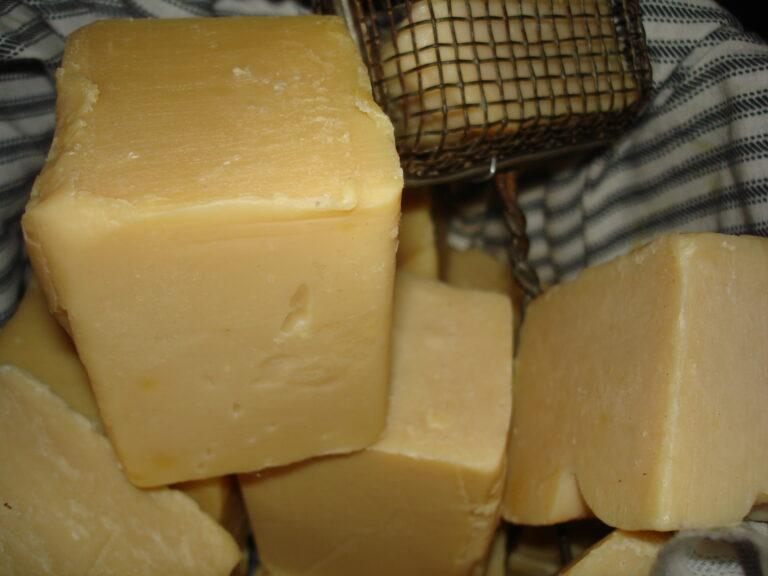
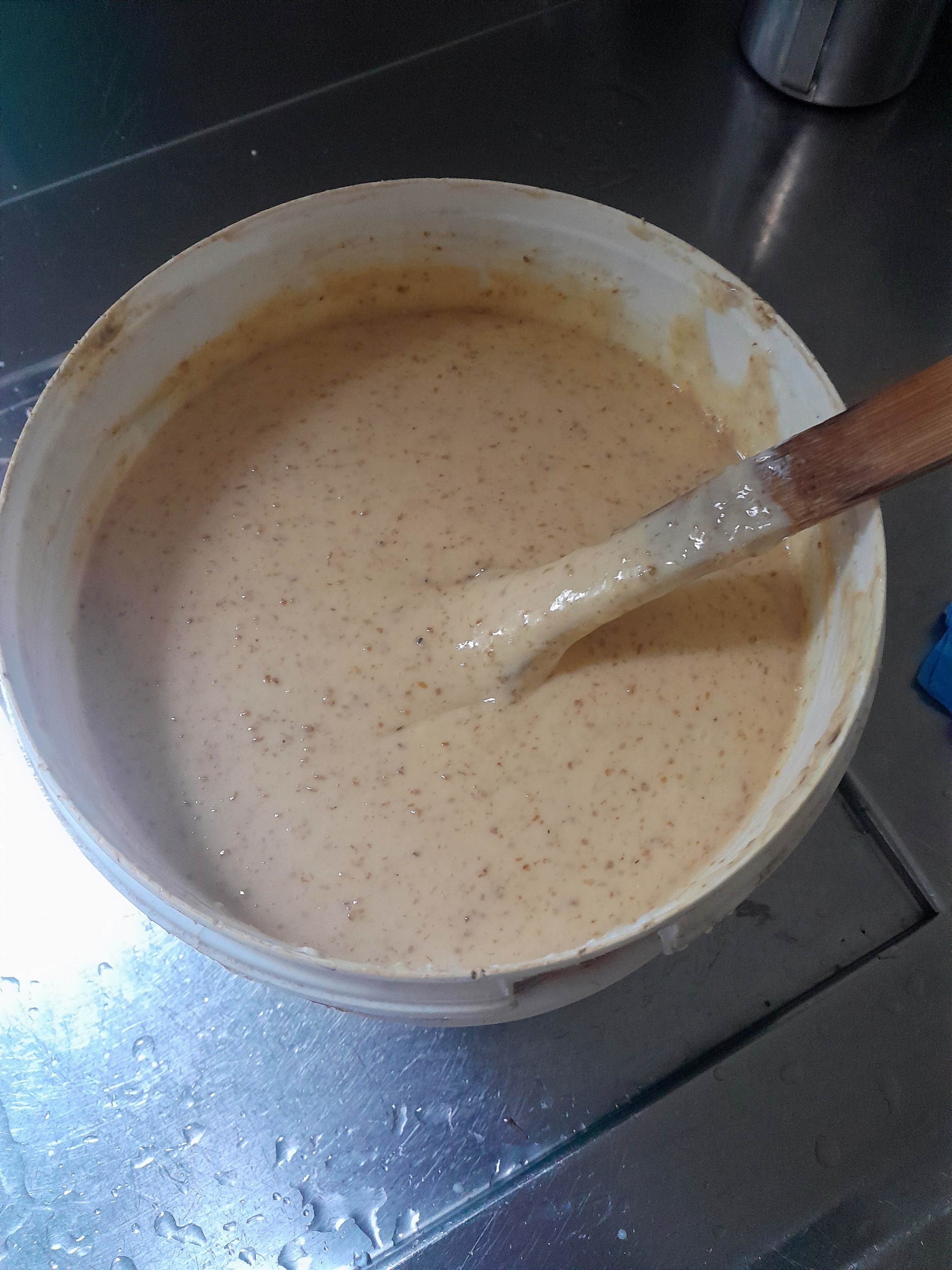
PIETRA DI SAPONE – A Rural Italian Recipe – Traditional Farmhouse Soap

Before supermarkets, detergents, and plastic bottles, farm households had to make do with what was on hand. Cleanliness was still important, but it was achieved with simple materials, practical knowledge, and a lot of experience.

In rural Italy, farmers and shepherds relied on a basic homemade soap often referred to as pietra di sapone — literally “soap stone”. It was a hard, plain soap made from animal fat and alkali, produced in large batches and used for everything from washing clothes to scrubbing floors and tools.

This was working soap, not luxury soap.

Soap Making on the Farm

Soap making was usually done once or twice a year, often after pig slaughtering, when large quantities of lard were available. Nothing was wasted. Fat that was unsuitable for eating became soap, and the end product was stored and used until the next batch was made.

There were many local variations, most passed on orally. The recipe recorded below, of which I made a 5 Kg batch today, was already in use by around 1870, and likely much earlier. It is one of the simplest and most economical versions.

The Traditional Base Recipe (Historical Record)

Ingredients

  • Pork lard – 5 litres
  • Water – 10 litres
  • Flour – 1 kg – (Use Whole Wheaa Flour for some texture and scrubbing effect – optional)
  • Caustic soda (sodium hydroxide) – 1 kg

Basic Equipment

  • Large plastic or wooden tub
  • Wooden or plastic stirring utensil
  • Protective gloves

Traditional Method (As Practised Historically)

The lard was first rendered until fully melted and clear. Water was placed in a large tub and the flour mixed in to form a smooth liquid with no lumps. The melted fat was then added and stirred until evenly combined.

Only at this stage was the caustic soda introduced. The mixture was stirred continuously until it thickened noticeably — what old soap makers recognised by eye and feel rather than measurement.

When ready, the soap was left undisturbed for several days to set.

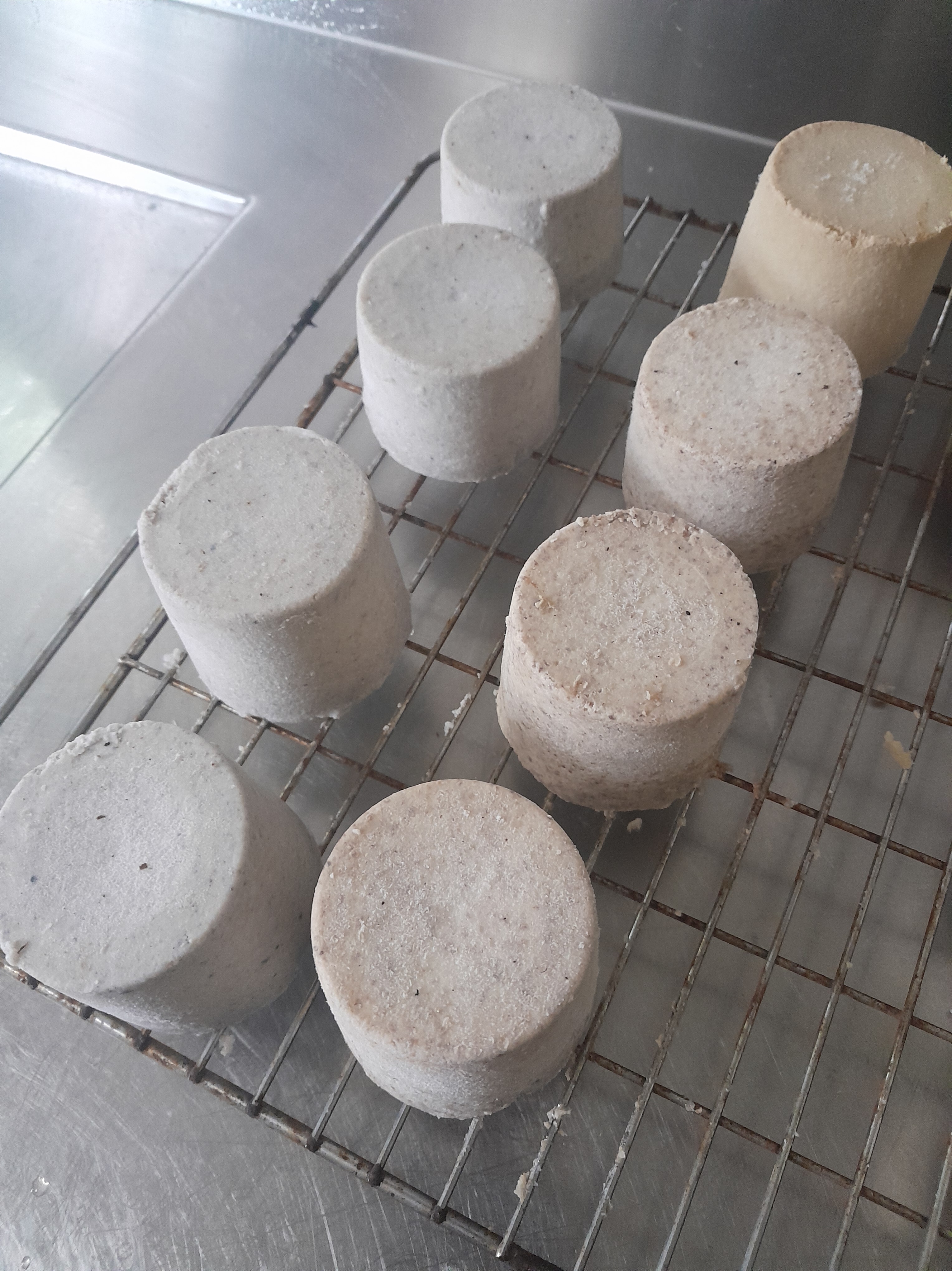
Once firm enough, the large block was turned out, cut into smaller pieces, and left to dry and harden in a well-ventilated place. Fresh soap was soft, almost butter-like, and became harder and more durable with time. Only useable after about 40 days.

What This Soap Was Used For

This was a strong, alkaline soap, intended mainly for :

  • Washing heavy work clothes
  • Cleaning floors and walls
  • Scrubbing tools, containers, and equipment

It was not designed for comfort or fragrance. Effectiveness mattered more than gentleness. Some families later added herbs or scents, but the basic soap remained plain and functional.

I also made some Extra Virgin Olive Oil Soaps today, adding coffee grind and mint leaves for a scrubbing effect and flavour

Why Flour Was Used

The addition of flour may seem odd today, but it made sense at the time. Flour helped thicken and stabilise the mixture in the absence of scales, thermometers, or chemical calculations. Soap making relied on observation, experience, and repetition rather than precision.

A Lesson in Self-Sufficiency

Recipes like this are a reminder of how farm households once operated. Everyday necessities were made at home, using local resources and practical knowledge built up over generations.

This old farmhouse soap is more than a cleaning product — it is a small example of rural independence, thrift, and ingenuity. Understanding how it was made helps us appreciate how closely farming life was tied to basic chemistry and hands-on skill.

Casatiello Napoletana (Stuffed Easter Bread)

1D3313DA-AA36-4986-8ACE-5A16CBC17B4D


There are many Easter Breads in Italy and each region has its own version, but most include whole, sometimes coloured, eggs. This specific recipe is from Napoli and is made in a pan with a hole in the middle, called a ruoto. The recipe is enough for two breads in 270 mm pans.

  • 800 g Bread Flour (Tipo 0)
  • 300 g  Water – luke warm
  • 5 g Honey or Molasses
  • 23 g Yeast – fresh
  • 500 g 1:1 Biga (Mother plant of yeast)
  • 100 ml Extra Virgin Olive Oil – plus extra to smear the pans
  • 20 g Salt
  • 50 g Salami –  about 5 mm cubed
  • 50 g Pancetta – about 5 mm cubed
  • 50 g Cheese  – any melting mild cheese of your choice – about 5 mm cubed
  • 50 g Parmigiano or Grana Padana Cheese – about 5 mm cubed
  • 12 Quail eggs – fresh – Plus two to glaze the bread

Mix the honey, water and yeast and let it stand for 5 minutes. Now mix in the flour, biga, oil and salt and knead well. Let it proof until at least double in size, then knead briefly again. Divide the dough in two, but keep about 50 g to make strips to secure the eggs,  and roll each into a square of about 300 mm. Spread all the cheeses and meat on the squares and roll up. Place each roll in a well smeared pan in such a way that it fills the entire base of the pan. Now place the whole eggs evenly on the breads and secure each with two thin strips of dough. Proof until at least double in size. Glaze the top of the breads with beaten egg and bake at 220 C for 13 minutes. Turn the pans around and bake for another 20 minutes at 190 C.

Enjoy hot or cold, or the next day on the Easter Picnic.


Quail Breeding in Italia

OLYMPUS DIGITAL CAMERA

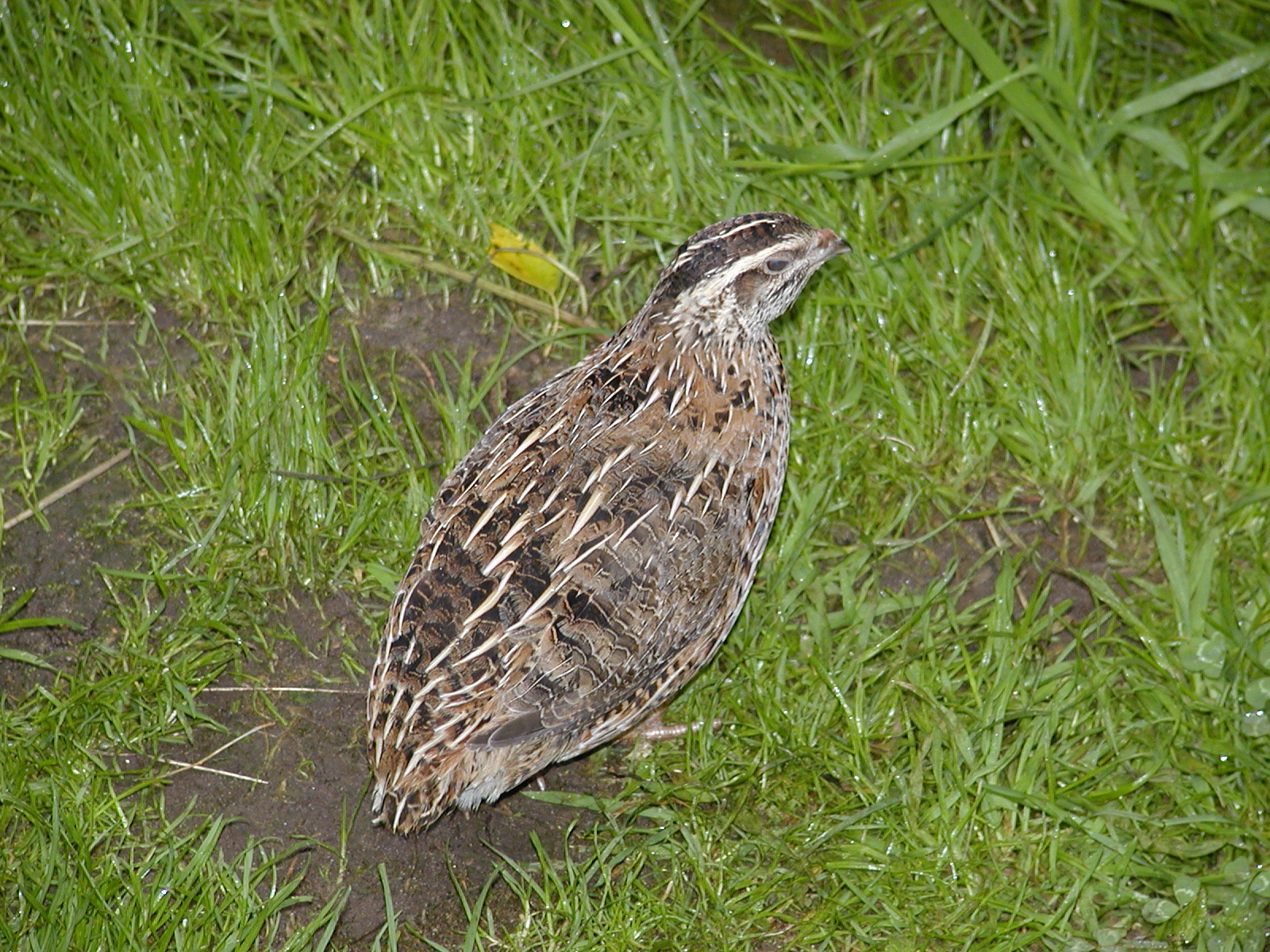
There are many quail and pheasant breeding farms in Italia which all breed for release as hunting is still very popular. It is almost impossible to visit these farms for quarantine reasons as well as keeping the secrets and knowledge within the family. I managed to visit a farm through a contact I had who had a friend that knew the second cousin of the neighboring farmer’s daughter to the quail farm I visited. Even with my good contacts, I still was not allowed inside the cages, but gained enough information. This farm breeds Coturnix coturnix as they still appear in Europe and North Africa in the wild. The birds are small and only weigh about 130 g at maturity. There is a general concern among breeders that some breeders may cross the natural occurring birds with domesticated birds which definitely result in a bird much less adapted to local conditions and also have poor survival capabilities when released. The crossbreeds are a bit heavier and a much inferior flier.

All the following figures are rough estimates, but I think very close to reality. This specific farm sells about 250,000 live quails a year at €1.50 each. For this he has 1,300 breeding hens and 450 males producing 1,000 viable good eggs per day.  He has 6 incubators that takes 3,500 eggs each and fills two of these every week. At 14 days the eggs are transferred to a Hatcher where about 5,600 chicks hatch every week, of which 5,000 grow to eight weeks of age when they are sold for release.

The interesting thing is that his Incubators run at 80% humidity and the Hatcher’s at 90%, which I thought are way too high, but apparently it works that way as I witnessed these levels personally.

The other interesting fact is that the growing cages are sheds with only canvas sides with holes in so the quails can come and go and fly in the adjacent aviaries if they wish. The quails are in these semi open cages from day one.  Gas heaters keep the temperature at about 37C at ground level for the first four weeks. There after the temperature is slowly reduced to day temperature over about one to two weeks, depending on outside temperatures, to harden them up. It gets very cold and it was – 12C on the day I was there and the quails seemed to be happy – my quails would have been dead after the first day. The growing houses are all the same size of 10 X 20 meters each, with two aviaries of 20 X 20 meters each attached to the  sides of each house. Each house holds half of the 5,600 day old chicks.

I was glad to have visited this successful third generation family business which is at present operated by the grandson only as the grandfather is retired and the father attends to the rest of the farm.

RABBIT SHOW AT BREMIO, ITALY


La fiera di San Giuseppe a Brembio

I attended a Rabbit Exibition / Show in Brembio, Italy yesterday and enjoyed it a lot. Not only were the rabbits of exceptional quality, but it is also interesting to see the information provided and transparency of judgement for each animal.

There were rabbits, equipment, feed, housing and much more on display, but I also enjoyed all the rabbit dishes and have over consumed, but luckily there was enough wine to balance the meat consumption. My favorits were Rabbit Salami and Rabbit Ripieni.

I attach a few photographs and it interesting to note the New Zealand White and New Zealand Red rabbits. The Flemish Giants are absolutely beautiful, but I liked the Hares a lot.