Revolutionising Quail Nutrition—The Natural Way

At Back Yard Farmer, we believe that the best solutions often come from the garden, not a laboratory. We are thrilled to announce our new 5-Herb Botanical Blend, a premium upgrade to our quail feed that brings “clean-green” bio-security directly to your coop.

By blending Organic New Zealand grown Salvia ‘Amistad’, Rosemary, Mint, Lemon Verbena, and Bay Leaves, we’ve created a powerhouse formula that acts as a natural shield against pests while boosting bird vitality.

Why Now?

We’ve spent the last several seasons observing the challenges our New Zealand keepers face—from high humidity causing grain pests to the relentless pressure of mites and flies in our summer months. We didn’t want to just offer another chemical fix. We waited until we could perfect a ratio that is safe, highly effective, and stabilized with Salmon Oil and Lypoforte for maximum absorption. It’s the result of months of testing to ensure your quail get the very best of nature’s pharmacy.

A Functional Shield, Not a Filler

Our organic botanical blend fits right into the growing body of research on phytogenic feed additives. These plant-based supports improve digestion, immunity, and antioxidant levels without the need for antibiotics. By including these five specific organic herbs, we help your birds fight off mites, lice, and internal stress naturally.

Featured Herb of the Week: Salvia ‘Amistad’
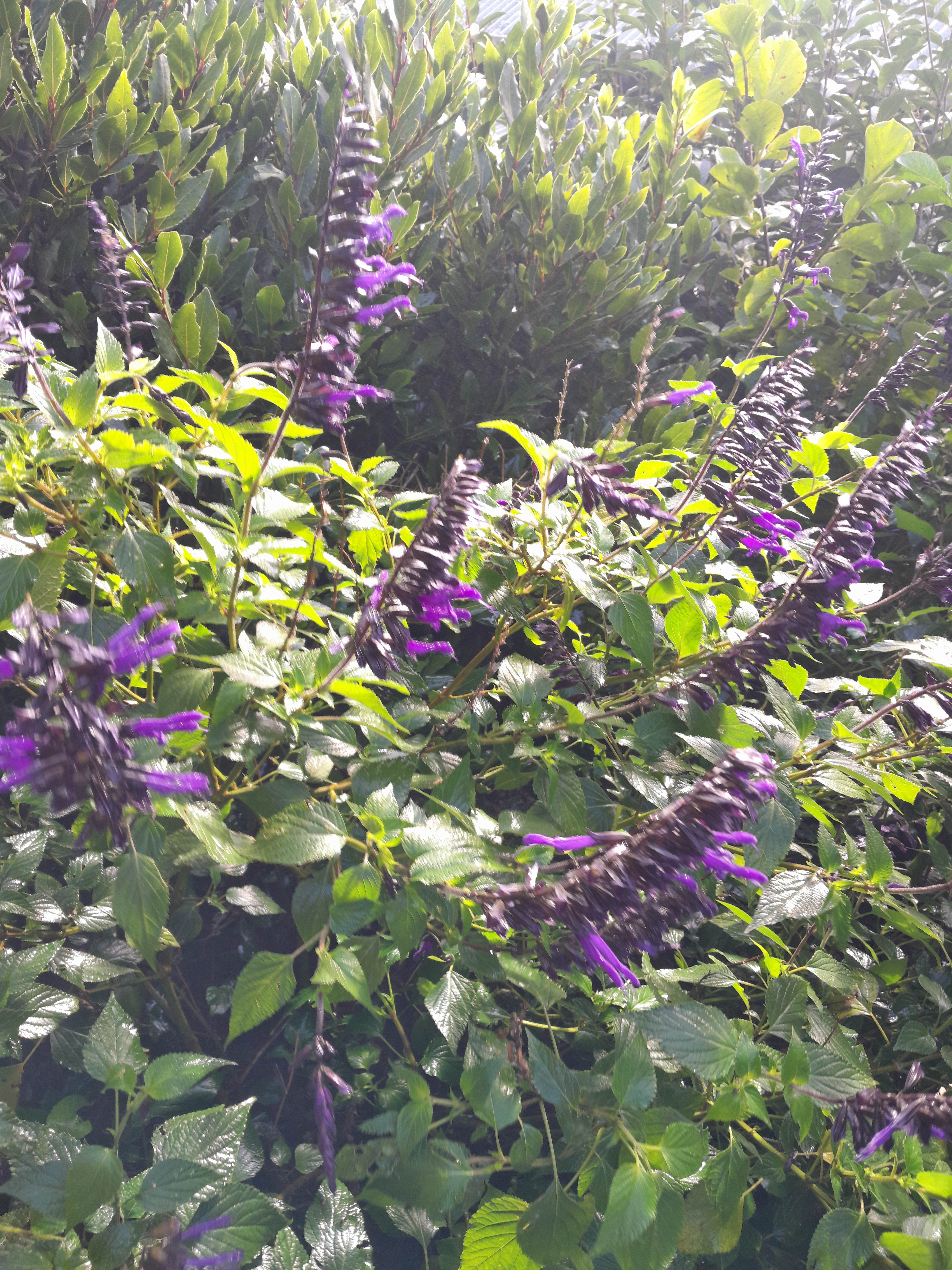
We are kicking off our series with the exotic Salvia ‘Amistad’. While a favorite in NZ gardens, for quail, it is a hidden gem. We use the dried leaves and flowers to provide:

  • Natural Bio-Security: The resinous compounds act as a bitter deterrent for external pests and rodents.
  • Immune Vitality: Rich in anthocyanins, these purple blooms provide powerful antioxidants that help birds cope with environmental stress and high egg production.

Potential Benefits You’ll Notice:

  • Antioxidant & Immune Support: Helping birds through molt and peak laying.
  • Enhanced Palatability: Aromatic herbs encourage natural foraging and steady intake.
  • Superior Absorption: Our 1% Salmon Oil cuts the dust and ensures these herbal oils are fully digested.

Stay tuned! Over the next four weeks, we will continue diving deep into each of these “Super-Herbs.” Next week, we put the spotlight on Rosemary and how it acts as the ultimate “Liver Specialist” for your flock.
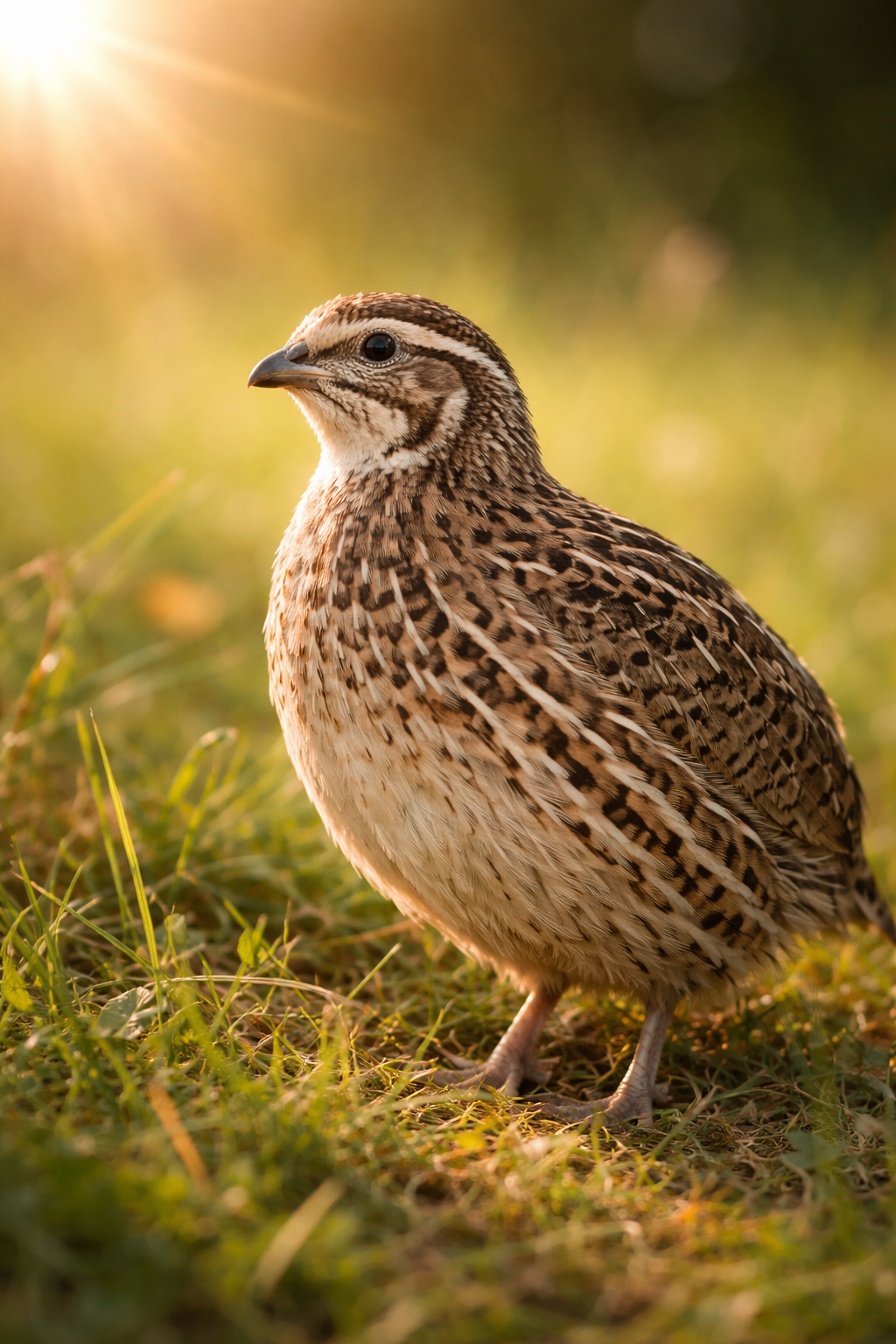
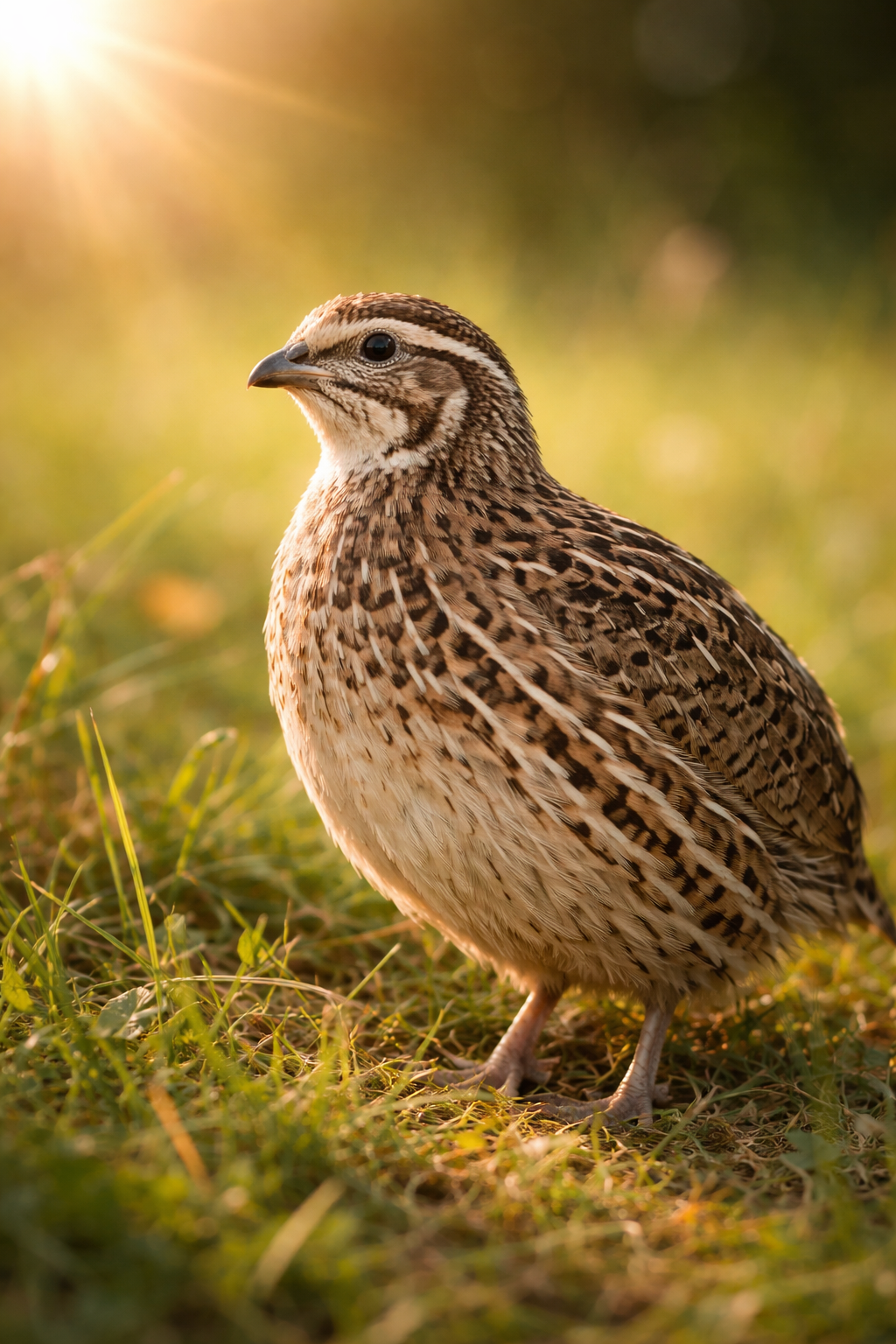
QUAILS and LIGHTING PROGRAM

To maximise egg production in Coturnix coturnix Quails from 5 weeks of age through peak and sustained lay, lighting must be managed as a structured, consistent program – not left to chance

From 5 weeks of age, just prior to sexual maturity (first eggs typically appear at 6–8 weeks), gradually increase total day length to 15 – 16 hours per day. Extend light slowly, no more than 60 minutes per week, using timer-controlled supplemental lighting. Maintain moderate, even intensity at bird level (approximately 10 – 15 lux) – excessively bright lighting can trigger stress and aggression

Combine natural daylight with artificial lighting strategically. As natural day length changes seasonally, artificial lighting must be adjusted so total daily exposure stay on 16 hours. During transitional periods, light may need to be added both before sunrise and after sunset to “cap” the day length at a consistent 15 – 16 hours without overshooting as daylight expands.

Key principles for maximum production:

  • Maintain a consistent 15 – 16 hours total light (natural + artificial)
  • Never exceed 16 hours per day
  • Provide at least 8 hours of uninterrupted darkness for proper rest and hormonal balance
  • Never reduce day length once birds are in production, as this can trigger a drop in lay or induce molt
  • Adjust lighting gradually as seasons change
  • Use reliable timers to prevent sudden fluctuations

A stable, well-managed photoperiod stimulates ovarian development, supports early peak production, and sustains annual outputs of approximately 200–300 eggs per hen. Consistency in timing, intensity, and seasonal adjustment is the foundation of long-term, high-level performance

Alternatively, if you prefer, you can leave your quails to follow the natural seasons, but expect seasonal drops in laying during shorter winter days.

HATCHING COTURNIX COTURNIX QUAILS

The following hatching conditions I have found over the years are giving the best hatching and survival rates for Coturnix coturnix quails

I collect eggs for up to 3 days, depending on how many I want to incubate, then class them for hatching.

1. Do not clean or wash the eggs at all

2. Remove any odd colours and shapes of eggs

3. Candle all eggs for fine cracks and discard cracked eggs

4. Weigh the eggs and only incubate eggs that are between 12 and 15 grams. Smaller eggs result in weaker chicks, while larger eggs (15 g plus) is not preferred since it becomes too large for the hens. The incidence of double yolks are not always detectable and is more frequent in larger eggs. I select hens for about 280 – 300 g body mass and do not breed from larger birds. This is the most economical bird and eggs size.

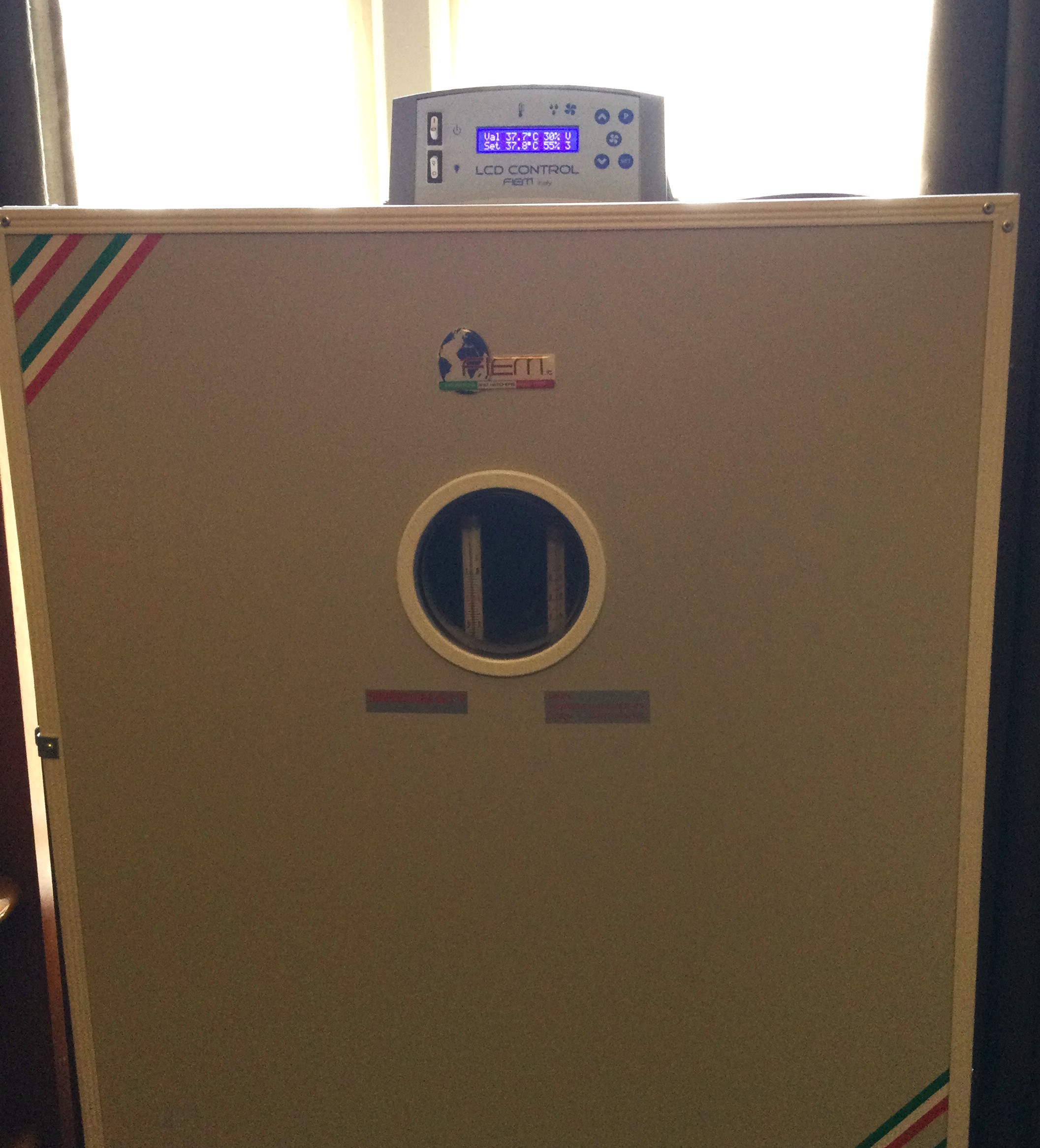
5. Incubators are set at 37.7 Celsius and 45 degrees Humidity. Hatchers are set at 37.5 C and 80 % Humidity. I monitor and adjust incubators and hatchers for both these two parameters with independent monitors as incubator measuring and displays are not always that accurate, even with my commercial, sophisticated and well proven machines. Notice the independent thermometers and wet bulb thermometers through the front windows of the machines. Preheat incubators and hatchers for a couple of hours before setting.

I am always trying to simulate nature during incubation and hatching and therefore keep the inside of the machines dark, as if under a hen. Furthermore there are some research published lately suggesting to have better hatching results if the incubators and hatchers are switched off for about 30 minutes every day, again simulating the hen getting up to eat. I have not tried it, but will experiment with this soon.

Keep hatchers and incubators in an environment as close as possible to the setting parameters. Also avoid fluctuations in conditions and make sure there are no drafts, but it should be very well ventilated.

6. Coturnix coturnix eggs are incubated for 14 days (37.7 Celsius and 45 degrees Humidity) while automatically turned every 2 hours. Then they go into the hatcher (37.5 C and 80 % Humidity) until hatching at about 17 days. I leave the chicks undisturbed for 24 – 36 hours after the first chick hatched and then move all the hatched chicks to the brooders and stop hatching. I do not assist any chicks that struggle to hatch, or still in the eggs.

HATCHING TIMES

I use the same incubation and hatching parameters for many other species as well. All are moved to the hatchers 3 days prior to hatching and are just left in the incubators until 3 days before hatching, whatever time that may be.

Pheasants 24 Days (21 + 3)

Partridge 23 Days (20 + 3)

Bob White Quail 23 Days (20 + 3)

Californian Quail 22 Days (19 + 3)

Coturnix coturnix 17 Days (14 + 3)

Coturnix coturnix QUAILS ARE NOT MINIATURE PHEASANTS

Today I was called by an acquaintance who also “breeds quails” and was informed that he has lost over 150 quails this season dying mysteriously from whatever. My first question, as a animal nutritionist, was what he feeds the birds. I was appalled to hear that he gives them a commercial “Game and Quail Crumble” (A name invented by the reseller as the manufacturers does not even call it that) and supplements it with kibbled corn, peas and some “other seeds” and every so often they get some dog roll. This manufacturer also claims their product to be good for all stages of game birds, which is IMPOSSIBLE.

The mistake that many people make is to think that quails are just small pheasants. The feed companies that manufacture pheasant feeds, because there is a reasonable industry breeding and rearing pheasants for the hunting industry, want to jump onto the wagon and claim their feed is also good for quails as well, which is just not true. New Zealand is one of the few, if not only, developed countries in the world that does not have any animal feed regulations and / or legislation relating to feed analyses. This means the manufacturers can mix anything and claim anything and do not have to disclose any content nor analyses. It Is therefore difficult for anybody to comment on any feed, as very little is disclosed and no regulatory body oversee this industry

A quail hen of 220 g average body mass can lay up to 300 eggs of 11 g average (5 % of body mass), in a season. A total egg mass of 3,300 g, or 15 times the quail’s body mass

A pheasant hen of 1,300 g average can lay up to 80 eggs of 32 g average (2.4 % of body mass), in a season. A total egg mass of 2,560 g or 1.97 times the pheasant’s body mass

Quails are 760% more efficient egg producers than pheasants and they recommend feeding them the same?

So are there many other physiological and production differences between these two species of animals

I am an experienced and well qualified animal nutritionist who has been involved at all levels of animal nutrition in many countries of the world, and seldom, if ever, have I heard such misrepresentation of any animal feed.

If you want your QUAILS to be healthy, happy and efficient producers, feed them a series of well formulated QUAIL FEEDS that is specifically manufactured for every different stage of life and production

221 / 221 Egg Production


My Coturnix coturnix breeding program provides me with lots of joy, satisfaction and brain food in my immediate and small environment where myself and Mrs BYF have an almost self sustainable lifestyle.

The scientist in me dictates to measure, interpret and use the facts to improve my own efforts.

I take many measurements from the quails as they proceed through their life cycle and use these to breed a better bird. Some of the measurements I take are :

  • 3 Week body mass
  • 5 Week body mass
  • 7 week body mass (When I select Breeding Stock)
  • 100 day body mass (Used as mature body weight in my index calculations)
  • Daily egg production
  • Daily egg mass
  • Body conformation
  • Temperament
  • Feather quality
  • Feet quality
  • Beak quality
  • Age
  • Longevity
  • Weight all birds at least once a month, irrespective of age
  • Any possible hereditary defect is an immediate disqualification

I use all these to calculate a weighted index at seven weeks and again revise the index at 100 days

In the past I did these for 4 different breeds i.e. Golden Italian, Pharaoh, Tibetan and Texan White. This was becoming overly complex and limited numbers caused progress to plateau. With limited or no genetic stock of similar quality available in New Zealand, I decided to amalgamate all breeds into a new breed – The Back Yard Farmer Quail (If Coturnix japonica is accepted as a breed, maybe I can apply for Coturnix backyardia  ). I now have four times as many animals to select from with one less selection parameter – colour. The interesting thing is that all Whites have disappeared and very few Tibetans are left as the Italians and Pharaohs take over on merit only. There is a new colour developing, being a dark cross between all the breeds.

I have several spreadsheets that automatically update as I collect data including dates and ages of all birds. The result is that I can provide all parameters and indices for any bird, updated, at any time. I also calculate averages over all parameters.

Some of the results of 5 years of selective breeding are :

  • Increased body mass of about 80 g per bird
  • Increased egg production of about 30 %
  • Calm and contented birds compared to nervous non adaptable birds
  • Drop of hereditary defects from about 20 % of the population to less than 1 % of all birds
  • Increased fecundity
  • Improved feather quality and body confirmation
  • A very contented Back Yard Farmer!

Egg production is monitored on a daily basis and fluctuates from day to day as well as being influenced by the average age of the population. Normally egg productions hovered around 90 – 95 % over the past few months. I have increased breeding numbers to compensate for increased demand and when Corona hit, demand dropped off, resulting in me having MORE replacement females and a younger average female stock.  The average age for all females dropped from the standard 160 – 190 days to about 140 – 150 days, but the most important is that egg production has increased as well, because of the younger stock and fewer low productive females. For the first time ever I have recorded 100 % PRODUCTION for 3 days in a row!!!!!

221 / 221.

I AM HAPPY !!!!