12 Bits and Pieces Vegetable Lunch

Today we needed a quick light lunch. I have come to the conclusion that the more vegetables I bring in from the garden, the more innovative Mrs BYF becomes. I decided to post this recipe that can never be repeated because it was delicious and used up all the bits and pieces I have produced and harvested.

1/2   cup thinly sliced swede
4     handfuls radish tops, washed and picked. Discard the bigger stems and eat the radishes
8   small tomatoes some not fully ripe, some over ripe
2   handfuls of very tiny potatoes
4   very small zucchini and whatever flowers are left, diced
1   small but evil chilli
1  thumb nail sized bit of fresh ginger
1/2  medium onion
1   tablespoon or much more chopped garlic
 4  tablespoons of olive oil
salt and pepper
1  sprig of rosemary just because I got it for free from the museum foyer on Anzac Day
3 fried quail eggs (runny yolk) on top of each serve. The egg is optional but makes all the difference according to Mrs BYF who can eat eggs for every meal, every day of the week
Method
Put the washed radish tops in a pot , cover and fry until the leaves have wilted. In the mean time, fry the onion until translucent in the olive oil along with the garlic, chilli, ginger and rosemary.  When the onion is ready add the potatoes (boil them first if they are bigger than your pinky nail)  and the swede. Fry quickly until all is soft and integrated. Add a spoonful of water if necessary. Lastly, add the tomatoes and fry for a minute. Serve when everything is soft and just before the tomatoes burst. Add salt and pepper to taste.
Add a ladle of Extra Virgin Olive Oil and cracked Black Pepper and enjoy while washing it all down with a glass, or two, of home made Cherry and Black Current Wine. Scoop up the sauce with home made bread.
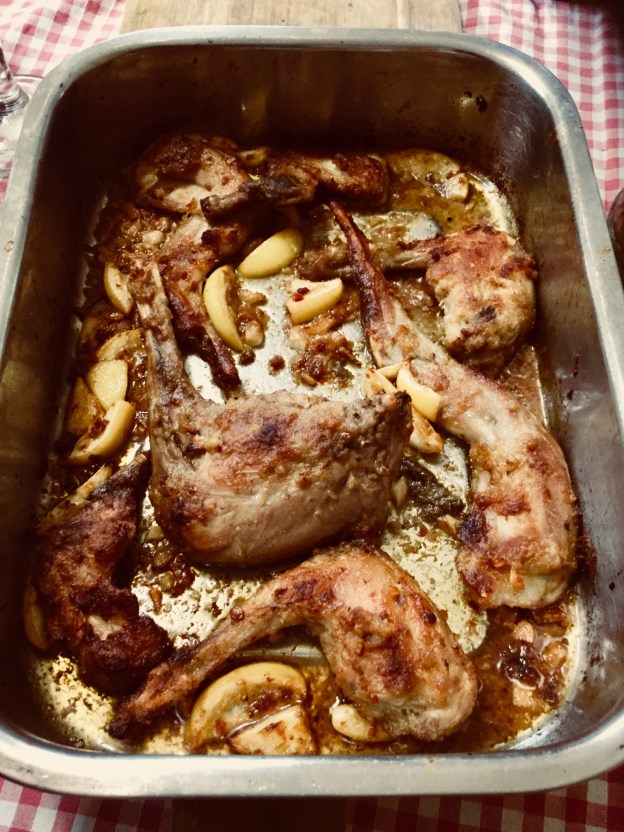
Lepre al Limone di Domenico

B30C60D0-B8CD-4D73-8648-37F35AFF086A.jpeg

We decided to take a few hares before the newly released virus gets to them. After cleaning them well and ageing in the fridge for some days, it was time to taste.

Lepre al Limone ( Rabbit with Lemon )

  • 1 Hare
  • Half a cup of flour
  • Pinch of salt and pepper
  • Three tablespoons of good Extra Virgin Olive Oil
  • Two table spoons of butter
  • One handful of garlic
  • One fresh hot chili
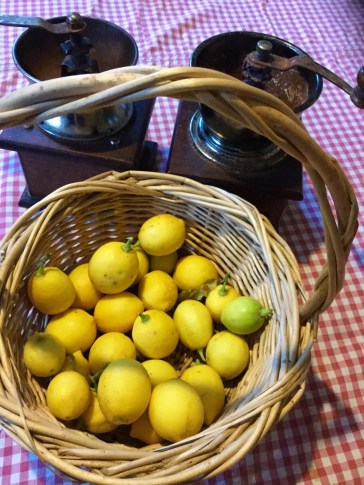
  • 2 Small fresh lemons
  • Good stock
  • Heat the oven to 200 C.

Cut the rabbit into portions and dry very well with paper napkins. Mix the flour, salt and pepper and dust the rabbit very well. Heat a cast iron or heavy based pan that can fit all the rabbit pieces, add two table spoons of good olive oil, shake off the flour and fry the rabbit until well browned.  When the rabbit is golden, transfer the the pieces to a roasting pan. Add one tablespoon of butter and place in the centre  the oven. Discard the contents of the frying pan and wipe clean. While the rabbit is roasting in the oven,  add one table spoon of butter and one tablespoon of  olive oil to the cleaned pan. Add a handful of fresh garlic and as much chili as you can take,  some whole fresh lemons cut into pieces (I was fortunate to have harvested some small sweet lemons from my tree the day before) and cook on low heat until the garlic is translucent before adding the contents of the pan to the hare in the roasting pan.  Baste and turn the hare often and keep moist with good stock – about a spoon full  at a time, adding stock when the hare appears too dry.  Don’t add too much stock at a time, you never want to poach the hare    (again I had very good stock on hand from pigeons I cooked the day before). Depending on the age of the hares it may take  up to an hour before they are tender, but remember to keep it moist and toss frequently.

Enjoy with your favorite starch (we had potatoes and spinach from the garden)

Never forget the good home made wine. I tried the new cherry wine for the first time and Mrs BYF the new Rhubarb wine.

ENJOY!!!!


Puffball

E1D3E917-6FD5-4303-B074-8F8FCF348E60


One can benefit greatly by living in close proximity to a keen forager with an eye for mushrooms. The mushroom season in Dunedin has been exceptionally good and boletus are plentiful should one know where to look for them.  Mushroomers may share their haul, but will never, ever tell where their mushrooms are found! Our generous benefactors have shared their bounty with us and some of the most thrilling mushrooms, the puffballs, grow right here in their garden!

Recipe for fried puffball mushroom

1 Good sized puffball, firm and pure white right through when sliced. The inside has a marshmallow like texture

2 to 3 Eggs, lightly beaten

1 cup dried breadcrumbs with a pinch of salt and pepper added and mixed in

Use a cast iron or heavy based pan big enough to fry the mushroom slices in 2 ot 3 batches

Enough pork fat or vegetable oil to come up to about 2.5 ml up the side of the pan. Apart from the great taste, pork fat can be heated to a very high temperature, ideal for frying

I have written about puffballs before, and this one was prepared by again slicing it into ‘steaks’ about 15 mm thick, dipped in egg wash and coated in dried breadcrumbs. This time the slices were fried until golden in pork fat, processed in our kitchen from a delicious home grown porker. I highly recommend frying in pork fat but those that fear animal fat can use vegetable oil. We ate the mushroom, dressed with a few drop of fresh lemon juice and ground black pepper, for dinner along with fresh tomatoes that ripened in Dunedin’s first hot summer since we moved here. The tiny lemons are from the tiny tree planted in our front garden 2 seasons ago.

Only flour for making the bread to produce crumbs and salt and pepper were purchased to produce this lovely meal.


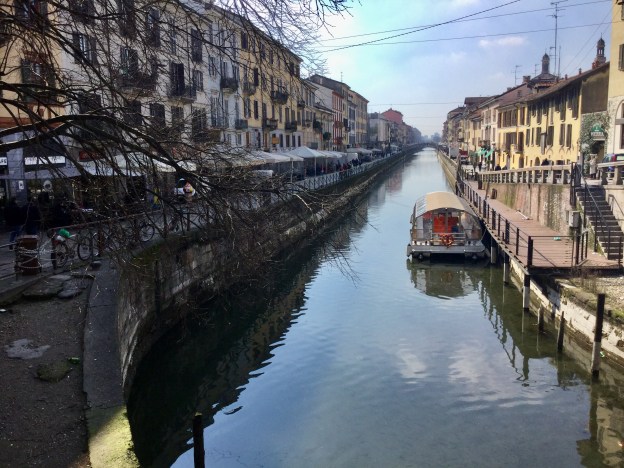
NAVIGLI DI LEONARDO DA VINCI A MILANO

87A77A2A-C189-4BE1-9E17-A8335DE6D89F

After spending a whole day combing through Archives of Mezzano Martello in Milano, I was thrown out at 15H00, because they wanted to close for the day.


On recommendation of my wife, I made my way to the Navigli in Milano for a memorable lunch / dinner.


The Navigli of Milan are the artificial canals constructed between 1179 (Naviglio Grande) and the 16th century (Naviglio Martesana) with the purpose of making Milan accessible from the Ticino and Adda rivers.

I enjoyed the home made Gnocchi as a Primi and Polenta with Eggs and Truffle as a Secondi with fried Artichokes as a Contorni. Even though the place was still very quiet and empty as it only comes to live at night, it was a memorable and enjoyable experience.


Lumache

I was on  my way to the cemetery of Caselle Landi, a small village not far from my house, in search of more information on a certain Marchesa Landi, married to Douglas Scotti, who lived in my property, Mezzano Martello, in the 1870’s. I could however not resist to take a detour after passing this sign on the side of the road.

0ADF0AE2-D757-41D9-A93F-66ABDE1AEC96

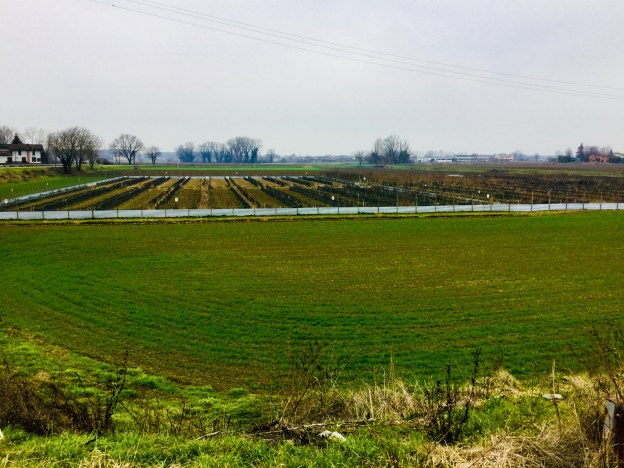
I always wondered what it would be like to have a hectare under snails, producing 10 Tonnes of snails a year.

99E9F2C1-48F9-4741-AA46-D0E7F6FC447E

They have planted covered areas in winter where the snails can hide from the winter snow, as well as little houses made out of wood as additional cover, with lots of tiny snails in there when you lift the roofs. The extra growth of plant material is then removed to allow maximum snail growth during the warmer months. Harvesting in summer happens once a week for both eating and cosmetics purposes.


I left with 1 Kg of snails and convinced my friend at the delicatessen, cum restaurant, at Castelnuovo Bocca d’Adda to cook these for me, offering him to join in the feast as a softener. He willigly obliged, but said it would take some days to clean (purify) the snails before cooking.

J97A10A84-40C0-4D94-AAC8-E2BA68725A55

I am having a hard time waiting until Thusday evening to see how he prepares the snails.

If it was me, I would have fried them in the shells in butter and lots of garlic, then adding some parsley just before removing it from the heat, and serve it with lots of fresh bread and lots of GOOD RED WINE.