Rabbit Coratella with Artichokes

2016-01-13 - Rabbit and Artichoke Coratella


Old recipes that use meats that are these days regulated to the garbage or pets abound in Italy. The problem is that offal is not generally obtainable. Slaughtering my own animals has huge advantages!

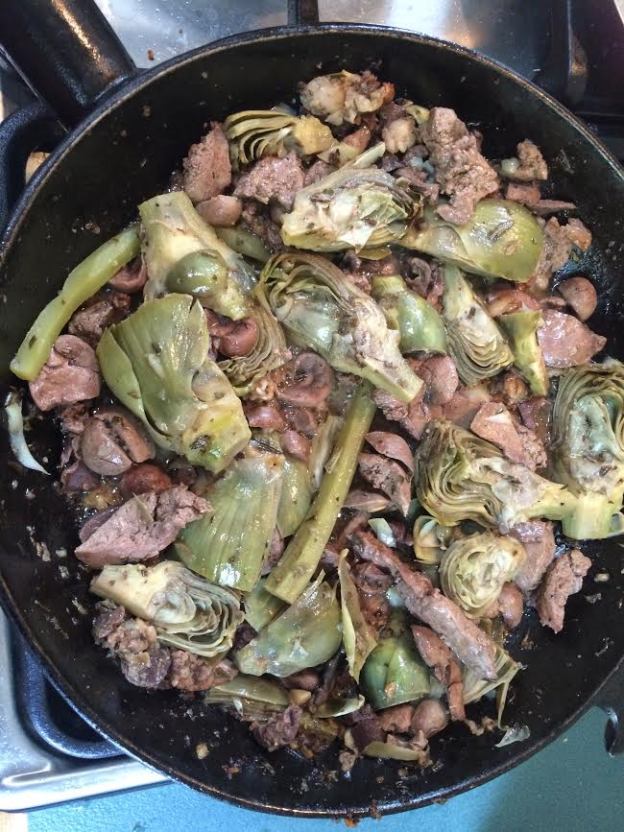
With a few rabbit carcasses in the freezer, we decided to make a dish with the coratella (heart, liver, spleen, kidneys and lungs) incorporating some of the artichokes that we now have in abundance. Mrs BYO created the dish and did the cooking, serving it with the staple of the North, polenta. It was a delicious meal and we have all of the rabbit left to feed the more fussy members of the tribe.

CORATELLA CON CARCIOFI

As many cleaned rabbit offals as you can get your hands on, but at least 4, cut in small pieces

1/2 cup rabbit fat. The fat surrounding the kidneys are the best. alternatively use 1/2 cup olive oil

4 large garlic cloves roughly chopped

2 tablespoons of finely chopped rosemary

white wine

4 or 5 artichokes, cleaned and prepared, cut into 4 sections. All the green leaves of the artichoke must be snapped off and the choke removed, leaving only the tender white parts of the leaves and the heart

salt and pepper

Heat the fat in the pan on a low heat until the fat runs clear and only small bits of browned fat remains in the pan. Saute the garlic and rosemary in the fat until the garlic is golden. Add the rabbit, season with salt and pepper and brown everything quickly over a high heat. Sprinkle with a bit of wine. Lower the heat and cook the rabbit for about 10 minutes, regularly sprinkling the meat with wine, then add the artichokes. Sprinkle wine generously and cook uncovered, turning the artichokes often. When the artichokes are tender, serve  hot with polenta or bread.


Coratella

2015-11-27 - Coratella

Coratella is the Italian name for all the organs in the thoracic (chest cavity) and the dish includes the heart, lungs, liver, spleen and kidneys of either a young lamb, chicken or rabbit. We were fortunate to obtain a suckling Boerbok lamb from a farmer close to Dunedin and I went to the farm and slaughtered it myself, hence had access to all the organs normally discarded and seldom eaten in New Zealand. Coratella is also the name of the resulting dish.

Clean the organs making sure that all the blood is washed off, then cut it into cubes about 2 cm square. Dice two onions and two cloves of garlic and fry in some butter and olive oil until well soft. Ad all the organs, except the liver, and fry well over medium to high heat. While frying, ad a chopped red chili, two bay leaves, salt and pepper. When the meat is almost done ad the liver and turn the heat to high. Ad a handful of chopped parsley and fry for three to four minutes until livers are done, but still pink on the inside. Ad one glass of dry white wine and let it evaporate. Serve immediately with polenta.

Do not forget the good home made dry red wine!

ENJOY!!

Cardoon – the ultimate BYF Recipe (Cardi alla Besciamella)

2015-10-28 - Cardo alla Besciamella

We have tried many recipes, see http://www.backyardfarmer.co.nz, mainly because we have a LOT of cardoon, but also, because we do not admit defeat easily. Wasting any garden harvest is a serious offense in this household. Mrs BYF has been on a mission to find a foolproof recipe that we can both enjoy on a regular basis instead of a one off and finally, partly due to the influence of the great Marcella Hazan and her own invention, she has arrived at the recipe below :

Cardi alla Besciamella (white sauce) with Home Made Mascarpone (We buy fresh unpasteurised milk and make our own. Tatua makes a very good mascarpone and sells in all the supermarkets, but it is very pricey.)

6 or more cardoon stems. The largest ones on the plant work best. I take care not to over harvest so the plant can keep growing.

1 liter of home made chicken stock

500 ml Besciamella (white sauce, use any recipe you like)

2 small brown onions

5 strips or more of un smoked bacon (no prosciutto to be had – pre packaged rip offs do not count )

Home made mascarpone to dollop over the besciamella. (Marcella recommends grated Parmigiano but hey, in Dunedin it is cheaper to use gold dust)

Pre heat the oven to 200C

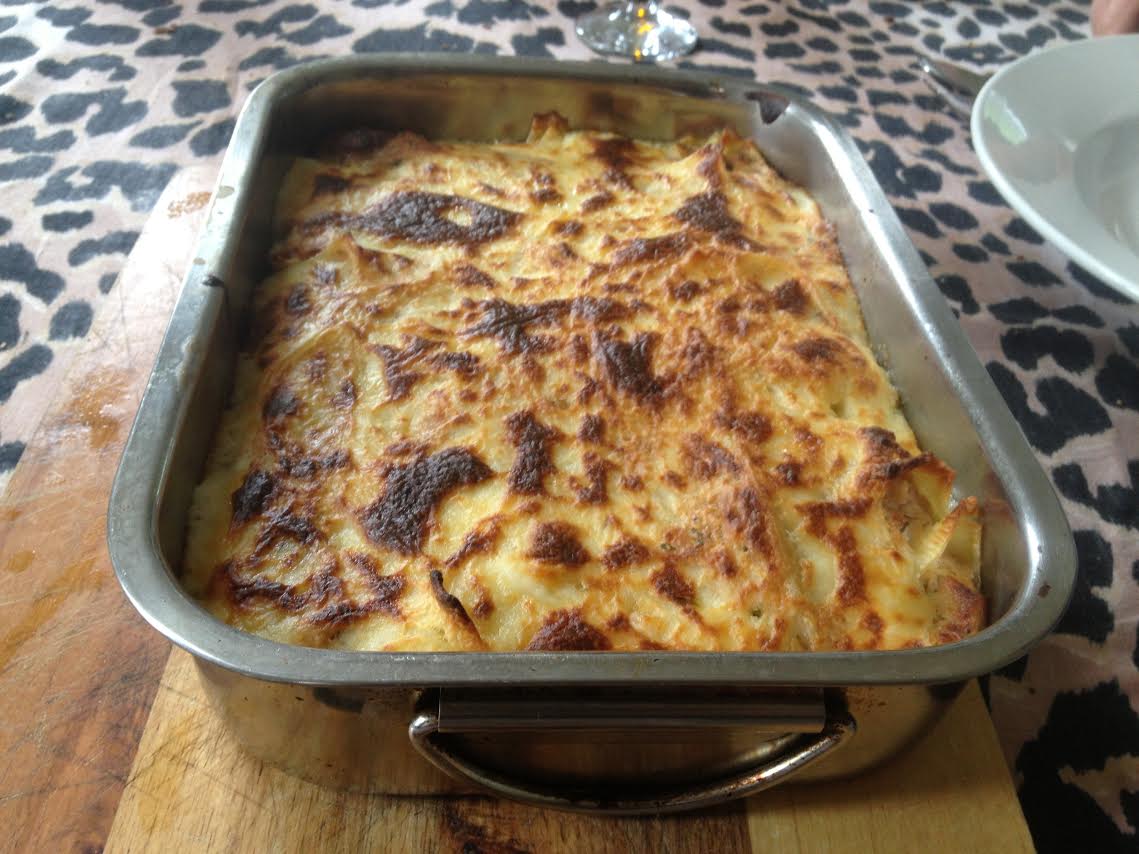
Prepare a bowl of lemon water to hold all the cardoon pieces. Using a potato peeler, strip the strings from the cardoon stems, and cut the stems in bite size pieces. Drop the pieces into the bowl of lemon water. When all have been prepared, drain the lemon water and put the cardoon in a pan, cover with water, stir in about 1 tablespoon of salt. Boil the cardoon until soft, about 40 minutes. Drain the water and set the cardoon aside. Fry the onion and bacon in a few tablespoons of olive oil until the onion is soft but not coloured. Add the cardoon and fry for about 3 minutes, then add stock, covering the cardoon. Simmer until the stock has eveporated and the pan is almost dry. Arrange the pieces in a baking pan, convex side up, and cover with besciamella. Dot generously with tablespoons of mascarpone or grated parmigiano (or both!) and bake at 200C until bubbling and golden brown on top. Serve with fresh bread as a main meal or as a side to a meat dish.

Ravioli alla Zucca (Pumpkin filled Ravioli)

2015-09-17 - Ravioli di Zucca 2 2015-09-17 - Ravioli di Zucca 32015-09-17 - Ravioli alla Zucca 5

See recipe for basic fresh pasta – https://backyardfarmer.co.nz/2015/05/05/pappardelle-al-ragu-di-quaglia-egg-pasta-with-quail-sauce

For the Pumpkin Filling

Use a small 1.5 Kg pumpkin, sliced in half, remove seeds, place the halves face side down and bake at 200 C until soft. Dry the seeds for next year’s planting and feed the peels to the rabbits. Scoop the flesh out of the peel. Mash the soft pumpkin and mix with two beaten eggs, 100 g grated parmigiano cheese, 100 g  dried breadcrumbs, 5 crumbled amaretti biscuits, salt, pepper and a pinch of nutmeg to taste.

Roll out the pasta until it passes through the number 6 setting on the pasta machine and cut circles as large as you prefer. Place some pumpkin filling on the center of a circle, brush the edges with egg and cap with another circle. Press the edges down using a fork to prevent them from leaking while cooking.

Boil enough salted water to cook the ravioli until they raise to the top and float (al dente), which should take only a few minutes. In the mean time heat 100 g butter in a large pan with a handful large of sage leaves. The butter should just begin to burn and should be brown but not black when you dump the well drained cooked ravioli in the pan. Toss and cook for another minute. Serve immediately topped with the burnt butter sauce and crisp sage leaves and generous helpings of  grated parmigiano. Do not forget the wine.

ENJOY!!

The off cut pieces are being used for maltagliata pasta, for another day, which goes very well with any ragu.

Rapa (swedes, turnips, kohlrabi, ?)

2015-08-17 - Rapa 1

I was given, as a present, a bag of something the farmer that gave it to me, called turnips. They were organically grown and much too good to feed to the rabbits. Unfortunately the tops were beyond saving and the rabbits got those. Our experience with this vegetable is limited, so we decided to experiment and started to look up recipes, but soon had to consult our gardener across the street as to what swede, rape, turnip, kohlrabi, rapa, etc all are.  After much consulting, discussion and research, the subject is still open for more opinions.

Brassica rapa – Turnip –  https://en.wikipedia.org/wiki/Turnip

Brassica oleracea – Kohlrabi – https://en.wikipedia.org/wiki/Kohlrabi

Brassica napus – Swede / Rutabaga / Neep  / Rape – https://en.wikipedia.org/wiki/Rutabaga

Call it Turnip, Swede, Rape, Kohlrabi, Rutabaga or Rapa, I had a crack at cooking some according to a recipe adapted from Carluccio, and Mrs BYO invented her own after reading some recipes and not finding anything to her taste. The surprising result was one of the most memorable meals we have ever had.

In our house we always have this competition as to who can cook what best! In this case Mrs BYF – 1 :: Mr BYF – 0 (At least I made the pork sausages she used)

2015-08-17 - Rapa 42015-08-17 - Rapa 5

RECIPE (Mrs BYF) serves 2 with some left over

6  small pork meatballs, well seasoned. Leftover sausage meat worked well

2 roasted and peeled red pepperoni  (capsicum / sweet pepper)

1 rapa (swede) sliced into bite sized pieces

few garlic cloves

1 tablespoon finely chopped rosemary

4 tablespoons olive oil

1 cup of chicken stock. Home made is best and we always have some on hand

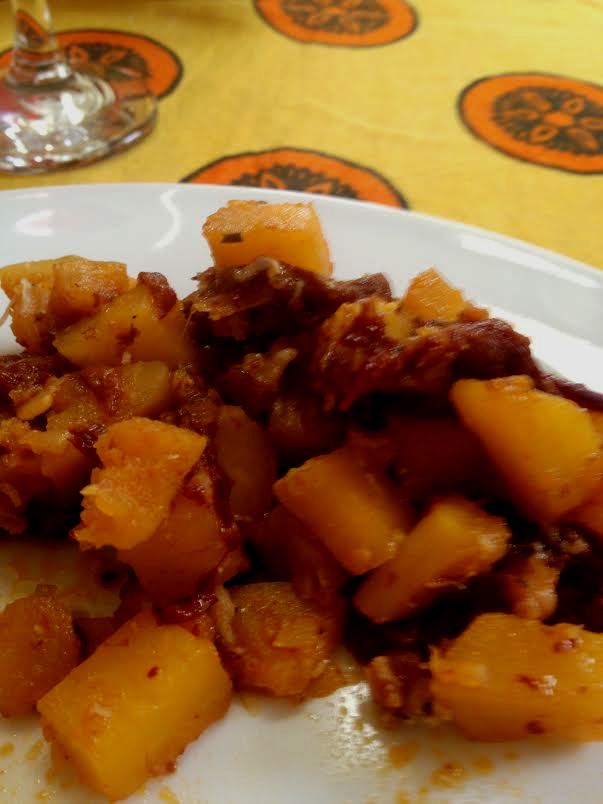
Choose a pan big enough to hold everything. Brown the meatballs in one tablespoon of olive oil, remove and set aside. In the same pan add the rest of the oil, the garlic and rosemary. When the garlic has softened add the chopped Rapa and fry on medium, stirring until well covered with the oil. Add hot stock, cover and simmer on medium / low heat until the Rapa has softened. Do not cook too long, as you don’t want mush. Add the pepperoni, stir and heat through. Add the meatballs, stir and heat through. Serve very hot. Some people will have bread with this, but we found we did not need anything more.

RECIPE (Mr BYF)  – RAPA  ALLA  FRIULANA  (adapted from Carluccio)

As most of the Southern Italians consider Rapa to be cattle feed, the predominant recipes for this vegetable are from the North. This recipe from Friuli is very easy and tasty.

Take a heavy cast iron pot and ad 20 gram of castor sugar and 100 gram of butter

Heat the butter and sugar and allow to caramalise a bit

Now peel and dice one average size Rapa and place in the cast iron pot with the butter and sugar. Stir and cook for about ten  minutes

Ad 50 ml of good white wine vinegar, 20 gram of plain flour and stir gently while gradually adding 250 ml of chicken stock

Adjust for salt and pepper and cook slowly until the Rapa is soft

Serve hot with any meat dish

Do not forget the home made wine

ENJOY!!!

2015-08-17 - Rapa 3