
Cured Salmon

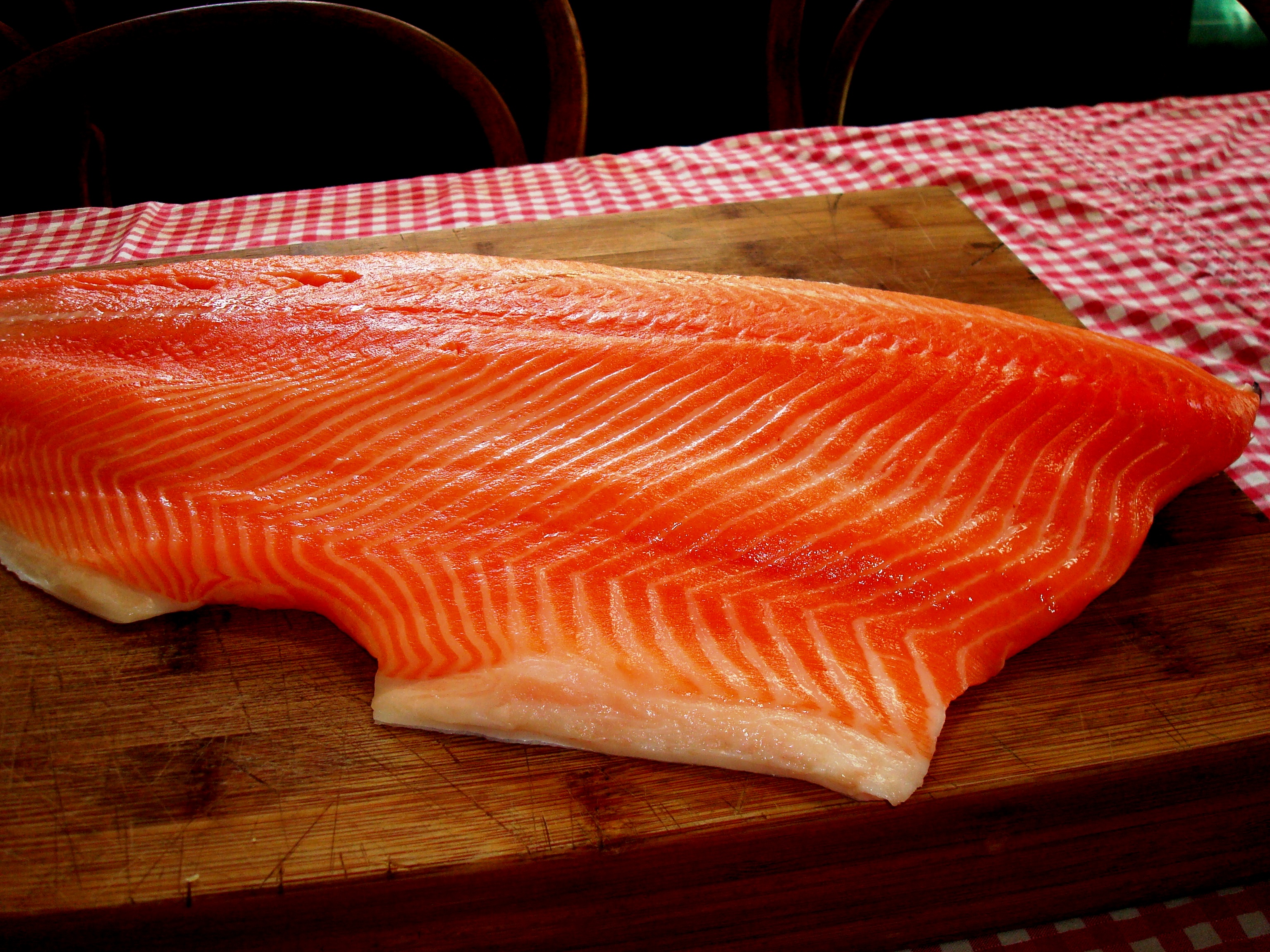
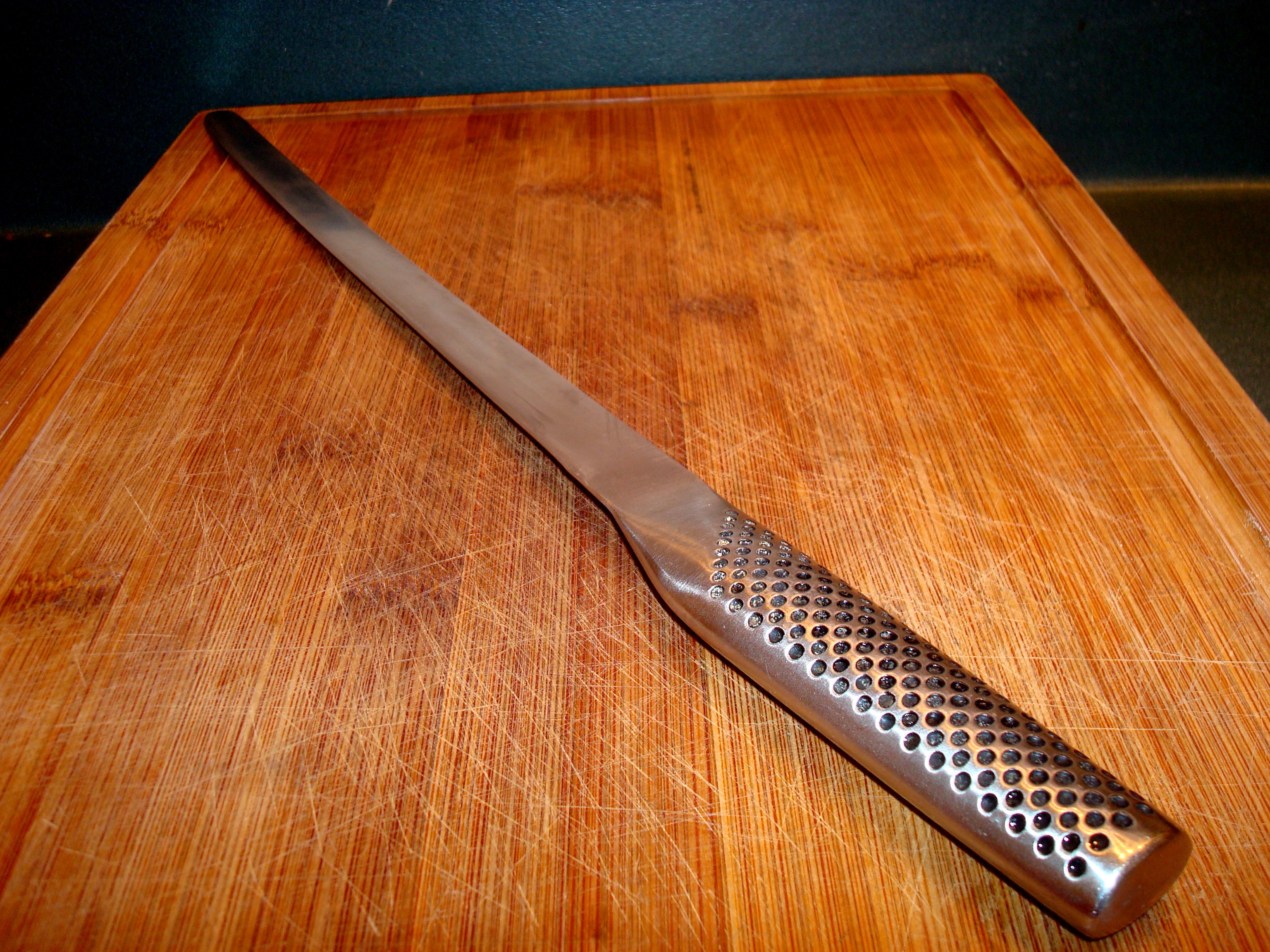
2014-05-14 - Salmon Fillet2014-05-14 - Salmon in Salt2014-05-14 - Salmon Filleting KnifeSalmone 3

I think the Portuguese are particularly good preparing and cooking seafood. This Cured Salmon recipe, which is so easy and absolute fantastic, I have learned from a Portuguese Chef I employed and even though he was not Italian, he cooked magnific food in an Italian restaurant.

Fillet the Salmon and take all the bones out with a pair of sharp nosed pliers.  Mix 800g Salt, 200g Sugar and the grated rind of four Lemons ( with no pith).  Put a thin layer of the salt mixture in a baking tray, large enough to hold the fillet. Place fillet skin side down on the salt mixture and use the rest of the salt to completely cover the fillet. Leave in the fridge for 24 hours, then flip the fillet over and make sure it is again covered with the salt mixture. After another 24 hours, remove from the salt and wash well with cold running water. The timing  is absolutely critical to secure a delicious end product, not too dry, not too salty, just right. Dry well with absorbing paper. The cured fish can be consumed immediately or stored in the fridge for about ten days. I cut mine in usable size bits and vacuum seal it, extending the fridge time with some weeks. It is polished off quickly so I have never found out just how many weeks it will keep! Traditiopnally I serve it sliced in paper thin slices – I use my very sharp filleting knife – with capers and a tiny bit of olive oil, fresh rocket salad and home made bread or with some smoked fish roe – do not forget the glass of good red wine (white if you must)


Looked for Bufala but only found Jersey

Today was another family outing to the dairy farm and the youngest was keen to get to know the young Jersey bull a lot better by poking and pulling ears of the young future stud.

After having a good look to see if there were any buffalo around, as it was my intention to make some Mozzarella, I had to settle on Jersey milk after all.

We came home with some beautiful fresh full cream Jersey milk, of which I converted the bulk into some fine Brie and Mozzarella. The rest of the milk I put into my home made Separator to collect the rich and yellow cream tomorrow for our week’s supply. Tonight after supper I am converting the whey into Ricotta. We had a delightful antipasto of INSALATA CAPRESE, with fresh home made Mozzarella, fresh ripe tomato, fresh basil, olive oil and pepper, with fresh home made bread to clean out the plate.

2014-05-11 - Insalata Caprese 2

MOZZARELLA RECIPE

Heat  10 Liters milk to 33 C and wait until the pH is 6.8. Ad 100 g of thermophyllic mother starter and mix well. Ad 3 g lipase and stir very well. For Jersey milk, top stir for another minute. Cover and ripen at 33 C for 30 minutes. Ad 4 ml rennet and stir with a up and down motion for one minute.. Cover and let is set at 33 C for 90 minutes, or until the milk has set into a soft curd. Once set it will have the texture of a soft yogurt. Gently cut the curd into 6 mm blocks and let it set undisturbed for 20 minutes. The whey will float to the top and the pH should now be 6.5, if it is not, wait a bit longer. Slowly heat the curd t0 38C , increase heat by 2 degrees every 5 minutes. Let it rest for 5 minutes. Drain the whey from the curds (save the whey for Ricotta) Fill a large pot with water (double cooker) and heat water to 40C. Now place the curd pot into the water pot and keep it at 40 C for three hours so the curds can acidify.  Every half hour, drain off the whey and flip over the curds. At the end of the three hours check that the pH is 5.2 – 5.3, if not, wait some more. Now put the curd mass on a draining board and cut the curds in 10 mm sizes. Once cut up and drained, put the curds into a stainless steel bowl and cover with water at 78 C. Using two wood spoons, work the curd together and form it into balls. The surface will now become glossy and stretchy. when gently pulled. Continue to work the curd mass until blisters start forming on the surface. When the ph is 5.3 or less, put the cheese into a bowl with cool water to become firm. Make a brine with 5 Liters of water, 1 Kg cheese salt and 20 g Calcium Chloride and submerge the cheese for one hour. It can either be eaten fresh or stored for later use to make delicious pizza.


Blackcurrant and Apple Rose Wine – Dry

2014-05-04 - Wine Fermenting

Today I started making a batch of about 23 Liters (32 bottles of wine) of  a blackcurrant and apple rose wine. It is the intention to ferment all the sugars and produce a dry Rose.  The juice was extracted from the fruit, filtered and purified with potassium metabisulphite and then fermented, not on must, but directly with the juice. The PH was adjusted to 3.1 by adding a combination of citric and tartaric acids, using the titration method to determine PH as it is more accurate. After measuring the specific gravity with a hydrometer, it was adjusted to a level of 1090 by adding sugar, which, if all fermented, should produce a wine of about 12 % alcohol. Starting with 2 to 3 liters more than the main vat can take gives you product to top up with, from time to time, after racking and filtering. This smaller quantity is fermented in a separate smaller jar (5 Liters) until used.  Red wine yeast and nutrients were added and fermentation traps fitted and the long process of fermenting, racking, clearing and filtering started, to hopefully bottle in about four months time when the specific gravity has reached a level of less than 1000. I rack and filter more frequent than normal, as I like a clear clean drinking wine. This should be a very palatable dry table wine, light red or rose in colour with very little sweetness, a good nose, clean taste and medium body, which is the way I like my lunch time wine.


Low-Fat Fad Has Done Unfathomable Harm – Eat Healthy

Dreamtime


http://articles.mercola.com/sites/articles/archive/2014/02/24/modern-diet.aspx

Celery, Leeks, Fennel and Potato Recipes

I harvested celery, leeks, fennel and potatoes this week. As usual the question is how to put my harvest to good use without using the same recipe twice. I have a picky household that does not tolerate the same dish twice in one week so here are my efforts so far:

Crunchy Celery, Fennel and Apple Salad 

1 bunch of celery chopped in to bite sized pieces. Keep the leaves for stock making.

1 apple cut in small pieces

1 fennel bulb shaved thinly

1 orange – 1/2  juiced and 1/2 cut in bite sized pieces

salt and pepper to taste

Mix everything in together.  You can change the quantities to suit your taste as it is hard to get this one wrong. You will have a pale looking salad so liven it up by sprinkling the dark green fennel fronds, cut decoratively, over. The trick is to prepare and assemble this salad just before serving, any delay causes the apple to discolor a bit. 

2014-02-02 11.43.35

Celery, Leek and Potato 

8 tablespoons of olive oil

500 g peeled potatoes cut in pieces

1 head of celery, stems only, keep the leaves for stock making

1/2 lemon juiced

salt

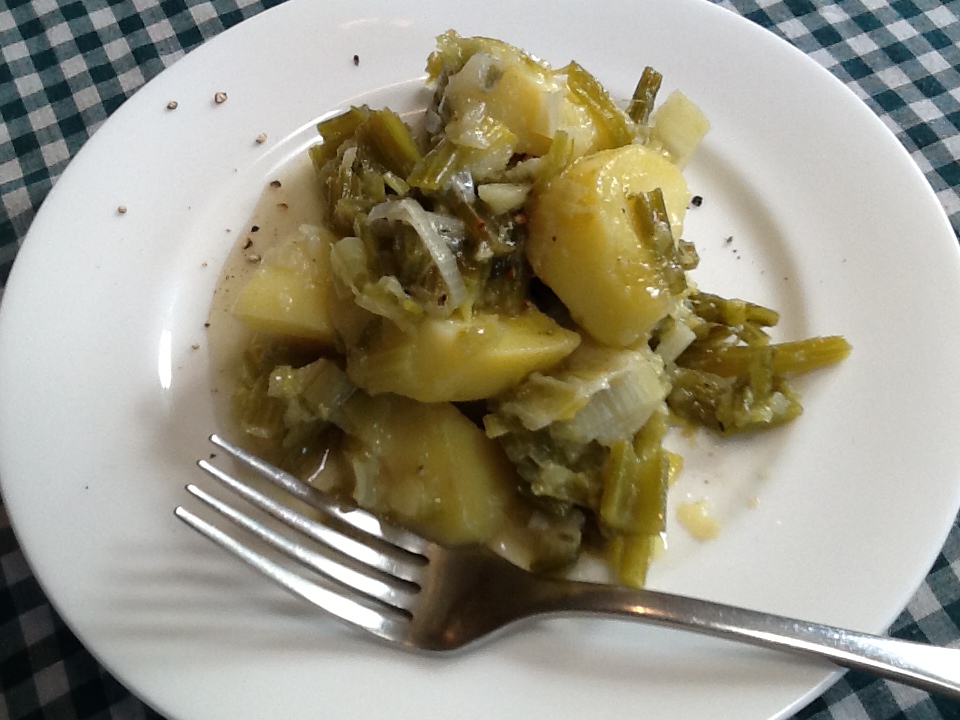
Use a heavy pot with a lid. Put the olive oil and celery in and add water until the celery is covered. Cover the pot and boil until the celery is softened about 10 to 15 minutes. Add the potatoes and cover the mix with water again. Add salt and lemon juice. Cover the pot and boil until everything is tender and no liquid barring the oil is left (this is important). Serve hot or at room temperature. I used it as a side with the week end barbecue but the dish is robust enough to  eat as a main with some bread.