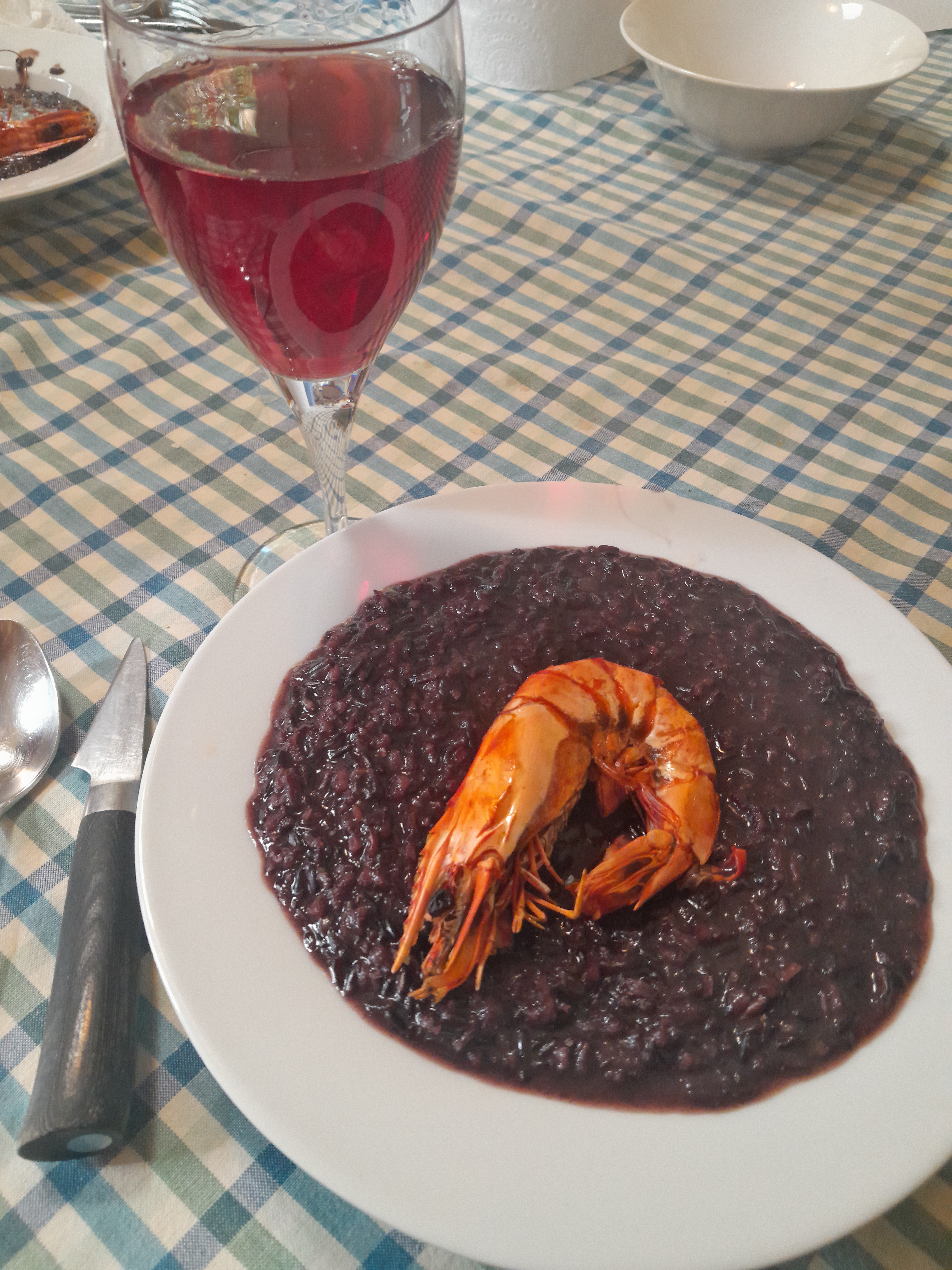
Riso Venere (Black Rice) con Gamberi alla Liguria

Liguria-Style Venere Black Rice with Prawns

As Lombardia (my region) does not have any sea access, we always look up to Luguria when it comes to seafood recipes. In Liguria, seafood is treated with great respect : simple preparation, excellent olive oil, fresh herbs, and bright citrus. This version reflects the coastal cooking of the Italian Riviera — clean, aromatic, and elegant, with no heavy sauces.

Ingredients (Serves 4)

  • 300 g Riso Venere (black rice)
  • 400 g raw prawns (preferably whole, shell-on for best flavour)
  • 3 tbsp high-quality Ligurian extra virgin olive oil
  • 1 clove garlic, lightly crushed
  • ½ glass dry white wine
  • Zest of 1 lemon
  • A few thin strips of lemon peel (no white pith)
  • Small handful fresh parsley, finely chopped
  • Small sprig fresh thyme or marjoram (optional but traditional)
  • Sea salt, to taste

Method

  1. Cook the rice
    Boil the Venere rice in abundant salted water according to package instructions (20–40 minutes). Drain well and spread on a tray briefly to steam off excess moisture.
  2. Prepare the prawns
    Peel and devein the prawns, keeping tails if desired. If using whole prawns, reserve shells to briefly flavour the oil.
  3. Infuse the oil
    Warm the olive oil in a wide pan over medium heat with the crushed garlic and (optionally) the prawn shells. Cook gently for 1–2 minutes to release flavour, then remove shells and garlic before they brown.
  4. Cook the prawns
    Increase heat to high, add the prawns, and sauté briefly — about 1–2 minutes per side.
  5. Deglaze
    Add the white wine and allow it to evaporate quickly, concentrating the flavour.
  6. Combine with rice
    Add the drained rice to the pan and toss gently so it absorbs the seafood juices and oil.
  7. Finish in the Ligurian style
    Remove from heat and add:
    • Lemon zest
    • Lemon peel strips
    • Chopped parsley
    • Thyme or marjoram (if using)
      Adjust salt and drizzle with a final thread of excellent olive oil.

To Serve

Serve warm — not hot — as is typical of Ligurian seafood rice dishes. The aroma of citrus, herbs, and the natural perfume of Venere rice should remain delicate and fresh.
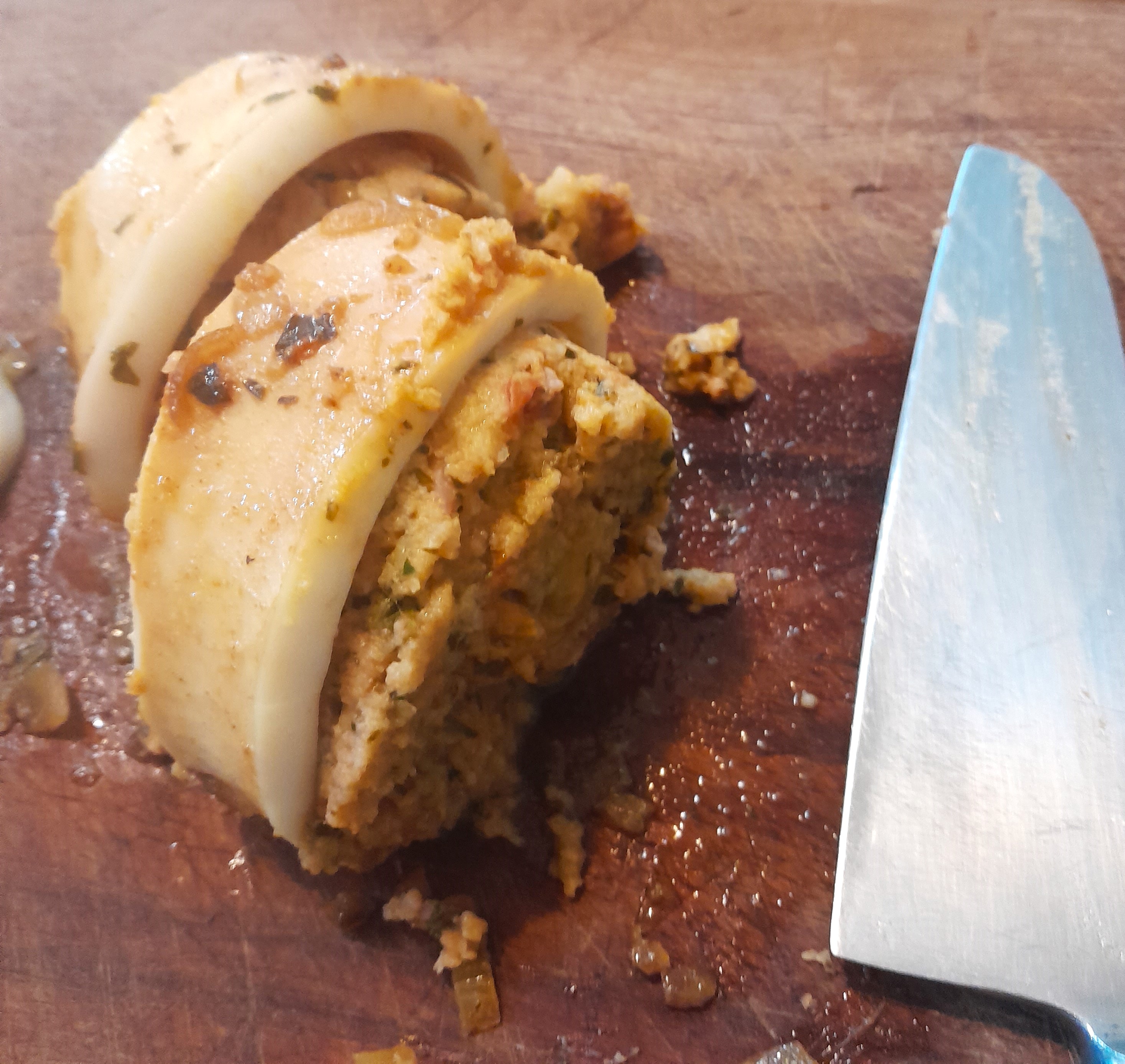
CALAMARI RIPIENI (Stuffed Squid)

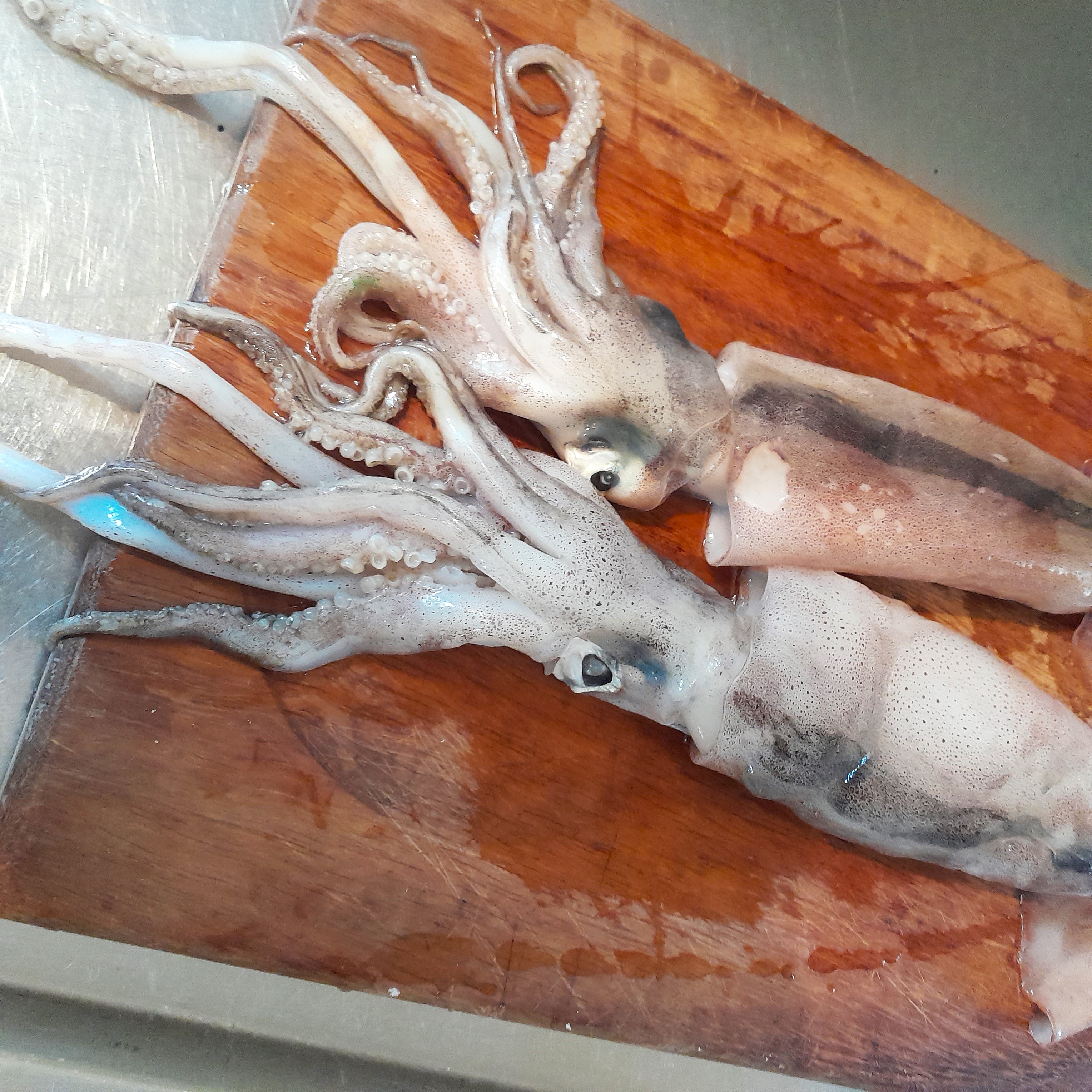
We got our hands on probably the best squid we have ever had. Fresh, large, tasting of the sea. We immediately started discussing our many options, determined to make the most of it.  The recipe we settled on was a tender, flavourful dish of squid. I cleaned as much as we need and froze the rest. After making a tender and tasty squid  with wine and spinach, Mrs BYF decided to put stuffed squid on the menu for lunch.

To serve six, or two with some very nice leftovers for the rest of the week 

6  whole Squid cleaned, tentacles and fins cut off leaving the sac intact

4  tablespoons extra-virgin Olive Oil

4  Garlic cloves or more

2  tablespoons chopped Italian Parsley 

140g fresh Tomatoes.

Salt to taste

chopped Chilli or chilli flakes to taste

1 Egg yolk

15g dry Bread crumbs. White bread unflavoured.

170g thinly sliced brown Onion 

100ml dry white Wine

Toothpicks the large strong ones

Method

Chop up the fins and tentacles

To make the stuffing, cook the garlic in the 1 1/2 tablespoons of oil until slightly coloured. Add the parsley and stir a few times before adding the tentacles and fins, cook for a few minutes stirring well. Add the tomatoes and let the stuffing simmer for  about 30 minutes until the tomatoes are dense and have lost the waterlines.  When done, transfer the stuffing to a bowl and let it cool completely. Add the egg and the breadcrumbs and mix well. Mrs BYF was using quail eggs and could not be bothered to seperate the whites from the yolks. The result was still very good. 

While the tomato mix cooks, cook the chopped onion in 11/2  tablespoons of oil until golden. Meanwhile divide the stuffing in to 6 equal portions and stuff the squid sacs, secure the openings with the toothpick.

Add 1 tablespoon of olive oil to the onion and turn up the heat, cook the squid turning it until all the sides of the sacs are golden brown. Add the white wine, let it bubble away completely, put the lid on the pan and turn the heat to a very gentle simmer for 45 minutes. Add a bit of water only when there is a danger of the squid sticking to the pan. When tender, slice the sacs in to 1 or 2 cm thick slices. Return to the pan and dribble whatever juices there are over the slices. Serve immediately.

The entire process was worth while because the end result was delicious! 

ENJOY and do not forget a glass of good home made red wine

Cured Salmon

DSCN0433

Today was Salmon curing time. With a beautiful, fresh fish I like to keep things simple, adding as few flavours as possible to enhance the taste but not change it. Fish, salt, sugar and lemon rind only. Smoking overpowers the fish and all the freshness is lost. This cured Salmon recipe is so easy and tastes wonderful. I vacuum seal the cured salmon, after processing, in smaller portions and it lasts for several weeks in the fridge.

After filleting, I remove all the small pieces of flesh from the carcass and then freeze these in smaller portions for making a very tasty and quick risotto. Everything remaining – bones, head, tail, etc goes into the stock pot wit some onions, celery and carrots. Add water and reduce the liquid by at least a third before portioning and freezing.  Use the stock for soups, risotto and fish stews.   NOTHING WASTED!

Rombo

3B09D62C-AE5C-49D3-A31D-AAD4C0A10FC3.jpeg
My neighbour caught some flounder (Rombo in Italian) locally. He generously gave me two lovely firm, fresh fish caught that day. We cooked them as soon as we could manage, being chronically over fed, we had to wait until the next day. Mrs BYF decided to fry the fish in pig fat that I rendered from the organic Kunekune last year. The fish looked fantastic and was delicious.  The fat contributed to the taste as well as the appearance, not sure why, but things fried in fat look more golden brown to me. The side was spinach and smashed potatoes, and roast pumpkin.
Flounder (Rombo)
1 cup of flour generously seasoned with salt and pepper
6 tablespoons of pig fat or vegetable oil about 10 mm deep for frying

Heat the oil in a pan big enough to hold the entire fish lying on its side. The oil must be hot enough to sizzle when the fish goes in. Use kitchen paper to dry the fish very well. Drench the fish in flour, make sure every bit of it is covered. Shake off excess flour and slide the fish into the pan, skin down. After about 5 minutes, when the skin is crispy and brown, turn over and fry for 5 minutes more.

Serve immediately with some cut lemon and a vegetable of your choice.

Love living in New Zealand!

Bianchetti – Whitebait

2014-08-25 - White Bait


The simple things in life are more than often the best and I think this also applies to recipes. Even though it is white bait season, I have not been able to locate a site near Dunedin where one could forage whitebait. To satisfy my craving, I went to the local fresh fishmonger and was lucky to find some lovely fresh whitebait, at $120 per Kg I was hesitant to buy, but got a small portion anyway. I would be grateful if there is anybody close to Dunedin who could head me in the right direction regarding catching whitebait!

RECIPE

Make sure the white bait is dry by patting it with kitchen paper. Make a mixture of flour, salt and black pepper, mix it well and put it in a plastic bag with the white bait. Shake well to evenly cover the bait. In the mean time heat a pan with about 50 mm deep vegetable oil to medium / high heat while you taste the wine. Separate the bait from the flour by sifting  the contents of the bag. Test the heat of the the oil by placing one fish in and it should sizzle. Now put the white bait in the hot oil in not too large portions – I did about 100 g at a time. Deep fry until light gold – about one minute. Place on a paper towel to drain the excess oil and serve immediately with lemon and fresh bread – do not forget the bottle of good wine.  ENJOY!