Artichokes (Carciofi alla Romana) and Foccacia light Dinner

2015-01-16 - Light Dinner

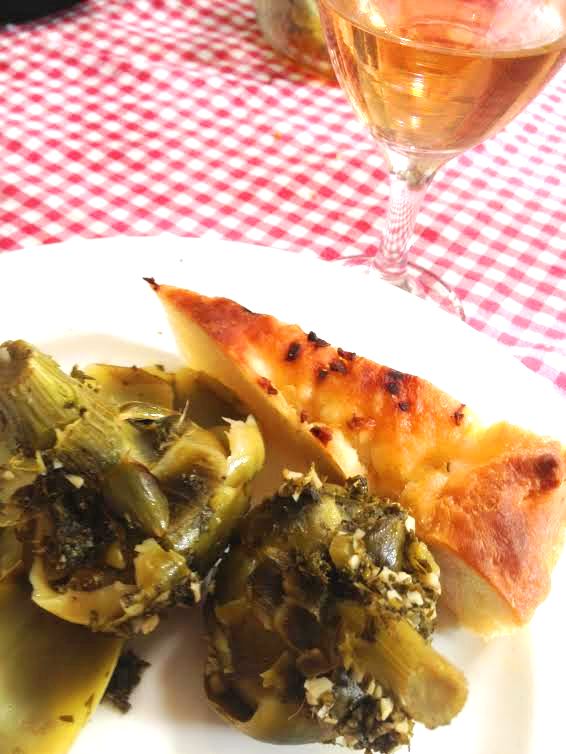
Not being very hungry tonight, I decided to pick a few artichokes and cook them the way the Romans do to enjoy with the foccacia I baked this morning.  A glass of my dry white wine complimented a simple and satisfying meal.

CARCHIOFI ALLA ROMANO ( adapted from one of the great Marcella Hazan’s recipes )

As many artichokes as you can fit snugly in your deep cast iron casserole or heavy bottomed pot. Keep about 50mm of stem attached to the artichoke because this is how the Romans serve them

1 lemon

2 or 3 cloves of garlic chopped fine. More if you like!

1 small handful of mint leaves chopped very fine

1 small handful of parsley chopped fine

salt

1/2 cup of oil

Prepare the artichokes by slicing about 25mm off the top of the artichoke getting rid of spikes and a lot of the inedible green parts of the leaves. Peel away the hard outer leaves of the artichoke until the white leaves have only a little green at the top. Peel the green outer layer off the stem. I use an apple corer to dig the choke out from the centre without damaging the base of the artichoke. As each artichoke is cleaned, drop it in a bowl full of cold water with the lemons squeezed in. Drop the halves of squeezed lemon in the water too. Mix the garlic, parseley, salt and mint in a bowl. Press most of it in to the cavities of the artichokes. Put the oil in the pot and place the artichokes stem side up in the pot. Rub the last bit of the garlic mix on the outsides of the artichokes. Add enough water to cover most of the artichokes, keeping the stems dry. Put the lid on tightly.  Cook on medium until tender when prodded with a knife. Serve with the sauce left in the pot poured over the artichokes. Eat the right away.  ENJOY and remember the wine!


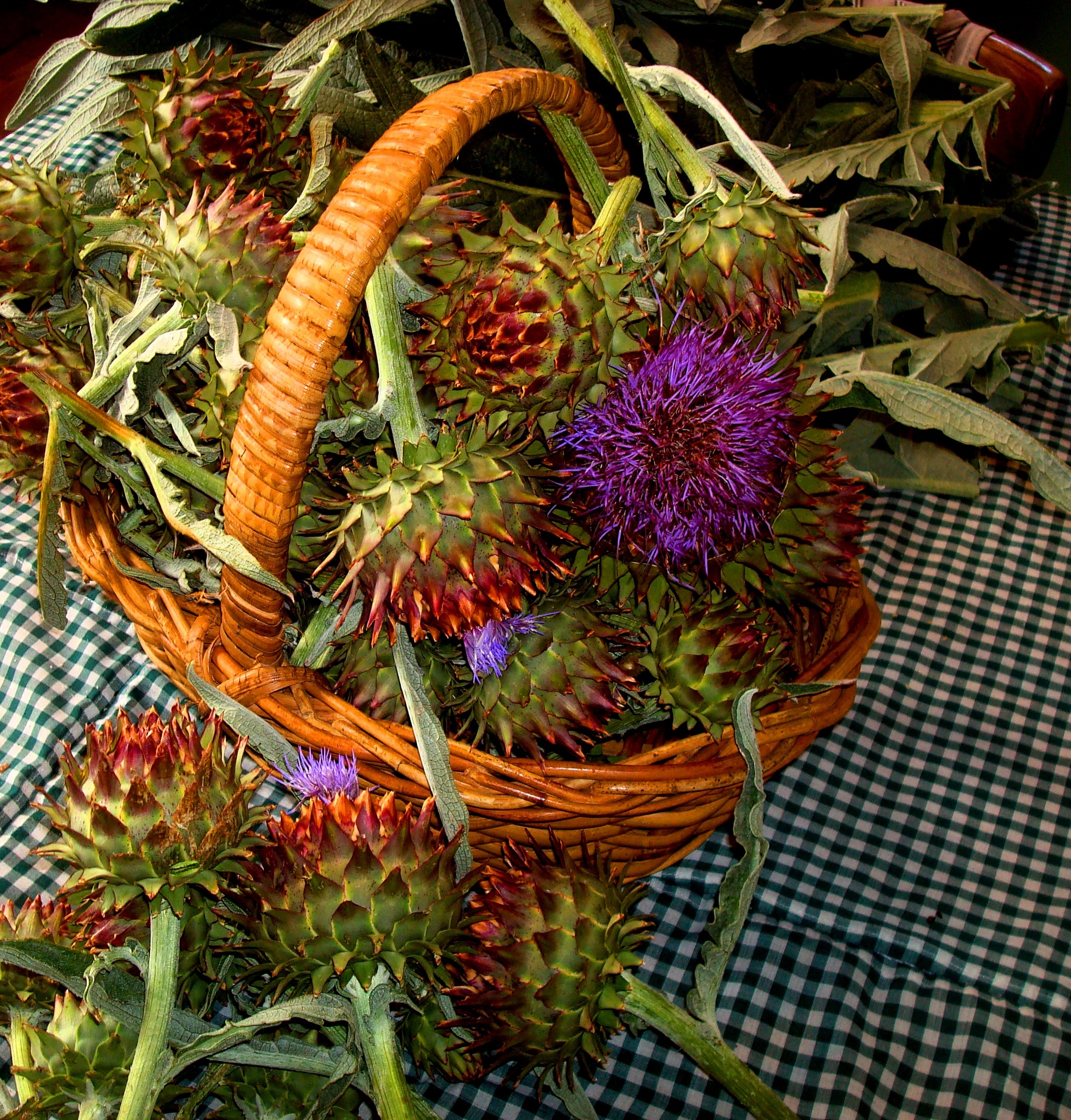
Cardoon buds and yes, they should be eaten!

DSC03960DSC039522015-01-23 - Cardoon in Blompot2015-01-23 - Cardoon Flowers 2


Mrs BYF is fanatical about not wasting any food that the garden produces. Her attitude has resulted in many memorable dishes ranging from fantastic, better that any world class restaurant, etc. etc., to (seldom, I might add) never to be attempted again, EVER!

I was going to let the cardoon buds flower, because the bees love them, and ‘they’ say that only the stems should be eaten, but Mrs BYF commanded me to “bring them in!”.  After all the cardoons grow so well in Dunedin and my plants were well over 3 meters high with lots of flowers. They were all boiled in a big pot of water, with a squeeze of lemon and some salt, then peeled, chokes removed and the hearts put under oil.  The taste and texture of the hearts proved to be  sensational, perhaps a bit more starchy, at the same time almost creamy, than artichokes. We eat them as antipasto or on panini with  roast bell peppers (peperoni) and fried eggplant (melanzane). The real taste of Italy in Dunedin. Unbelievable !

Just to take the non wastage policy a bit further, Mrs BYF used the inedibles for  a lovely vegetable arrangement of rosemary, flowering cardoon and  fennel fronds. The cardoon flowers are beautiful and, surprisingly, sweet smelling.

Bruschetta al Pomodoro e Basilico

2014-12-04 - Bruschetta

100 ml Extra virgin olive oil
2 Cloves garlic – finely chopped
4 – 6 Slices home made bread or good Italian style bread like ciabatta
4 Fresh, ripe and sweet tomatoes – coarsely chopped
Small bunch basil
Generous pinch salt
Black pepper
In a large bowl, combine the chopped tomatoes, basil, black pepper, chopped garlic, salt and extra virgin olive oil , mix to combine. In the meantime toast a few slices of home made bread and rub with fresh garlic. Drizzle the warm bread with extra virgin olive oil. Cover the still warm bread with the tomato mixture, and serve immediately.  The trick is not to let the mix stand because it becomes watery. ENJOY !!

Passata di Pomodoro

2014-11-27 - Passata 12014-11-27 - Passata 2

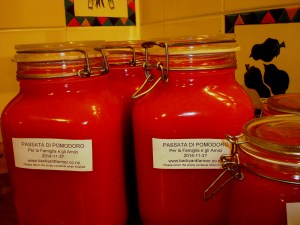
No good Italian can live without tomatoes, and plenty of it. So the annual Passata day always takes effect when tomatoes are in abundance, ripe, sweet and fresh. Making about 60 kilograms of Passata every year for our own needs, and some as gifts, has been a family tradition for many decades. It helps to be on a good footing with the local green grocer who is only too pleased to discount  the tomatoes that would be considered over ripe in New Zealand, but just right in Italy.

RECIPE

Wash and roughly cut up the tomatoes, and at the same time remove the odd bad or discolored spots. Now boil the tomatoes, without water, for about five to ten minutes, depending on the ripeness, until soft, but not cooked.

2014-11-27 - Passata 62014-11-27 - Passata 82014-11-27 - Passata 9

Passata making can be a huge job without the magical Passata Machine – a device that separates the skin and seeds from the flesh. This little machine can do in excess of 100 kilograms per hour and is wonderfully designed, easy to operate, durable and very quick to clean. No self respecting Italian household is without one! Within minutes I had processed 30 kilograms of tomatoes into 28.5 kilograms of Passata leaving 1.5  kilograms of seeds and skins to compost, or dry to plant next year.

Bottle the tomatoes in clean canning bottles – do not use the cheap screw on type of bottles, but a good strong bottle with lid that can seal properly. There is  no need to sterilise the clean bottles before hand, as it is going to happen after filling them. Put the filled and sealed bottles in a large enough pot that would totally cover the bottles when filled with water. It is good to have a tea towel or some screen in the bottom of the pot, so that the bottles do not stand directly on the heated surface. Now fill the pot with water of about the same temperature as the product is at this stage (prevent bottles from cracking).  Heat until the water is boiling and then boil for twenty minutes more. Immediately remove the bottles from the boiling water, if the water starts to cool, water may be sucked  into the product.

DSC03861

Cool and label.  PRONTO !!

2014-11-27 - Passata 4

While washing the tomatoes, select the ripest and firmest tomatoes for Bruschetta with tomato, basil, olive oil, salt, pepper and garlic. Mrs BYF cannot be beaten for making the best Bruschetta!  ENJOY!

NO MEAT LUNCH

2014-11-16 - No Meat Lunch2014-11-16 - Artichokes2014-11-16 - Carcioffi Cooked2014-11-16 - Carcioffi Eaten

Lunch without meat does not often happen in our house, but today’s meal was so good I almost did not miss it. Fritters made from radish leaves, of which the seeds were purchased from Italian Seeds Pronto the very good Italian Franchi seed supplier in New Zealand, complimented by home made yogurt with milk purchased from the most beautiful dairy farm ever. A salad with borage leaves and flowers, the plant being supplied by Kimberley of Good Life Gardens in Dunedin, mixed with radish from the back yard and a good vinaigrette  – mix two parts good extra virgin olive oil with one part of home made apple cider vinegar, ad a bit of salt and pepper and shake well before dressing. Of coarse all were supplemented by good home made wine.

This was followed by artichokes again from our dairy farm in Port Chalmers. We like to cook it in water with a squeeze of lemon until the leaves come free when pulled lightly, then drained. Pull the leaves from the head and dip into good extra virgin olive oil with plenty of salt added to it and then rip the soft flesh from the leave with your teeth. After an enjoyable meal you eventually reach the pot of gold at the end of the rainbow – artichoke hearts!

All of the above accompanied by delicious home baked bread and at the end there is no space left for the meat in any way.

ENJOY !!!