
Stock

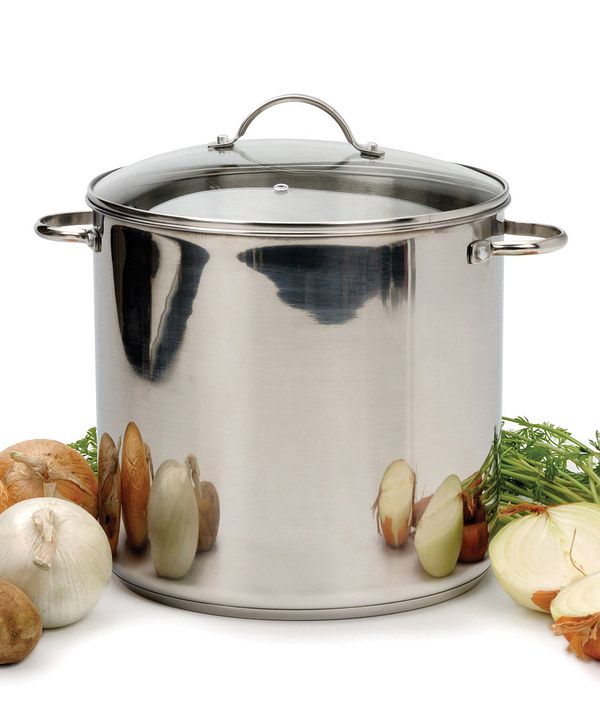
2014-0318 - Stock Pot

Good stock is the one ingredient a kitchen should never be without.

INGREDIENTS

Chicken bones or (quail back bone, neck, wing tips and excessive skin) – About half a Kg in total or more if you want to make a stronger stock.

2 onions (No need to skin) – Washed and roughly cut up. Could be replaced with Leeks

2 large carrots leaves and all) – Washed and roughly cut up

half a bunch of Celery (Leaves and all) – Washed and roughly cut up. You could add celeriac leaves if you have any

salt lightly to taste

8 Liters of water

I often buy chicken frames from the supermarket (sorry, but sometimes I have to go there) or use the back bones and necks of the quails, when I slaughter, which are both good for stock even though different. Quails make a much stronger stock than chicken. You can also do a fish stock, by replacing the meat with fish heads and frames. I keep the stocks separate so I have different flavours for different dishes.  Put all the ingredients, including the water (cold) into a meat stock pot and boil over a low heat for at least two hours, but preferably more. Let the liquid reduced by about one third and keep topping it up with more cold water to keep it at this level. Stir every so often to prevent it from burning and sticking to the bottom.

Strain the liquid from the solids using a colander and return the liquid to the stock pot and heat until boiling again. Immediately pour into clean containers and seal immediately (I use 2 liter plastic buckets). Should the lids fit properly, the reduction in product temperature will form a very effective vacuum seal. If you have maintained a high level of cleanliness and your containers were  clean, the stock will remain good for months in the pantry, even though I normally keep mine in the fridge. Once opened it should be kept in the fridge and used within a couple of days. The vegetables  are good to feed to your Chickens and Quails.

With home made stock, soups are delicious and easy, pasta sauces and stews shine and you cannot make risotto without it. Braising meat and keeping it moist with the correct stock also ad complexity and additional flovour.

The Curse of the Cookbooks

2014-03-06 09.22.32

I had to photograph the result of a cooking discussion or, cooking bickering, if you must.

The great thing about being self sufficient and eating from the vegetable patch is the joy of harvesting something one grew oneself. It is organic and fresh even if, at time whatever is harvested is gnarled and puny it still tastes wonderful. The bad thing is that one is held hostage by the blackbird that eats all the seedlings the chickens overlooked when they were free ranging last time. The seasons and climate, especially here in Dunedin , dictate whether things grow or not and the person in control of the garden constantly suffers arched inquiries as to why in the world so much (or so little) of something was planted

Sometimes there is a glut of something and then the search for a great recipe, or, often many great recipes of one particular vegetable or fruit depending on the amount harvested. The frantic paging through the cookbooks begin, and since my 200 plus books are all about regional Italian cooking the search can not be narrowed down to, say, Indian or Chinese, and mutterings of  ‘ it was always in this book, where has it gone’ are commonplace. A lot of time is spent getting side tracked when I see something fondly remembered or something I always wanted to try. Once the recipe is selected sudden resistance from the household to the ingredients could flare up, prompting the beginning of a new search and the hauling out of more books!

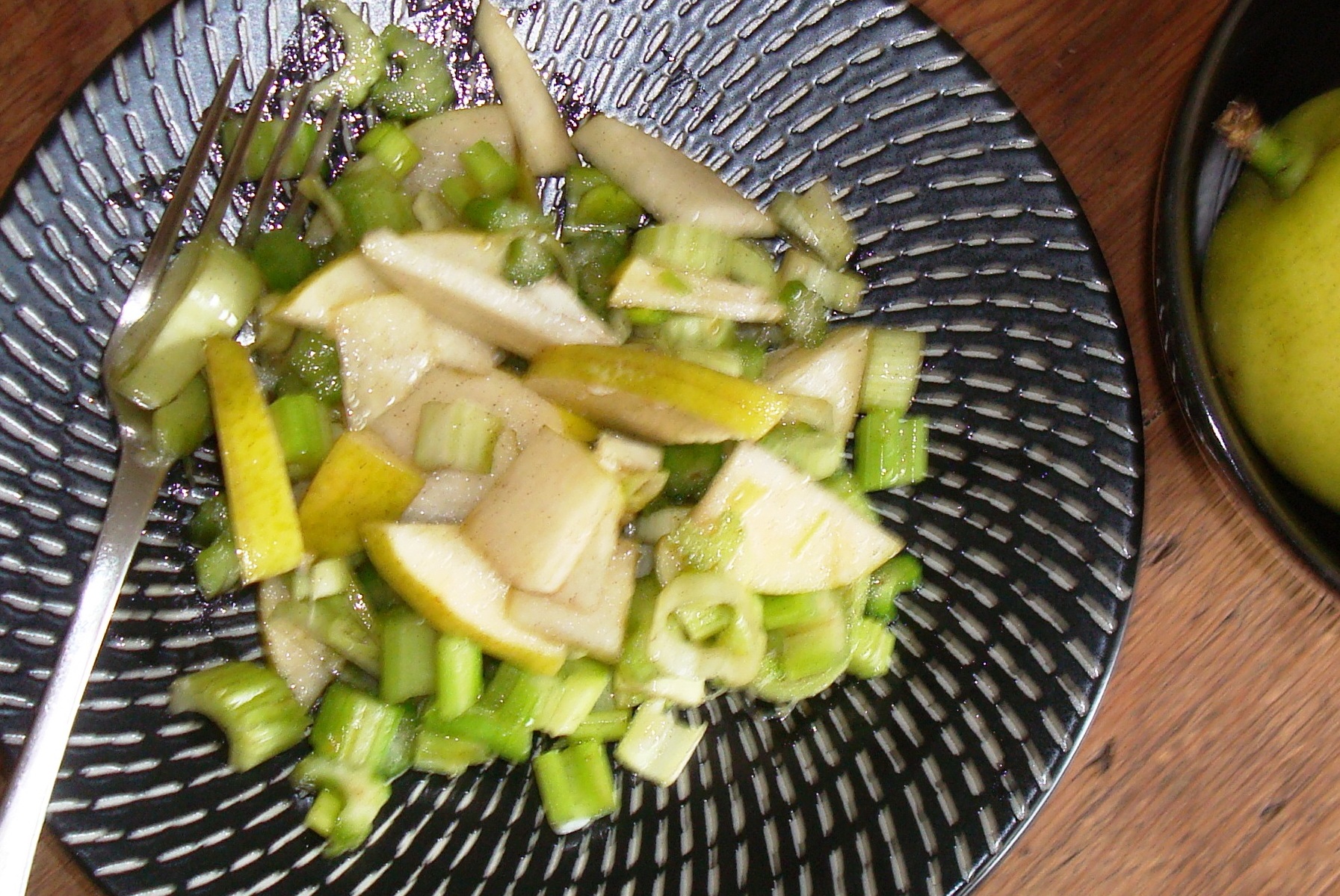
Nashi Pear and Celery Salad

2014-03-02 15.28.42

My generous neighbor has a large established garden with some prolific fruit trees. I got some of his nashi pears as a gift.  I love eating them like one would eat an apple, but for the rest of the family I had to combine the pears with some freshly harvested celery to make  a crunchy salad.  I had to make it again the next day, always a sign that the recipe was a good one!

1 large nashi pear

1/4 head of celery

5 cm of leek

1 1/2 table spoon fruit scrap vinegar

4 table spoons olive oil

salt and pepper

You can add chopped nuts and a bit of strong cheese if you have any on hand

Chop everything up and mix with a dressing made of the vinegar, olive oil, salt and pepper. Serve with fresh bread, and on a hot day, a glass of chilled Prosecco.

Apricot and (Dunedin) Rosemary Jam


2014-02-23 16.10.542014-02-26 12.33.02

I am a bit of a jam tragic, if there is anything in abundance I need to make jam from it (or preserve it one way or another). I have a lot of apricots and Dunedin has a lot of rosemary. There are no genuine Italian food ingredients to be had over here, apart from all this rosemary. It grows in every garden, cascades down garden walls in the university grounds, grows vigorously several public spaces, parks, everywhere but in my garden. Why the inhabitants plant so much of it, I can not fathom, since I can not believe that they cook with it. But, I seem to be the only person in Dunedin who has not succeeded in growing a single sprig.  To get my hands on rosemary I have to resort to theft from lush bushes of the stuff overhanging various pavements around where I live.

Apricot and Rosemary Jam 

3 Kg Ripe Apricots

2 Kg White Sugar

20 g Finely chopped Rosmary leave

15 g Apricot Stone kernels, finely chopped

Cook everything together in a big pot for half an hour. Let it rest for some 12 hours.  Cook again until the jam consistency reaches the “Freezer Test ” thickness. Stir in a tablespoon of butter and take it off the heat. When it is cool enough to handle. bottle and seal. Sterilise the closed bottles as described before.

This flavorsome jam is ideal for eating with strong cheeses and using as a glaze for pork and poultry.

Peperoni Soffritti con le Uove (Sweet Peppers)

2014-02-26 - Peperoni

This is peperoni preserve time and I have been asked what to do with “Peperoni Sott’Olio” other than serve it as anti pasto – here is but one recipe. It could also be used in any recipe that calls for capsicum, or you can make a fresh panini with your preserved capsicum, fresh tomato and strong cheese or salami and a fresh bread roll just out of the oven.

Fry your preserved peperoni in some of the oil used to preserve it in for a few minutes until soft. Ad  some chopped peeled and deseeded fresh tomato. When the tomato and peperoni are both soft pour on two slightly beaten eggs (eight eggs if you use quail eggs), add salt and pepper, and cook very briefly until just set. Sprinkle with a bit of grated Parmigiano Cheese. Serve immediately with that bread that just came out of the oven – Breakfast fit for a King (and Queen).

The only problem is that the peperoni in the photo is not from my garden and I am still trying to grow it successfully in Dunedin – maybe next year!