Passata di Pomodoro

2014-11-27 - Passata 12014-11-27 - Passata 2

No good Italian can live without tomatoes, and plenty of it. So the annual Passata day always takes effect when tomatoes are in abundance, ripe, sweet and fresh. Making about 60 kilograms of Passata every year for our own needs, and some as gifts, has been a family tradition for many decades. It helps to be on a good footing with the local green grocer who is only too pleased to discount  the tomatoes that would be considered over ripe in New Zealand, but just right in Italy.

RECIPE

Wash and roughly cut up the tomatoes, and at the same time remove the odd bad or discolored spots. Now boil the tomatoes, without water, for about five to ten minutes, depending on the ripeness, until soft, but not cooked.

2014-11-27 - Passata 62014-11-27 - Passata 82014-11-27 - Passata 9

Passata making can be a huge job without the magical Passata Machine – a device that separates the skin and seeds from the flesh. This little machine can do in excess of 100 kilograms per hour and is wonderfully designed, easy to operate, durable and very quick to clean. No self respecting Italian household is without one! Within minutes I had processed 30 kilograms of tomatoes into 28.5 kilograms of Passata leaving 1.5  kilograms of seeds and skins to compost, or dry to plant next year.

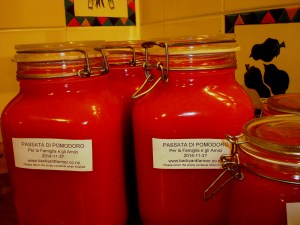
Bottle the tomatoes in clean canning bottles – do not use the cheap screw on type of bottles, but a good strong bottle with lid that can seal properly. There is  no need to sterilise the clean bottles before hand, as it is going to happen after filling them. Put the filled and sealed bottles in a large enough pot that would totally cover the bottles when filled with water. It is good to have a tea towel or some screen in the bottom of the pot, so that the bottles do not stand directly on the heated surface. Now fill the pot with water of about the same temperature as the product is at this stage (prevent bottles from cracking).  Heat until the water is boiling and then boil for twenty minutes more. Immediately remove the bottles from the boiling water, if the water starts to cool, water may be sucked  into the product.
DSC03861

Cool and label.  PRONTO !!

2014-11-27 - Passata 4

While washing the tomatoes, select the ripest and firmest tomatoes for Bruschetta with tomato, basil, olive oil, salt, pepper and garlic. Mrs BYF cannot be beaten for making the best Bruschetta!  ENJOY!

NO MEAT LUNCH

2014-11-16 - No Meat Lunch2014-11-16 - Artichokes2014-11-16 - Carcioffi Cooked2014-11-16 - Carcioffi Eaten

Lunch without meat does not often happen in our house, but today’s meal was so good I almost did not miss it. Fritters made from radish leaves, of which the seeds were purchased from Italian Seeds Pronto the very good Italian Franchi seed supplier in New Zealand, complimented by home made yogurt with milk purchased from the most beautiful dairy farm ever. A salad with borage leaves and flowers, the plant being supplied by Kimberley of Good Life Gardens in Dunedin, mixed with radish from the back yard and a good vinaigrette  – mix two parts good extra virgin olive oil with one part of home made apple cider vinegar, ad a bit of salt and pepper and shake well before dressing. Of coarse all were supplemented by good home made wine.

This was followed by artichokes again from our dairy farm in Port Chalmers. We like to cook it in water with a squeeze of lemon until the leaves come free when pulled lightly, then drained. Pull the leaves from the head and dip into good extra virgin olive oil with plenty of salt added to it and then rip the soft flesh from the leave with your teeth. After an enjoyable meal you eventually reach the pot of gold at the end of the rainbow – artichoke hearts!

All of the above accompanied by delicious home baked bread and at the end there is no space left for the meat in any way.

ENJOY !!!


Frittata di Borragine e Cacciatore (Frittata with Borage and pork sausages)

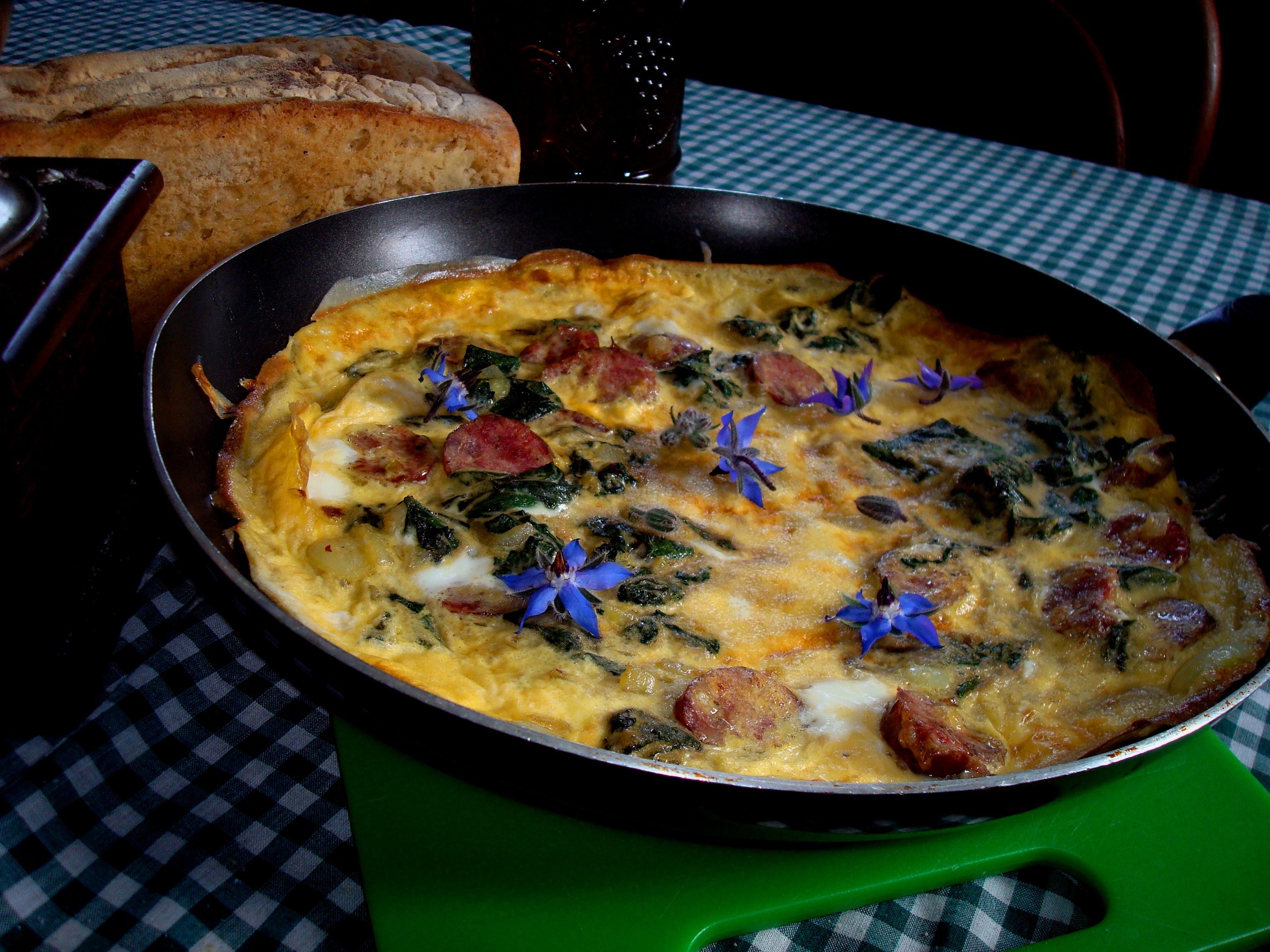
2014-11-13 - Frittata di Borragine 3

This morning’s breakfast was a feast put together by Mrs BYF (I knew it was breakfast, because I did not have wine with the meal). Borage (Borago officinalis) is one of the plants that actually thrives in Dunedin’s whether, so one has to make the most of it. The flowers and young leaves are delightful in a salad and the older leaves can be cooked like spinach as a side vegetable. Making a frittata with home made Cacciatore sausages was not only very pretty, but also exquisite.

RECIPE

Fry some onions and garlic in butter and olive oil in a heavy pan, ad the sausage and fry until it starts to color, then ad the borage leaves and cook until almost done. In the mean time, lightly beat 24 quail eggs (6 chicken eggs) with six tablespoons of water. Ad a bit of grated parmigiano cheese, salt and pepper and pour into the pan with the other ingredients. Turn the temperature down to medium and leave, without stirring, for a few minutes until it just starts to set on the top. Now put in in the oven under the grill until lightly brown. ENJOY !!! (If after 10H00 a good red wine is permitted)

Fave e Cicoria (Broadbeans with Chicory)

2014-05-16 Fave e Chicoria 2014-05-16 - Preserved Fava


I heard about this recipe many years ago but have never tried it. Today I harvested all the chicory in the garden, cleaned it and put it in the pot straight away. I used some of the broadbeans that I had vacuum sealed and preserved during the summer. The result was delicious! The recipe originated in the old Queen of the Sea, Bari (Puglia),  the home town of my dear friend Lino Pansini. I must remember to ask him if his mum ever made it. It is traditionally served in on big plate, placed in the centre of the table, and each person was given a fork.

Fave e Cicoria

500g Broad Beans-  Soaked overnight and boiled down to a puree. I have used my fresh preserved beans (In Italy dried broadbeans are used)

1 Large bunch of fresh green Chicory

A pinch of Chili

2 Cloves of Garlic finely chopped

Olive oil for frying and Extra Virgin Olive Oil for drizzling on the finished dish

Salt and pepper


Cook the broadbeans until most of it becomes a puree, about 40 minutes. Add a bit of salt and pepper to the bean puree. Meantime, boil the chicory for about 10 minutes until tender. Do not add salt to the chicory. Fry the garlic in a bit of olive oil until soft, add the chilli  and chicory (squeese out as much water as you can first). Cook for about 5 minutes. To serve put the chicory on a serving plate and spoon the hot bean puree over the chicory.

This is enough for 4 people as a side and for 2 people if eaten as a main with bread. Use any left over bean puree as a pasta sauce.  ENJOY!


Celery, Leeks, Fennel and Potato Recipes

I harvested celery, leeks, fennel and potatoes this week. As usual the question is how to put my harvest to good use without using the same recipe twice. I have a picky household that does not tolerate the same dish twice in one week so here are my efforts so far:

Crunchy Celery, Fennel and Apple Salad 

1 bunch of celery chopped in to bite sized pieces. Keep the leaves for stock making.

1 apple cut in small pieces

1 fennel bulb shaved thinly

1 orange – 1/2  juiced and 1/2 cut in bite sized pieces

salt and pepper to taste

Mix everything in together.  You can change the quantities to suit your taste as it is hard to get this one wrong. You will have a pale looking salad so liven it up by sprinkling the dark green fennel fronds, cut decoratively, over. The trick is to prepare and assemble this salad just before serving, any delay causes the apple to discolor a bit. 

2014-02-02 11.43.35

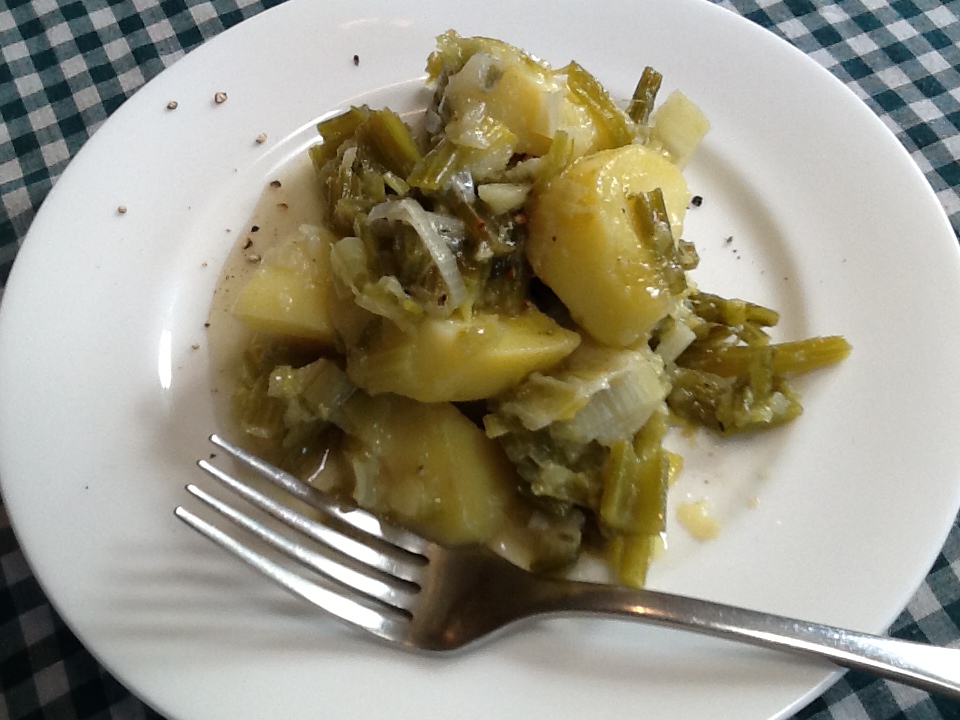
Celery, Leek and Potato 

8 tablespoons of olive oil

500 g peeled potatoes cut in pieces

1 head of celery, stems only, keep the leaves for stock making

1/2 lemon juiced

salt

Use a heavy pot with a lid. Put the olive oil and celery in and add water until the celery is covered. Cover the pot and boil until the celery is softened about 10 to 15 minutes. Add the potatoes and cover the mix with water again. Add salt and lemon juice. Cover the pot and boil until everything is tender and no liquid barring the oil is left (this is important). Serve hot or at room temperature. I used it as a side with the week end barbecue but the dish is robust enough to  eat as a main with some bread.