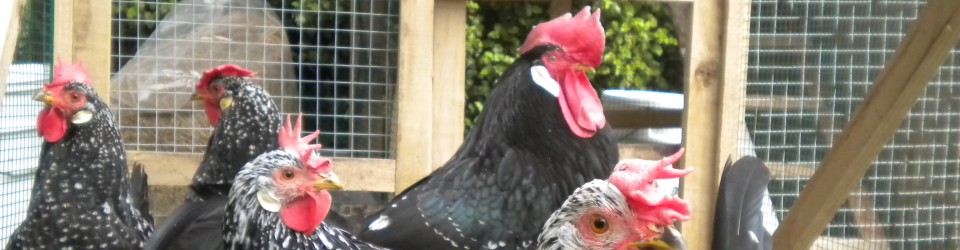
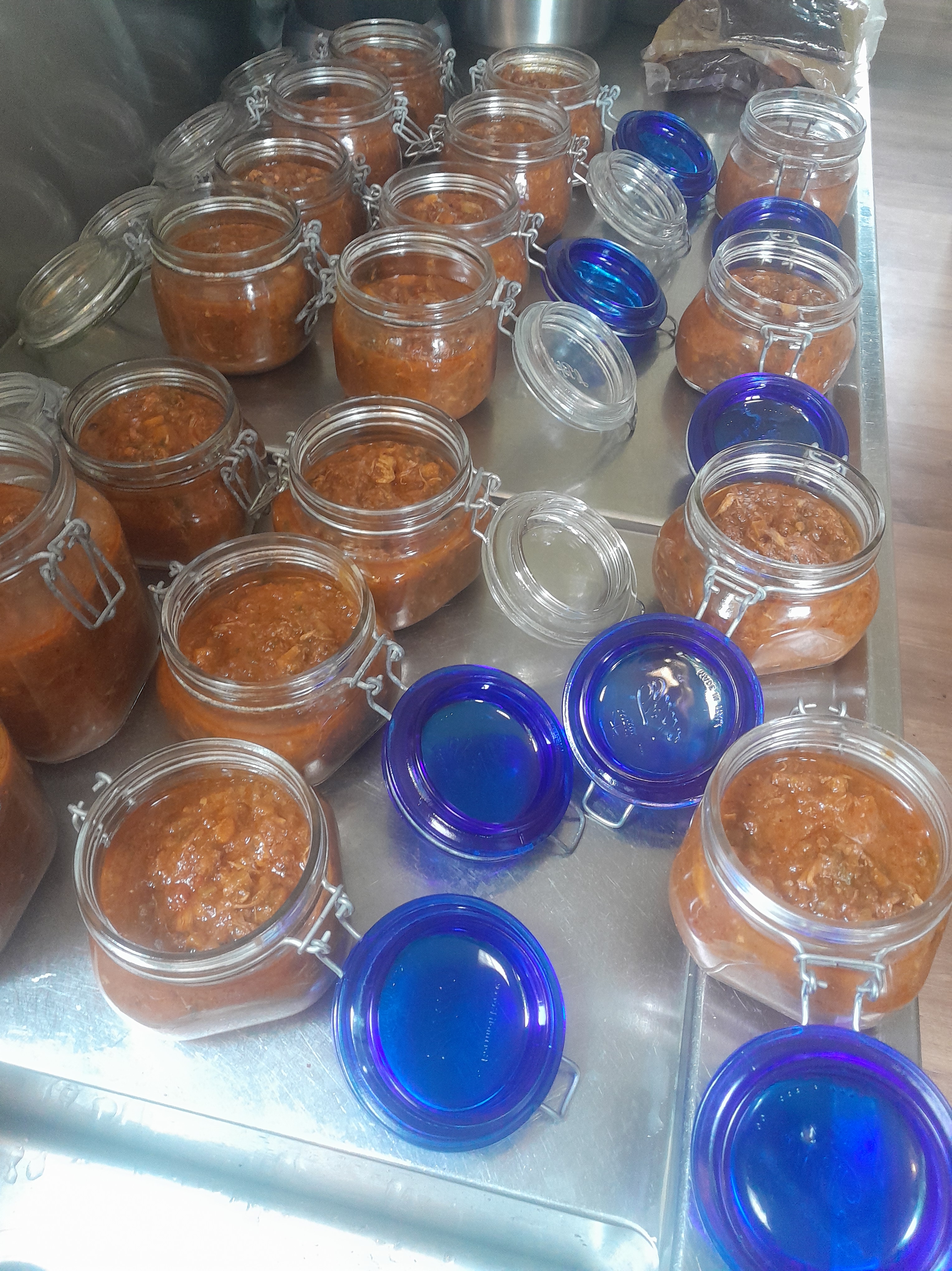
Every so often the freezer fills up with mature, processed quails, and the best solution is to turn them into something truly special : a slow-cooked ragù. On this occasion, I pulled 40 frozen quails from the freezer and spent most of Sunday afternoon transforming them into a rich, deeply flavoured sauce that can be enjoyed for months to come.
This is a labour of love, but one that rewards you generously. This is not just a sauce – it’s a celebration of North Italian tradition, where time, patience, and respect for every ingredient create something unforgettable. Cooked slowly, bottled carefully, and served with fresh pasta, it brings the warmth of our kitchen straight to your table.
Ingredients
- 40 deboned quails
- 2 kg finely chopped onions (50% brown, 50% red)
- 250 g extra virgin olive oil
- 250 g butter
- 200 g finely chopped celery
- 200 g finely chopped carrot
- 50 g salt (adjust to taste)
- 50 g freshly ground black pepper (adjust to taste)
- 250 ml full-cream milk
- 500 ml white wine
- 500 ml stock (quail stock preferred)
- 500 g tomato purée
- 1 kg tinned tomato passata
- 100 g finely chopped garlic
- 50 g finely chopped fresh hot chilli (optional)
- 5 g freshly grated nutmeg
- A handful of hand-shredded fresh basil
- 2 Cups Grated Parmigiano Reggiano Cheese
Method
In a very large, heavy-based pot (large enough to hold all the ingredients), add the olive oil, butter, and chopped onions. Sauté gently over medium heat until the onions are soft and translucent, but not browned.
Add the celery and carrot and cook gently for a further 5 minutes.
Add the quail meat, season with salt and pepper, and cook until lightly browned. Stir in the tomato purée and cook for a few minutes to deepen the flavour.
Pour in the white wine and cook until it has completely evaporated. Add a portion of the stock and stir frequently.
Reduce the heat to medium, then add the garlic, chilli (if using), milk, and nutmeg. Cook until the milk has fully evaporated, stirring regularly.
Stir in all the tomato passata. Once the ragù begins to bubble, reduce the heat to low and cook uncovered for 4–5 hours. Stir often and do not let it burn. As the ragù thickens, add more stock, as needed to maintain a rich, slow-simmering consistency.
Once cooked, bottle the ragù, seal, and pasteurise.
Storage & Yield
The great advantage of this method is longevity : the bottled ragù can be stored in the pantry for a very long time and provides an exceptional, ready-to-use meal at any time.
This batch yielded approximately 50–60 meal portions. For a family-sized version, simply divide all quantities by ten.
If quail is not available, a combination of beef and pork makes an excellent alternative.
Pasta al Ragù di Quaglia
While the pasta cooks in ample salted water – fresh pappardelle is my preference – open a bottle of ragù and transfer it to a pan large enough to accommodate both the pasta and sauce.
Gently heat the ragù. Drain the pasta while it is just shy of al dente and add it directly to the pan. Toss the pasta and ragù together over low heat until fully cooked, stirring and lifting constantly (Mantecare).
If the sauce becomes too thick, add a little stock, or some of the salted boiling pasta water. Finish with fresh basil, give it one final toss, and serve immediately topped with ample grated Parmigiano Reggiano Cheese.
Pasta al Ragù di Quaglia should be served piping hot – and enjoyed without haste.
Do not forget the bottle of home made red wine to finish it all !
 Back Yard Farmer
Wow.. that’s some recipe.. & blog.
Sent from my iPhone
And it is good to eat too!!
👌
You have been very busy!!you won’t starve over winter!
Sent from my iPad
>
Hope to share with friends and family !!!