La Stagione delle Ciliegie – The Cherry Season

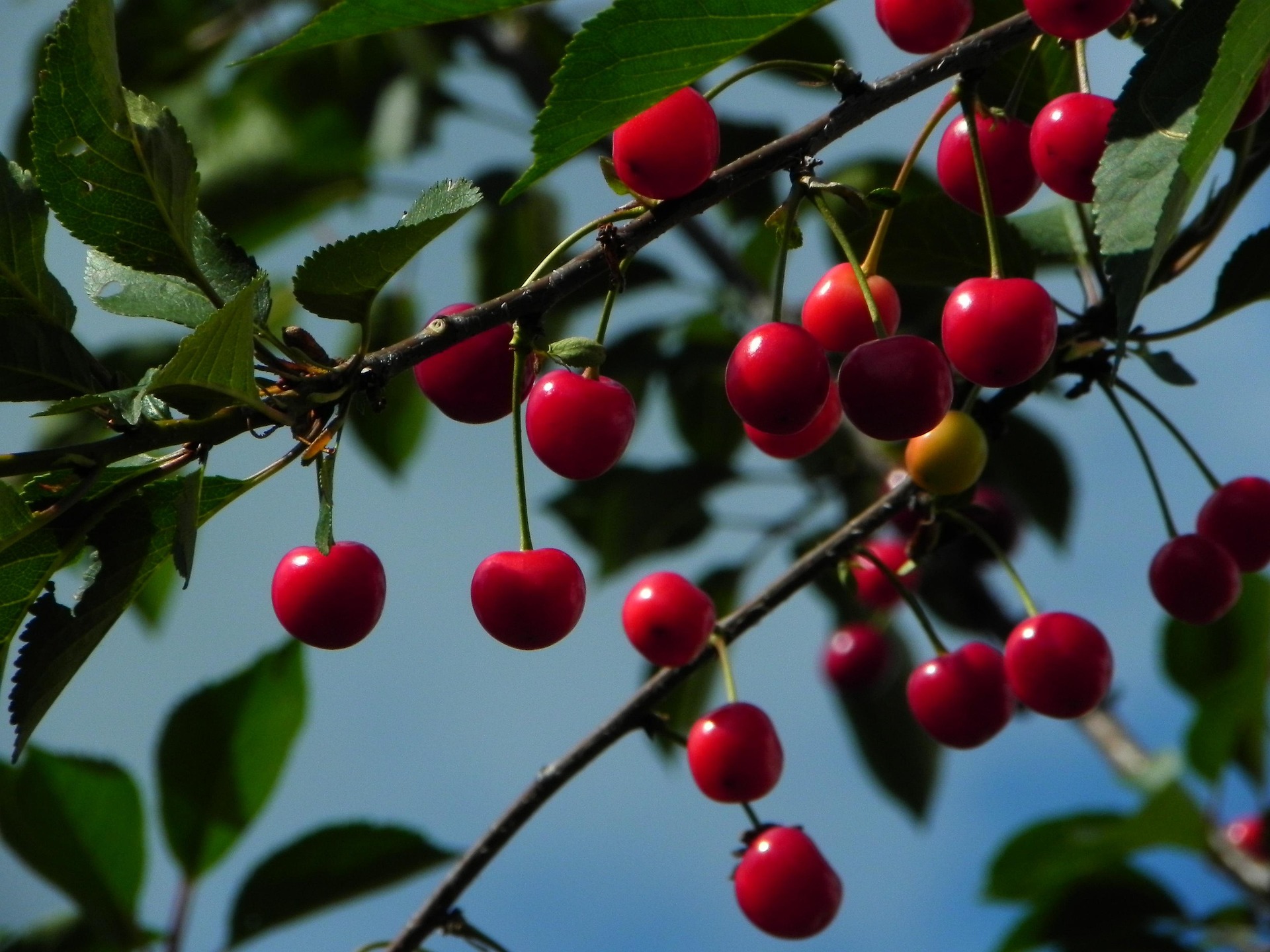
Just when the cherry harvest was at its peak – and my friend and I arrived from Cromwell with around 200 kg of Cherries – soon our trusted Cherry Pitter decided to take a break. A little rebellion in the kitchen for more pay and variety!

Still, the bounty of the season did not go to waste. In the warm, fragrant kitchen, we quickly transformed the cherries into Cherry Wine, Cherry Cordial, Cherry Jam, Cherry Preserve and Cherry Grappa – treasures to carry the taste of summer through the year


🍷 Vino di Ciliegie — Cherry Wine, La Fattoria Style

In true Italian farmhouse fashion, our cherry wine is simple, hands-on, and made with love:

  1. Prepare the Fruit: Place pitted cherries in a clean fermentation vessel and cover them with boiling water
  2. Sweeten & Balance: Once cooled to room temperature, add sugar to taste and adjust the acidity as needed
  3. Add Life: Stir in wine yeast (Mangrove Jack’s MA33 and AW4) and yeast nutrients
  4. Ferment on the Must: Let it sit for about a week, stirring daily, allowing the fruit and yeast to mingle and awaken

If the yeast seems hungry, a little more sugar or nutrients keeps it happily working


🍶 Secondary Fermentation

  1. Strain and siphon the liquid into a clean demijohn (damigiana) with an airlock
  2. Watch as it gently bubbles away, slowly transforming into wine over several weeks
  3. When the fermenting slows, rack into a clean vessel and leave for about four weeks to ensure the wine is fully at rest

🍾 Bottiglia e Godimento — Bottling and Enjoying

Once the wine is clear and quiet, it is ready to:

Bottle – Seal – Label – Store

A simple, rustic cherry wine, carrying the warmth and charm of the Italian countryside – perfect for sharing with family, friends !!

VINO di SAMBUCO (Elderberry Wine)

8B852935-D11B-463B-A687-DCE03EA783D7

Make sure to pick clean, ripe elderberries and remove all the leaves and stalkes. Wash well under running water.

Crush the berries to create a must –  I use my PASSATUTTO machine which works very well for this.

Once you have your must, pour it into a large enough container to hold all the product and have some spare space to allow for foaming during the first few days.  Now add about three litres of boiling water for every litre of fruit.  Close it well and leave it  for one day to sterilise the must. Add pectinase enzyme and leave for another day.  Adjust the pH and sugar contents, add your wine yeast and yeast nutrients and ferment on the must for about ten days. Remember to stir twice a day and always use clean sterilised equipment. Always close the container well to prevent contamination and fruit flies getting into the must.

After 10 days, rack and filter and adjust for sugar if required. Now pour your wine into a large enough Damigiana to make sure their is not too much air space, then put on an airlock and wait.

Rack and filter when the ferment is becoming clear and sediment is visible (about 2 – 3 weeks). Every time you work with the wine, top the Damigiana up to the neck with similar sugar content syrup or fruit juice. Airlock and ferment.

After another few weeks the fermentation will become slow and it is then time to rack, filter and top up again.

Make sure the fermentation has stopped completely before you rack, filter and bottle.

Leave it alone for a month and ENJOY!!

Vino di Fiori di Sambuco (Elder Flower Wine)

2018-12-24 - Elderberry Harvesting Team

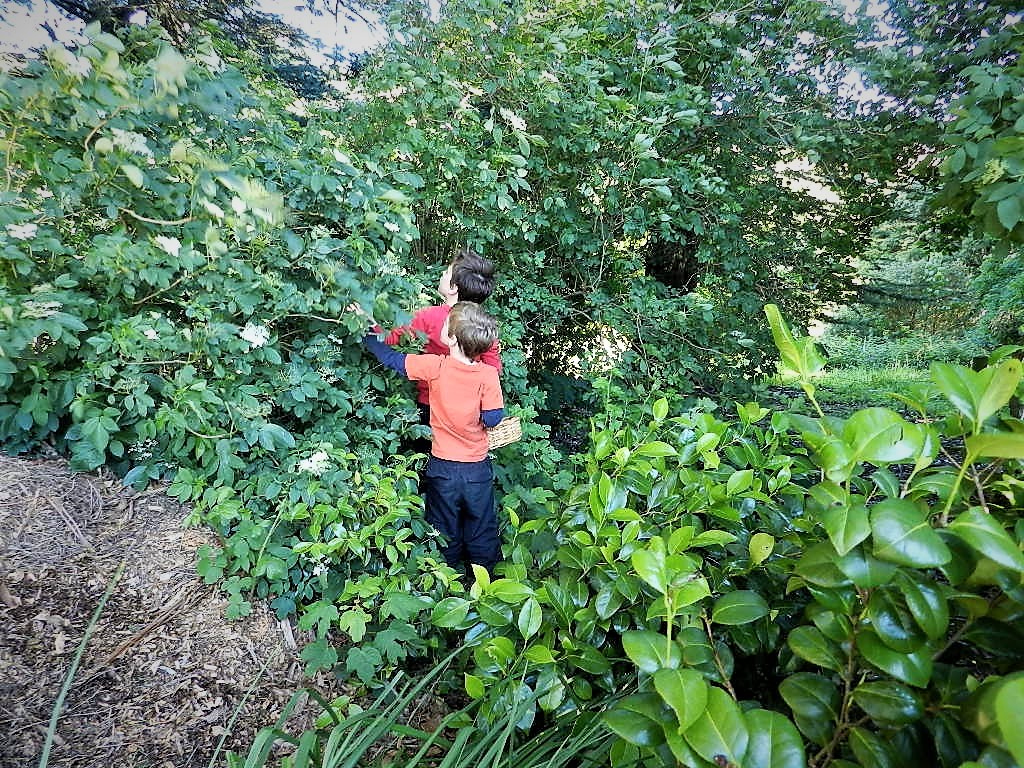
The Elder Flower Pickers hard at work. We had a trial run a few weeks ago making Elder Flower Sparkling Wine. It was delicious. We set out to harvest enough before the flowers disappear, at which stage we will attempt elderberry wine!

Vino di Sambuco ( elder flower wine ) Recipe as it happened step by step

2018-12-03

Add about 1 Liter Elder flowers, stems removed, to a 10 L plastic drum and cover with 5 Liters of boiling water – seal

2018-12-04

Stir in 1 Kg of Sugar until dissolved

Ad lemon zest of four lemons

Ad lemon juice of four lemons (about 210 ml)

Re – hydrate yeast by adding 6 g ‘GoFerm’ and 5 g ‘Lalvin EC1118′

(the seller is called Make Wine) and 50 ml of cooled boiled water Leave for 30 minutes

Add re – hydrated yeast to the must

Add 4 g ‘Ferm Aid ‘ to the must

SG (Specific Gravity measured with a Hydrometer to determine the sugar content) – 1.055 (Ad more sugar later)

Stir very well and put lid on tub – ferment on the must

Stir twice daily

2018-12-08

Rack and filter into two X 5 Liter Damigiane or large glass wine bottles. Top up with about 0.5 Liter each of 1.09 SG sugar syrup

Airlock and Ferment

SG – 1.06

2018-12-11

Rack and Filter

Airlock and Ferment

SG – 1.04

2018-12-15

Rack and Filter

Airlock and Ferment

SG – 1.02

Top up with 200 ml (100 ml per Darmigiana) of SG 1.09 Sugar Syrup

Taste – Pleasant, sweet and a bit bubbly

SG – 1.04

Airlock and Ferment

2018-12-20

Still fermenting slowly

SG – 1.02

Rack, Filter and Bottle in a Champagne bottles

Drink and ENJOY!!!


Puffball

E1D3E917-6FD5-4303-B074-8F8FCF348E60


One can benefit greatly by living in close proximity to a keen forager with an eye for mushrooms. The mushroom season in Dunedin has been exceptionally good and boletus are plentiful should one know where to look for them.  Mushroomers may share their haul, but will never, ever tell where their mushrooms are found! Our generous benefactors have shared their bounty with us and some of the most thrilling mushrooms, the puffballs, grow right here in their garden!

Recipe for fried puffball mushroom

1 Good sized puffball, firm and pure white right through when sliced. The inside has a marshmallow like texture

2 to 3 Eggs, lightly beaten

1 cup dried breadcrumbs with a pinch of salt and pepper added and mixed in

Use a cast iron or heavy based pan big enough to fry the mushroom slices in 2 ot 3 batches

Enough pork fat or vegetable oil to come up to about 2.5 ml up the side of the pan. Apart from the great taste, pork fat can be heated to a very high temperature, ideal for frying

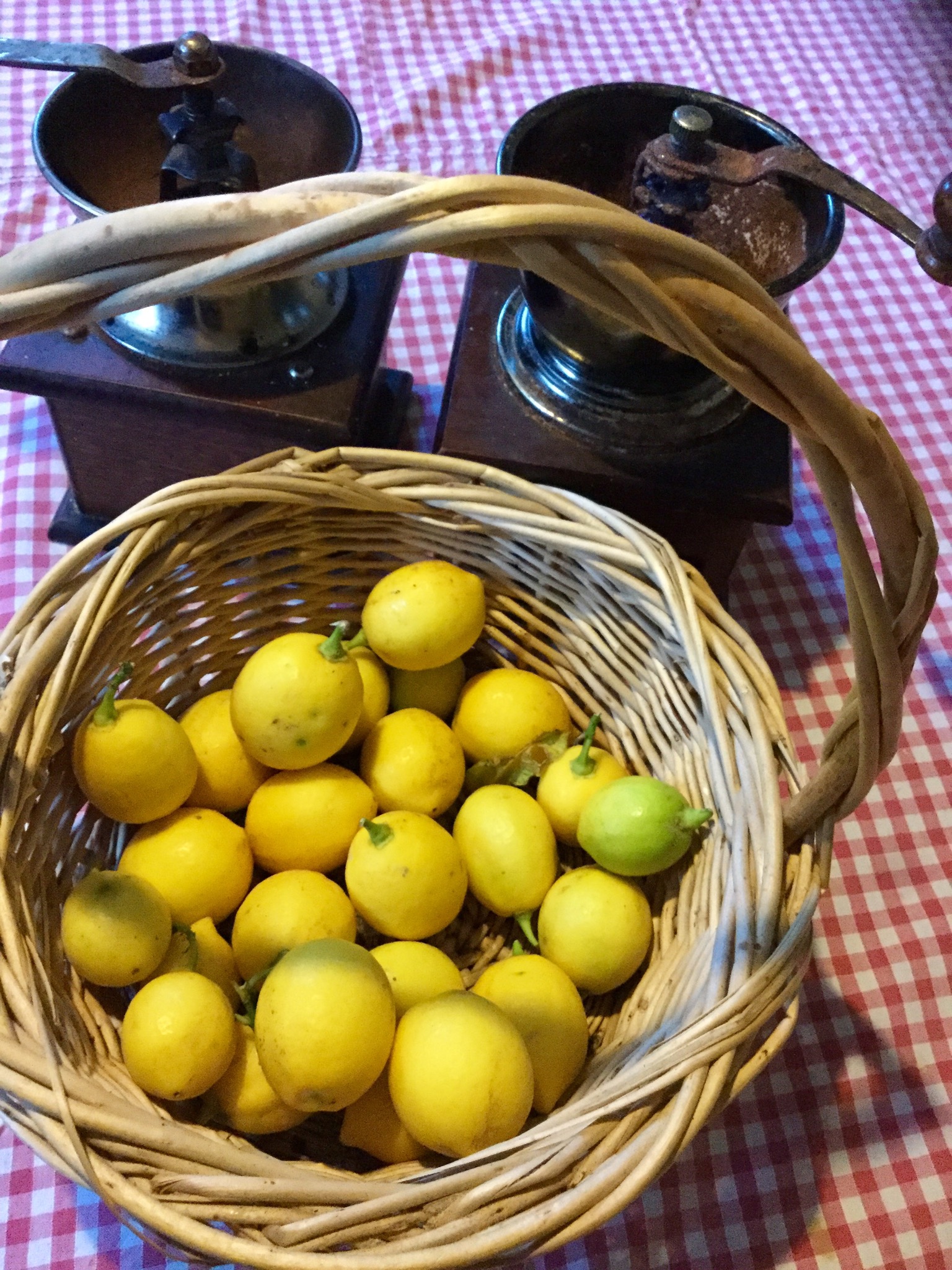
I have written about puffballs before, and this one was prepared by again slicing it into ‘steaks’ about 15 mm thick, dipped in egg wash and coated in dried breadcrumbs. This time the slices were fried until golden in pork fat, processed in our kitchen from a delicious home grown porker. I highly recommend frying in pork fat but those that fear animal fat can use vegetable oil. We ate the mushroom, dressed with a few drop of fresh lemon juice and ground black pepper, for dinner along with fresh tomatoes that ripened in Dunedin’s first hot summer since we moved here. The tiny lemons are from the tiny tree planted in our front garden 2 seasons ago.

Only flour for making the bread to produce crumbs and salt and pepper were purchased to produce this lovely meal.