HATCHING COTURNIX COTURNIX QUAILS

The following hatching conditions I have found over the years are giving the best hatching and survival rates for Coturnix coturnix quails

I collect eggs for up to 3 days, depending on how many I want to incubate, then class them for hatching.

1. Do not clean or wash the eggs at all

2. Remove any odd colours and shapes of eggs

3. Candle all eggs for fine cracks and discard cracked eggs

4. Weigh the eggs and only incubate eggs that are between 12 and 15 grams. Smaller eggs result in weaker chicks, while larger eggs (15 g plus) is not preferred since it becomes too large for the hens. The incidence of double yolks are not always detectable and is more frequent in larger eggs. I select hens for about 280 – 300 g body mass and do not breed from larger birds. This is the most economical bird and eggs size.

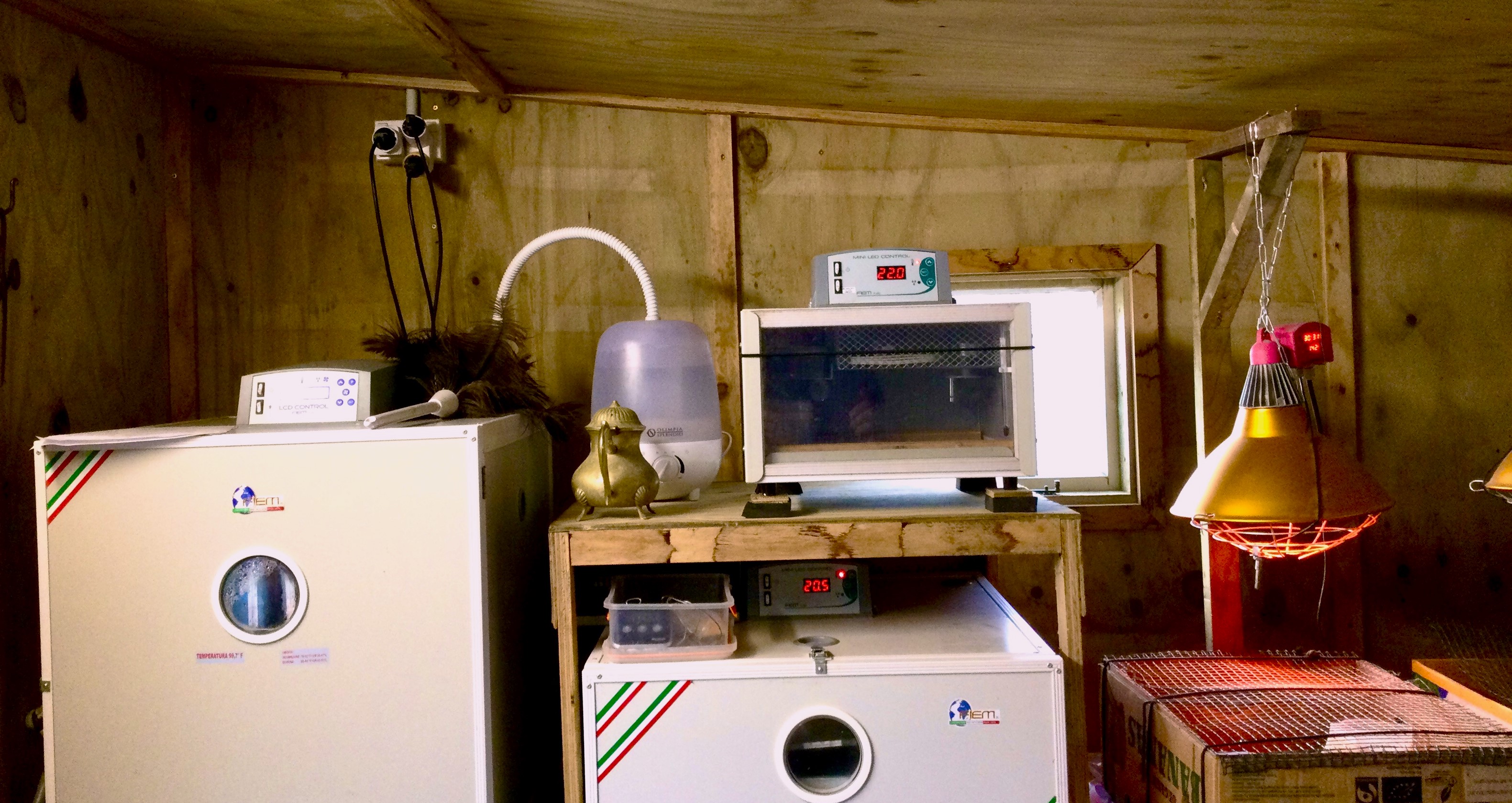
5. Incubators are set at 37.7 Celsius and 45 degrees Humidity. Hatchers are set at 37.5 C and 80 % Humidity. I monitor and adjust incubators and hatchers for both these two parameters with independent monitors as incubator measuring and displays are not always that accurate, even with my commercial, sophisticated and well proven machines. Notice the independent thermometers and wet bulb thermometers through the front windows of the machines. Preheat incubators and hatchers for a couple of hours before setting.

I am always trying to simulate nature during incubation and hatching and therefore keep the inside of the machines dark, as if under a hen. Furthermore there are some research published lately suggesting to have better hatching results if the incubators and hatchers are switched off for about 30 minutes every day, again simulating the hen getting up to eat. I have not tried it, but will experiment with this soon.

Keep hatchers and incubators in an environment as close as possible to the setting parameters. Also avoid fluctuations in conditions and make sure there are no drafts, but it should be very well ventilated.

6. Coturnix coturnix eggs are incubated for 14 days (37.7 Celsius and 45 degrees Humidity) while automatically turned every 2 hours. Then they go into the hatcher (37.5 C and 80 % Humidity) until hatching at about 17 days. I leave the chicks undisturbed for 24 – 36 hours after the first chick hatched and then move all the hatched chicks to the brooders and stop hatching. I do not assist any chicks that struggle to hatch, or still in the eggs.

HATCHING TIMES

I use the same incubation and hatching parameters for many other species as well. All are moved to the hatchers 3 days prior to hatching and are just left in the incubators until 3 days before hatching, whatever time that may be.

Pheasants 24 Days (21 + 3)

Partridge 23 Days (20 + 3)

Bob White Quail 23 Days (20 + 3)

Californian Quail 22 Days (19 + 3)

Coturnix coturnix 17 Days (14 + 3)

Frittata di Uova di quaglia, Cardi e Asparagi

Quail Egg Frittata with Cardoon and Asparagus

Clean and dice a handful of the cardoon and boil in salted water for about 5 minutes. Dice a handful of Pancetta and fry in a pan large enough for all the ingredients. Ad the Cardoon to the pan and fry with the Pancetta for about 5 minutes. Ad pepper to taste (salt is already in the Pancetta)

Crack about 30 Quail Eggs and ad a handful of grated Parmigiano Reggiano, two tablespoons of water and ground Black Pepper. Beat the eggs slightly with a fork and ad to the Pancetta and Cardoon. Fry slowly until almost set. Now place the pan in the oven with the grill turned to high.

Cut the tips of the Asparagus and fry in another pan with butter and Black Pepper for about 2 -3 minutes.

When the Frittata has set in the oven, decorate with the fried Asparagus and return to the oven until brown. Remove and drizzle with Extra Virgin Olive Oil, Black Pepper and fresh Basil leaves

Eat with toasted Wholemeal Organic Bread and wash it down with a good wine – Today I tried my Honey Wine, which I make to be dry and it was all GOOD!!

HOW DO I SEX MY COTURNIX QUAILS

A question that I often get is “How do I sex my quails?”

The easiest is that the male quails crow and the females do not. Should your quails be well housed and fed, the males will start crowing at about 3 weeks of age. I catch the crowing males and place them in a different brooder and come the time that they can go out to the breeding cages, or be sold, at 6 – 7 weeks of age, they are all sexed. Mature male quails only crow when sexually active during the breeding season and not so much when molting and not producing. Secondly the Pharoah colour and Italian colour can be feather sexed in that the males have brown feathers on the chest where the females have black spotted chests. The problem comes with the Tibetan colour and White colour where you cannot feather sex them as males and females look alike. All birds can be vent sexed though. The cloaca opening in the female is larger and more plump. In the males the cloaca opening is more tight and they also have a red swollen gland on the top end of the cloaca opening and when pressed a white substance appears, which is lubricant and not semen. The females do not have this gland. This gland in the males is also very depressed when not in the breeding cycle and it is more difficult to distinguish then.

Italian Coturnix coturnix Male with brown feathers on the chest

Italian Coturnix coturnix Female with black spotted chest feathers

Pharoah Coturnix coturnix Male with brown chest feathers

Pharoah Coturnix coturnix Female with black spotted chest feathers

Tibetan Coturnix coturnix – Males and Females look alike

White Coturnix coturnix – Males and Females look alike

Coturnix coturnix QUAILS ARE NOT MINIATURE PHEASANTS

Today I was called by an acquaintance who also “breeds quails” and was informed that he has lost over 150 quails this season dying mysteriously from whatever. My first question, as a animal nutritionist, was what he feeds the birds. I was appalled to hear that he gives them a commercial “Game and Quail Crumble” (A name invented by the reseller as the manufacturers does not even call it that) and supplements it with kibbled corn, peas and some “other seeds” and every so often they get some dog roll. This manufacturer also claims their product to be good for all stages of game birds, which is IMPOSSIBLE.

The mistake that many people make is to think that quails are just small pheasants. The feed companies that manufacture pheasant feeds, because there is a reasonable industry breeding and rearing pheasants for the hunting industry, want to jump onto the wagon and claim their feed is also good for quails as well, which is just not true. New Zealand is one of the few, if not only, developed countries in the world that does not have any animal feed regulations and / or legislation relating to feed analyses. This means the manufacturers can mix anything and claim anything and do not have to disclose any content nor analyses. It Is therefore difficult for anybody to comment on any feed, as very little is disclosed and no regulatory body oversee this industry

A quail hen of 220 g average body mass can lay up to 300 eggs of 11 g average (5 % of body mass), in a season. A total egg mass of 3,300 g, or 15 times the quail’s body mass

A pheasant hen of 1,300 g average can lay up to 80 eggs of 32 g average (2.4 % of body mass), in a season. A total egg mass of 2,560 g or 1.97 times the pheasant’s body mass

Quails are 760% more efficient egg producers than pheasants and they recommend feeding them the same?

So are there many other physiological and production differences between these two species of animals

I am an experienced and well qualified animal nutritionist who has been involved at all levels of animal nutrition in many countries of the world, and seldom, if ever, have I heard such misrepresentation of any animal feed.

If you want your QUAILS to be healthy, happy and efficient producers, feed them a series of well formulated QUAIL FEEDS that is specifically manufactured for every different stage of life and production

IFRARED HEATED BROODERS

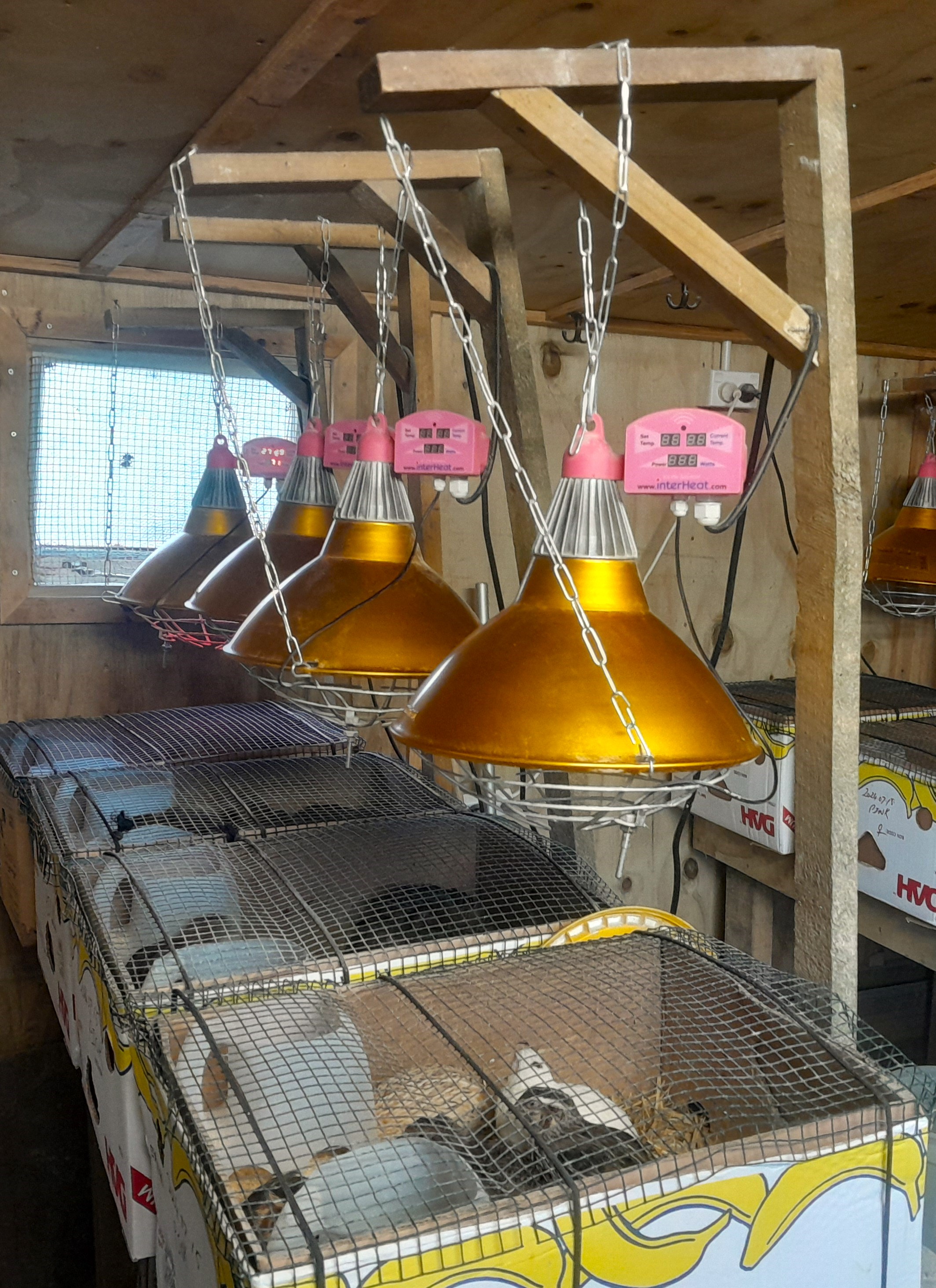
About a year ago, I introduced Remote Control Automated Infrared Heating in my quail brooder houses with excellent results. Mortality is down from already low values and growth rates are up, which partially may be as result of the selection pressure I constantly apply towards growth rates. Best of all is that my electricity usage is down as the heating is applied only when and how much is required all the time, compared to the previous system where heating was applied all the time and only adjusted manually every few days, neither were there any adjustments for ambient temperature fluctuations.

I have seven of these units – basically one for every age group as I hatch a batch every week and move them outside when 7 weeks old.