This is an abstract of an answer I provide regularly to some of my Coturnix coturnix friends requesting general advise on quail keeping
“You seem to have a lovely palace for your quail and by the looks of it about 4 X 2 meters or more. That size would be more than adequate for 20 females and about three males. You need about one male per 6 or 7 females to ensure a high rate of fertility in the eggs. If you do not mind to have lower fertility rates in the eggs, you can cut the number of males. If, as in your case, the quails have enough space to stay out of each other’s way, more than one male per cage should not be a problem. See if the males and females have resolved the pecking order (no fighting) and if so, they should all be happy. If you do see fighting or restless birds, try to identify the culprit, which may be dominant or subordinate, whichever will cause interruptions in the pecking order and stability of the group, and remove the bird. If the fighting stops and the group becomes calm, you have done well, if not, try and replace the bird with another bad apple. Sometimes it is possible to stabalise the group by removing individual birds, sometimes not, but it is worth the try. The other alternative, as you mentioned, is to have individual breeding groups of 6 – 7 girls and a boy – this however would not guarantee stability of the group as they may still have issues with each other and destabilise the group and you would be back to square one to try and resolve the domestic violence! If everything fails to calm the groups, you need to look at OTHER STRESS FACTORS, such as housing, disease and parasites, feed quality, etc. Also remember that temperament is highly hereditary and I select very heavily against this.
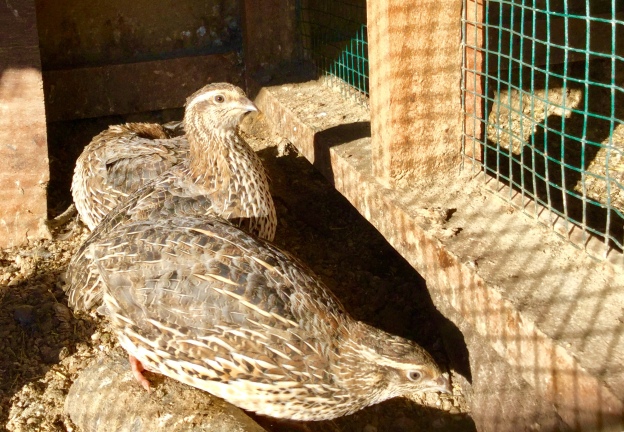
Housing needs for Coturnix coturnix is simple – remember they are ground dwellers and would not roost. Hence they need a lot of space to hide from the weather, other birds, have some private time or whatever. They love low growing vegetation and / or hiding spaces in the form of upturned boxes or plants, etc. The cage must be DRY AT ALL TIMES and the quails should be well ventilated, but OUT OF DIRECT DRAFTS. If the cage is dry and sandy, they will find their own dust bathing areas which you could encourage by turning the dry soil over and maybe ad some wood ash or lime to encourage them to bath. It is also a very easy and convenient spot to ad a bit of diatomaceous earth or flea powder to keep them free from external parasites. Furthermore clean and well balanced food and water needs to be available at all times (Ad lib).
Deworming once every three months is advisable
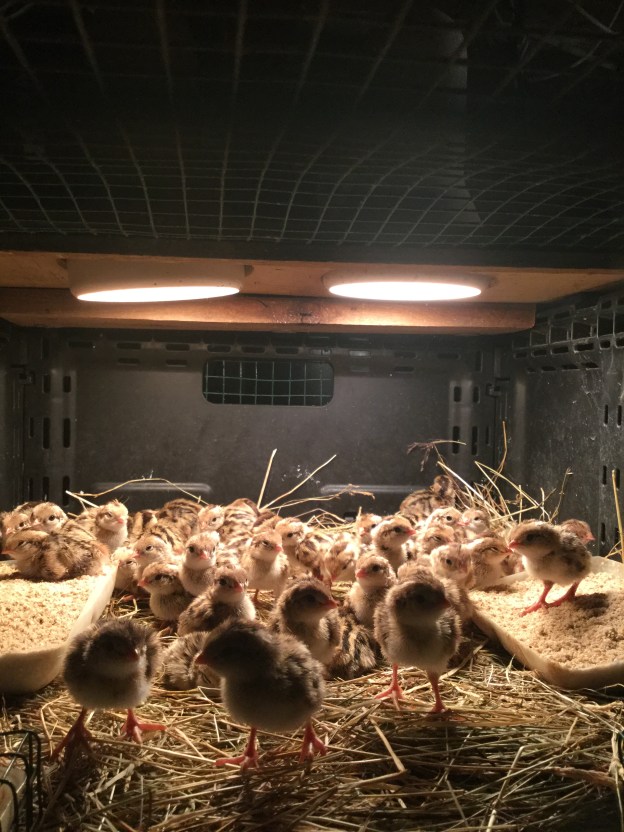
Live meal worms, table scraps (especially protein in the form of meat off cuts (cut into quail bite sizes), etc are always welcome and enjoyable for the birds. Not only does it provide additional nutrients, but it also keeps them occupied and less time to fight with somebody they do not like. Lettuce is a great delicacy for them and the additional vitamins do them well. The question is however at what level do you like your quails to produce at – if you want maximum production and feed a well balanced diet to achieve this, table scraps and other foods should not make up more than about 20 % of their daily requirements. Remember that young Coturnix need about 28 % protein in their diet and the older birds need 22 % protein. If you can provide them with these levels of protein and balance all the other nutrients to compliment the protein, they will be some of the most effective PRODUCTION MACHINES you have ever encountered. That is why I only feed my birds a WELL BALANCED COMPLETE QUAIL FEED and supplement daily with some greens for their enjoyment.”




 Back Yard Farmer