Category Archives: Quail – Breeding
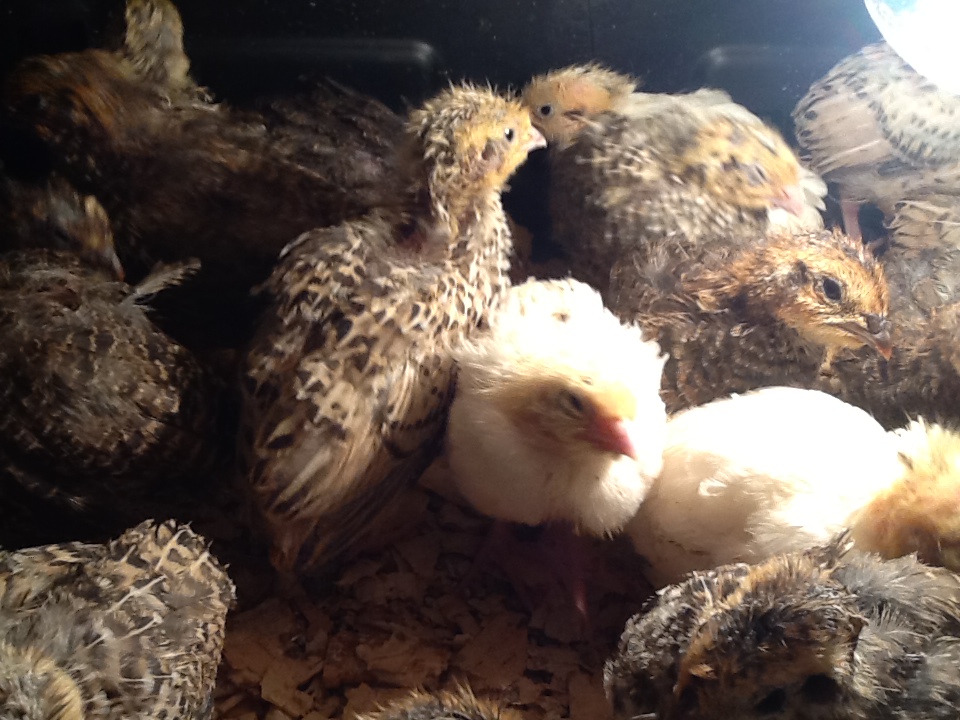
PHAROAH COTURNIX QUAIL
PHAROAH – COTURNIX QUAIL
I aim to develop purebred PHAROAH QUAIL BREEDING GROUPS or PHAROAH QUAIL HATCHING EGGS that I intend to introduce to NZ breeders
(I also breed Golden Italian, White and Tibetan Coturnix Quail and have eggs and breeding groups on offer. )
The Pharoah Quail (Coturnix coturnix Japonica) has similar characteristics and colour to the wild quail (Coturnix coturnix). These birds are native to the Mediterranean, Asia and Africa. Migratory habits resulted in some birds landing in Egypt and this is where the initial domestication has happened. Since the twelfth century these birds have been raised in Japan for meat, eggs and as pets (hey loved their singing). Coturnix Quails were introduced into the United States in 1870. Even though the Pharoah and Wild Quails are very closely related they normally to not naturally interbreed, even in Europe where wild flocks of both strains would be found in the same area. They have yellow/ brown speckled plumage with a white stripe above the eye. Males have rusty brown breast feathers. The Pharoah colouring is exactly as for the Wild Quails. Birds are well adapted to cage conditions.
At present there are a few true breeding mutations of the Coturnix Quail, of which the PHAROAH is one. It is my intention to keep this strain pure and not mix it with other strains such as the Golden Italian, Tibetans, and Whites all which I also breed. Each of these strains has specific characteristics such as plumage, conformation and size, temperament, egg and meat production ability, etc. These characteristics I intend to maintain and develop for each strain within the limitations provided by the limited genetic material available. Careful responsible breeding and strenuous selection would result in birds with as low an inbreeding co-efficient as possible and hopefully a more disease resistant, highly fertile, healthy, happy, beautiful and productive quail at the end of the day.


With the project in its infancy it is not possible to guarantee 100 % true colouring from eggs., but I am confident that I will reach my goal with careful selecting.
WHITE COTURNIX – BREEDING GROUP
WHITE – COTURNIX QUAIL
It is now your opportunity to share in this development of purebred WHITE QUAIL BREEDING GROUPS or WHITE HATCHING EGGS.
I also breed Golden Italian, Faroah and Tibetan Coturnix Quail Eggs and Breeding Groups
These birds are on average somewhat larger than the other Strains, but in New Zealand show a lot of variation and poor quality with many birds obviously highly inbred with resultant loss of vitality and size. White plumed with the odd dark spot. Birds are well adapted to cage conditions. The White Quail is both good for meat and egg production and has been developed at A & M 


 Texas University as a real Dual Purpose bird. Also in the UK a White variant has been bred that is smaller than the USA variety. I suspect that initially both Strains were present in New Zealand, but due to small numbers have been crossed and highly inbred. These quail are poor flyers and has never been bred for release and hunting. I am selecting for uniformity, vitality and size at present, but unlike many International Breeders do not place too much emphasis on size only. I think it dangerous to go for larger and larger birds all the time like the American many a time do.
At present there are a few true breeding mutations of the Coturnix Quail, of which the WHITE is one. It is my intention to keep this strain pure and not mix it with other strains such as the Golden Italian, Tibetans, and Faroahs (Wild Coloured Quail) all which I also breed. Each of these strains has specific characteristics such as plumage, conformation and size, temperament, egg and meat production ability, etc. These characteristics I intend to maintain and develop for each strain within the limitations provided by the limited genetic material available. Careful responsible breeding and strenuous selection would result in birds with as low an inbreeding co-efficient as possible and hopefully a more disease resistant, highly fertile, healthy, happy, beautiful and productive quail at the end of the day.
With the project in its infancy it is not possible to guarantee 100 % true colouring from eggs. At present I am searching for more White Breeding Stock of good quality.
TIBETAN COTURNIX QUAIL
TIBETAN – COTURNIX QUAIL
It is now your opportunity to share in this development of purebred TIBETAN QUAIL BREEDING GROUPS or TIBETAN HATCHING EGGS.
I also breed Golden Italian, Faroah and White Coturnix Quail Eggs and Breeding Groups
These birds are small, dark plumed and very spirited. The Tibetan Quail is both good for meat and egg production and is slightly smaller in size than the other strains. The temperament is aggressive and it is a strong and fast flying Quail. For these reasons, Tibetans are often bred and released for hunting.
At present there are a few true breeding mutations of the Coturnix Quail, of which the TIBETAN is one. It is my intention to keep this strain pure and not mix it with other strains such as the Golden Italian, English White, and Faroahs (Wild Coloured Quail) all which I also breed. Each of these strains has specific characteristics such as plumage, conformation and size, temperament, egg and meat production ability, etc. These characteristics I intend to maintain and develop for each strain within the limitations provided by the limited genetic material available. Careful responsible breeding and strenuous selection would result in birds with as low an inbreeding co-efficient as possible and hopefully a more disease resistant, highly fertile, healthy, happy, beautiful and productive quail at the end of the day.
With the project in its infancy it is not possible to guarantee 100 % true colouring from eggs. At present I am using both Tibetans and Tuxedos to breed this strain and since the Dark Colour is Dominant and Tuxedo is recessive, I hopefully will soon have pure dark Tibetans only. Tuxedos is not a breeding mutation, but a cross between a Tibetan and White Quails in any way. 


GOLDEN ITALIAN – COTURNIX QUAIL

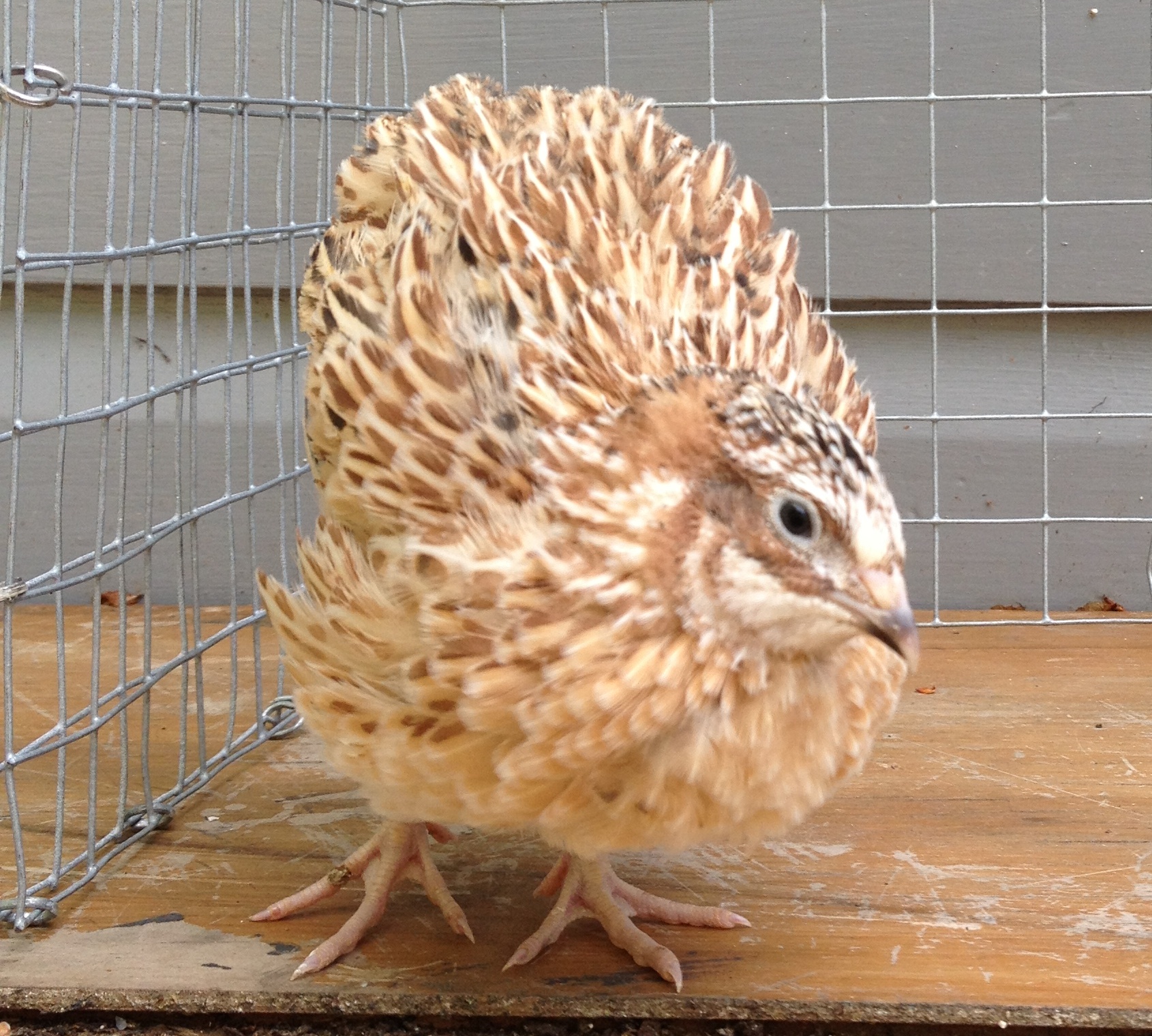
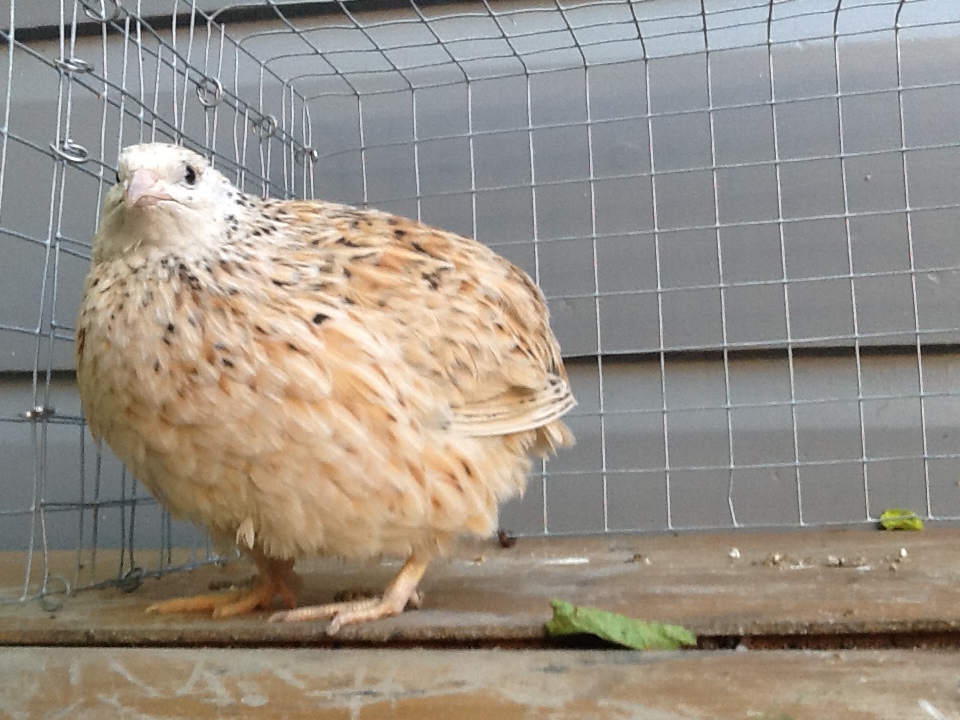
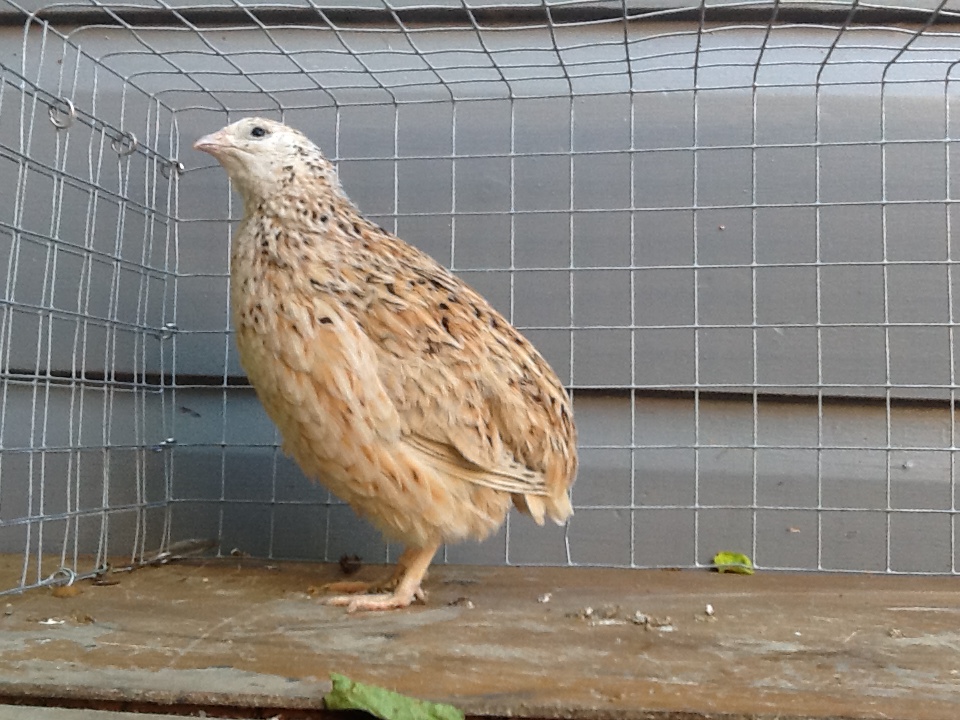
GOLDEN ITALIAN – COTURNIX QUAIL
At present there are a few true breeding mutations of the Coturnix Quail, of which the GOLDEN ITALIAN is one. It is my intention to keep this strain pure and not mix it with other strains such as the English / Texan A and M Whites, Tibetan / Tuxedo and Fharoahs (Wild Colored Quail) all which I also breed. Each of these strains has specific characteristics such as plumage, conformation and size, temperament, egg and meat production ability, etc. These characteristics I intend to maintain and develop for each strain within the limitations provided by the limited genetic material available. Careful responsible breeding and strenuous selection would result in birds with as low an inbreeding co-efficient as possible and hopefully a more disease resistant, highly fertile, healthy, happy, beautiful and productive quail at the end of the day.
These birds are beautiful fawn colored with speckles all over and no bars. Males often have a brownish head that appears to belong to a different bird. The Italian Quail has specifically been bred for maximum egg production and is slightly smaller in size than the other breeds, even though it lays an egg of equal size. Temperament is very docile and calm.
It is now your opportunity to share in this development of purebred GOLDEN ITALIAN QUAIL BREEDING GROUPS or GOLDEN ITALIAN QUAIL FERTILE HATCHING EGGS.
I also breed Tibetan, Fharoah and White Coturnix Quail Eggs and Breeding Groups
With the project in its infancy it is not possible to guarantee 100 % true coloring from eggs.
 Back Yard Farmer