Cooking for Family and Friends


We love olives but are wary of the chemically saturated commercial products available. The solution is to cure our own the way it had been done traditionally in Italy. On the drive to Cromwell to collect olives we passed through beautiful, and often contrasting scenery, as one does when travelling in New Zealand. We stopped several times to admire the amazingly blue Clutha River. Normally rivers are colored muddy brown and the color and clarity of this river was quite thrilling. Then we passed by Cromwell where we once again stopped to look at the reflections of the mountains (one snowy peak in the background) in the water. In the distance tantalising, snow covered, mountains stayed just out of reach for close up pictures. The olive grove belongs to Bill and Helen Dunbar and is on the shores of Lake Dunstan. The lake and the snowy mountain tops are visible from everywhere, from the cleverly laid out open plan house and presses, to the trees when one is picking. The business markets fresh pressed olive oil which, once we got home, we compared with our favorite imported Italian brand and we are happy to report that it came out tops. There is much to be said for a fresh olive oil from good olives and carefully pressed and bottled. See the website http://www.Dunfordgrove.com
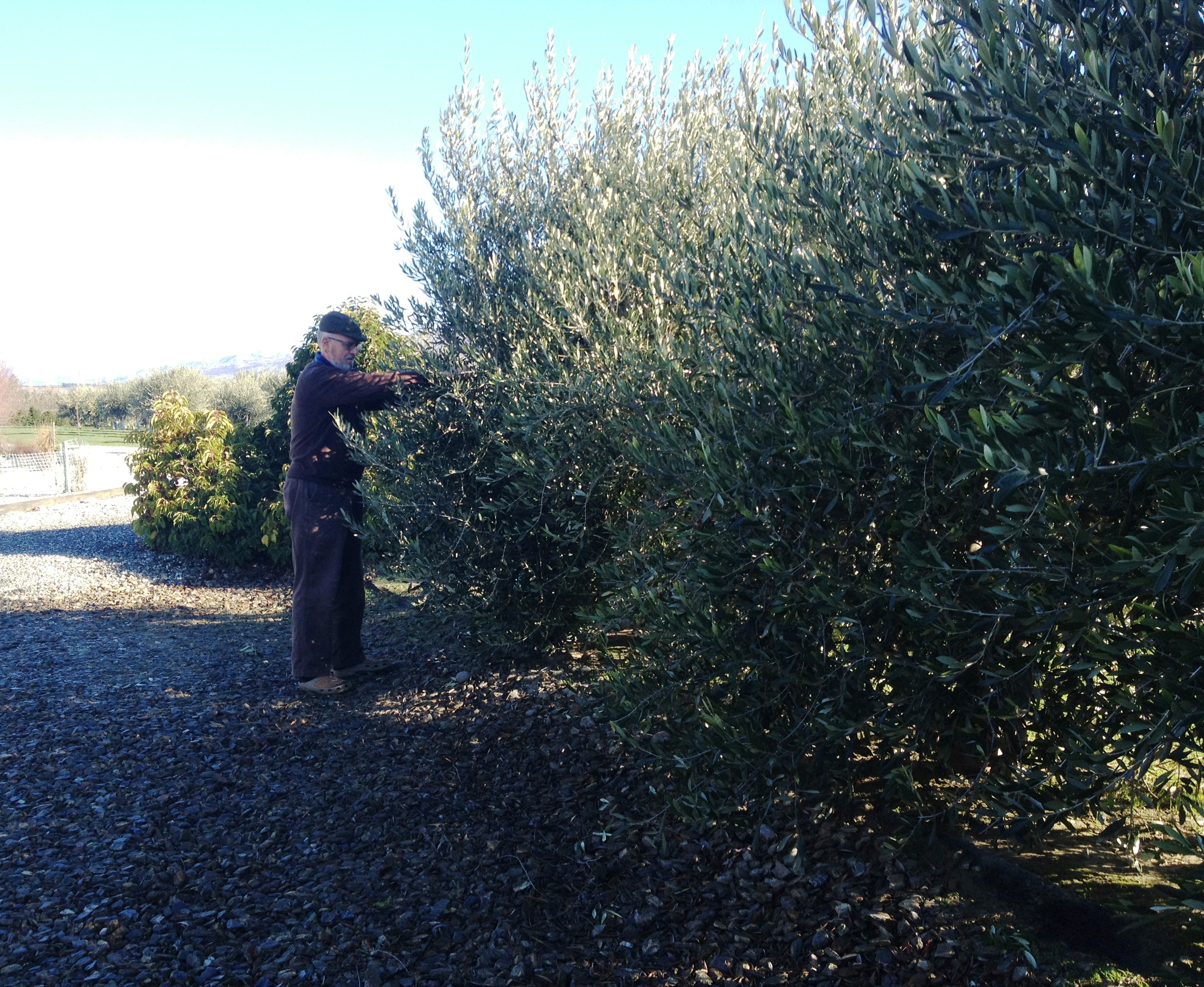

Bill and Helen invited me to pick my own olives – an unexpected bonus! The last time I had the opportunity to pick olives was in Italy in the Marche on the farm of an old friend, and then again in my friend Lino’s back yard (one tree only, but what a harvest!). We picked about 60 Kg, a mix of eating and pressing olives – thank you Bill and Helen.
Recipe for Curing Olives
The olives I picked were Picholine, Frantoio and Leccino. Leccino and Frantoio cultivars are the principal raw material for Italian olive oils from Tuscany. Leccino has a mild sweet flavor. Picholine is grown in Southern France and is a green, medium size, eating olive with a nutty flavor. I am going to cure them all for eating purposes and will try a few different recipes to make it all more interesting.
Picholine – I have about 40 kg of Picholine and will make 15 Kg in the following way.
Wash and submerge olives in clean cold water with lemon juice of two lemons as well as the lemon peels. Replace the water and lemon every day for five days. Now crush the olives with the bottom of a bottle, but do not destruct the fruit. Submerge again in clean water with lemon juice and peels and again replace water and lemon every day for five days. Drain the water well and pack the olives in glass containers. Ad a quarter of a sliced lemon and one crushed garlic clove per 5 liters. Make enough brine solution of 100 g salt per liter of water to cover all the olives. Bring the brine to a boil, let it cool for five minutes only and then pour the hot brine over the olives. Make sure all the olives are covered. I have plastic grids that fit tightly into the bottles and these keep all the fruit under water. Now add a thin layer of olive oil to seal the product and immediately seal the jars tightly. Store in a cool dark place for three months before consuming.
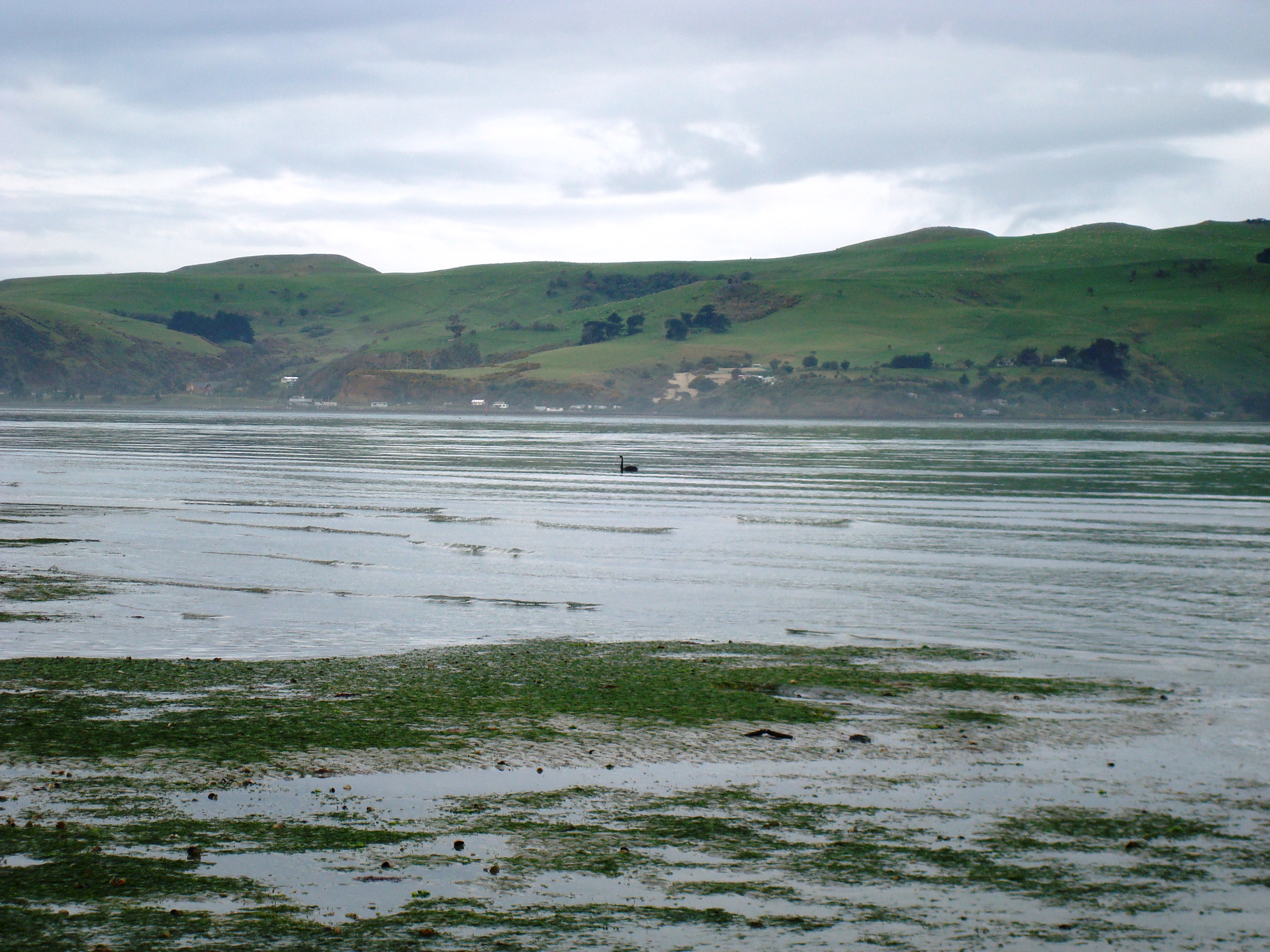
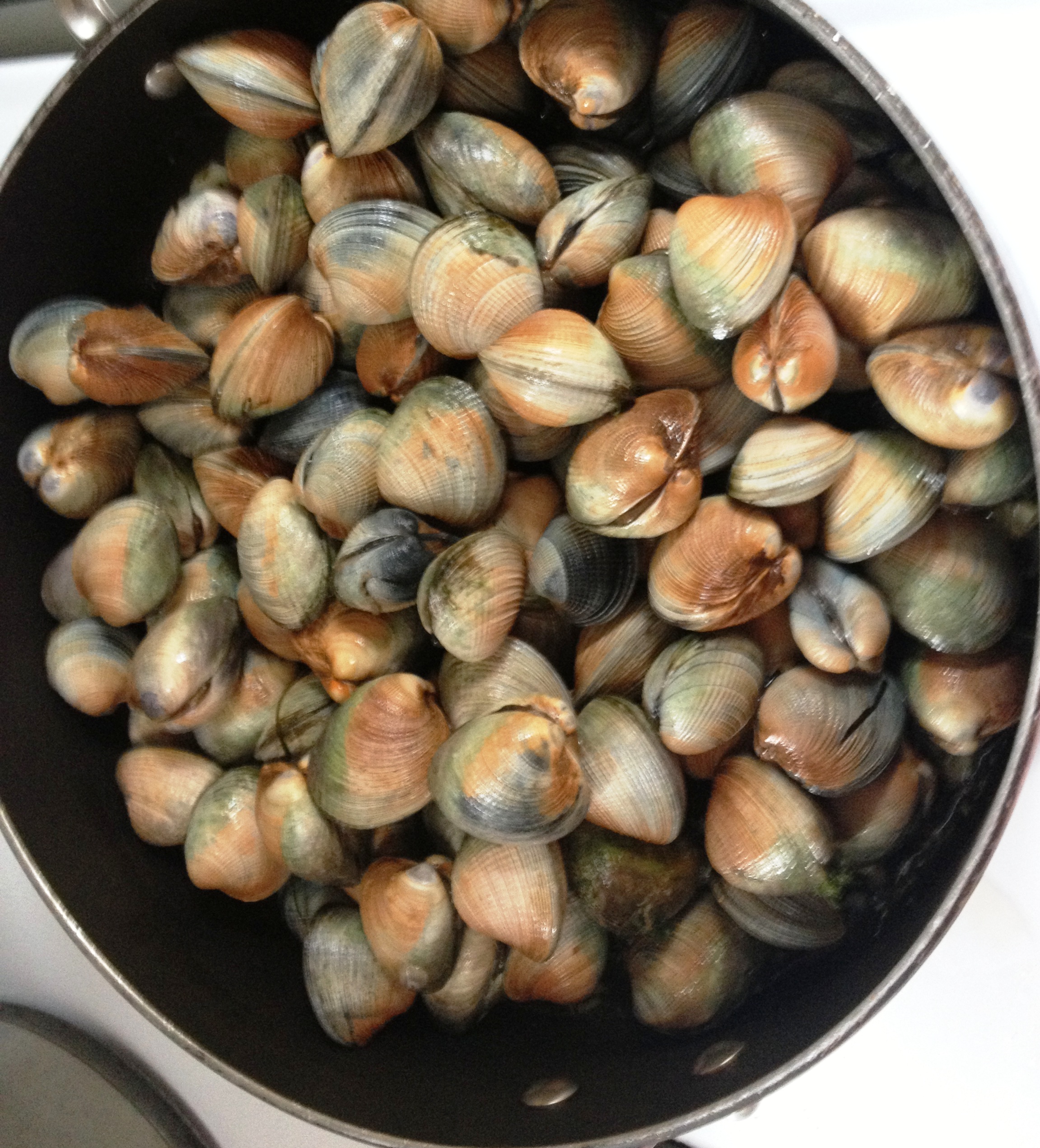
On the way to fetch milk from the farm I passed the bay where the locals forage for cockles and clams. The tide was right so I went down to the water and scooped up about 100 cockles with my hands. No implements allowed or needed and the quota is 150 shells per person. In the hour I was there I was kept company by a solitary black swan who kept an eye on what I was doing. I invited the troops for lunch and had Linguine alle Vongole on the table within 1 hour of harvesting. Next time I will soak them in fresh water for a little longer – my sauce was a little salty but no one complained
Linguine alle Vongole (spaghetti with a cockle sauce)
Use a large saucepan with a lid that can hold all the vongole
100 cockles or vongole
6 tablespoons of olive oil
3 cloves of garlic, crushed
1 tablespoon of finely chopped fresh rosemary
1/2 cup of white wine
Pinch of chili
Cook the garlic until soft but not colored, add the chili and rosemary, add the wine and cook for a few minutes. Put all the cockles in the pan and cover tightly. Cook until the cockles open, releasing their liquid. Remove the cockles to a heated dish as they open. At this stage start boiling the pasta, I use spaghetti in place of linguine because the grand kids will not eat anything else. When all the cockles are removed from the pan turn up the heat and reduce the liquid by about half to intensify the flavor. When the pasta is done and drained return the cockles to the pan and add the pasta, mixing well. Serve immediately. Do not add salt at any time.
Simple Italian food at its best – and I got to forage for it myself. I love this island!
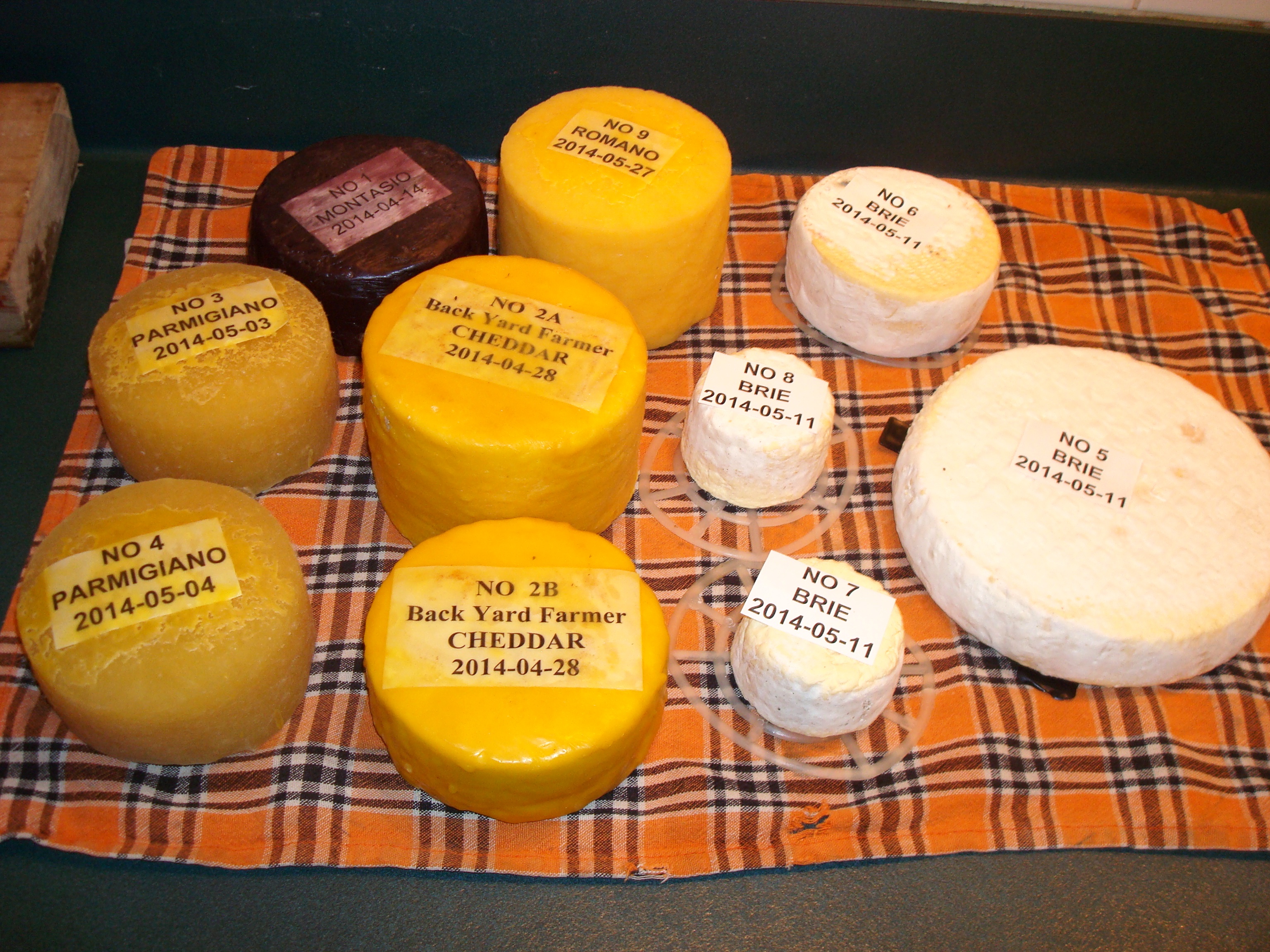
We use a lot of cheese in cooking and for light meals. There is very little choice in Dunedin where Italian cheese is concerned, so I hope to keep us supplied all year round. I shall soon post some information on the background and various uses of Italian cheeses
The month of May has been relatively productive with five kilograms of hard cheese (Parmigiano, Montasio, Cheddar and Romano) two kilograms of bacteria and mold ripened cheese (Brie) and about four kilograms of soft cheese (Three types of Ricotta, Mascarpone and Mozzarella) being produced. I purchase about 20 liters of Dairy and Goat milk per week and after harvesting some cream, drinking milk and making yogurt (four kilograms per week) the rest of the milk is being used for cheese making. All the whey, off coarse, is being made into Ricotta and the “whey” after the ricotta is being fed to the animals. The Dunedin climate, during the next three to four months, will be very good for cheese maturing and my outdoor cheese ripening safe on the South side of the house compliments the process very well. I therefor expect my first cheese season in New Zealand to produce good products. Because of the favorable conditions, production will increase during the following months to produce another 60 Kg of hard and Mold ripened cheese during the next four months, thereafter monthly production will decline to normal levels.
Next week we kick off with Cacciocavallo and Scamorza, then back to Provolone, Parmigiano and Romano. I am also going to try a yogurt cheese shortly. We also hope to have some sheep milk coming on line soon, which will result in Pecorino being produced.
Last week’s Romano. one of the easier cheeses to make, produced a very high yield and here is the recipe.
ROMANO
Heat 10 Liters of milk to 32 C and ad 150 g of Thermolytic mother starter. Mix well and ad 2 g goat Lipase. Cover and allow to ripen for 15 minutes. Now ad 7 ml rennet and stir for two minutes with an up and down motion. Top stir for another minute. Allow to set until the curds gives a clean break. Cut the curds in 6 mm cubes – I use my salmon filleting knife and a stainless steel whisk.
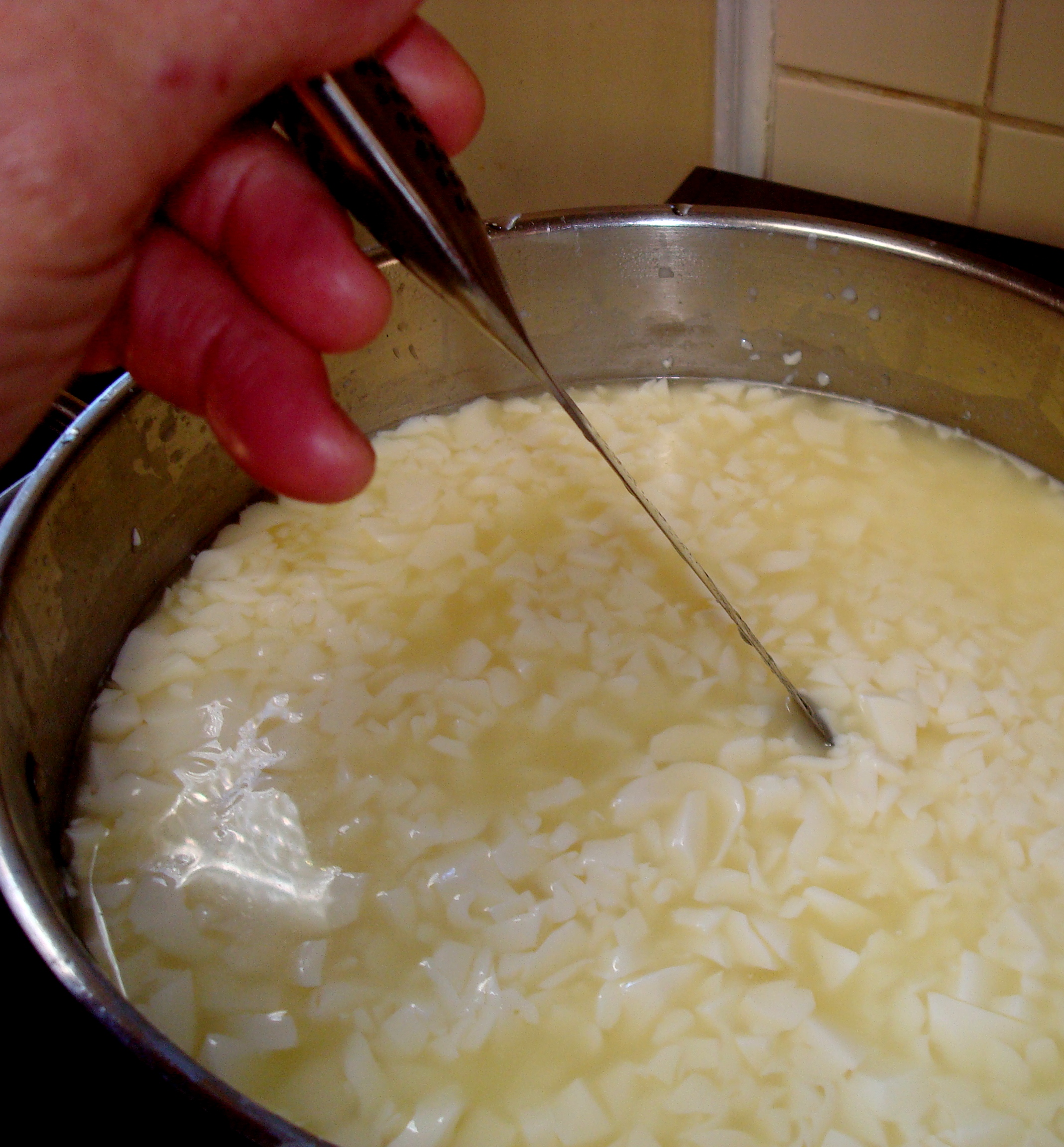
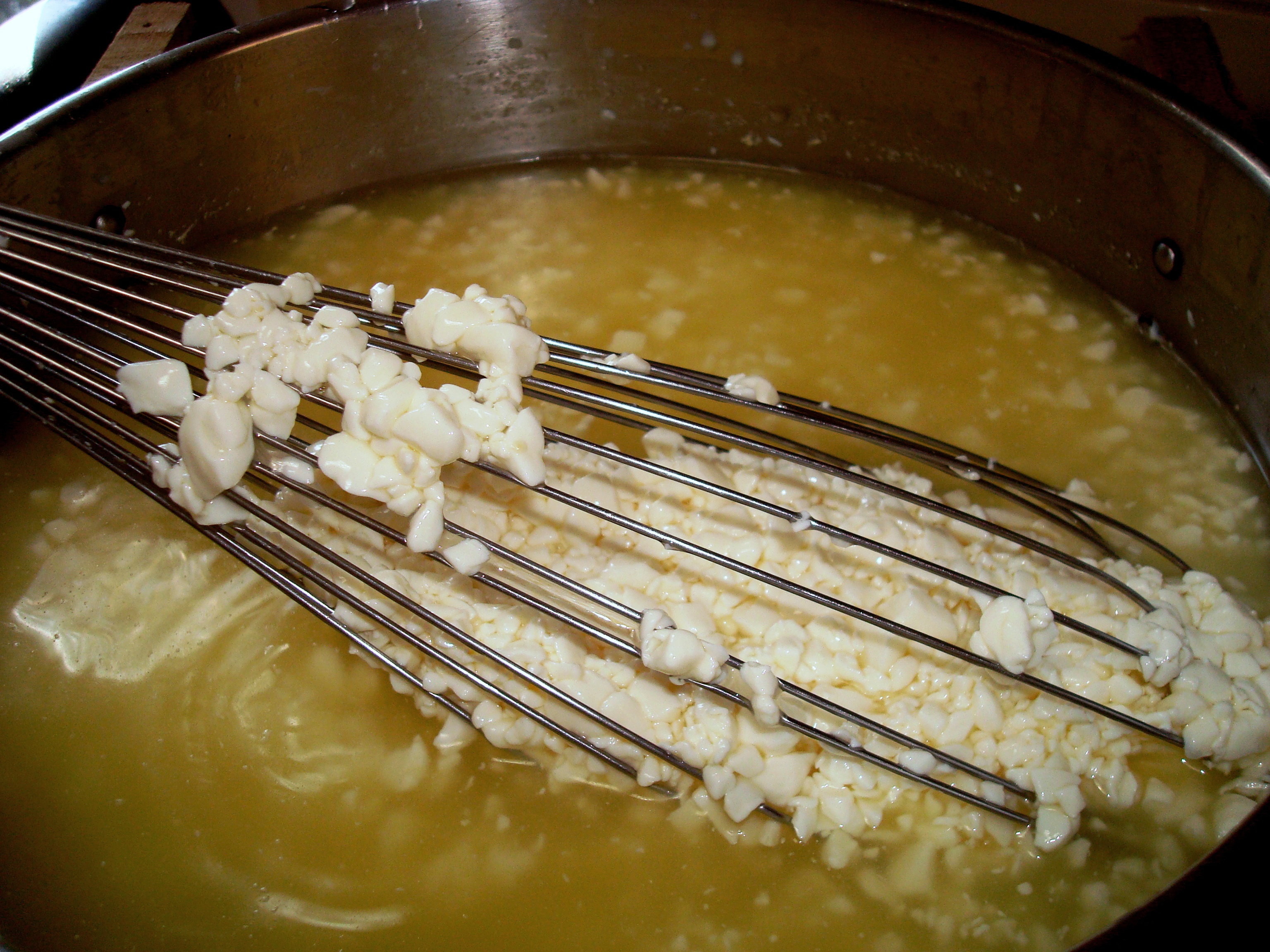
Slowly, over a period of one hour, raise the heat of the curd whey mixture to 48 C, while stirring constantly but gently, to prevent mat forming. Now keep the temperature at 48 C for another 40 minutes, whilst stirring gently. The curd granules should now be firm enough to hold their shape if pressed between the fingers. Drain the whey and keep for Ricotta. Line a 1 Kg cheese mold with cheesecloth and pack the curd inside. Press at 2 Kg for 20 minutes, then flip and press at 5 Kg for 40 minutes. Flip again and press at 10 Kg for 2 hours. Flip again and press for 12 hours at 20 Kg.
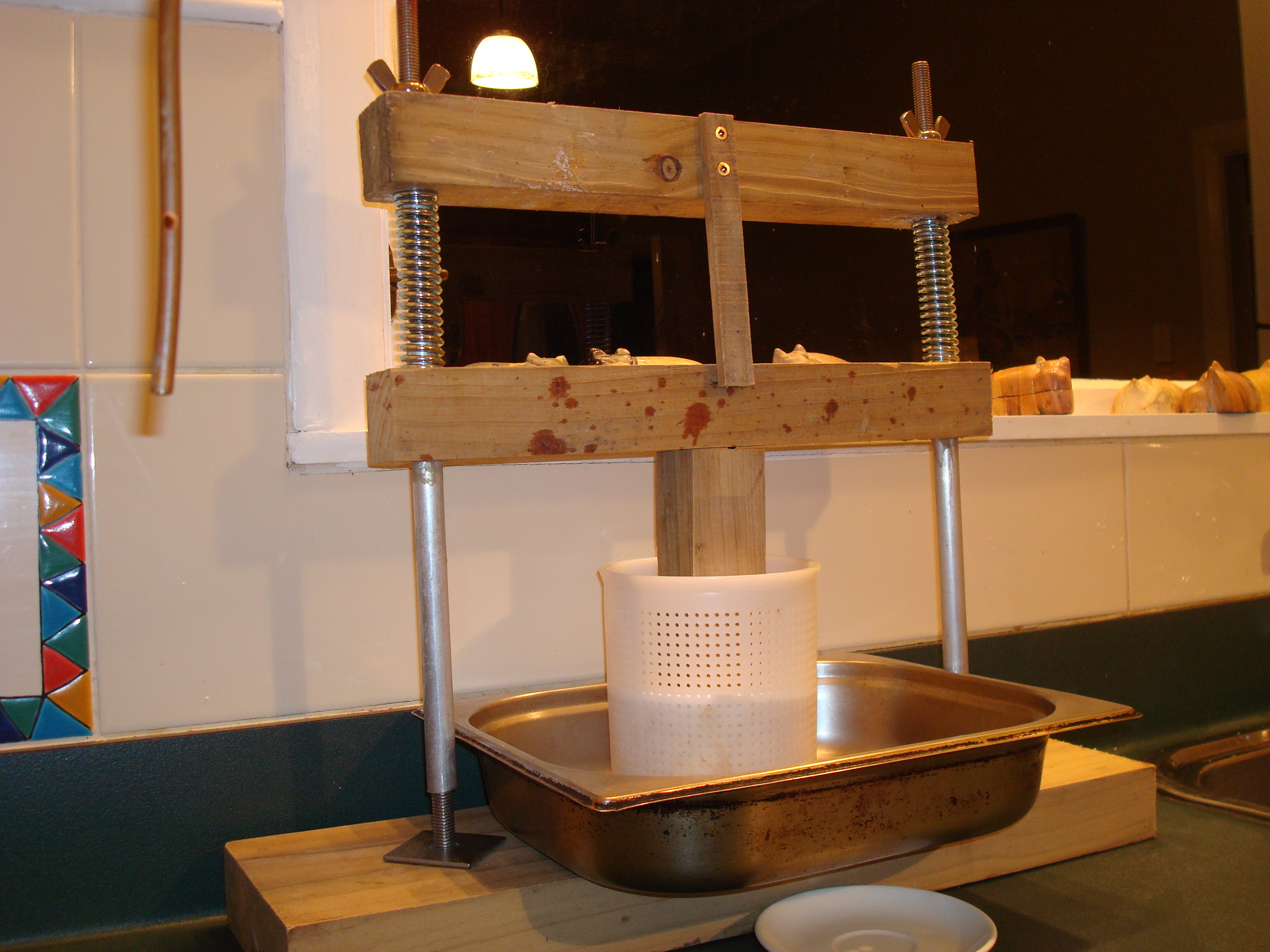
Remove cheese from the mold, peel the cheesecloth and submerge in a saturated salt brine solution for 12 hours. Pat dry and leave to air dry. Ripen for 4 – 12 moths. Turn daily for the first few weeks, thereafter turn weekly. If any molds form on the surface, rub lightly with a vinegar cloth. ENJOY!!

 Back Yard Farmer