Quest for Raw Goat Milk


2014-03-10 14.54.02-2

Yesterday we set off with the grand kids to buy raw goat milk for cheese making. We were not in time to see any milking, or to get close to the goats, but, as usual the scenery on the way to the farm was spectacular.  We had a lovely misty view down North East Valley, affectionately known as The Valley to us, its inhabitants, with the rest of Dunedin’s hills in the background. To compensate for missing the goats we had a bit of a walk, a bit of a climb, some hiding behind the trees and collecting many different types of fungi that all seemed inedible to me.

I have propagated new cultures for the cheeses and will start making the real cheese tonight. Half will be Montasio, the other half a Cheddar. The goat cheese ricotta has been done and tastes delicious, very rich and creamy and with a much firmer texture that the cow milk ricotta I normally make. Romano, Caccio Cavallo and Parmigiano are on the list for May.

Autumn Harvest

2014-04-04 08.52.33


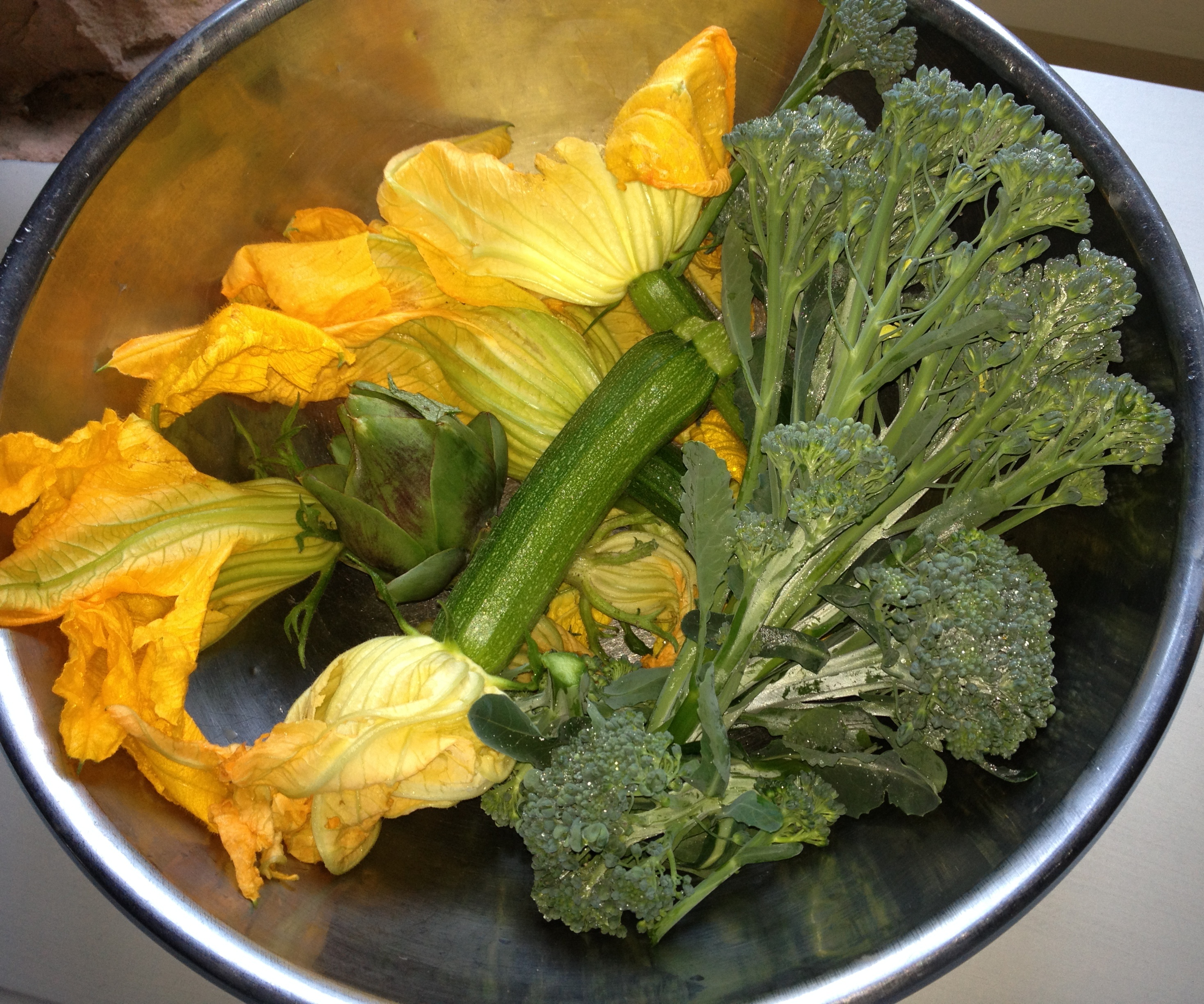
I will be cooking for the kids today. Fortunately the garden has delivered all the favorites – broccolini, small zucchini, one teeny artichoke ( next year will be bigger and better) and pumpkin flowers. Two flowers will be stuffed with ricotta for the grownups and the rest crispy fried in flour and water batter. Broccoli probably just steamed and Zucchini in a little butter and sage.  Add leftover lamb and I should have a winner. Should, because one never knows with small kids, what they loved yesterday could horrify them today!

CRABAPPLES

2014-03-22 11.50.09 2014-03-22 13.05.29 2014-03-22 18.04.50


Crabapple is not a fruit I have had much experience with in the past, but my BIG crabapple tree at my new house in Dunedin has forced me to have a closer look at possibilities  regarding these beautiful little fruits. I have spoken with the experts, borrowed cook books from my neighbors, googled, took advice from bloggers and, after a lot of reading picked about 10 Kg of crabapples (still have about 30 Kg left on the tree). I have decided to start with crabapple jelly. Most references suggested throwing the pulp away after extracting the juice, but my “use all and throw nothing away” culture has compelled me to do something with it. So here is what I did

10 kg crabapples

10 liters Water

Boil for about 20 minutes

Separate the pulp and juice by filtering through cheesecloth and put the pulp aside

JELLY

Heat the juice to boiling point and add  1 Kg  Sugar for every kg of liquid.  Simmer the mixture until it reaches setting point. Quickly, while still hot and before it gelatinises, filter again through cheesecloth and bottle. Seal bottles and sterilise in a boiling bath for 20 minutes. The clear, pink jelly sets beautifully and is delicious. I also made a batch where I added chili and rosemary to the original fruit – a very interesting and  tasty jelly resulted and I would probably make some more.

JAM

I have taken the pulp and put it through my Italian tomato pasata machine, which separates the skin and pips from the fine pulp. Heat the pulp to boiling point and add  1 kg of Sugar for every kg of pulp. Simmer the mixture until it reaches setting point. Seal bottles and sterilise in a boiling bath for 20 minutes. Beautiful and absolutely delicious jam.

The skins and pips I am using to make alpple cider vinegar. I think it will be good, as I normally use the cores and skins of ordinary apples to make this. I make large quantities of vinegar every year, of which I use most as is, but convert some to a mosto cotto

ROASTED CRABAPPLES AND HONEY

I have dribbled some fresh crabapples with honey and roasted them in the oven until soft, then served with home made custard – I never thought crabapples could taste so good, even though it was on the sour side where the rest of the household was concerned.

This week I am going to try making crabapple chutney and a  cider. After all that I should  still have another 10 kg of fruit left on the tree.

I find it strange that the big kereru pigeons do not eat the fruit  since they stripped the cherry trees and had a good go at the plum tree.


Cardoon – beautiful thistle with attitude

2014-02-03 11.33.562014-03-18 11.19.552014-03-18 13.03.202014-03-18 13.02.19

Pic 1: cardoon growing , Pic 2 harvested and lying on my kitchen table, Pic 3 Leaves and flowers removed and getting the woody strings off (put the stems in water with lemons squeezed in), Pic 4 boiling the cardoons with lemons

I harvested my first cardoon a few weeks ago my second cardoon yesterday.  The first one was made in to a successful dish, but the second was a disaster, fairly bitter and very stringy even though I spent the better part of the morning peeling the stalks and boiling them. Boiling for an hour tenderises the stalks and draws out the bitterness, but in this case it was not quite successful. As you can see from the pictures, a lot of work goes into preparing the cardoon before one can make up the dish for the table. I covered the boiled and cleaned cardoon in bechamel and sprinkled cheese and bread crumbles over the top then baked it in the oven until bubbly and crispy on top.  The taste was OK and the sauce and topping terrific but no one was very impressed and No second helpings! Someone wrote that one can only expect a good harvest after the 3rd year, saying that their cardoon grows to 2 meters high. Mine were planted this year and were about 1 and n half meter high when I cut them down. The first plant has regrown. We did boil the small buds like we do with artichokes and ate the soft parts of the leaves and the hearts and that was very nice.

I have to think about this vegetable and research it more – I am determined to make a successful dish when I harvest the third plant. Advice anyone ?

Quail Giblet Risotto (works for chicken giblets too)

2014-03-12 14.45.43

We are used to this dish made with chicken giblets, but, as you know we also have quail! I make stock with the quail  bones, and this risotto, every time when I have to cull. Risotto involves standing and stirring the pot all the time – no  answering the phone, getting the door or visiting the bathroom! 😉 The consistency of the dish must be just right, not too wet, not too dry and al dente. It takes some work but is worth the trouble. My smallest grandchild is particularly fond of this dish, to the  point where his grandmother once told me to stop shoveling it in after the 3 rd bowl – she was afraid he may pop.

Quail Risotto 

2 liters of good chicken or quail stock stock. I make my own, it is simple and easy and makes all the difference to the taste

2 cups of Arborio or Carnaroli rice. Yes, it has to be Arborio or Carnaroli, the normal rice does not have enough starch

10 quail giblets  (or 400 g Chicken giblets). One can save quail giblets by freezing them until enough has been collected

1 medium sized onion finely chopped

1 Large clove Garlic (more if you like) finely chopped

1 tablespoon rosemary or sage finely chopped

4 tablespoons extra virgin olive Oil

3 tablepoon butter

pinch of dried chili flakes

1 cup of good white wine

salt andpPepper

Half a cup of grated parmigiano cheese ( stir it in at the end, or serve with cheese on top)

one bottle Sangiovese wine (to go in to the cook and the cook’s friends 😉 )

.

Heat the stock and keep it hot. Ad one table spoon of olive oil and one table spoon of butter, a quarter of the onions and a quarter of the garlic to a pan and saute until soft. Ad the giblets and brown slightly. Pour half a cup of white wine in and evaporate.  Turn the temperature down, ad the Chili, Sage or Rosemary, and braise in a drop of stock for about 30 minutes until tender. Use a pot big enough to hold everything with ample room for lots of stirring. Put the rest of the olive oil and one table spoon of butter in the pot and add the rest of the onion and garlic and saute over a gentle heat until the onion is soft but not coloured.  Add the rice to the onion mixture in the pot and stir a few minutes to heat through. Toast the rice and cover every grain in oil. Add a half a cup of good white wine and cook until the rice have absorbed all the wine. Turn the heat medium low and start adding a few ladles of stock, and stir constantly. Every time the rice becomes dry, ad a ladle of hot stock and keep stirring. When half cooked (ten minutes) add the warm giblets to the rice. Keep adding hot stock a ladle at a time and keep stirring until the rice is almost al dente.   The consistency should be very moist as the rice will still absorb moisture and dry out for some time. Taste and adjust for salt and pepper while cooking. Immediately take off the heat and stir in one tablespoon of cold butter and half a cup of grated Parmigiano (optional). Stir quite aggressively to make it creamy and smooth. Let it rest for about three minutes while the rice finisesh cooking in the residual heat and serve immediately. Top with grated Parmiginao cheese if not stirred in at the end. The rice must never be dry but must also never float in the stock. If you add the stock all at once you will end up with boiled rice, not risotto.  Each grain of rice should have its own glistening coating of stock, and should be chewy, not soft and soggy. In Veneto they serve risotto “all’onda” which means like the waves of the sea – very soft and they give  you only a fork to eat it – no spoon. This is also the way I like it, even though I am from Lombardy.

We often eat risotto as a main meal but it makes a great primi piatti if the main meal is  meat. I would serve a great Sangiovese red with this if there is any left after tasting the good wine while cooking.