Raw Milk from the Loveliest Dairy Farm

2014-02-22 09.44.042014-02-22 10.05.232014-02-22 09.46.06

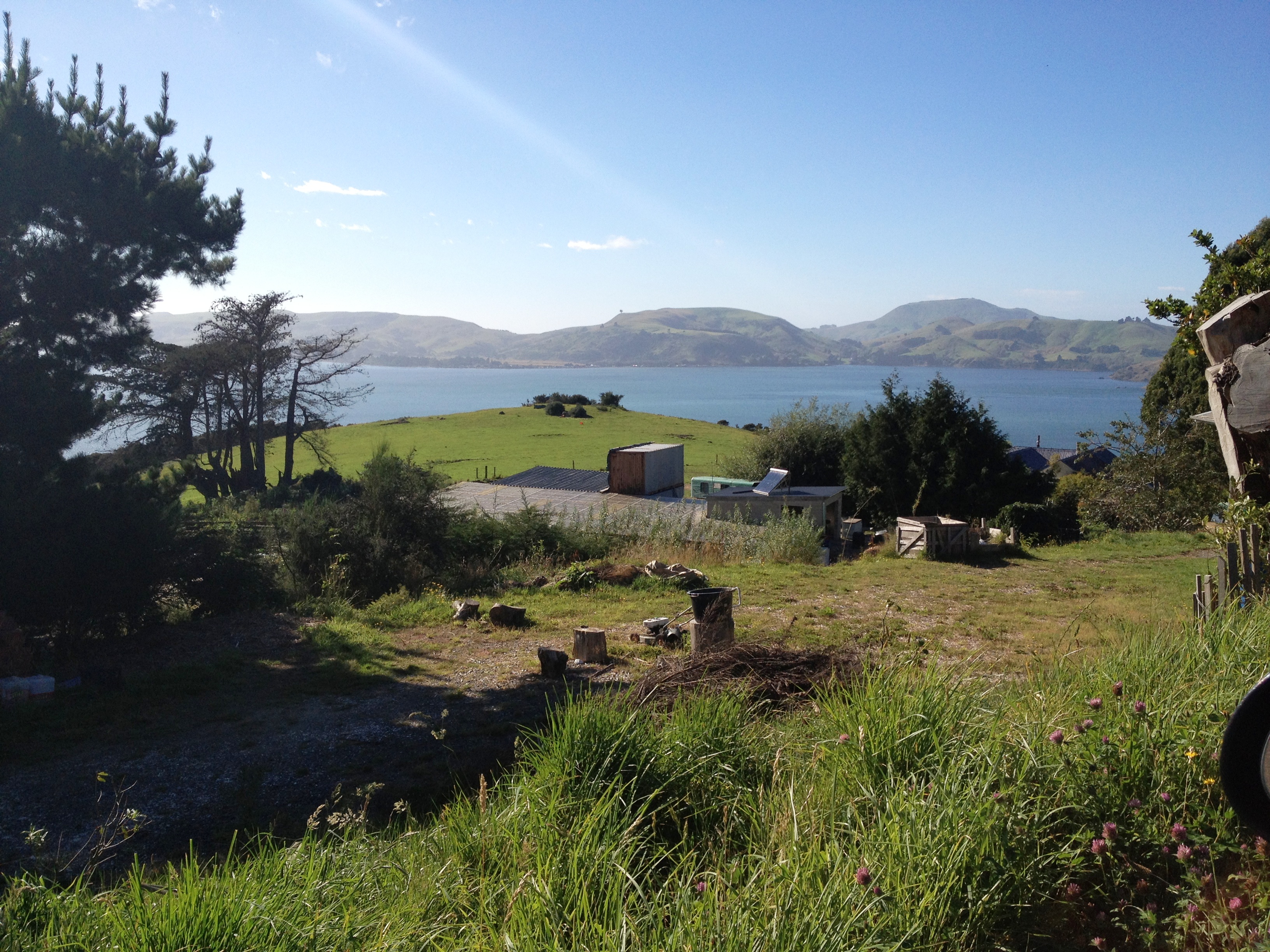
We got up bright and early to be in time for the morning milking. The beauty of the scenery around Dunedin is astounding, driving high up the hill behind Port Chalmers through dense trees and shrubs (that seemed to be natural bush to us ) overlooking the blue harbour is  thrilling. The intimate scale of the landscape , the green of the hills   accross the blue harbour and the pretty town below us made us feel lucky to live in New Zealand. We turned off on to a narrow gravel road, so narrow and winding through dense growth,   that we are still wondering what would have happened should we have met an oncoming car. We passed a delightful, shingled, ‘gingerbread ‘ house with a spectacular view of the harbour and parked beside the milking parlour, with, of course, a spectacular view of the harbour!

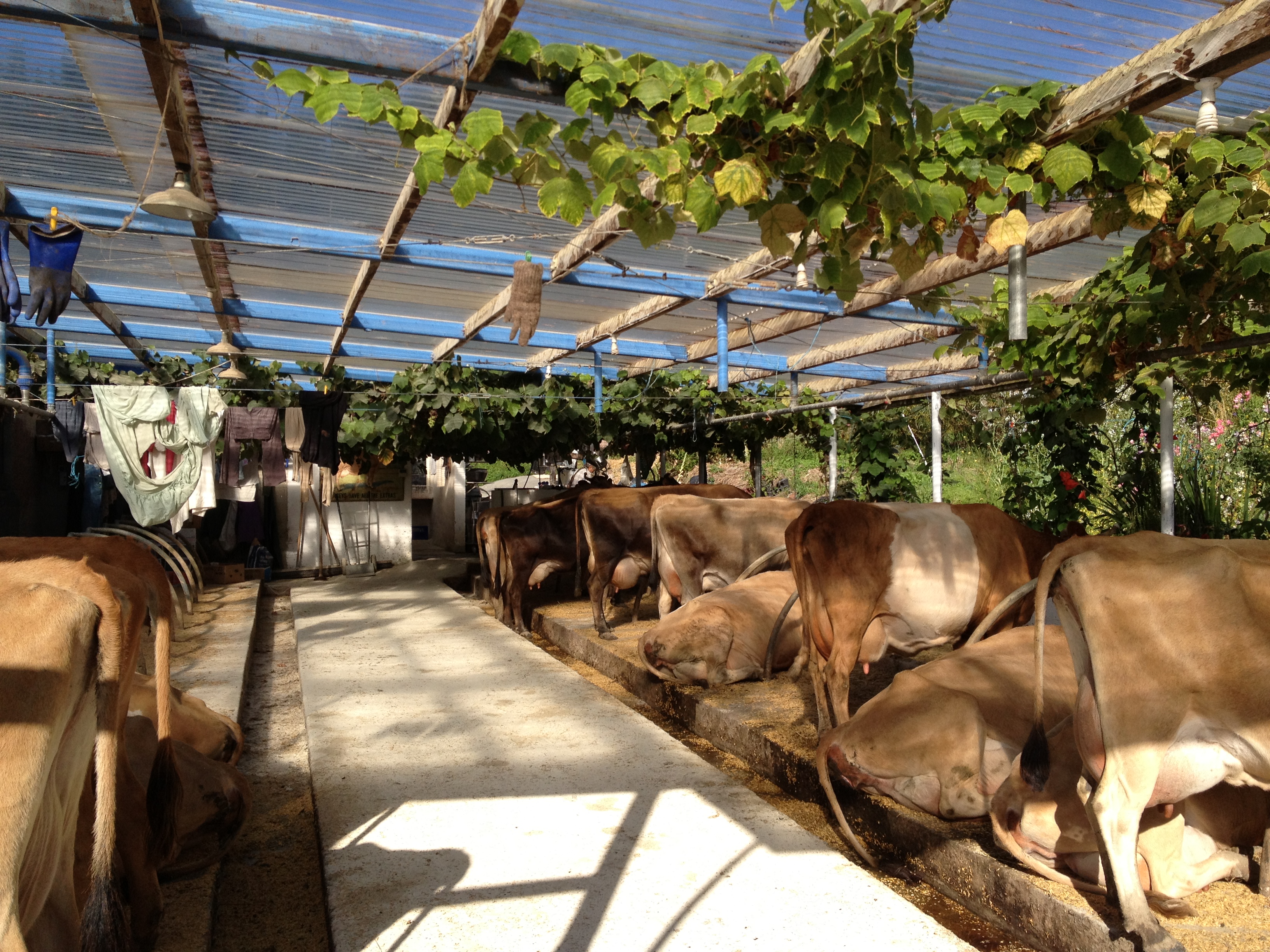
Milking was over and placid Jersey cows stood or lay in the stalls relaxing to soft classical music. The parlour has vines with ripening grapes trailing along the rafters over the heads of the cows.  There is a magnificent wild looking veg garden close by with roses and  what a friend calls  English Garden Flowers on all sides of the parlour.  As an unexpected bonus we were given some artichokes since the owners were not eating them anymore ( getting sick of artichokes  –  unimaginable) !

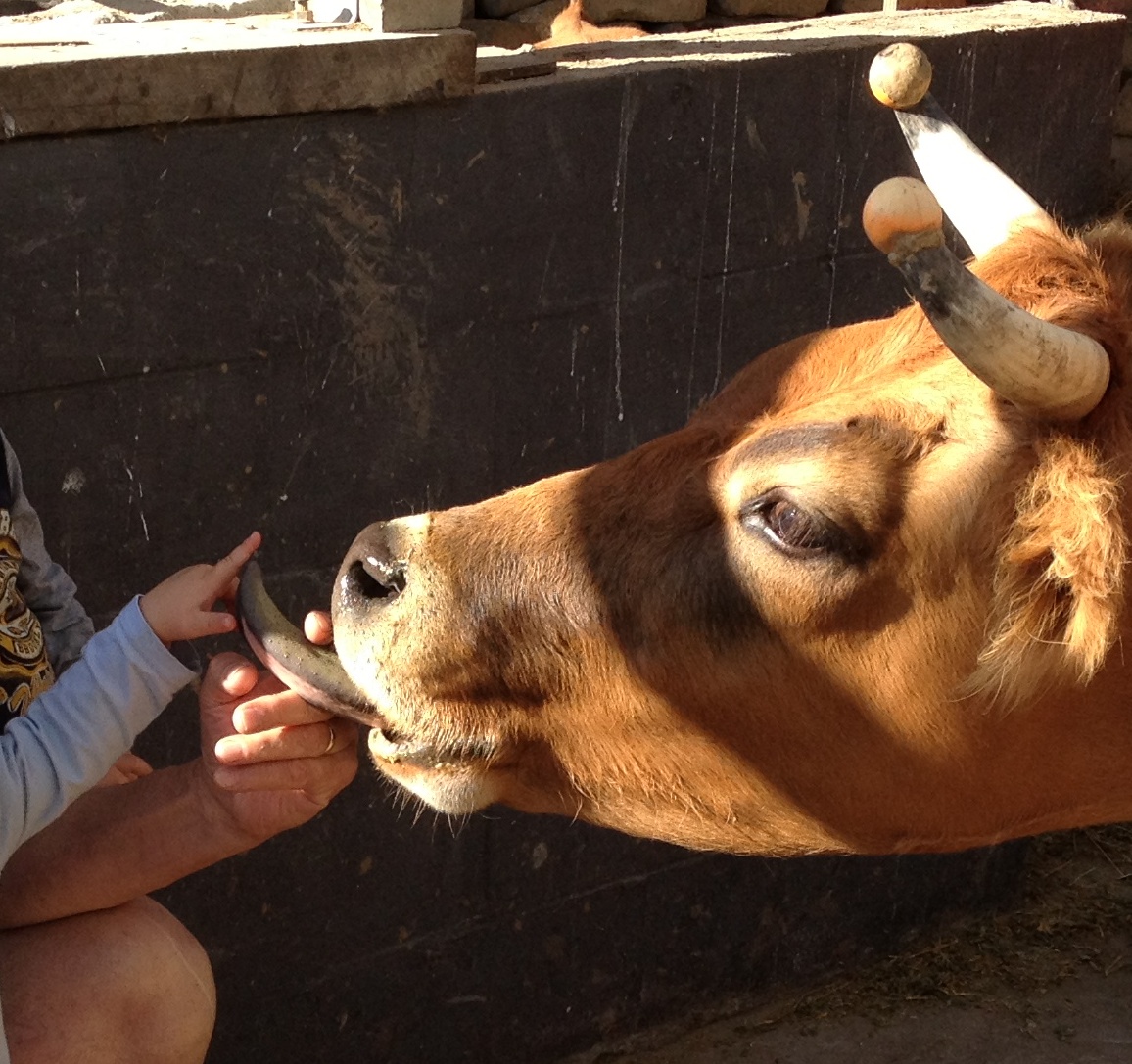
We fell in love  with the place and the kids fell in love with the cows. The cows were willing to be petted and ate hay from gingerly offered little hands. The magic ended when the smallest child was given a long lick through the face by a doe eyed but raspy tongued cow.  The resulting hysterical wailing and crying shattered the peace and we beat a hasty retreat so as not to disturb the tranquil mood.

Back in Port Chalmers we had the best French Toast ever. A huge cruise ship was docked, dwarfing the town, and the streets were filled with  uniformly dressed passengers enjoying a shore visit in glorious Dunedin summer weather (do the ships distribute shore leave uniforms to passengers, we wondered).

Once we got home, I immediately started making ricotta, mainly because I had no room in the fridge for 20 L of milk.

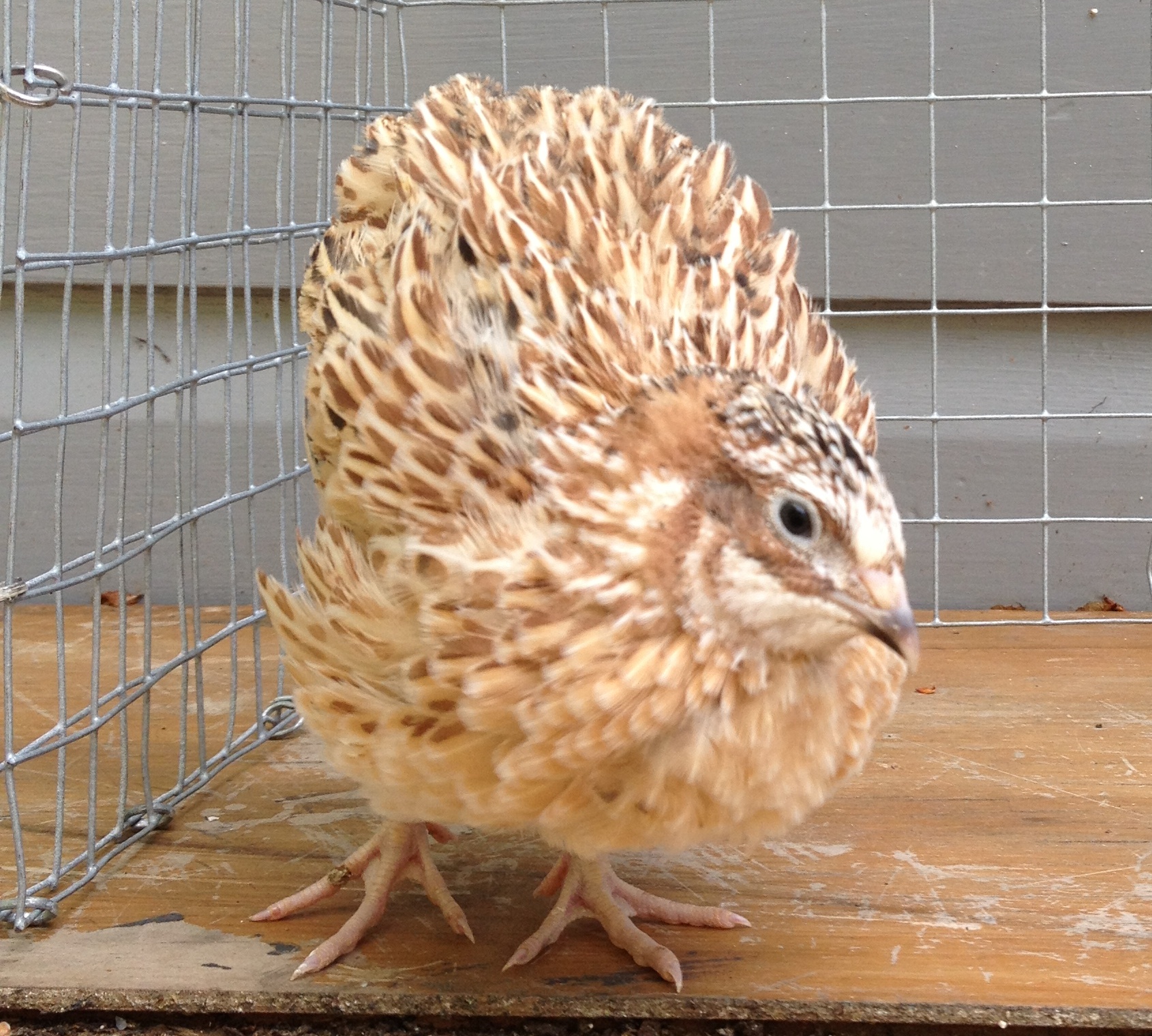
QUAIL BREEDING PROJECT

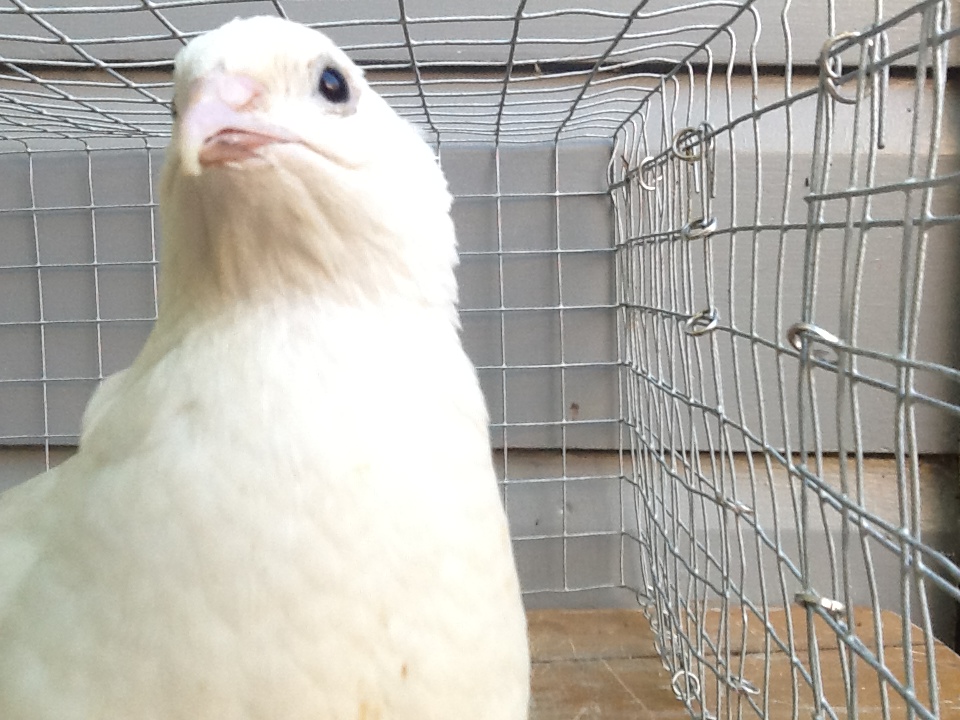
2014-01-07 - Rosetta Male 2013-10-24 - Italian Coturnix 2 2013-10-24 18.09.15 2013-10-24 - Tibetan Coturnix 21 2013-10-24 - White Coturnix 13 2014-01-07 - Tuxedo


After arriving in New Zealand mid 2013, I immediately commenced with my hobbies, i.e. Coturnix Quail and Ancona Chicken breeding. I was a bit disappointed in the genetic material available and the absence of any controlled national breeding project for any of these animals.

I am an animal scientist with  post graduate qualifications and have therefor engaged in a breeding project trying to re-establishing the phenotypical and production traits of the Coturnix coturnix Quail strains in New Zealand (I am doing the same for Ancona chickens, but more about that later).  New Zealand Authorities do not allow the importation of new birds or poultry into the country and with a very small gene pool (gene puddle), uncontrolled “breeding” , inbreeding, etc, the variation between strains that is normally detected in other countries does not exist in New Zealand.  Most birds, apart from color appear to have the same  traits, are very inbred, with low production ability and fecundity.

I have initially limited the project to four strains, but after some breeding and further investigations, have unwillingly expanded it to six strains – the more strains I try to breed and improve successfully the slower my progress will be. After only eight months of breeding some performance results already been achieved and established, because of the short life cycle of these amazing little animals.

If there are any New Zealand Breeders who would like to participate in this project, you are most welcome to give me a call. I am specifically looking for that very special animal you may have bred, which we may like to breed with in this project, in exchange for some of the offspring.

Back Yard Farmer

Tel – +64 211 34 14 52

byf@backyardfarmer.co.nz

www.facebook.com/backyardfarmernz

http://www.backyardfarmer.co.nz

Dunedin – New Zealand

Cherries in Brandy

2014-02-14 17.01.58

I am prepared for the winter when there will be no cherries at all. I shall be drinking the cherry infused brandy and eating the cherries in front of the fire!

Cherries in Brandy

350 g   sugar

1 liter  brandy

Ripe, unblemished cherries, stalks on, washed. stones in

sterilized jars

Dissolve the sugar in the brandy. Cut the end of the cherry stalks off leaving about 1/2 of the stalk on the cherry and prick the cherry with a needle on the opposite side of the stem. Pack the cherries in the jars, ensure that the jars are full enough so that the cherries will not float around later. Pour the brandy mixture in the jars, make sure that all the cherries are covered. Store in a cool dark place for 3 months before eating.

I try very hard but I  always eat mine up long before the 3 months are past and they always taste wonderful!

Who needs the Waste?

2014-02-10 - Garbage2014-02-10 - Garbage 3

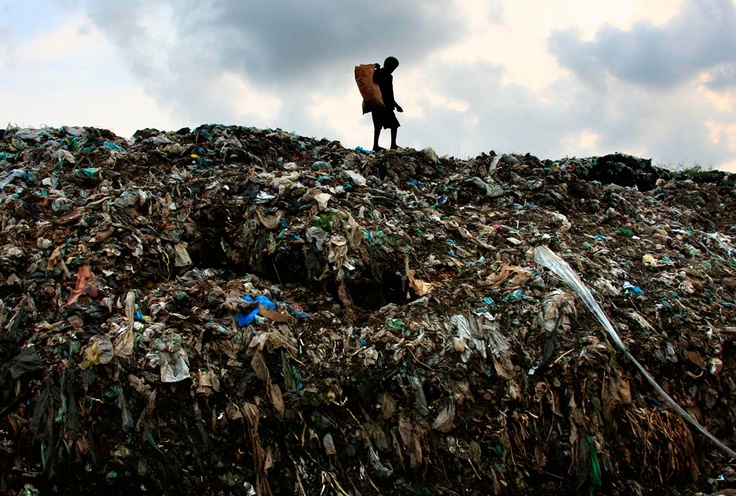
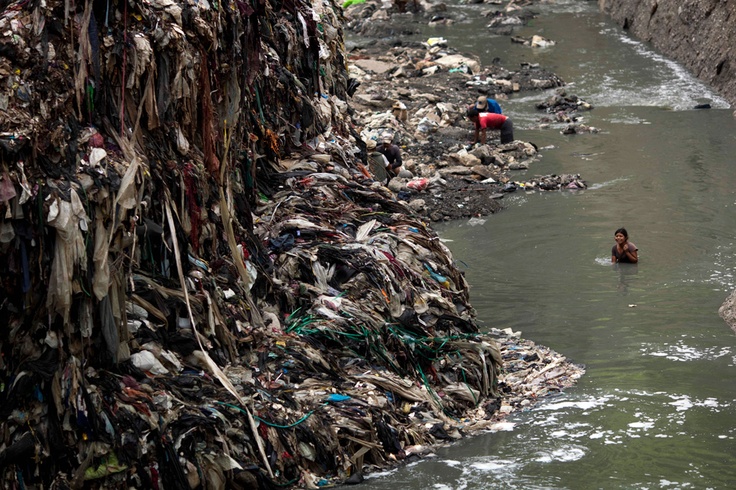
A WASTE REDUCTION PROGRAME (to be followed by all in New Zealand?)

The Council is supplying households with a YELLOW BIN and a BLUE BIN for paper and glass recycling respectively. Then you could either purchase black rubbish bags or rent a RED BIN for all your rubbish. This is for Dunedin, but probably similar elsewhere.

The object of garbage management in your household should be such that you should strive to have as little as possible to put in THE YELLOW, BLUE and RED BINS at all times. How do you achieve this? Firstly you keep an additional four containers under your sink (I keep 2 litre plastic buckets) and come into the habit when you work in the kitchen to have these bins readily available and sort offal into these in the sequence described underneath, as much as possible.

The BLUE BINS are used for unbroken glass bottles and jars

The YELLOW BINS are for paper and cardboard, clean rigid plastic, tins, cans, aluminium trays, foil, aerosol cans, plastic bottles, containers and lids

The other four bins are :

The GARDEN COMPOST BIN (If you do not make garden, it is now the time to start 😉 ) What goes into this bin?
• Citrus off cuts and peels
• Onion off cuts and skins
• Coffee Grinds
• Tea Bags
• Egg shells
• Newspapers and other light paper materials

The POULTRY BIN (Chickens are a delight!) – What goes into this bin?
• All off cuts and left overs that a human being will normally eat and benefit from if stranded in the desert and starving. Remember chickens love meat and meat products. Cut these in bite size bits for the chickens, ducks, quails or what ever.

The RABBIT BIN (Bunnies are so cute!) – What goes into this bin?
• The same principle applies as for chickens, but only the vegetarian foods – if you can eat it, so can the rabbits. Depending on rabbit and chicken numbers and animal preferences, divide food between these two groups.

The WORM BIN (Get worms ;-))
• Anything vegetarian that the chickens and rabbits wont eat or do not like, goes to the worms, like banana peels, apple cores, hard or wilted outer leaves of vegetables, poisonous plants for animals like rhubarb leaves, etc. Do not put meat into this bin as it attracts vermin

The GARDEN COMPOST BIN – You should have a compost bin already if you are a gardener
• Any product that will ferment in one to two months if composted and did not fit into any of the above. Do not put meat into this bin as it attracts vermin

The RED RUBBISH BIN – The odd product may go into this, which is unavoidable
• Bones
• Plastic Bags

The idea is to have as little as possible to put into BLUE, YELLOW and RED BINS.

For those of us who are fortunate enough to have a working vegetable and fruit tree garden the problem is so much smaller and easier to handle. Try to buy as little as possible processed, tinned and bottled food – buy fresh and unprocessed if you do not produce it yourself. Should we follow the above simple steps,  vast amounts of money will be saved, the human   carbon footprint will be dramatically reduced  with all the accompanying benefits. Last week was the National Day Against Waste in Italy. A project supported by the worldwide SLOWFOOD organisation.  If it is in Italian, click “TRANSLATE” on the top of the page for English


Blueberry Picking Bliss

Photo 26-01-14 11 22 17 AM

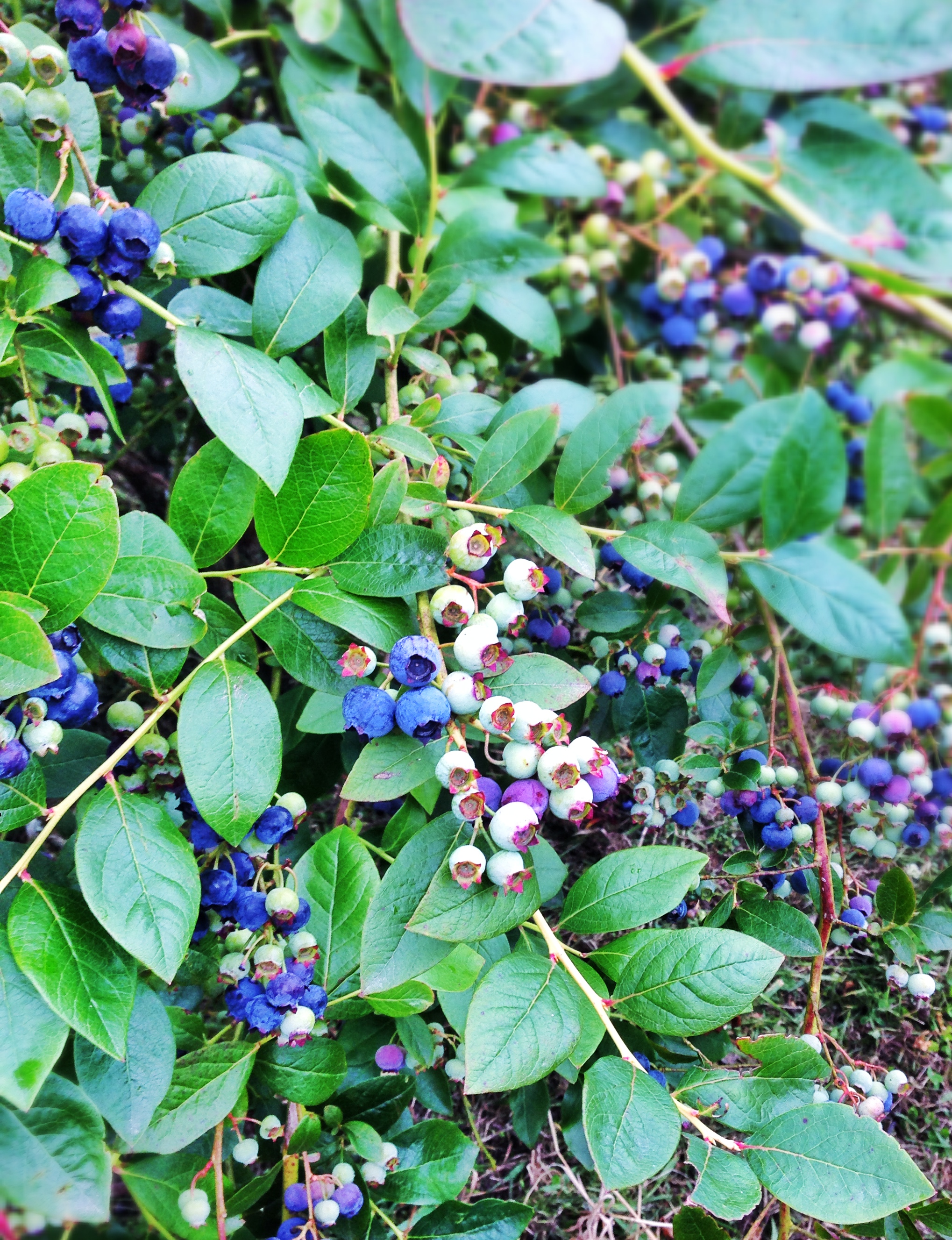
We chose the perfect Dunedin day for blueberry picking.  Warm, sunny , light breeze, AND we had the orchard to ourselves! To pick the fattest, blackest berry one has to focus, there is no time to worry about anything else. The only rule for the little ones is ‘do not eat from the bucket before we have paid’ . We did suggest that the owners weigh the one year old  before and after to calculate how much he ate, knowing that he would park himself under a bush and stuff berries into his mouth as fast as he can. 

The address is: 133/B Martin Road, Fairfield. Price  $12 per kilo (bring your own bucket, hat, sunscreen and sturdy shoes).  Open Sat 1pm – 5pm and Sun 9am to 5pm or call 0272486166 to arrange other times during the week.

The entrance to the farm is from a suburban street, with a driveway entrance that looks like any  other driveway in the neighbourhood. One passes a  house in progress, past a lovely pond and garden to where the blueberry bushes are.