Raw Milk Ricotta Cheese

2014-02-25 11.38.34

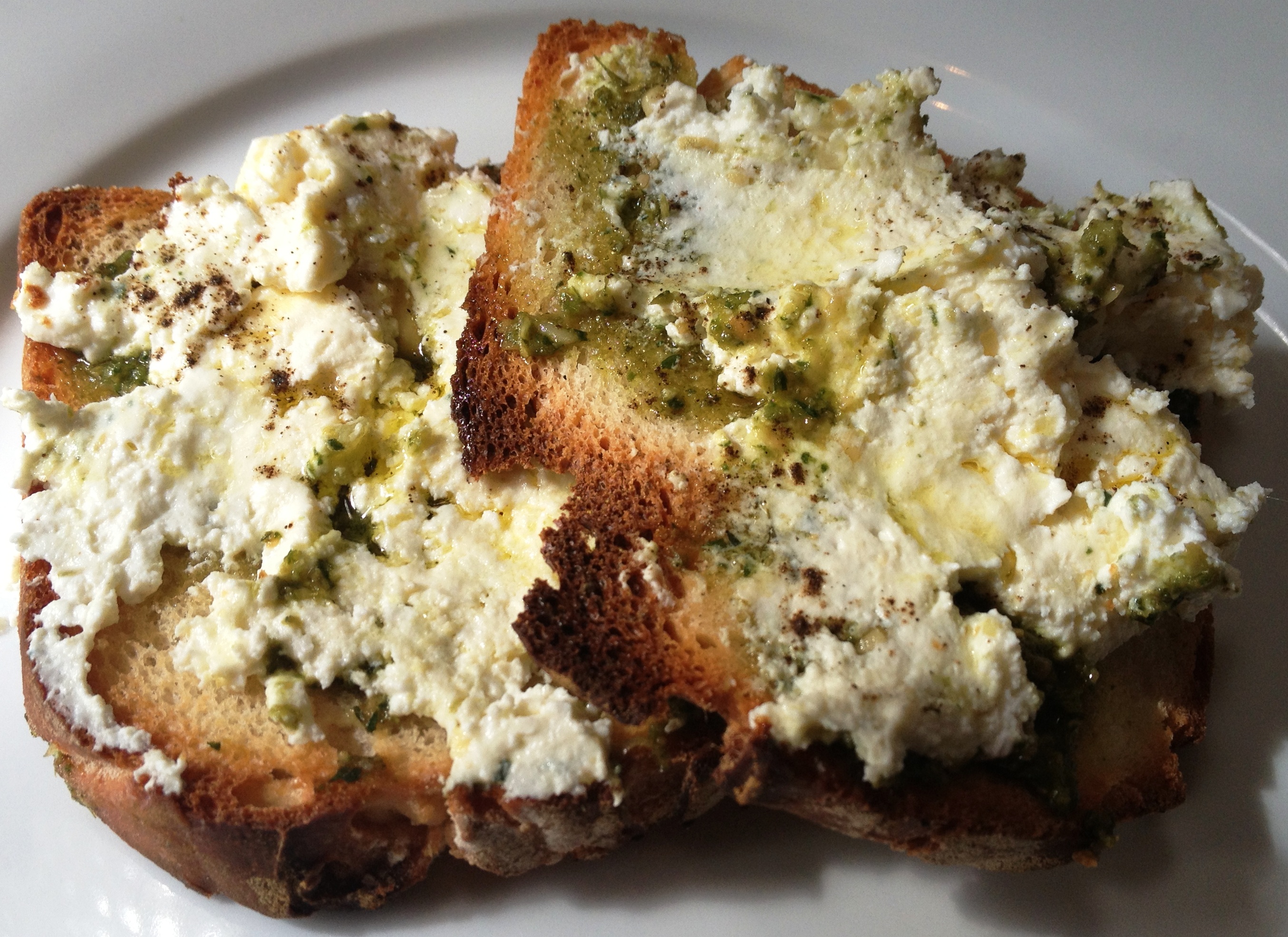
My raw milk ricotta has turned out very well.  I don’t even want to talk about the vile supermarket stuff,  but the raw milk effort is vastly different in taste and texture to the batch I made with supermarket milk. The high cream content, and the absence of added water makes a very rich, creamy, soft cheese. Here is a link to my ricotta cheese recipe, good enough but if you can, do it with raw milk.

I made bruschetta for lunch

Toast bread, rub with a clove of garlic drizzle olive oil over . Sopon ricotta cheese thickly on to the bread, add a few dabs of carrot top pesto, salt, pepper and another drizzle of olive oil. Eat it immediately befor the bread cools. Delicious. Link for carrot top pesto

PEPERONI SOTT’OLIO

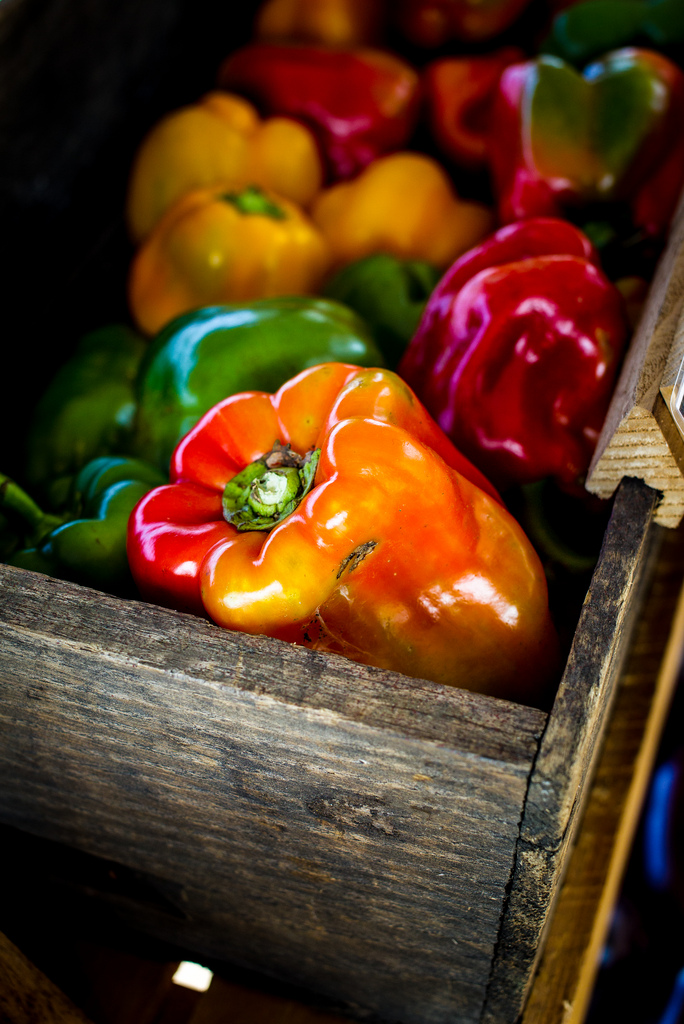
2014-02-24 - Peperoni

One part water and one part vinegar (good quality) add salt and pepper to taste plus a few bay leaves. Bring to the boil. Cut peperoni in 3 mm strips and throw into the water/ vinegar. When the water boil again, drain the peperoni. While still hot put into the jars and cover with good olive oil – ad two fresh bay leaves and a few garlic to the jar and seal immediately. Keeps in the pantry for ever. Beautiful!

COTURNIX BREEDING PROJECT (MAKING GREAT STRIDES)

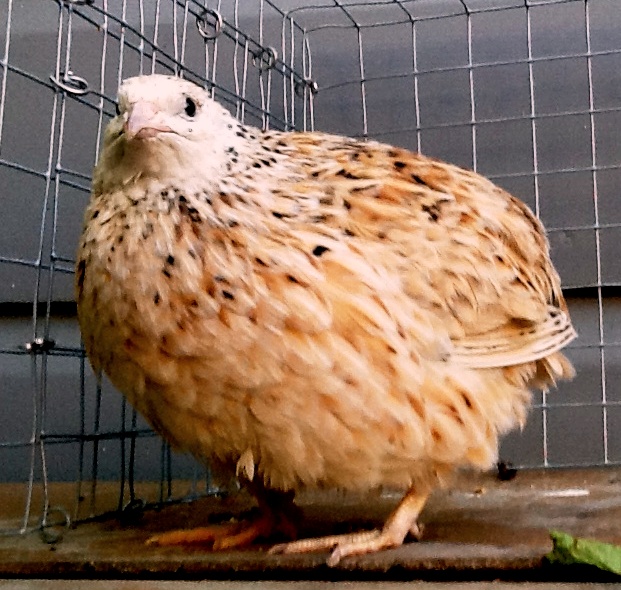
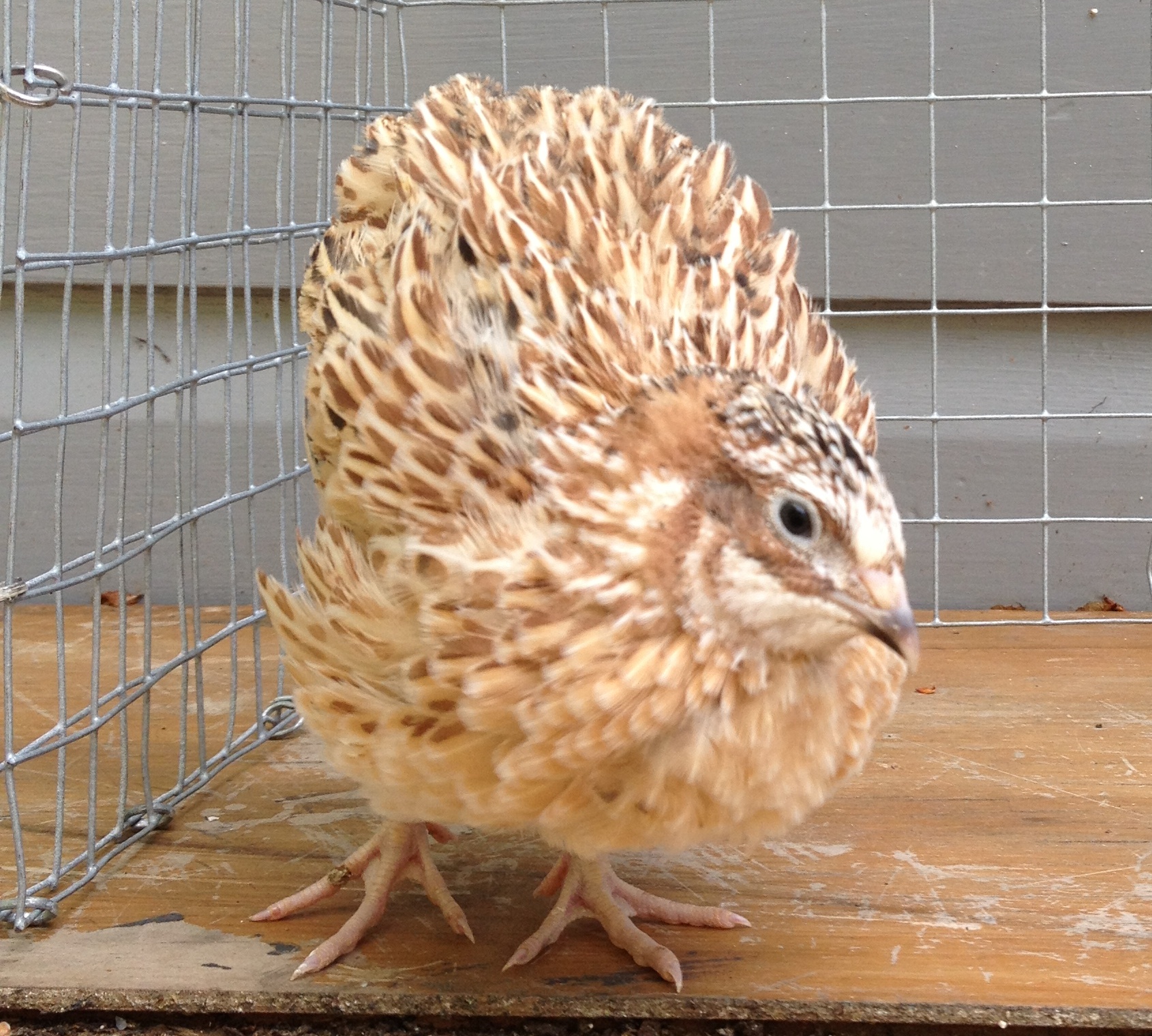
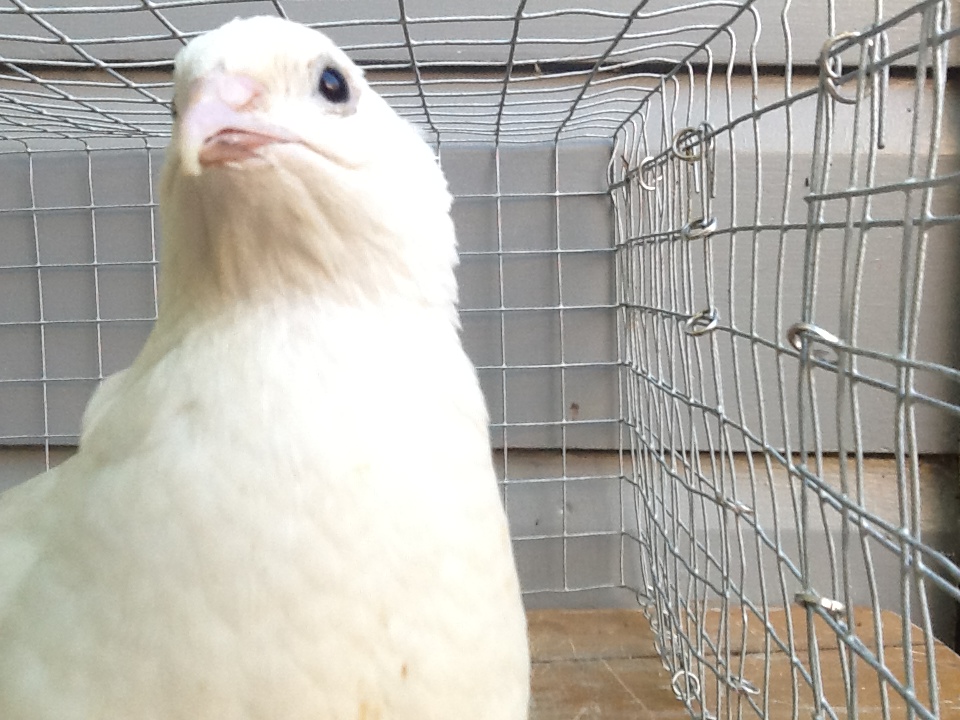
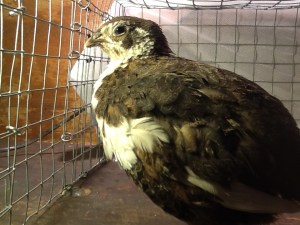
2013-10-24 - Italian Coturnix Male No 1 2013-10-24 - Italian Coturnix Female No 2 2013-10-24 - Italian Coturnix Female No 3 2013-10-24 - Italian Coturnix Female No 1 2007-01-03 - Italian Group of Babies 2014-02-24 - Italian Coturnix Group of young Males

CAN IT GET ANY BETTER?

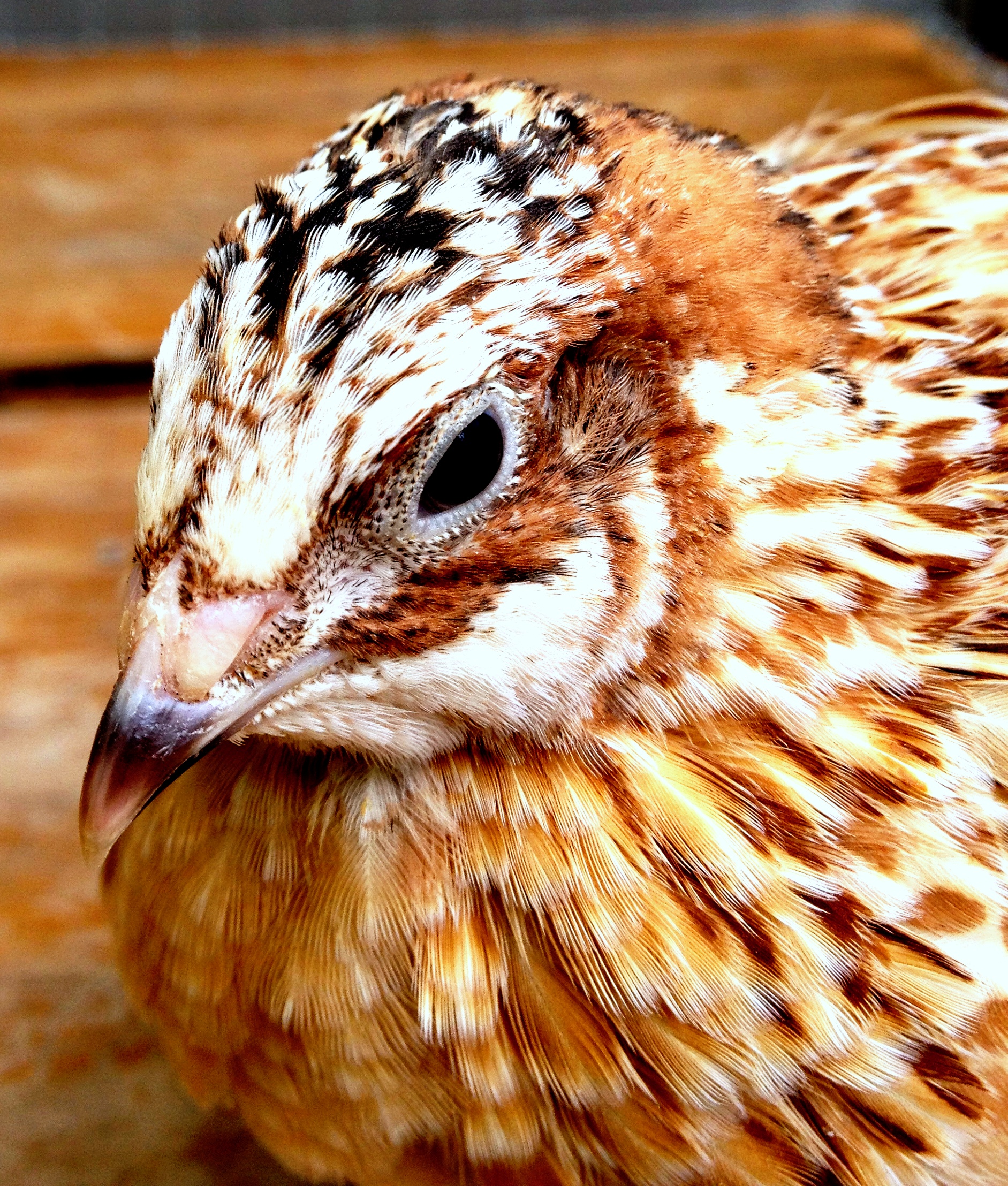
I am engaged in this project to improve the Coturnix Quail, consequently, I  monitor a lot of production parameters. One of my groups of Italian females has been in production  for 13 weeks now and has laid 100% eggs per day –  637 eggs in thirteen weeks from 7 hens – PHENOMENAL – and they are still going. (I commence recording egg production at 10 weeks of age). Above are photographs of three of the hens in this group as well as the male, which is from another high performance line I have (all the information at my disposal shows that these two lines are not closely related). I have also included a photograph of some of the chicks hatched out of this group, and young males from the same group at 28 days of age (average mass per bird at 28 days of age is 133 g -range between 123 and 165 g). Out of this group of young males I have selected only two outstanding males for future breeding. All the hens from this hatching are obviously going into the production unit.

I am again inviting breeders who would like to participate in this project to contact me. I am prepared to ship one of these young males FREE to a BREEDER in exchange for some offspring, or alternatively, should you have a phenomenal female of two, I would be interested to breed them at my place, again in exchange for offspring.

Raw Milk from the Loveliest Dairy Farm

2014-02-22 09.44.042014-02-22 10.05.232014-02-22 09.46.06

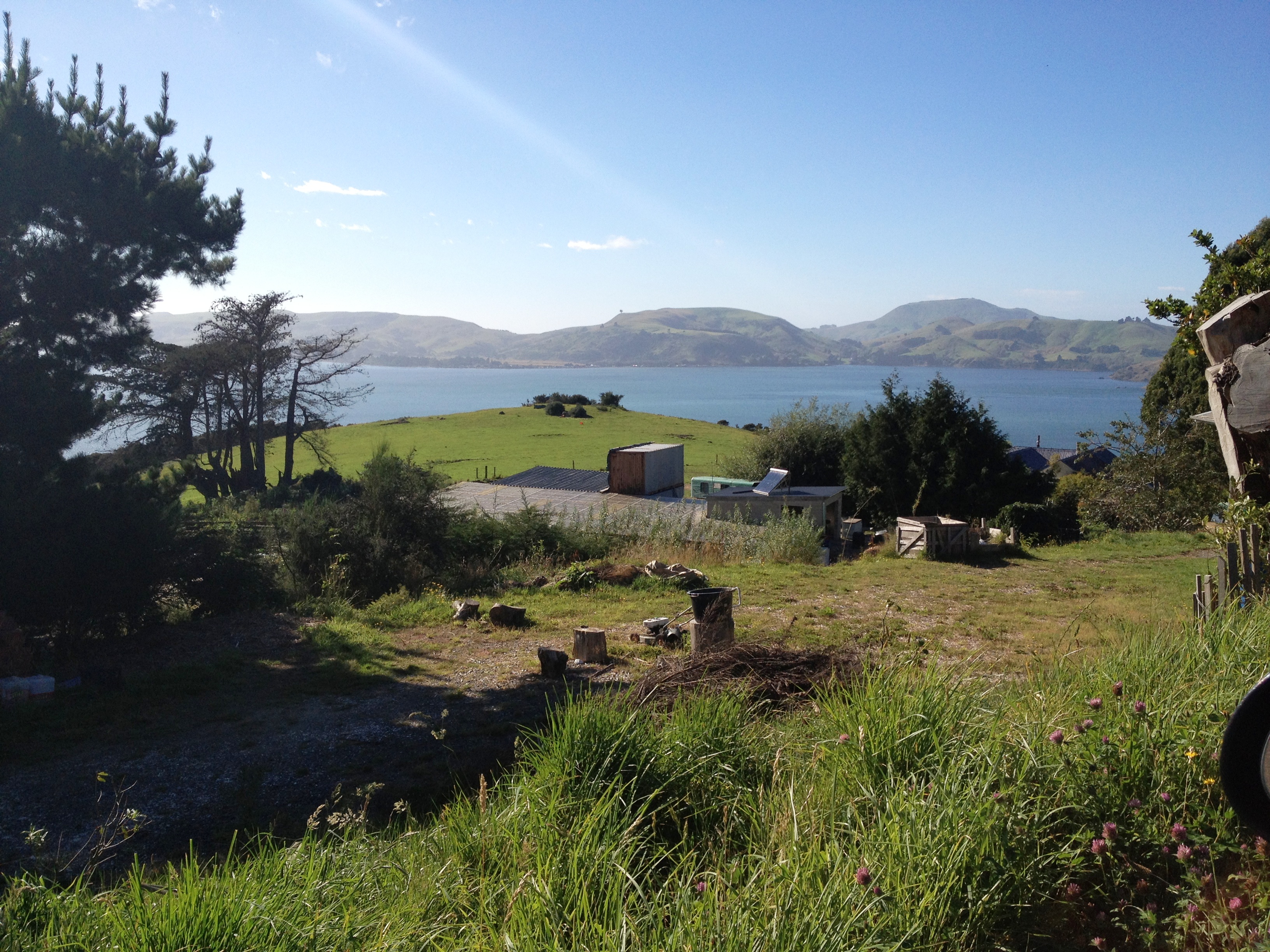
We got up bright and early to be in time for the morning milking. The beauty of the scenery around Dunedin is astounding, driving high up the hill behind Port Chalmers through dense trees and shrubs (that seemed to be natural bush to us ) overlooking the blue harbour is  thrilling. The intimate scale of the landscape , the green of the hills   accross the blue harbour and the pretty town below us made us feel lucky to live in New Zealand. We turned off on to a narrow gravel road, so narrow and winding through dense growth,   that we are still wondering what would have happened should we have met an oncoming car. We passed a delightful, shingled, ‘gingerbread ‘ house with a spectacular view of the harbour and parked beside the milking parlour, with, of course, a spectacular view of the harbour!

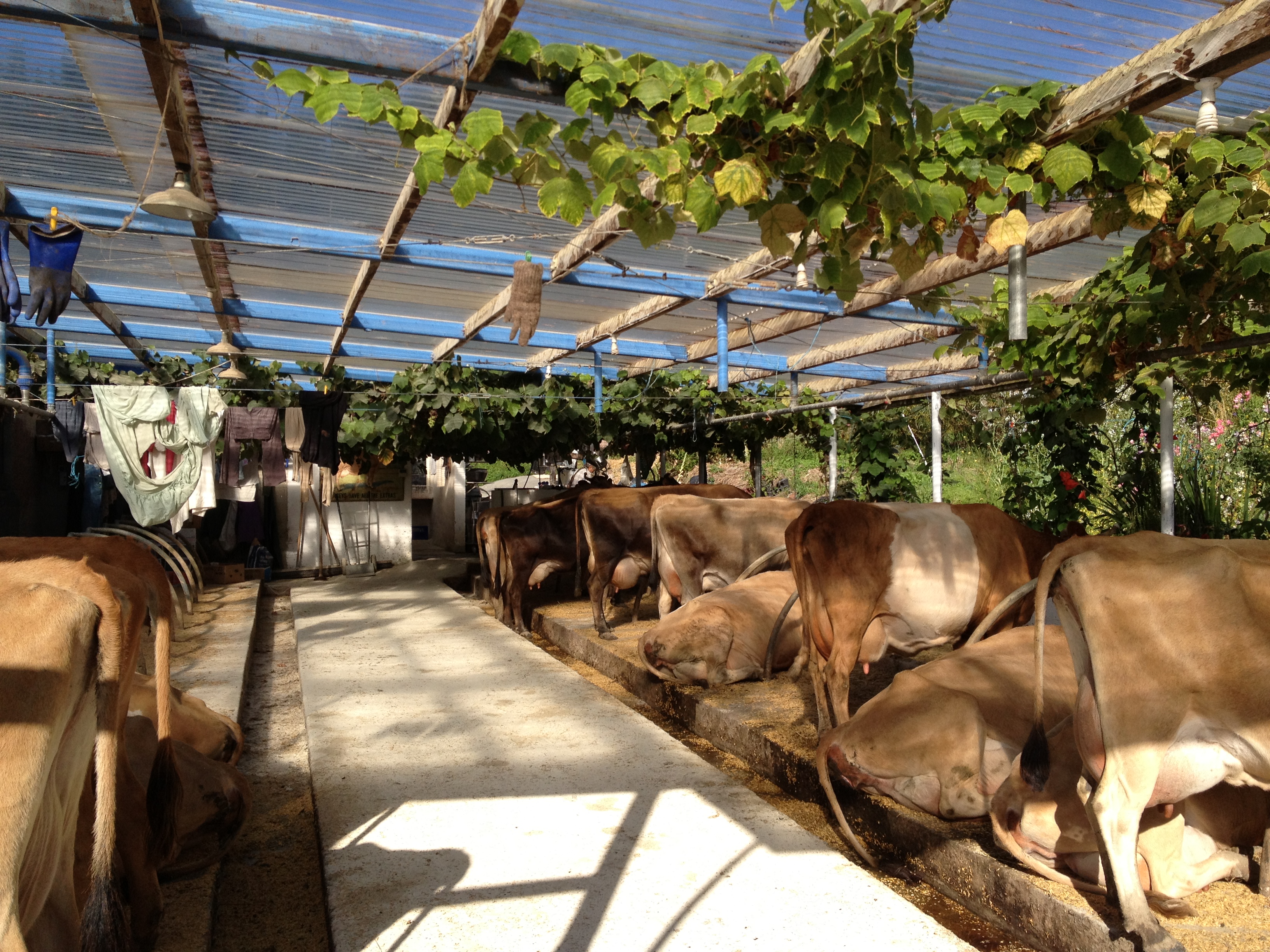
Milking was over and placid Jersey cows stood or lay in the stalls relaxing to soft classical music. The parlour has vines with ripening grapes trailing along the rafters over the heads of the cows.  There is a magnificent wild looking veg garden close by with roses and  what a friend calls  English Garden Flowers on all sides of the parlour.  As an unexpected bonus we were given some artichokes since the owners were not eating them anymore ( getting sick of artichokes  –  unimaginable) !

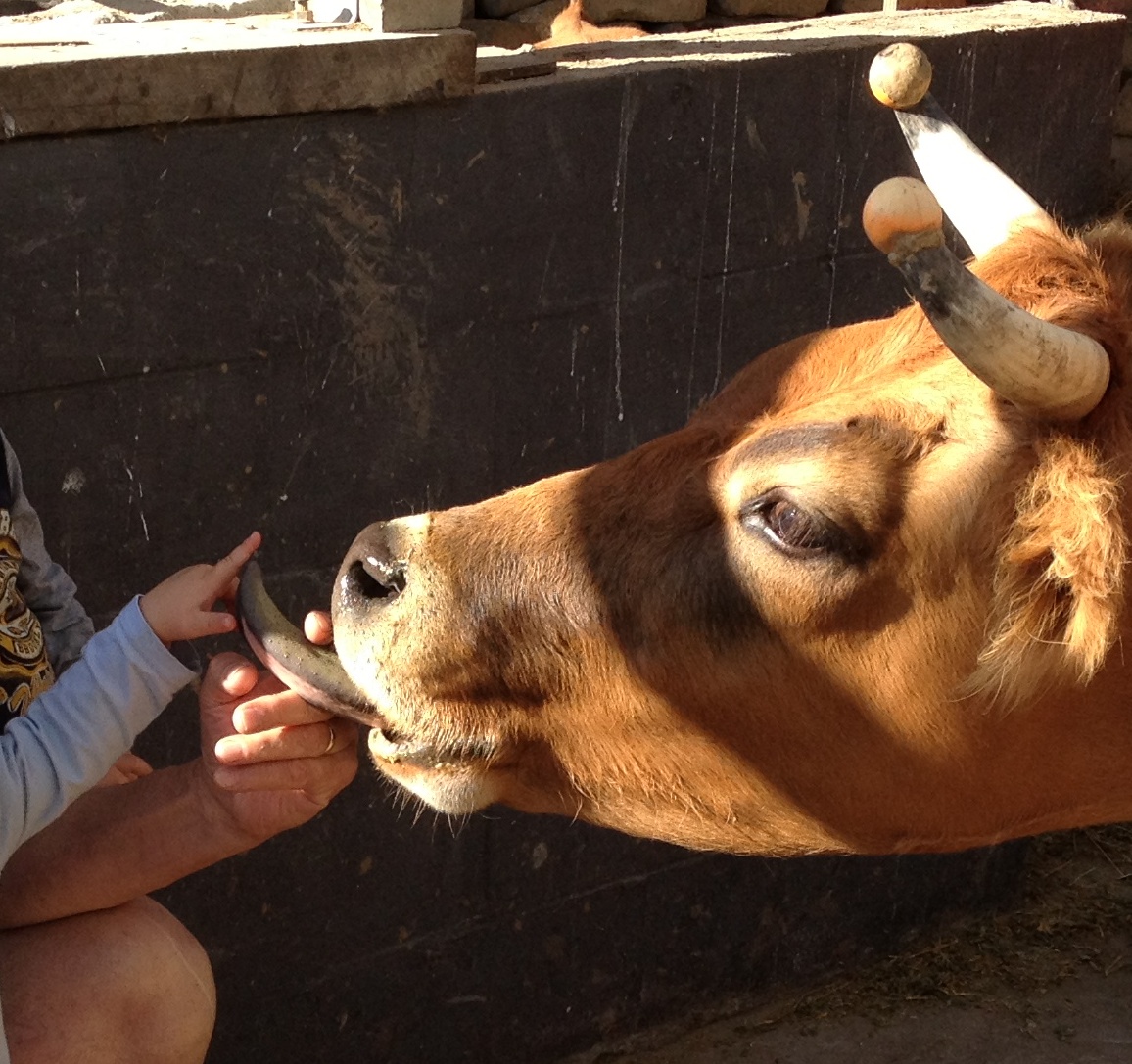
We fell in love  with the place and the kids fell in love with the cows. The cows were willing to be petted and ate hay from gingerly offered little hands. The magic ended when the smallest child was given a long lick through the face by a doe eyed but raspy tongued cow.  The resulting hysterical wailing and crying shattered the peace and we beat a hasty retreat so as not to disturb the tranquil mood.

Back in Port Chalmers we had the best French Toast ever. A huge cruise ship was docked, dwarfing the town, and the streets were filled with  uniformly dressed passengers enjoying a shore visit in glorious Dunedin summer weather (do the ships distribute shore leave uniforms to passengers, we wondered).

Once we got home, I immediately started making ricotta, mainly because I had no room in the fridge for 20 L of milk.

QUAIL BREEDING PROJECT

2014-01-07 - Rosetta Male 2013-10-24 - Italian Coturnix 2 2013-10-24 18.09.15 2013-10-24 - Tibetan Coturnix 21 2013-10-24 - White Coturnix 13 2014-01-07 - Tuxedo


After arriving in New Zealand mid 2013, I immediately commenced with my hobbies, i.e. Coturnix Quail and Ancona Chicken breeding. I was a bit disappointed in the genetic material available and the absence of any controlled national breeding project for any of these animals.

I am an animal scientist with  post graduate qualifications and have therefor engaged in a breeding project trying to re-establishing the phenotypical and production traits of the Coturnix coturnix Quail strains in New Zealand (I am doing the same for Ancona chickens, but more about that later).  New Zealand Authorities do not allow the importation of new birds or poultry into the country and with a very small gene pool (gene puddle), uncontrolled “breeding” , inbreeding, etc, the variation between strains that is normally detected in other countries does not exist in New Zealand.  Most birds, apart from color appear to have the same  traits, are very inbred, with low production ability and fecundity.

I have initially limited the project to four strains, but after some breeding and further investigations, have unwillingly expanded it to six strains – the more strains I try to breed and improve successfully the slower my progress will be. After only eight months of breeding some performance results already been achieved and established, because of the short life cycle of these amazing little animals.

If there are any New Zealand Breeders who would like to participate in this project, you are most welcome to give me a call. I am specifically looking for that very special animal you may have bred, which we may like to breed with in this project, in exchange for some of the offspring.

Back Yard Farmer

Tel – +64 211 34 14 52

byf@backyardfarmer.co.nz

www.facebook.com/backyardfarmernz

http://www.backyardfarmer.co.nz

Dunedin – New Zealand