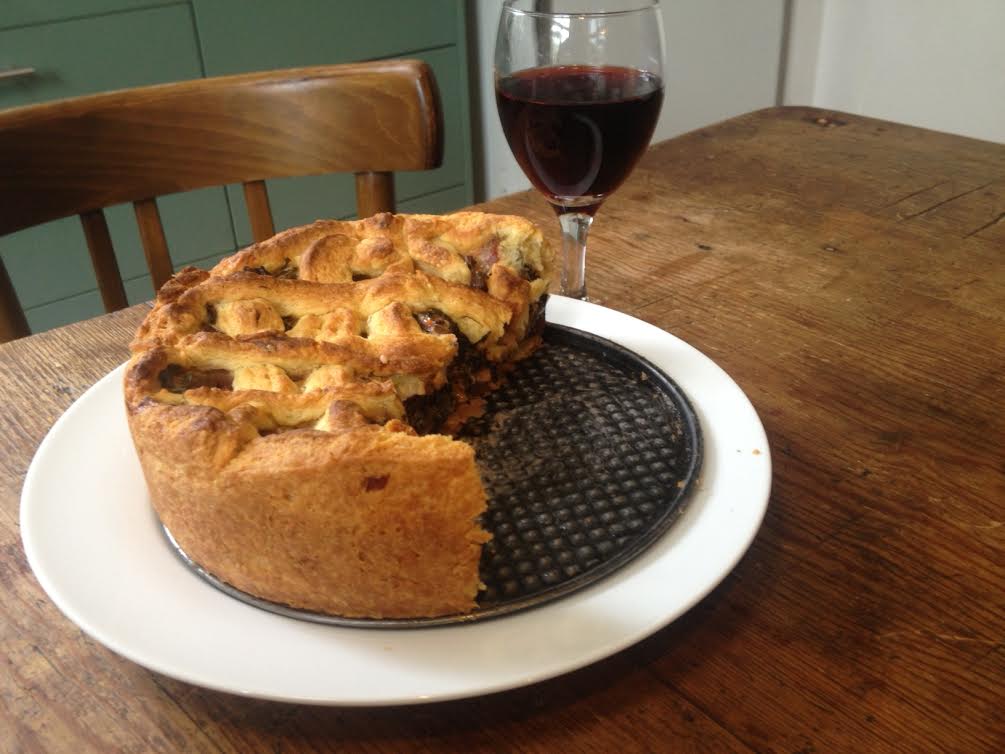
Beetroot Tops Pie

2015-02-23 - Beetroot Top Pie 3


We have agreed the beetroot tops are more tasty than spinach so, today, Mrs BYF made a delicious pie out of the leaves and all the stems of the leaves. Even the thicker bits went in to the pan. The reds and greens of the leaves and stems were colourful and the slightly rough texture was very good. It was so good that I had to share the recipe.

PIE CRUST

This recipe works with sour cream or home made yoghurt, full cream, no light stuff. Greek style bought yogurt may work as well.

2 cups of self raising flour

1 cup butter cut in small cubes

salt

1/2 cup yogurt or sour cream

you can add a tablespoon of sugar if you are making a sweet pie

Whisk the dry ingredients in a bowl, add the butter and work the butter in until the mix resembles fine breadcrumbs. Add the cream or yogurt and mix and knead util the dough comes together. Refrigerate until needed

BEETROOT TOPS FILLING

1 large bunch of tops, well washed and roughly chopped. Use the tasty stems as well but chop the thicker ones finer

2 tablespoons or more of olive oil

pinch of chili

pinch of pepper

1/2 cup ricotta or soft cream cheese

2 table spoons of parmigiano cheese or any cheese you have on hand

1 egg

METHOD

Use a lidded pan that can hold all the spinach and add the olive oil and chili. Turn the heat to med high and cook the chili for a few minutes before adding all the tops. Do not add any water, the water clinging to the leaves after washing will be enough. Cover the pan and cook until just softened. Do not  over cook. Cool the leaves a bit and mix in all the other ingredients well.  Line the pie dish with the pastry keeping some to make the lattice over the top. Fill the pastry case with the filling mix, decorate with strips over the top and bake for about 30 min at 200 degrees.

Do not forget the red wine. ENJOY!
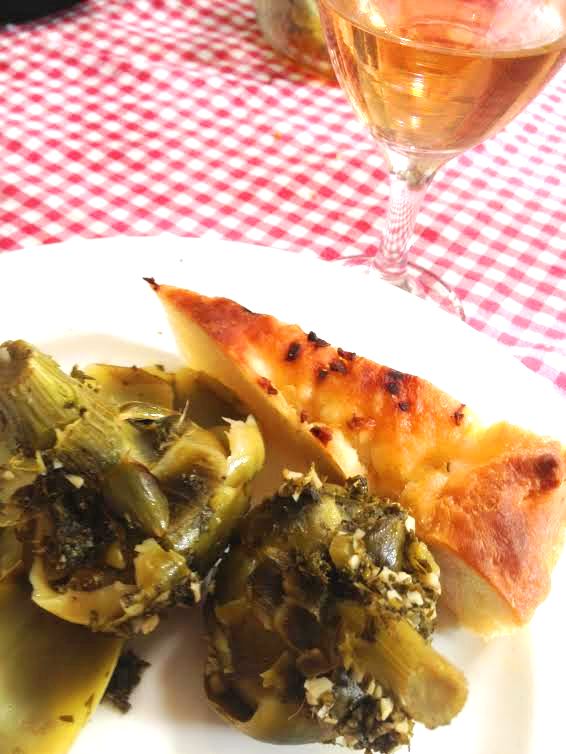


Artichokes (Carciofi alla Romana) and Foccacia light Dinner

2015-01-16 - Light Dinner

Not being very hungry tonight, I decided to pick a few artichokes and cook them the way the Romans do to enjoy with the foccacia I baked this morning.  A glass of my dry white wine complimented a simple and satisfying meal.

CARCHIOFI ALLA ROMANO ( adapted from one of the great Marcella Hazan’s recipes )

As many artichokes as you can fit snugly in your deep cast iron casserole or heavy bottomed pot. Keep about 50mm of stem attached to the artichoke because this is how the Romans serve them

1 lemon

2 or 3 cloves of garlic chopped fine. More if you like!

1 small handful of mint leaves chopped very fine

1 small handful of parsley chopped fine

salt

1/2 cup of oil

Prepare the artichokes by slicing about 25mm off the top of the artichoke getting rid of spikes and a lot of the inedible green parts of the leaves. Peel away the hard outer leaves of the artichoke until the white leaves have only a little green at the top. Peel the green outer layer off the stem. I use an apple corer to dig the choke out from the centre without damaging the base of the artichoke. As each artichoke is cleaned, drop it in a bowl full of cold water with the lemons squeezed in. Drop the halves of squeezed lemon in the water too. Mix the garlic, parseley, salt and mint in a bowl. Press most of it in to the cavities of the artichokes. Put the oil in the pot and place the artichokes stem side up in the pot. Rub the last bit of the garlic mix on the outsides of the artichokes. Add enough water to cover most of the artichokes, keeping the stems dry. Put the lid on tightly.  Cook on medium until tender when prodded with a knife. Serve with the sauce left in the pot poured over the artichokes. Eat the right away.  ENJOY and remember the wine!


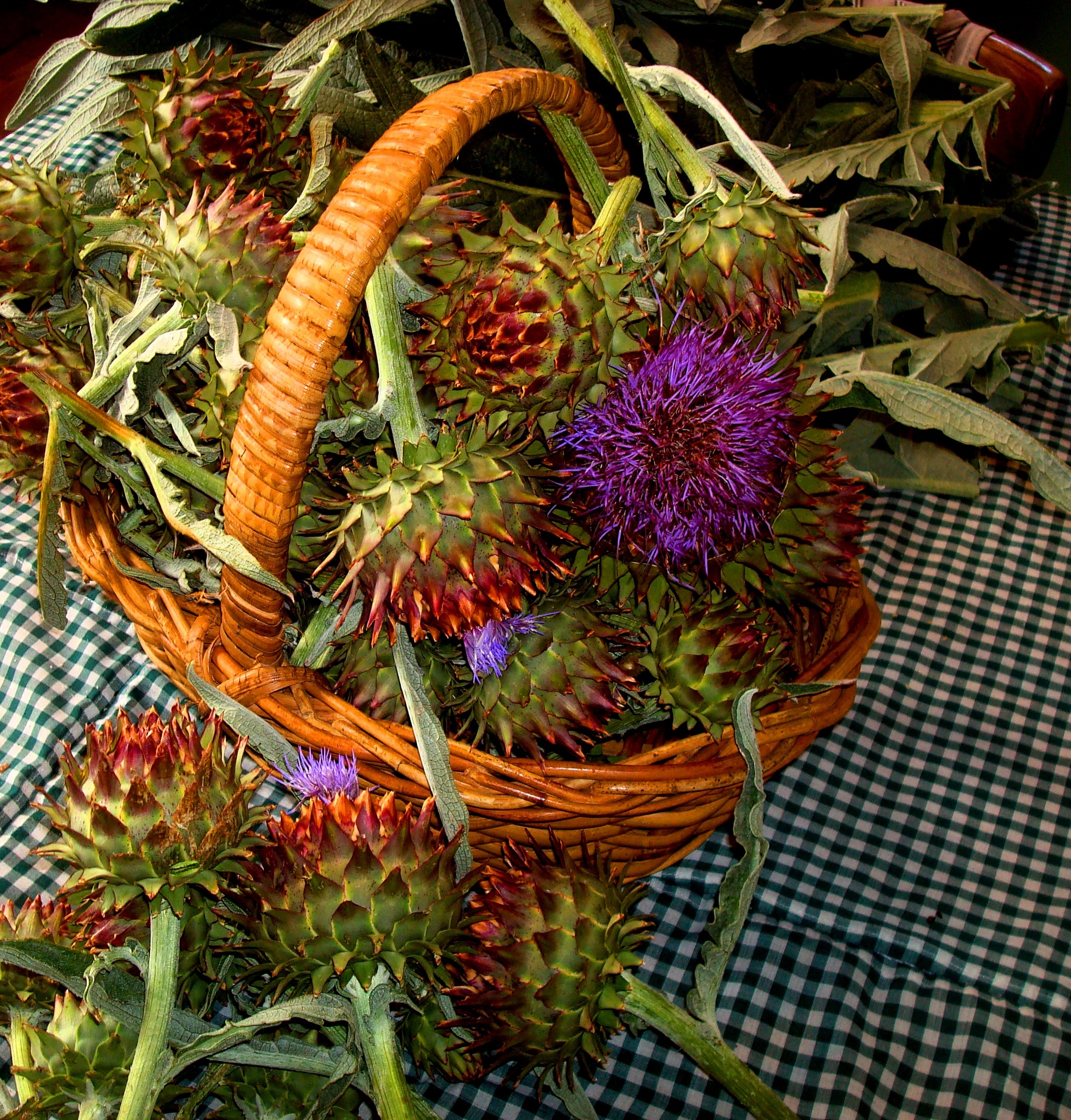
Cardoon buds and yes, they should be eaten!

DSC03960DSC039522015-01-23 - Cardoon in Blompot2015-01-23 - Cardoon Flowers 2


Mrs BYF is fanatical about not wasting any food that the garden produces. Her attitude has resulted in many memorable dishes ranging from fantastic, better that any world class restaurant, etc. etc., to (seldom, I might add) never to be attempted again, EVER!

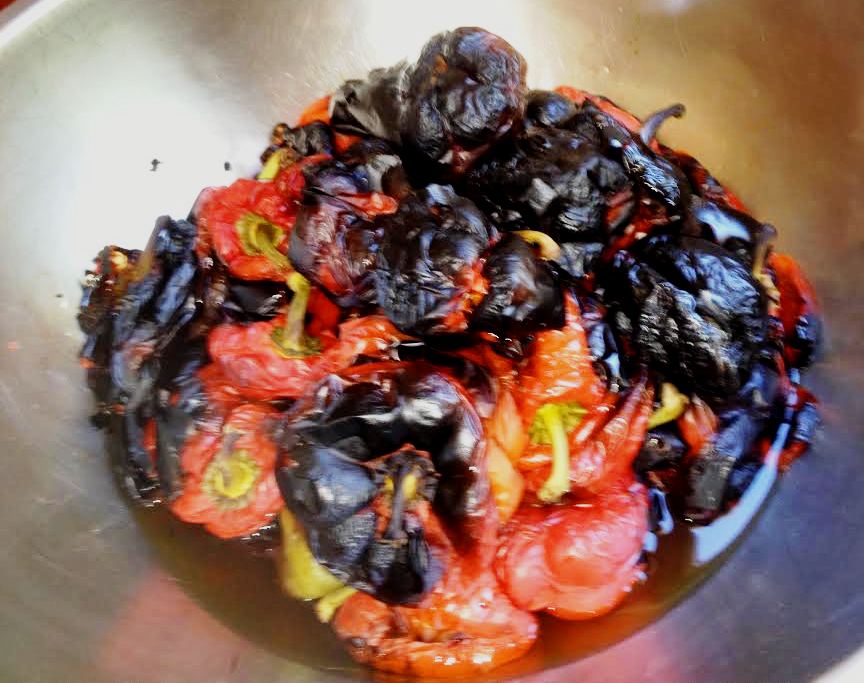
I was going to let the cardoon buds flower, because the bees love them, and ‘they’ say that only the stems should be eaten, but Mrs BYF commanded me to “bring them in!”.  After all the cardoons grow so well in Dunedin and my plants were well over 3 meters high with lots of flowers. They were all boiled in a big pot of water, with a squeeze of lemon and some salt, then peeled, chokes removed and the hearts put under oil.  The taste and texture of the hearts proved to be  sensational, perhaps a bit more starchy, at the same time almost creamy, than artichokes. We eat them as antipasto or on panini with  roast bell peppers (peperoni) and fried eggplant (melanzane). The real taste of Italy in Dunedin. Unbelievable !

Just to take the non wastage policy a bit further, Mrs BYF used the inedibles for  a lovely vegetable arrangement of rosemary, flowering cardoon and  fennel fronds. The cardoon flowers are beautiful and, surprisingly, sweet smelling.

Combating food waste : My contribution

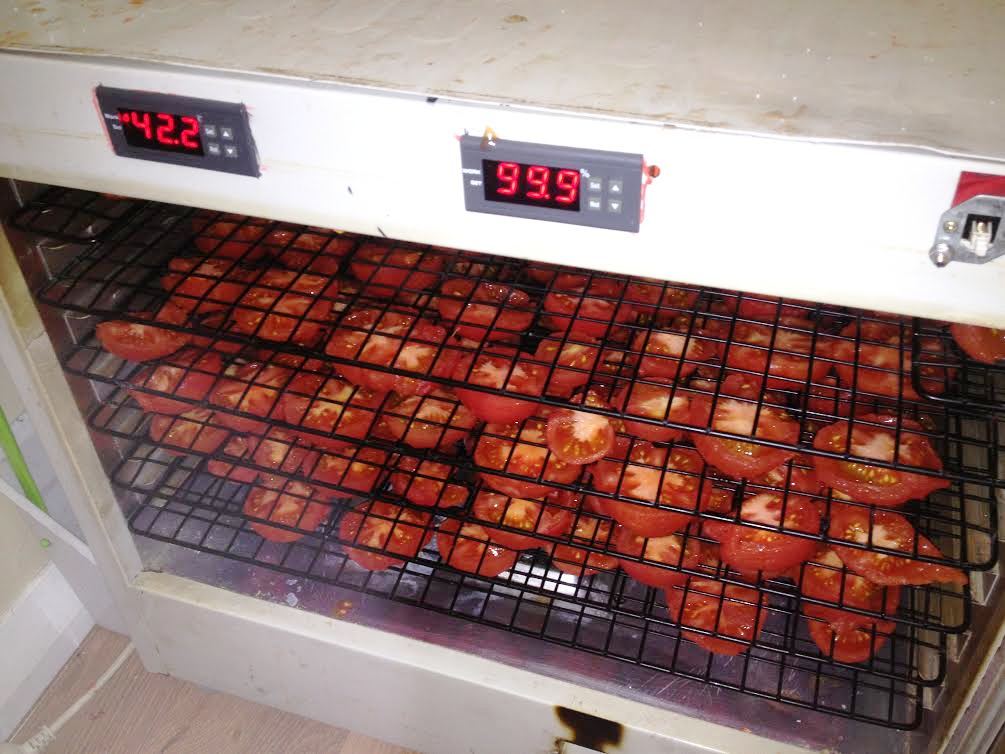
Pomodori alla Grilia2015-01-12 - Pomodori Secchi 2015-01-12- Cherry Time  2015-01-12 - Peperoni alla griglia


I love eating fresh produce in season and preserving all the excesses during the growing season for the rest of the year. Summer fruits and vegetables are expensive in winter and in summer there is a lot of glut and waste, especially at the small local green grocer who sells his fruit and vegetables fresh, in season and does not keep things in cool rooms for years. The supermarkets hold fresh foods over until they can hike the price so I avoid them. Why buy expensive bad produce, albeit blemish free if one can have uglier and tastier produce for less .
I do not have a glass house  ( green house? ) and find it impossible to grow the vegetables that are important for Italian food like capsicum and eggplant in Dunedin. My solution is to have a good relationship with the local shop and to buy fresh produce that he can not sell. A small blemish or spot of rot, a wrinkle here and there, a few tomatoes that are too ripe for locals but just ripe and soft enough for a great sauce can be had for very little money. The  shop keeper  gets in money he would not have had,  and it helps me to process things like eggplant, capsicum, tomatoes and a variety of fruits for use out of season without going bankrupt.  I prevent, in a small way the waste of good food and wish I could convince more people to do the same.

Vegetables can be  preserved in many ways, as sauce or ingredients for soups and stews or dried.  Fruits are made in to jam or pitted and vacuum sealed to bake in to pies and tarts. I always sort fruit and the best specimens are devoured by the troops before being processed.

We have been pretty busy. The worst thing to process are the delicious cherries. Every one has to be pipped before jam can be made or the can be pasteurised for baking.  I have a stiff shoulder and my arm and hand hurts. My hands and nails are stained purple and I have purple juice spots on my face. Keeping going is essential, though, because in dealing with this type of product ” time is of the essence “, seriously!

http://theplate.nationalgeographic.com/2015/01/06/stop-food-waste/?sf6758268=1

Bruschetta al Pomodoro e Basilico

2014-12-04 - Bruschetta

100 ml Extra virgin olive oil
2 Cloves garlic – finely chopped
4 – 6 Slices home made bread or good Italian style bread like ciabatta
4 Fresh, ripe and sweet tomatoes – coarsely chopped
Small bunch basil
Generous pinch salt
Black pepper
In a large bowl, combine the chopped tomatoes, basil, black pepper, chopped garlic, salt and extra virgin olive oil , mix to combine. In the meantime toast a few slices of home made bread and rub with fresh garlic. Drizzle the warm bread with extra virgin olive oil. Cover the still warm bread with the tomato mixture, and serve immediately.  The trick is not to let the mix stand because it becomes watery. ENJOY !!