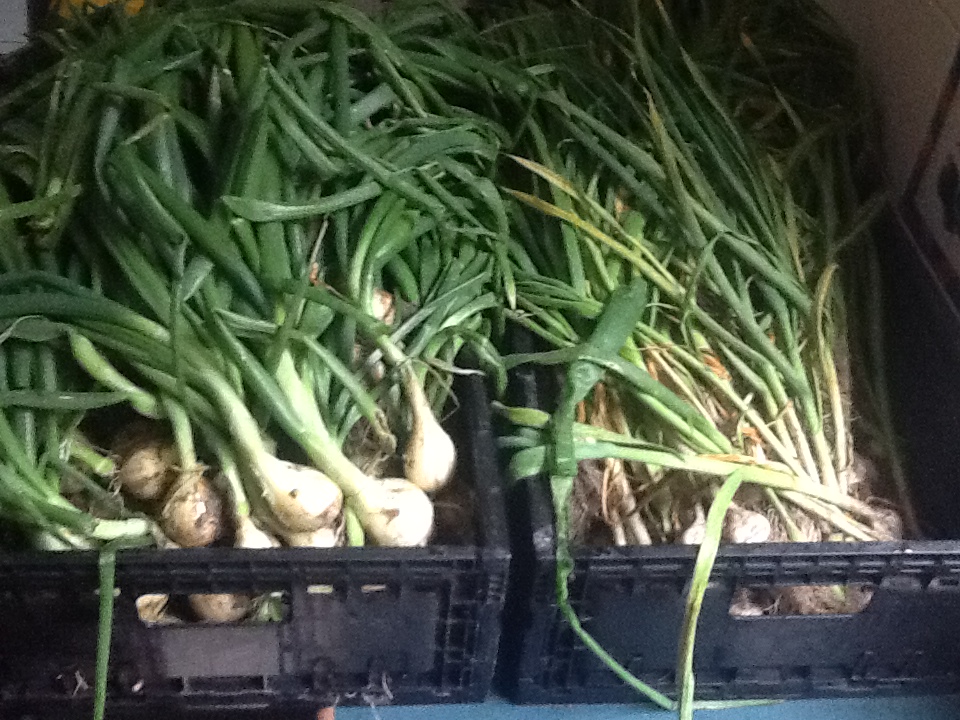
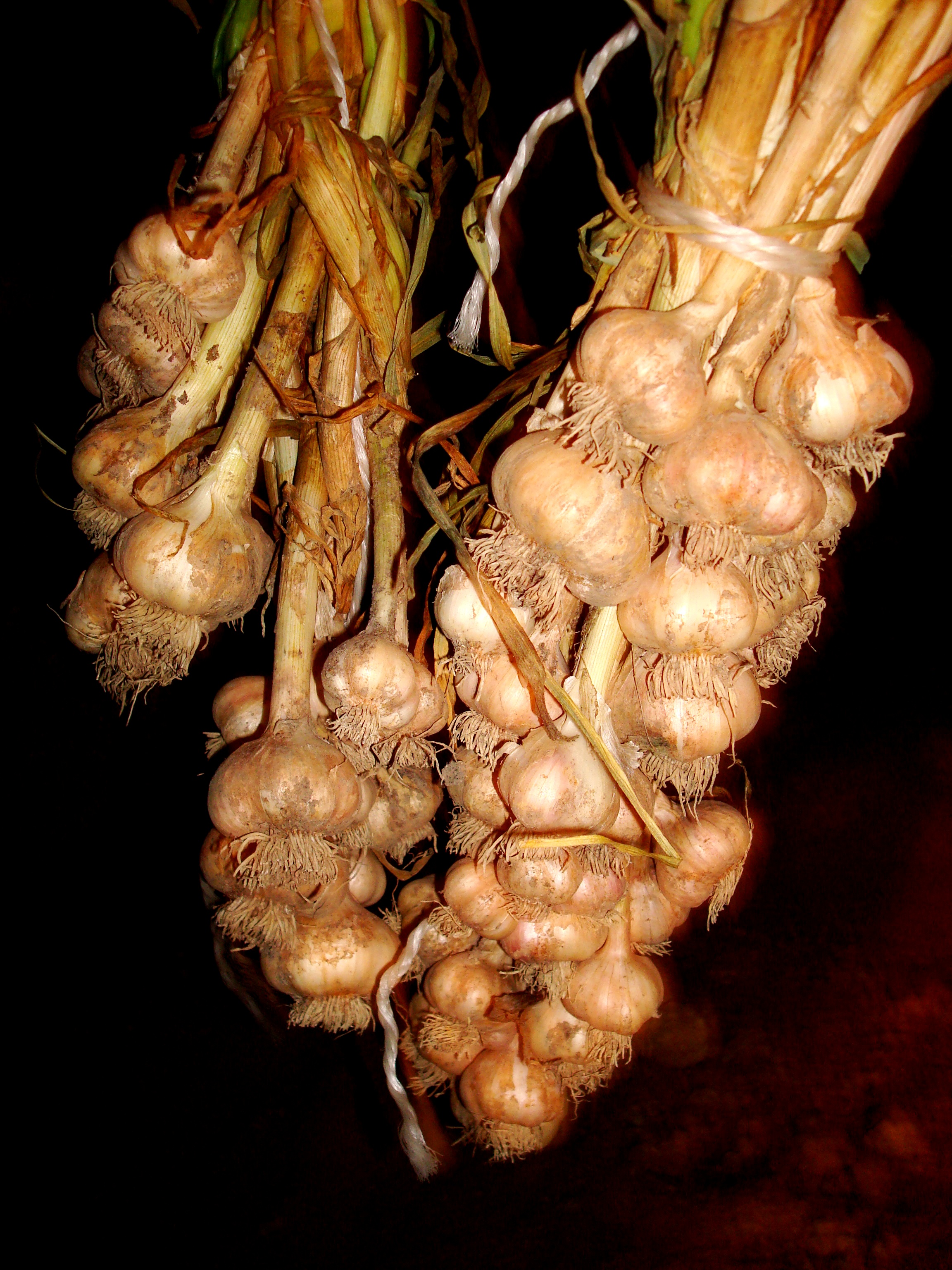
As Garlic is one of the favorite ingredients of Italian cooking I try to plant enough to see me through the year. This year, being new in New Zealand and my soil not 100% yet, I have harvested 180 bulbs only, which should hopefully last me about seven to eight months. After harvesting the garlic, leave it in a cool dry place (never in the sun) for a couple of days until the outside skin and loose soil is well dry. Now remove the excess soil carefully by hand and cut the roots without damaging the bulbs. Take a piece of soft rope and plait the garlic leaves and rope, adding more garlic as you go. Try to have the bulbs such that they have enough fresh air ventilation all the time. When your string is long enough tie the rope around the last leaves, make a loop and hang it in a dark, cool and dry place.
Category Archives: Vegetables – Growing
Cavolo Nero
Cavolo Nero (Black Cabbage) is definitely my favorite cabbage and I plant a lot of it. It seems to grow well at this time of the year in Dunedin, with the result that I can eat Tagliatelle al Cavolo Nero whenever I want to.
See the nice Artichoke plant in the back ground.
The recipe is easy and quick and I off coarse eat this with fresh home made egg Tagliatelle. Take one large bunch of Cavolo Nero and blanch it in boiling water for five minutes – put aside and let dry well. In a large pan put one tablespoon of Extra Virgin Olive Oil and one tablespoon of Butter. Ad four cloves of finely chopped Garlic , one finely chopped red hot chili (or less to taste) and six anchovy fillets. Fry and stir well until anchovies are melted – about five minutes. Now coarsely cut and ad the Cavolo Nero and two Tablespoons of Extra Virgin Olive Oil to the pan and fry and stir for another three minutes until the Cavolo is well mixed with the rest and warm. In the mean time you should have put the pasta in the boiling water to be ready at this stage – drain and mix well with the sauce. Serve with lots of grated Parmigiano Reggiano or Grana Padana cheese. Red wine to compliment.
One more thing to do with Beetroot Tops
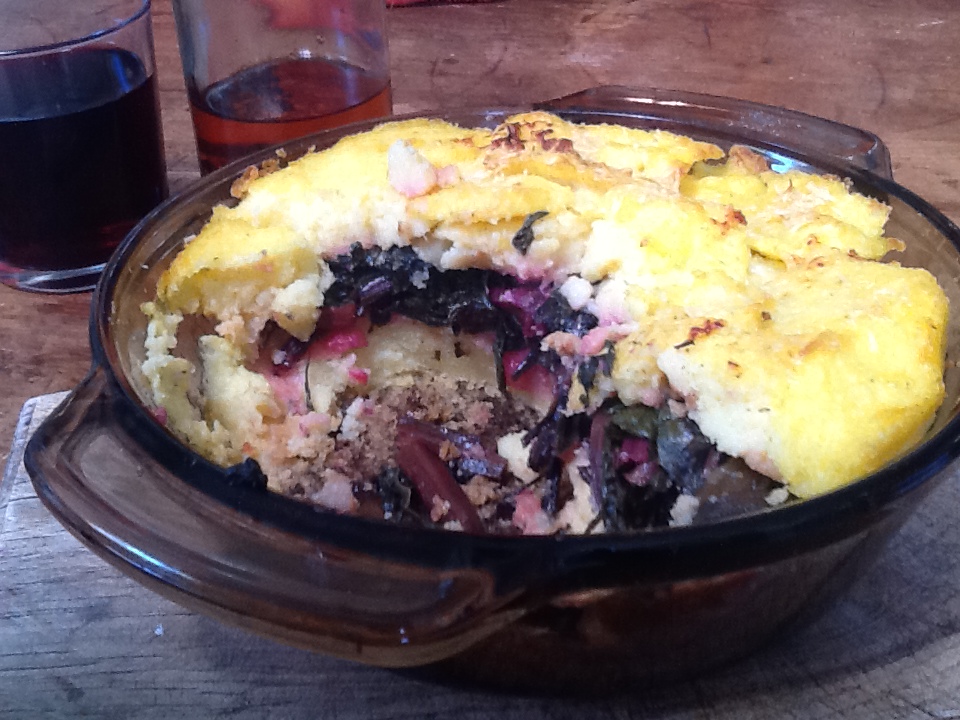
I love greens and have no problem with eating vegetarian meals, providing I have a bit of Parmigiano to sprinkle over the top. This recipe has it all, as far as I am concerned. I have polenta, bechamel sauce and beetroot leaves fresh from my garden. Using my beetroot and turnips as dual purpose plants give me great satisfaction.
Baked Beetroot Tops and Polenta
Pre heat the oven to 200 deg
Prepare and cook the beetroot leaves. See link
Cook the polenta. see link
Make the bechamel sauce according to your favourite recipe.
While still warm, layer the bottom of an ovenproof dish with polenta. Sprinkle parmigiano liberally. Spread the greens over the polenta and top with bechamel sauce. Repeat the layers until the dish is full. Drizzle sparingly with olive oil and sprinkle with more parmigiano.
Bake in the oven for 30 min until the top is golden and crispy. Serve immediately.
Vegetable Beauty
Who needs Tulips and Doffodils if you have Rhubarb, Radish and Rocket
Beetroot leaves
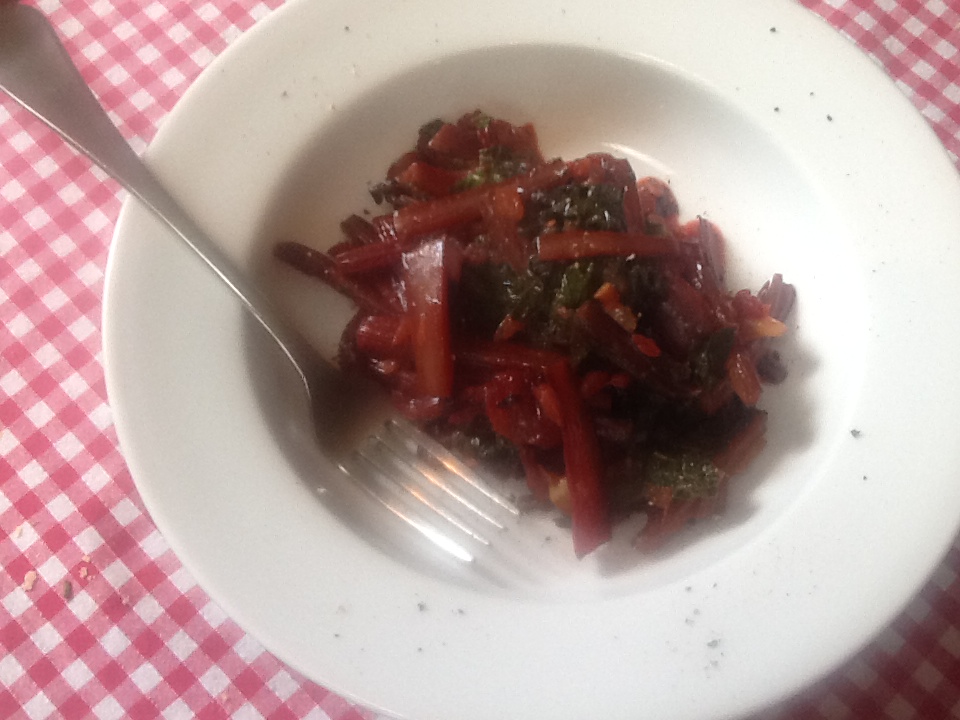
I love dual purpose things like a milk cow that effectively produces meat, chickens and quails that lay eggs and make delicious eating, and radishes and beetroot because one can eat the leaves, too. For lunch I prepared beetroot leaves as a side but we ate it as a main course because it tasted terrific. I washed and and cut the stems off as close to the root as I could get without damaging the skin of the beetroot. I wrapped the beet and a bit of rosemary in foil and popped it in to the oven while my bread was baking. I fried some garlic and rosemary in a teaspoon full of olive oil, chopped the leaves and stems, coarsely and added them to the pan. after frying for a minute I added about 2 tablespoons of water and covered the pan. Cook until tender adding a bit of water when necessary. Delicious. I intend eating the beetroot tomorrow dressed with some balsamic vinigar salad dressing and shaved Parmigiana cheese.
I would like to know of other plants where roots/ fruits and leaves can be eaten.