http://io9.com/quails-can-make-themselves-poisonous-1716166403
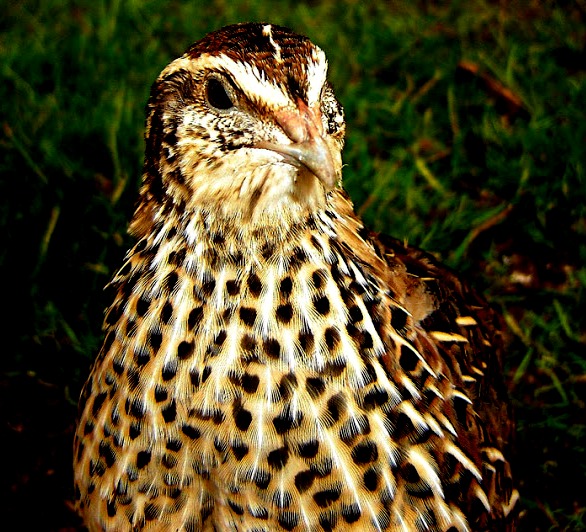
Coturnix coturnix
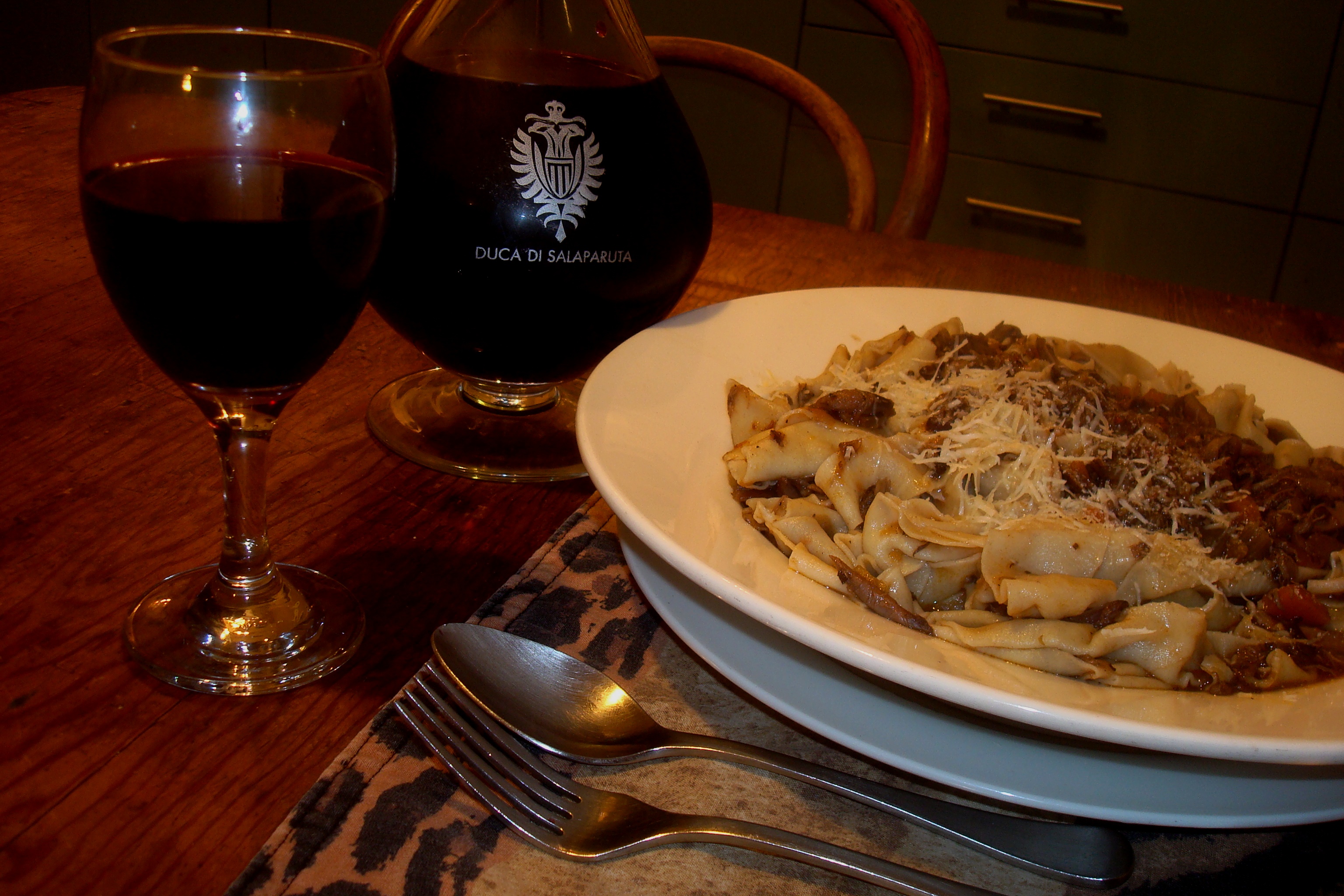
Fresh egg pasta and quail ragu shall always remain one of my favorites. Mrs BYF took off to foreign shores (again) and I shall have to look after myself for ten weeks. Tuesday being slaughter day and the quails were young, plump and very soft, so I decided to treat myself. While slowly simmering the quail ragu, I decanted a bottle of Blackcurrant wine, made on 2014-09-01, for the occasion. Even though I already racked it twice (and tasted it every time) I was pleasantly surprised. This is a bold and concentrated full bodied dark red wine with a pleasant strong velvety aroma and an endless after taste. Being young, I shall bottle tomorrow and keep it for some time and I am sure it is going to be very good as the bottle I had with the paste was excellent. I am fortunate to have made about 70 liters of this wine and I shall post the recipe later during the week.
Recipe for fresh paste
Mix 500 g plain flour with 20 quail eggs (5 chicken eggs). Knead until smooth (ad water or flour to get the correct consistency), cover and place in the fridge for one hour. Fold and roll the dough several times through the thickest setting on the pasta machine, then gradually pass it through at a thinner setting each time, until the desired thickness is obtained. Use ample amounts of flour whilst rolling the dough. The pasta can now be used or allowed to dry for later use. This fresh pasta cooks very fast and is ready in less than five minutes.

Feeding is such an important component of any animal husbandry operation. Not only is it the single most expensive component, but it also effects the health and well being of each individual animal and therefore contributes to the profitability and success of the whole operation. Research has been done over the years indicating exactly what any animal requires in terms of nutrients for what ever system you follow, this information can be applied to the benefit of your farming operation. One fact cannot be argued away – no animal can produce optimally without a balanced diet.
In my own case, I have set up a small blending plant with great success. I do not process any raw materials, as I buy every ingredient in ready to use format, but purely blend it in the right ratio and consistency.
SELECT QUALITY INGREDIENTS
I use an average of about eight dry raw ingredients, depending on the final product, and have sourced regular, suppliers who offer high quality products and are reliable for these. After the initial blending, I add either molasses or oil, both adding mainly energy to the finished product and helps make the product virtually dust free. This method prevents the product from separation and finer ingredients such as limestone, diatomaceous earth and vitamin / mineral premixes from segregating and moving to the bottom of the container. All of this makes it easier and more enjoyable for the animal to consume. Also, each and every mouthful supplies a balanced diet with the required nutrients in place to be healthy and produce optimally.
MEASURING ACCURATELY AND BLENDING DRY INGREDIENTS WELL
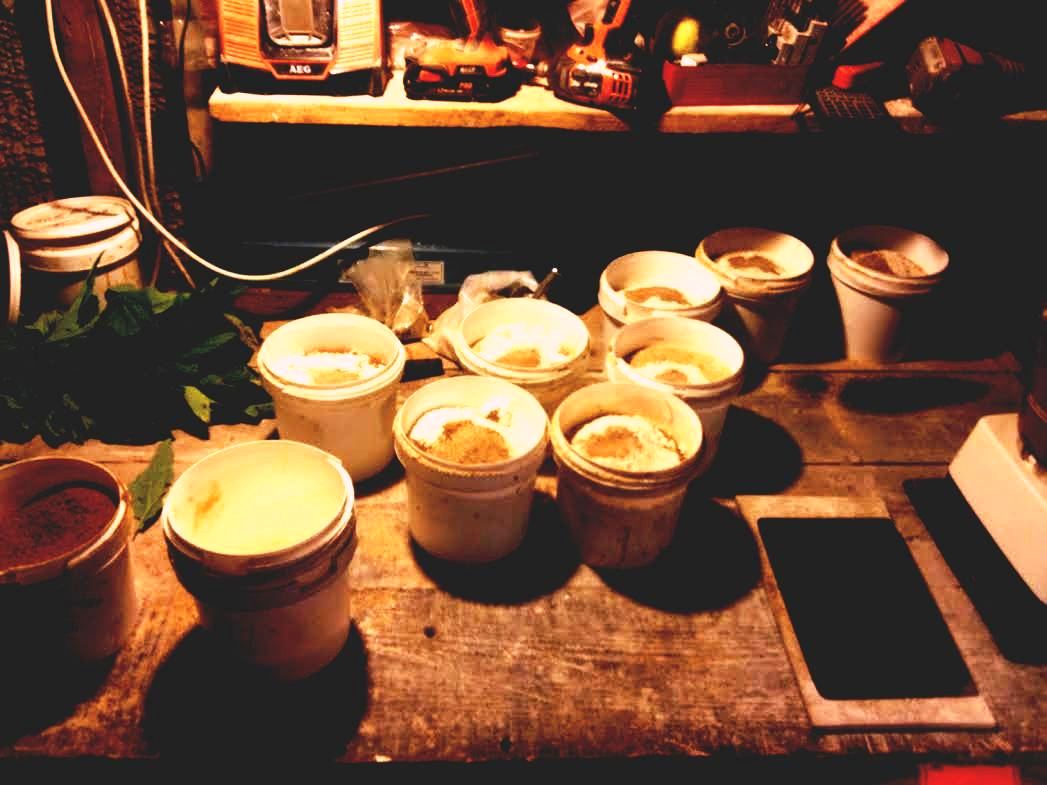
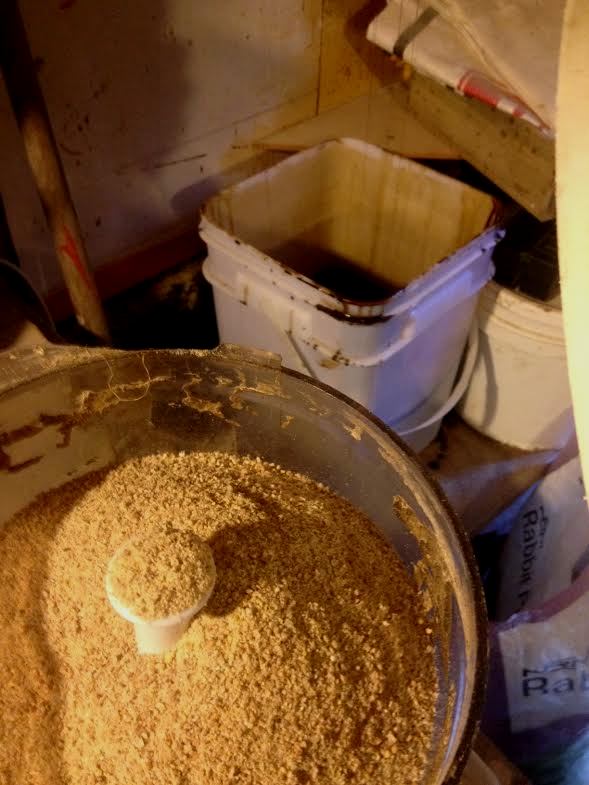
I use a large number of two liter plastic containers to accurately weigh each ingredient to make up a batch which is around 1.25 Kg in total. I do this product by product, which eliminates confusion and limits possible errors. In other words, I would weigh in all the wheat, then all the blood meal, etc,etc always ending with the diatomaceous earth and lastly the vitamins and minerals. As soon as I have about twenty buckets each containing all the raw materials, I would blend the contents of each one using a food blender / wisk, blending for about ten seconds.
ADDING GREENS

Even though I do not formulate to have green material into the ration, I always have a surplus in the garden and mix about 50 – 100 grams into each batch, hoping that it may supply some natural ingredients over and above what I have already catered for (I of course do not do this for my free ranging animals). I only take the finer and softer parts of the plants and feed the more fibrous parts to the rabbits. Cardoon has stood me well here in Dunedin as it grows vigorously and even though I eat the best part of the cardoon, it still leaves enough for the rabbits and poultry. If I have other surpluses like cabbage, salads, spinach, etc I would use that instead.

As soon as I have blended the dry ingredients I add the greens and blend everything for another 20 seconds, chopping and mixing the greens well into the dry mix.
ADDING MOLASSES OR OIL

After the greens are mixed into the feed, I ad the molasses or oil and blend for another 10 seconds. The feed is now complete and ready to use
SCREENING

Screening the final mix is very important as a last mixing exercise to ensure there are no large parts that may be inedible. The final feed must be an even bite size and well mixed together in a uniform consistency that would not separate easily.
CAPACITY OF MIXING PLANT
Once you are in operation and all your ingredients and final feed containers are all close and within easy reach, it is very easy to weigh out new batches while, at the same time, mixing the feed of the already weighed ingredients. Mixing cycles are about two minutes and doing 30 Kg per hour is relatively easy. A morning session of four hours delivers 120 Kg plus, depending on how often you break for coffee. This is enough for a reasonable sized operation, like my own, for one week.
The advantage here is that you have a well mixed feed, you know that all the essential ingredients are in the product and the feed is always fresh. By mixing your own feed you are assured that your animals are always well fed enabling them to produce optimally and make money for you.

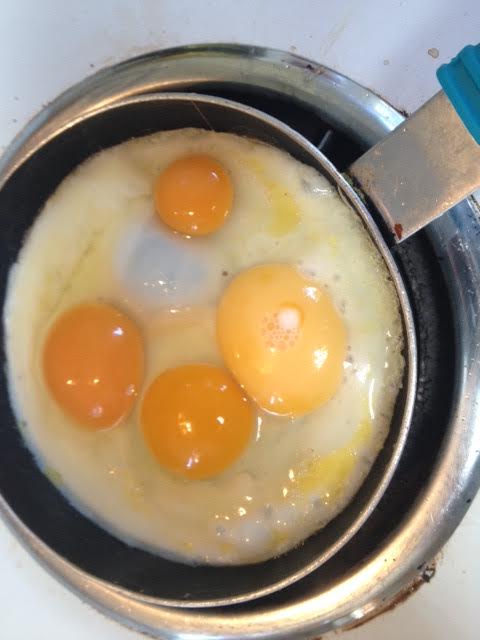
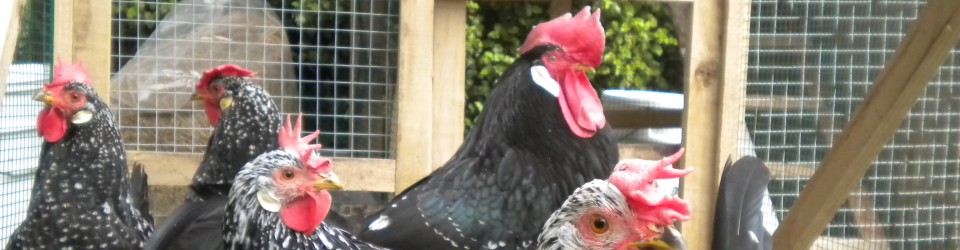
Fried eggs for breakfast. The unique thing was not the bit of chili and butter in the pan but that the eggs were from top to bottom: bought brown hens egg , pure white egg, laid by my Ancona hen, egg laid by my guinea fowl hen and a pretty speckled egg laid by my quail hen. In the pan the pale yellow is the bought egg and the middle egg beside it is the guinea fowl egg. The latter took a bit longer to cook than the others. Very tasty treat. Yolk color is more often than not an indication of quality of the feed consumed and the general well being of the bird.


I want to state that this post is not a reflection on all quail breeders in New Zealand, with whom I hope to maintain a positive relationship, but an isolated, and hopefully, rare case.
I am trying to get more good unrelated quail (Coturnix coturnix) birds to enhance my breeding programs. Lack of available birds, costs and unwillingness of some breeders to work together in my efforts to enhance the quality of the Coturnix coturnix in New Zealand has forced me to buy eggs and hatch with the hope of finding some good birds among them. Needless to say, it is an uphill battle. I am reporting here on one specific “Breeder” that has sent me three batches of eggs. The first batch had a hatching percentage of 0%. In the same machine were eggs from other breeders which have achieved hatching percentages well in excess of 60%. Consignment two is still in the incubator. Consignment three, of 100 eggs, arrived with 52 visually broken eggs and perhaps many more with hairline cracks – 13 of the unbroken eggs were under 8 g in weight (too small to incubate) – All egg yolks are a palish yellow color, pointing towards very unhealthy and underfed birds. The breakages occurred because the sender cut and stacked the egg trays in such a way that each egg tray actually rested on the eggs below, instead of having the trays supporting each other protecting the eggs (see last photo which is an example – the other photos were actual as the eggs were received). The “Breeder” refuses to reimburse or replace any eggs as he claims that the courier to be at fault. I have used the same courier for hundreds of egg consignments wit good results.
 Back Yard Farmer