Inside the mind of a Quail

QUAIL WATER DRINKERS

I am a minimalist and like to use whatever is on hand, but won’t compromise on efficiency and quality of the end product. Plastic is definitely not my favorite material, but in today’s life you cannot avoid it, so why not use it and save it from landing in the garbage bin and become part of the world wastage problem.  I use an old plastic milk and peanut butter bottle to make a very effective quail water drinker FOR FREE and in the process drastically reduced my carbon footprint.

Knowing quail babies love to climb on and into everything and during the first few days are very clumsy and petite,  I used this knowledge to make a quail water drinker that encourages the little quails in the beginning to climb into the drinker to make water consumption easy, without being able to drown, get wet  or get stuck in a corner. When they are a few weeks old and know their way around the brooder and eat and drink freely, I switch to a drinker that they cannot get into and spoil or soil the water.

2014-01-06 - Juvinlile Water Feeder 1

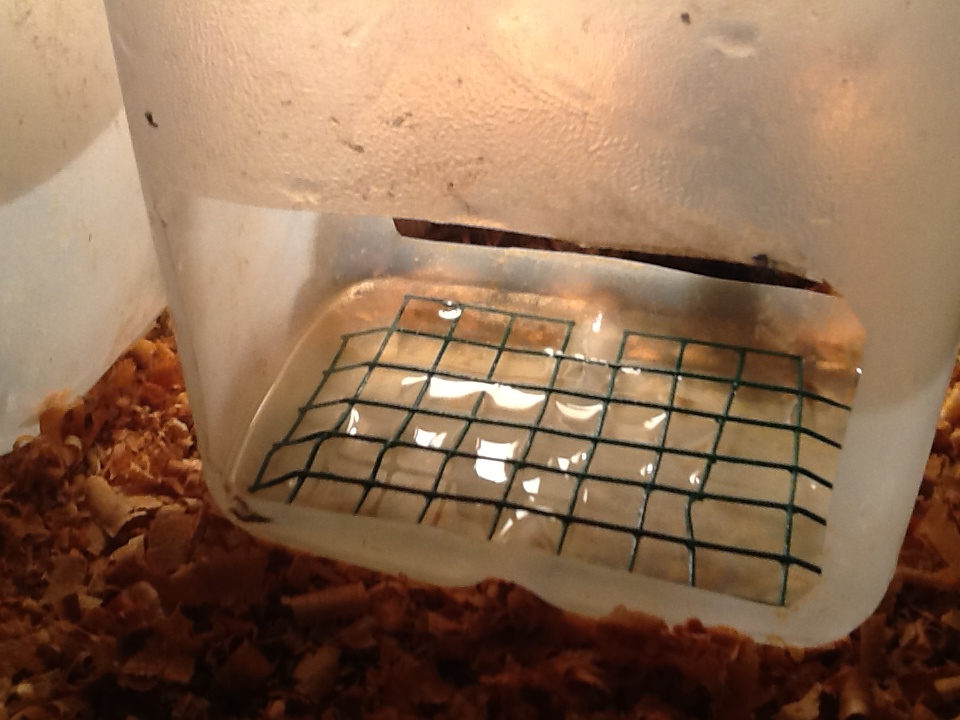
Use a milk bottle and cut a large enough hole into both sides so the baby quails can freely enter and exit. Place a piece of wire netting (leftover from the last cage you built) inside to fit well with the sides turned slightly down so the netting is about 5 mm off the bottom of the bottle. Fill with water until the water touches the netting and you are ready. Cut the top off the milk bottle to make cleaning easy.

2014-01-06 - Juvinlile Water Feeder 2

This will encourage the little quails to enter without any risk of drowning or getting wet.

2014-01-06 - Juvinlile Water Feeder 3

Drinking made easy

When the quails are about two weeks old, I switch to adult Drinkers

2014-01-06 - Adult Water Feeder 1

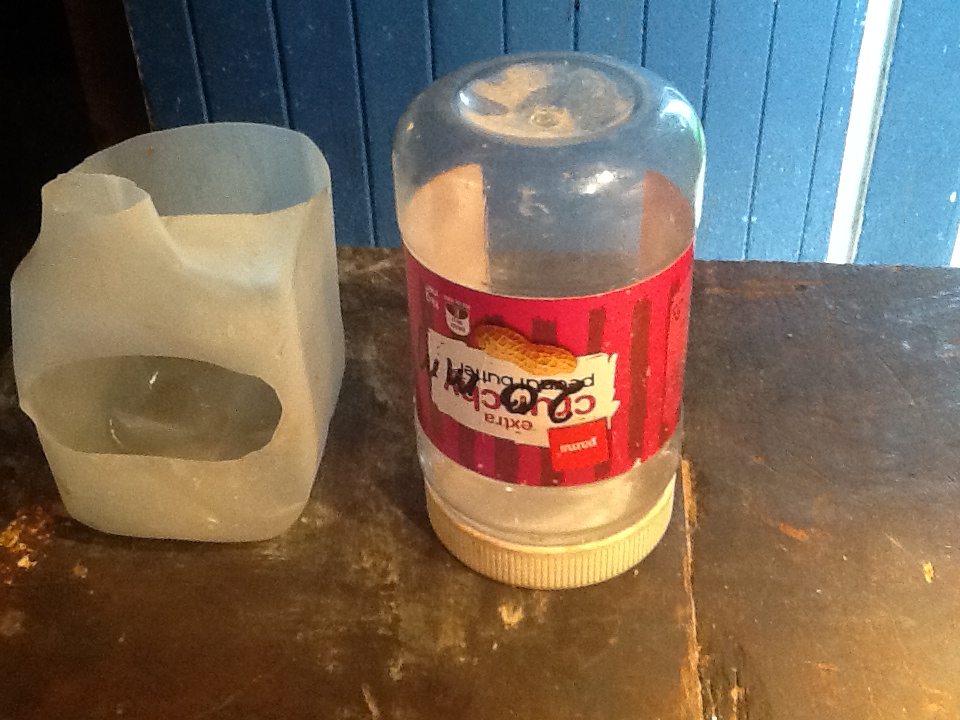
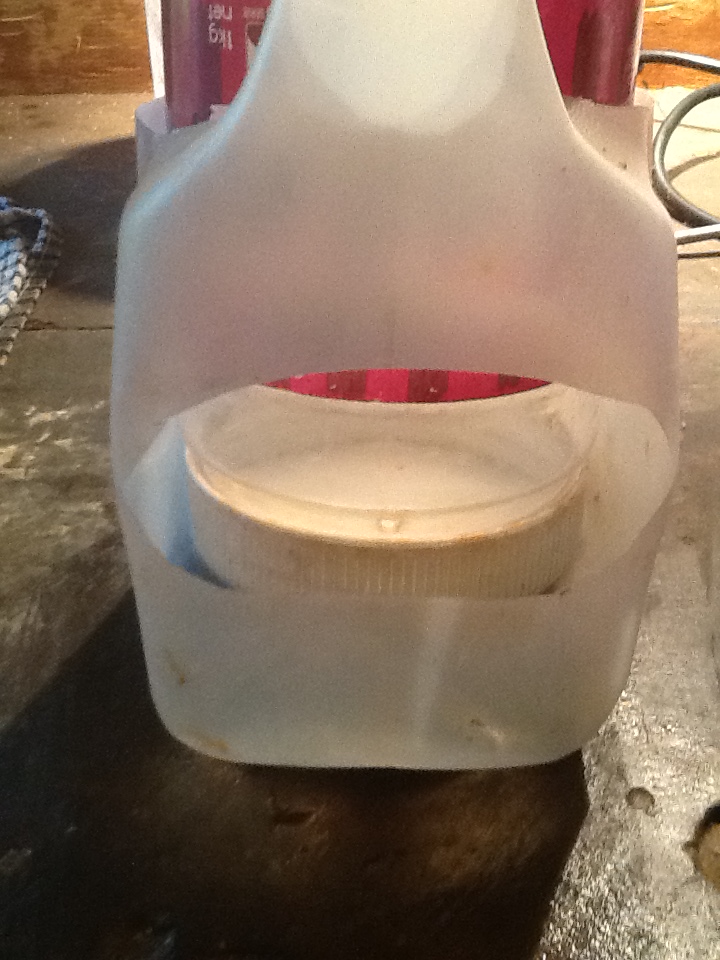
Take used Milk and Peanut Butter Bottles. Any other bottle will work as long as it fits tightly inside the milk bottle. Cut off the top of the milk bottle. Cut a oval hole in the side small enough so a quail cannot enter it’s body, but large enough it can poke it’s head through – about a 30 mm opening and about 50 mm off the bottom.

2014-01-06 - Adult Water Feeder 2

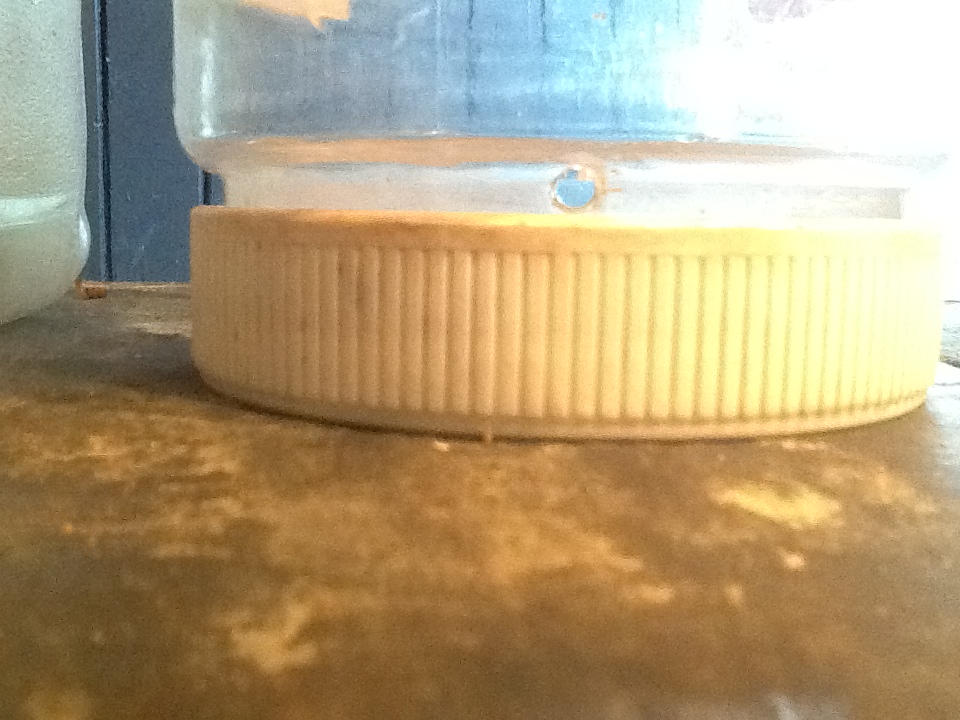
Now drill four holes (opposite side) into the peanut butter bottle

2014-01-06 - Adult Water Feeder 3

The hole in the peanut butter bottle must be lower than the bottom edge of the hole in the milk bottle

2014-01-06 - Adult Water Feeder 4

Fill the Peanut bottle with water replace the lid and turn upside down and insert into the milk bottle.

2014-01-06 - Adult Water Feeder 5

Here you have 1 Liter of water that the quails cannot soil, but have easy access to

2014-01-06 - Adult Water Feeder 6

Happy Quails and Happy Farmer !!

Lethal Homozygous (Y) Gene in quail

This short reply was written by me as result of a Facebook discussion

2013-10-24 - Italian Coturnix 2

2013-10-24 - Italian Coturnix 9

  • I select and breed all my animals for functional efficiency, as I have done all my life, not only in breeding my own animals but also when involved in establishing new cattle and horse breeds in the past, as well as advising Governments, large International Organisations and many thousands of Farmers around the world. I breed with poultry as they come out of the egg, without having to interfere with them to be able to survive and breed. I select and cull heavily, especially when the gene pool is as limited as it is in New Zealand for the breeds I am interested in. As for the Lethal homozygous Y gene associated with Golden Italian Quails, I failed to have read any article reporting hatchability between strains under the same commercial conditions and report on comparable results, nor have I found any reputable body advising to never breed Golden Quails to Golden Quails. In my own case, over a period of three months, using 480 quail hatching eggs (120 from each of the four strains I breed at present –  All purebred) I quote the following results for animals alive after 24 hours of terminating the hatch : Golden Italian – 74.3 % (Variation 66.7 % to 83.1 %) ; Tibetan – 83.2 % (Variation 79.1 % – 90.0 %)  ; Pharoah 75.0% (Variation 73.3 % – 76.7 %) and White – 68.9 % (Variation 56.7 % – 76.7%). I do not for one moment doubt the work that has been done in identifying and mapping the genetics of the Golden Italian Quail, but clearly there is more to it than say you have 25% embryo mortality and that is it. As an example there exist a plumage color mutation Yt2 that is dominant over the yellow (Y) gene and produce fawn or yellow birds almost exactly like the heterezygous Y, but is not lethal. There are also many other malformations and abnormalities controlled by one or few genes, as well as many other lethal genes in Quails. I am aware of a number of commercial operations using purebred Golden Italian strains of Coturnix coturnix japonica with great success. There are also some reports quoting 100% hatchability in purebred Golden Italian strains of quail. Any poultry will experience embryo mortality at some level and the results I have achieved with Golden Italians prove that I am on the right track and there is no real difference at present with the strains available to me in New Zealand. Inbreeding, indiscriminate breeding and failure to identify and eliminate hereditary defects are doing the damage to poultry breeds in New Zealand. I am also not against breeding fancy breeds – it is a lot of fun, but do it sensibly.

How do you tell if a egg is Bad?

How to Tell if an Egg is BadPlace the egg into a bowl of cold water. The water level should be about 2 times higher than the egg.Fresh eggs will sink to the bottom of the bowl and probably lie on their sides. Slightly older eggs (about one week) will lie on the bottom but bob slightly.

If the egg balances on its smallest tip, with the large tip reaching for the top, it’s probably close to three weeks old. Eggs that float at the surface are bad and should not be consumed.

Effect on Hatchability with Pre Storage Incubation of Stored Eggs

Research showed that Pre Storage Incubation of eggs for 6 hours at 37.5 C could improve the hatchability from 70.5% to 79.0 % when stored at 11.5 C for 14 days. The results of this study provide evidence that embryos of eggs that have completed hypoblast formation (Pre Storage Incubation for 6 hours) and are stored for 14 days have a survival advantage over embryos of  that have not been subjected to any Pre Storage treatments.

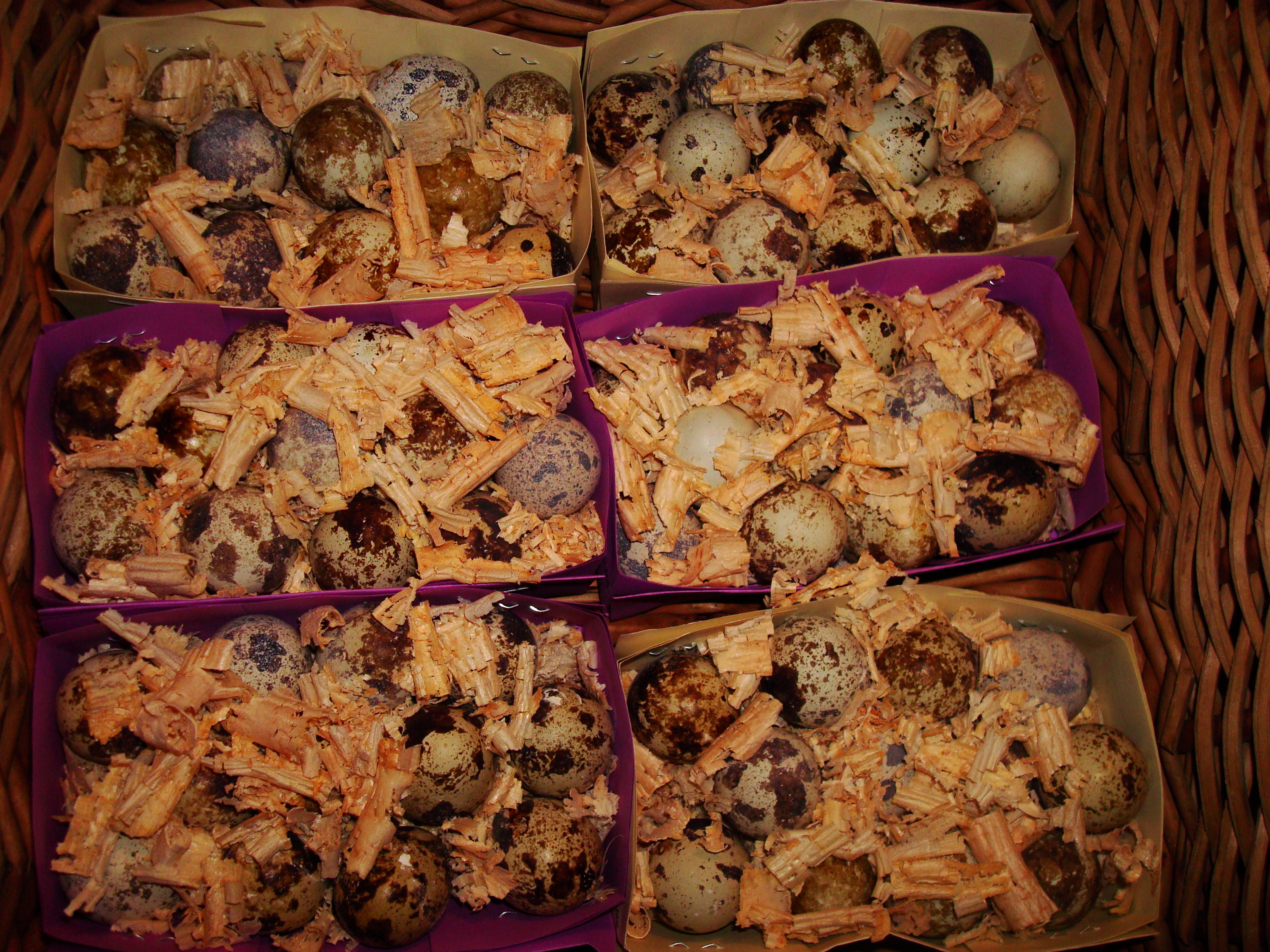
2013-11-29 - Fresh Quail Eggs