Back Yard Farmer’s Poultry Self Feeder

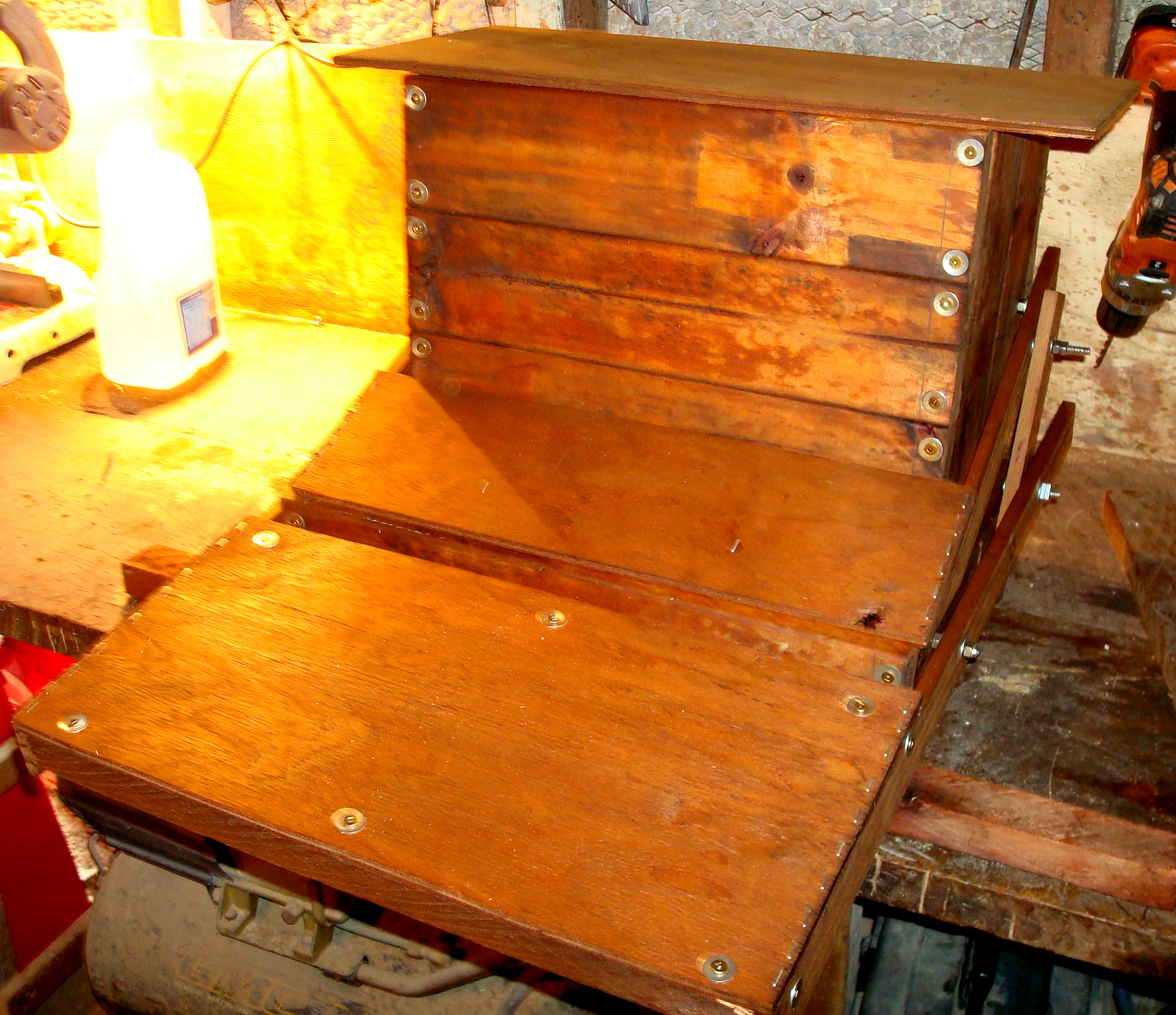
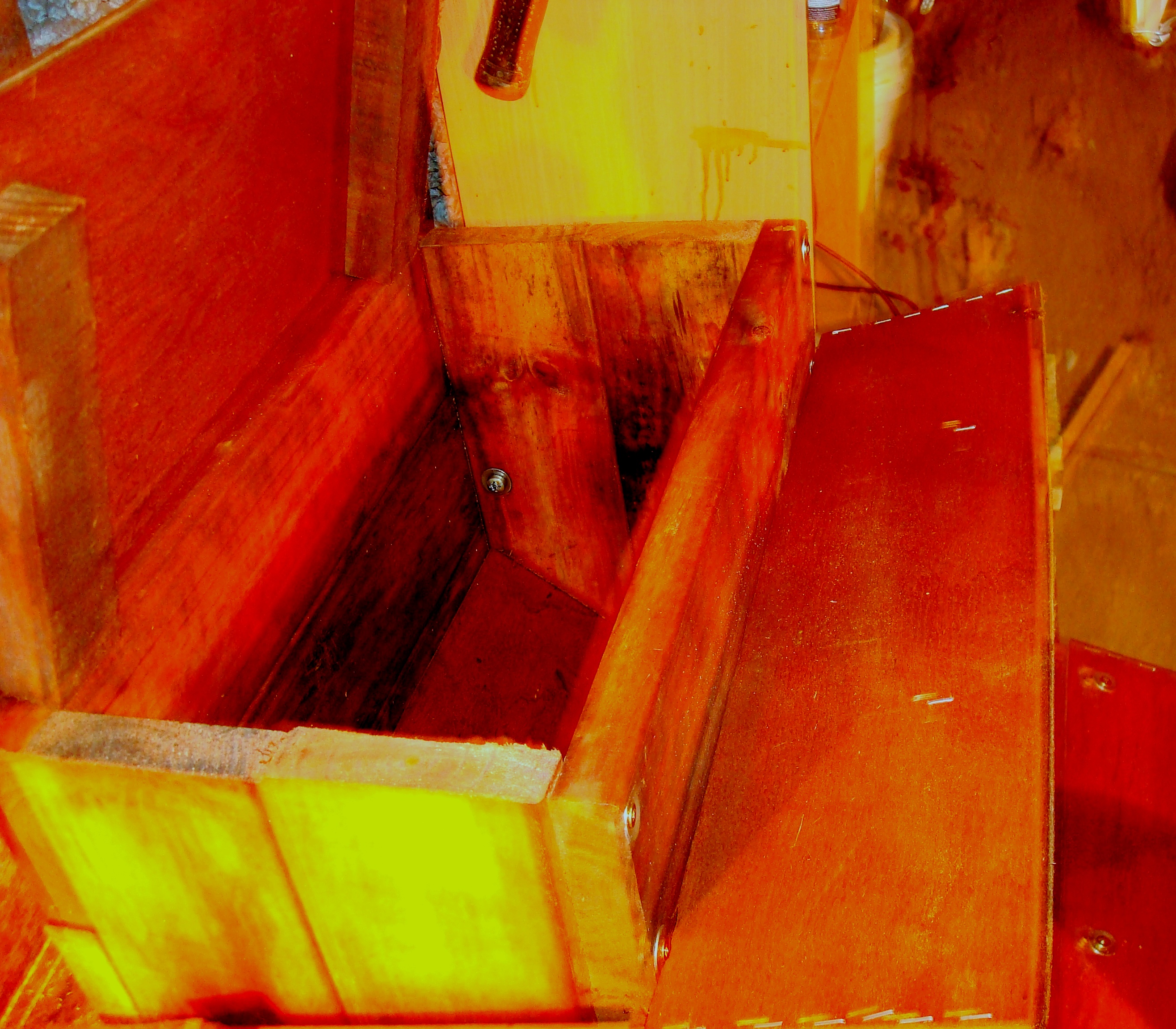
I did not know what to do with some wood that was always in my way in the workshop area.  The wood was from an old bed I dismantled some time ago. I am building a new chicken house to accommodate some of the Anconas who are now temporarily in the rabbit hutch. While doing this, I was again made aware of the spillage and waste of layers pellets as result of the bad table manners of the chickens. Suddenly I had a use for the old pieces of wood –  I made a chicken feeder the Backyard Farmer way!
2014-04-08 14.49.50

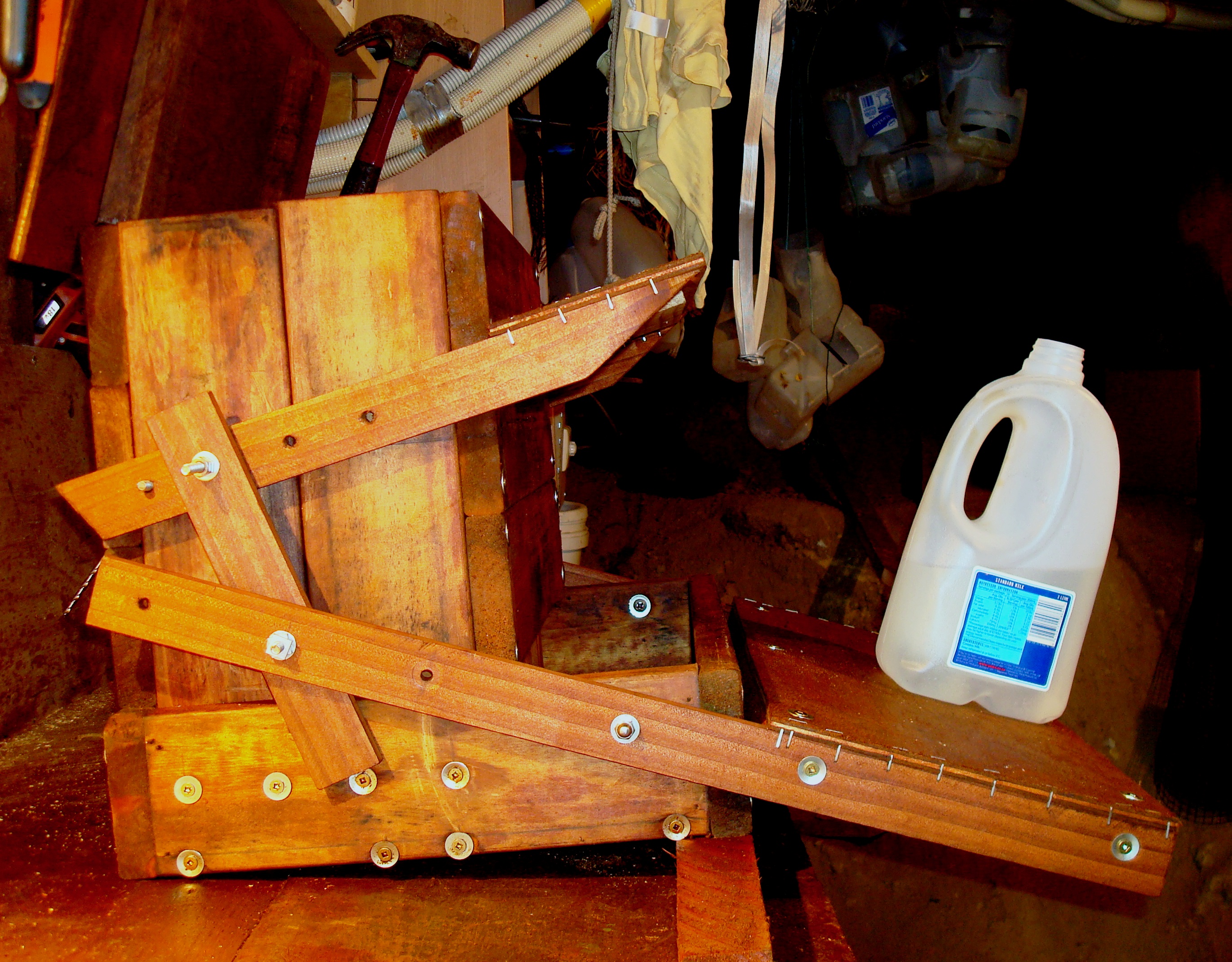
I designed it in such a way that it holds 15 Kg of pellets – enough for five birds for at least two weeks (so I can go on holiday). Having ordered some water nipples, this, together with the new feeder, will virtually make the chickens self maintaining. (I wish!)
 

2014-04-08 14.51.15

I have also designed it in such a way that with a few adjustable hole positions in the lifting arms, it could be set that it works for any size poultry – from Quails to those Jumbo Cornish Crosses.
2014-04-08 14.51.54

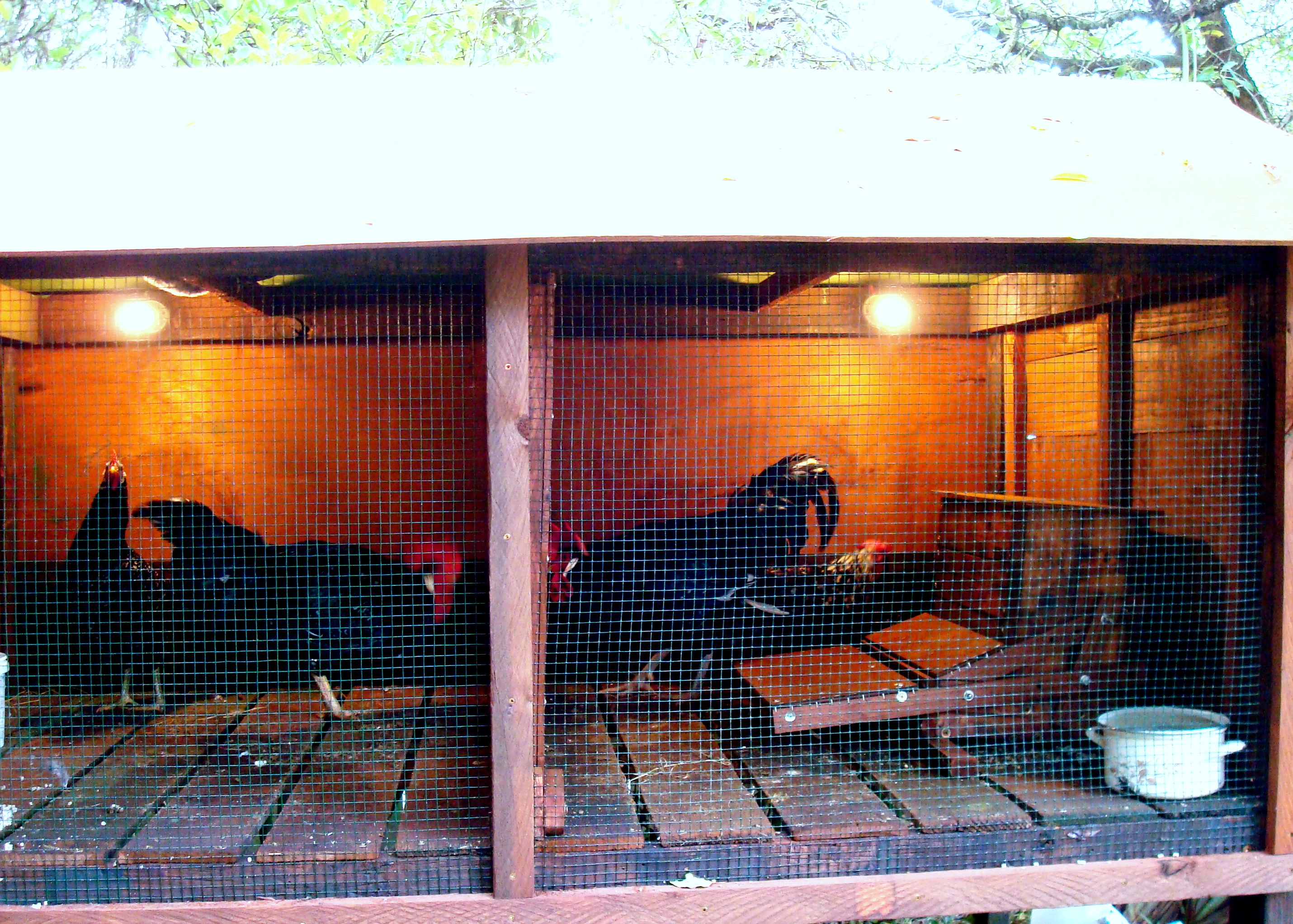
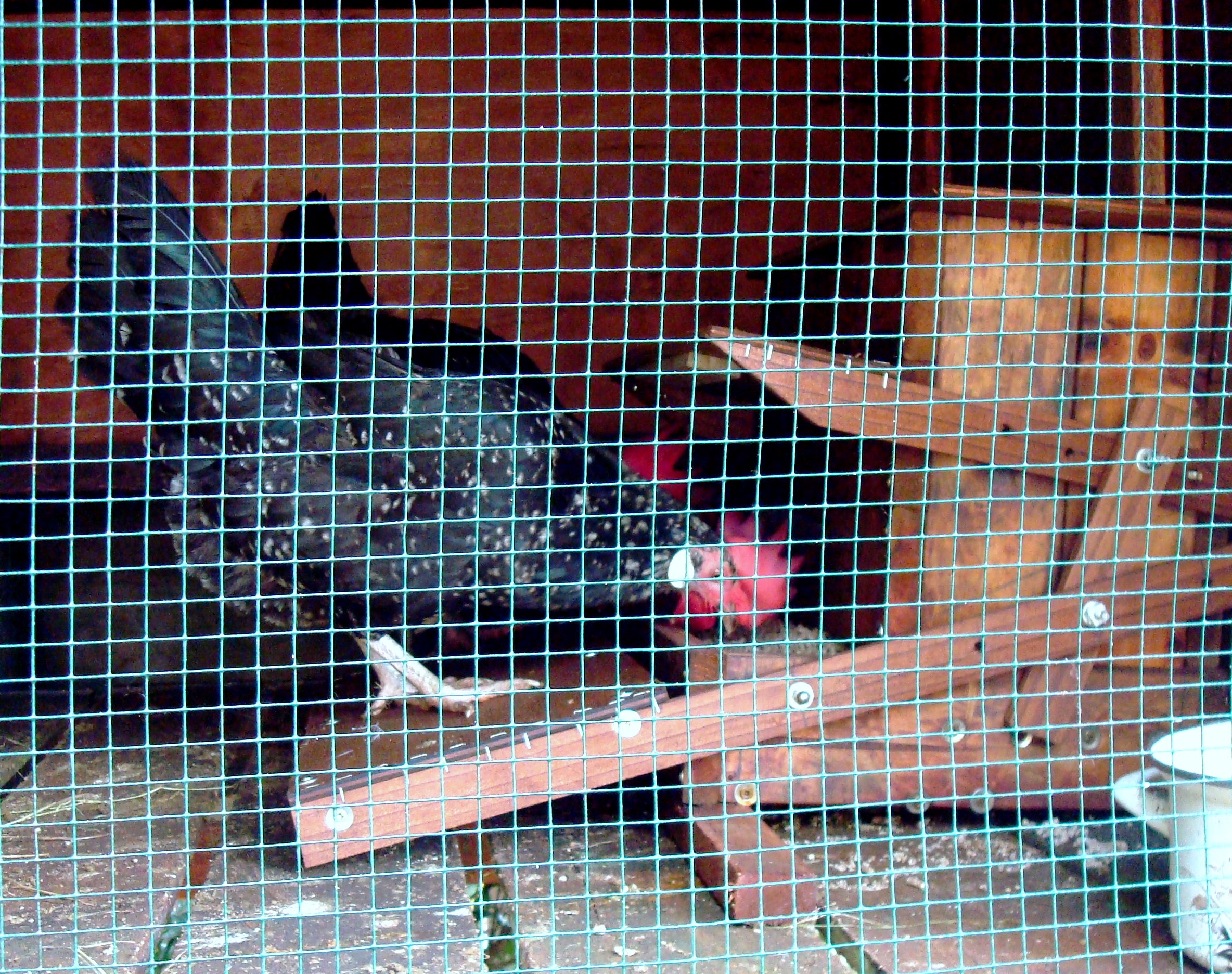
The proof of the pudding was to see what the intelligent Anconas think of  it as they have been in the rabbit hutches for only one day, and will be there for a short time while I am busy constructing their new luxury apartments. I was a bit worried because I was sure they would not appreciate another change in amenities and environment.

2014-04-07 16.51.45 2014-04-07 16.53.12

While the boys were measuring each other up for size, the girls were interested in more important matters – FOOD! It took them less than one minute to decipher this piece of “modern” technology and enjoy a feast.
2014-04-08 15.19.542014-04-08 15.01.46


ENCEPHALOMALACIA – BAD COMMERCIAL FEED

2014-02-19 16.18.20

In New Zealand I have fed my Quails a diet “corrected ” for Quails starting off with a  commercial Chicken Starter Mash. This seemed to have worked fairly well as the growth results were acceptable. As my enterprise expanded it became more time consuming hand mixing feed all the time and I inquired with various feed companies, as to the availability of a specialised product for Quails, to no avail. I have however found a standard product off the shelf from a reliable feed company that claims, on the bag, to be adequate for quails. Having purchased it and used it for the past weeks, the results are shockingly bad. A specific batch of Quails, consisting of about 80 birds,, received this diet from day one. I normally supplement young Quail diets with boiled eggs for the first two weeks, which I have also done for this group.

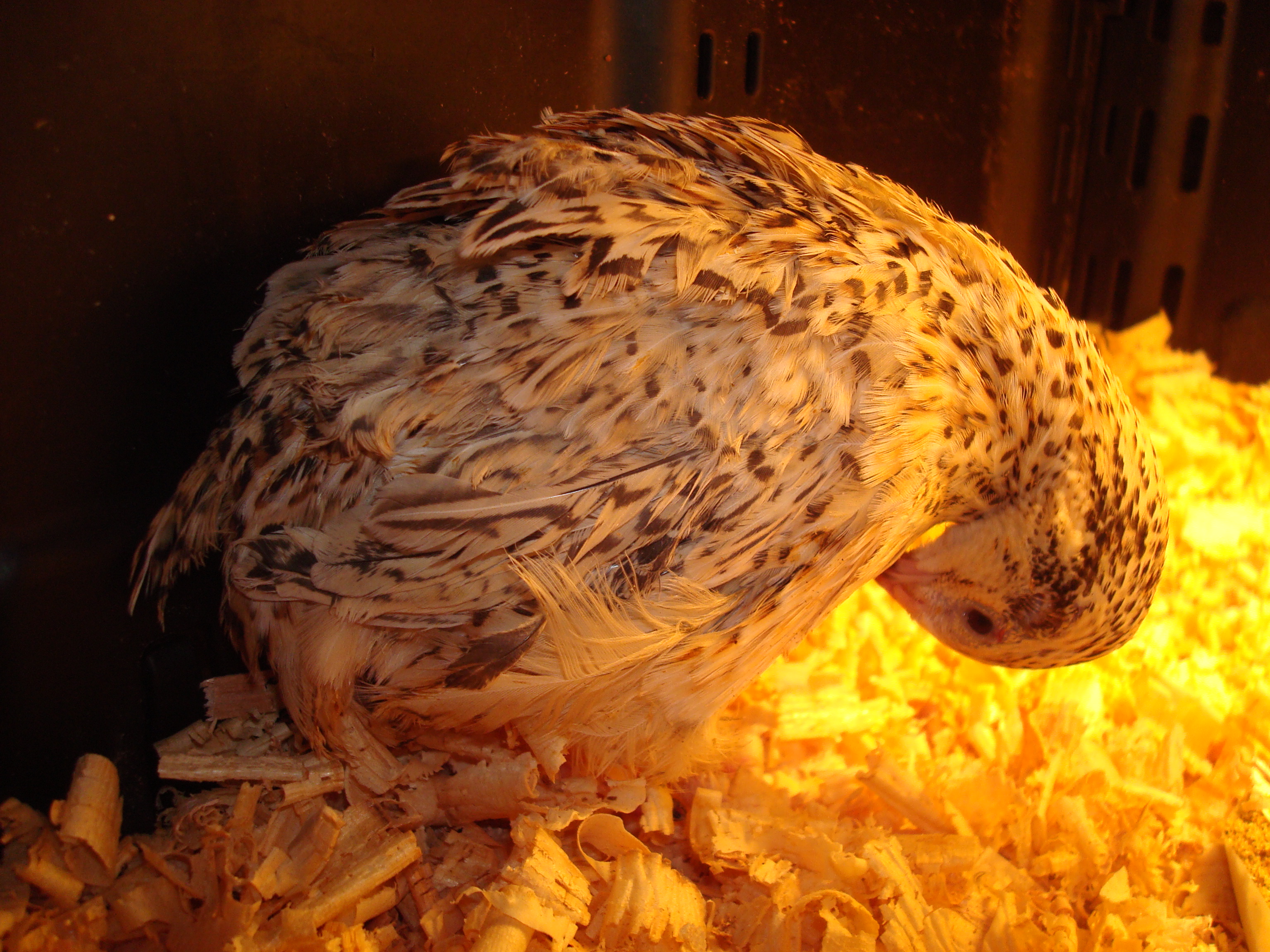
Apart from excessively poor growth and survival performances I have two birds showing severe signs of Enephalomacia (Vitamin E deficiency). The inherently low level of vitamin E in the the cerebellum makes it very susceptible to Vitamin E, Selenium and Antioxidant levels. The problem is normally associated with diets high in unsaturated fats as often found in poor quality fish meal as well as poorly processed blood and bone meal. Also the rations are normally supposed to be adequately supplemented with a vitamin and mineral pre-mix appropriate for the specific application. I dare to say it was not the case with the product I have purchased at high cost.

The signs of Encephalomalysia is imbalance, staggering and uncontrolled movement. Treatment is by supplementing Vitamin E and/or Selenium in the water and feed. Should the brain damage not be too severe, remission is possible.

I also have a video of two birds affected but cannot upload it – if you are interested I could Email it to you. I am busy setting up a YouTube account which will resolve this problem in future.


My diagnosis of the deficiency was unfortunately a few days too late as I firstly did not expect it from the purchased diet and secondly I initially thought it to be Wry Neck, a genetic disorder for which I select and cull very strictly against

The performance for this group are as follows (Figures in brackets depicts all previous batches):

Average mass at 21 days of age for top 20 % of birds – g – 108 (113)

Average mass at 21 days of age for the bottom 20 % of birds – g 57 (78)

Birds alive from eggs placed – % – 42  (69)

As can be seen from the above results there was a great number of bids affected as can be seen in the large number of underweight bids as well as the high mortality, even though only a few show the excessive diagnostic behavior found int the two birds photographed. Interesting enough the one bird showing signs was by far the heaviest bird in the group (Maybe the fast growth required higher levels of nutrients??) I am now supplementing the entire group with Vitamin E and hopefully shall save the rest not too severely affected.

LISTEN TO YOUR QUAILS

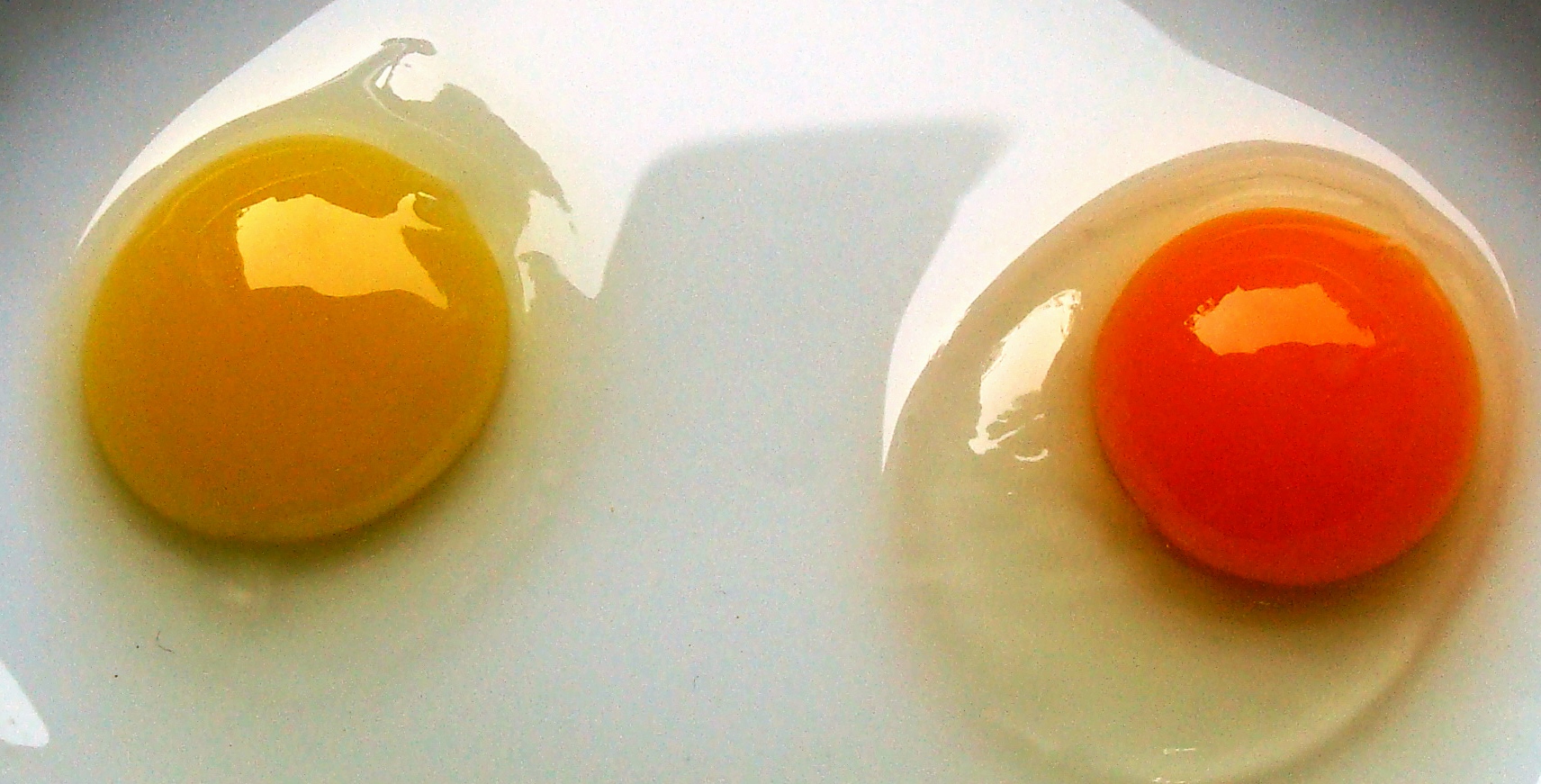
2014-02-17 - Eggs Quality 3

One egg was purchased from a customer claiming to feed a commercial All Mash to her quails plus the odd bit of table scraps, the other is from my layer unit where my birds are eating All Mash specially formulated for Quails. Not only is the yolk color vastly different pointing to a probable difference in vitamin and mineral absorption of the birds, but the albumin is also more firm and of better quality (this is where most of the protein in the egg is). The message is that the Quail receiving the correct nutrition that allows her to produce a better quality egg is most likely more happy, healthy and will live longer, producing more and healthier eggs for her Master.

QUAIL FEED – SPECIALLY FORMULATED FOR QUAILS – See –  https://backyardfarmer.co.nz/for-sale/ 

Inside the mind of a Quail

QUAIL WATER DRINKERS

I am a minimalist and like to use whatever is on hand, but won’t compromise on efficiency and quality of the end product. Plastic is definitely not my favorite material, but in today’s life you cannot avoid it, so why not use it and save it from landing in the garbage bin and become part of the world wastage problem.  I use an old plastic milk and peanut butter bottle to make a very effective quail water drinker FOR FREE and in the process drastically reduced my carbon footprint.

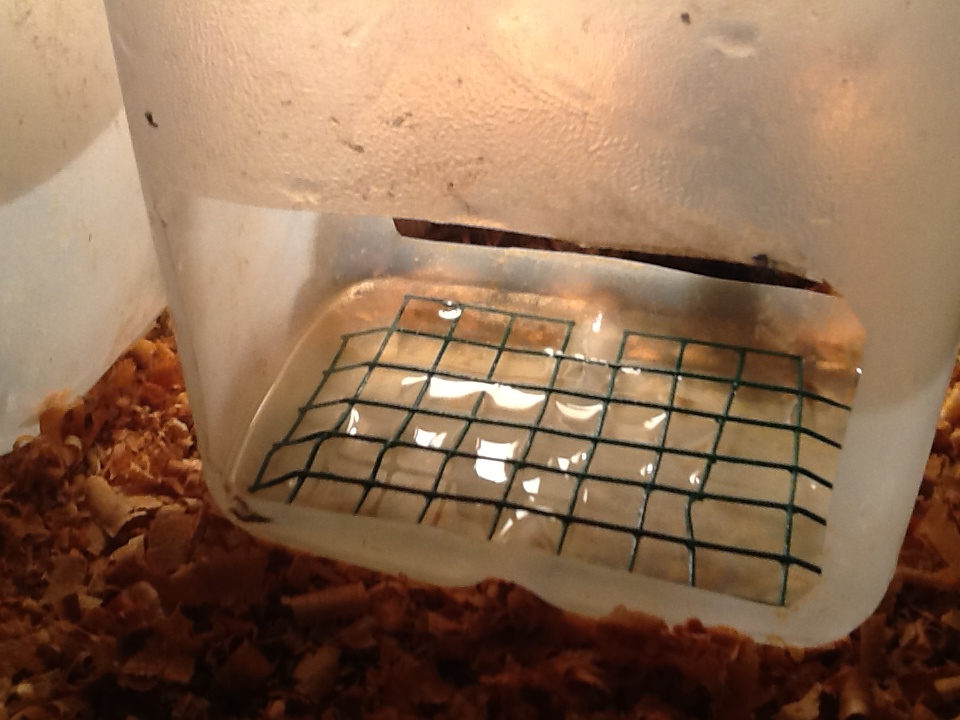
Knowing quail babies love to climb on and into everything and during the first few days are very clumsy and petite,  I used this knowledge to make a quail water drinker that encourages the little quails in the beginning to climb into the drinker to make water consumption easy, without being able to drown, get wet  or get stuck in a corner. When they are a few weeks old and know their way around the brooder and eat and drink freely, I switch to a drinker that they cannot get into and spoil or soil the water.

2014-01-06 - Juvinlile Water Feeder 1

Use a milk bottle and cut a large enough hole into both sides so the baby quails can freely enter and exit. Place a piece of wire netting (leftover from the last cage you built) inside to fit well with the sides turned slightly down so the netting is about 5 mm off the bottom of the bottle. Fill with water until the water touches the netting and you are ready. Cut the top off the milk bottle to make cleaning easy.

2014-01-06 - Juvinlile Water Feeder 2

This will encourage the little quails to enter without any risk of drowning or getting wet.

2014-01-06 - Juvinlile Water Feeder 3

Drinking made easy

When the quails are about two weeks old, I switch to adult Drinkers

2014-01-06 - Adult Water Feeder 1

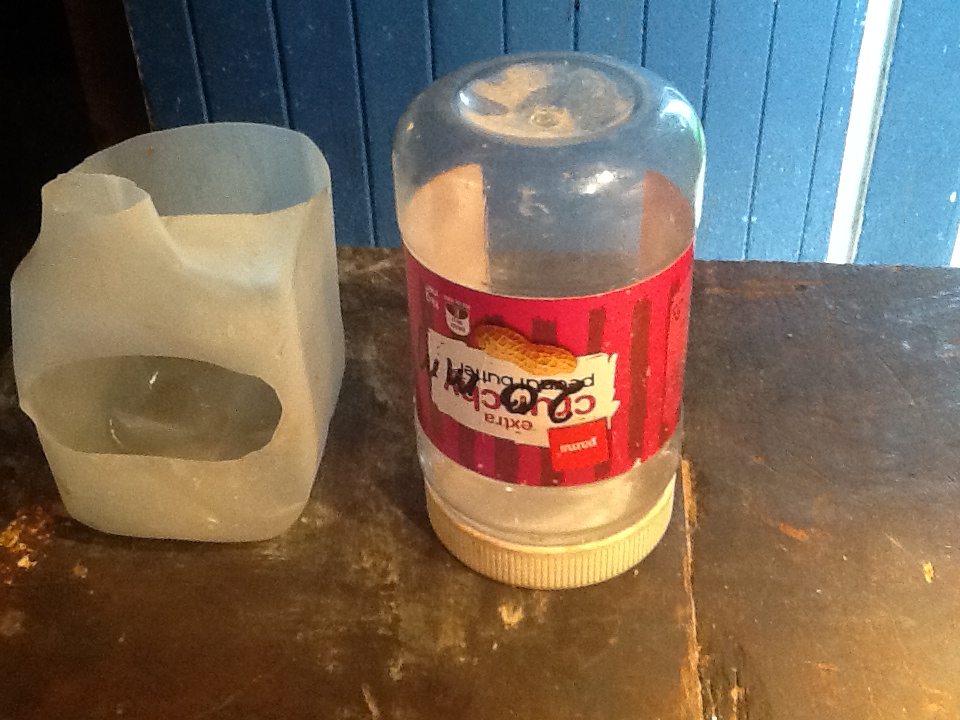
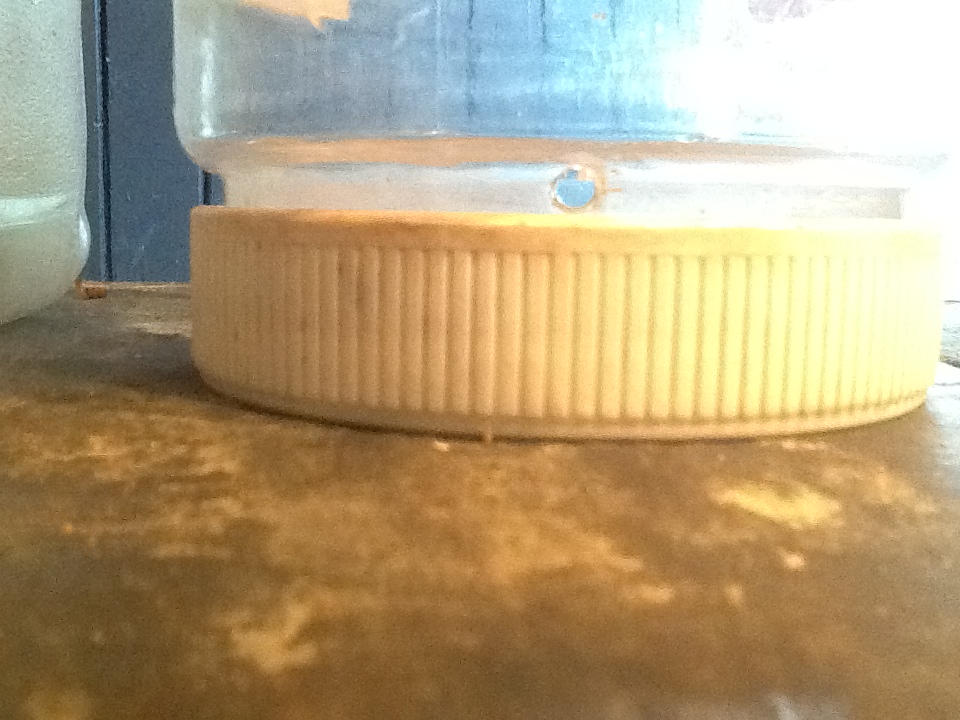
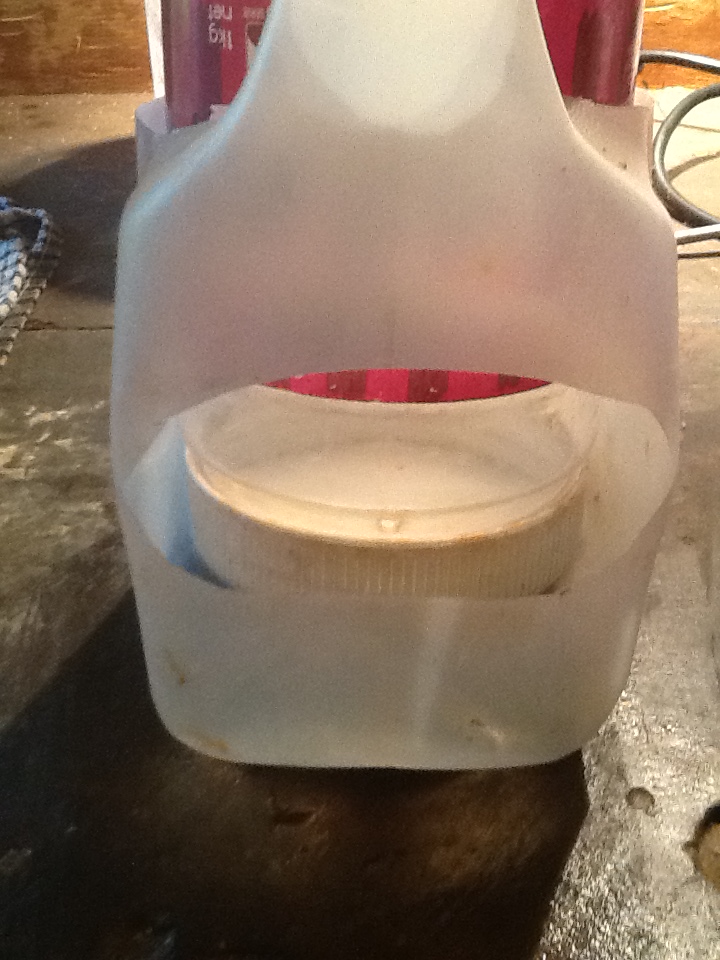
Take used Milk and Peanut Butter Bottles. Any other bottle will work as long as it fits tightly inside the milk bottle. Cut off the top of the milk bottle. Cut a oval hole in the side small enough so a quail cannot enter it’s body, but large enough it can poke it’s head through – about a 30 mm opening and about 50 mm off the bottom.

2014-01-06 - Adult Water Feeder 2

Now drill four holes (opposite side) into the peanut butter bottle

2014-01-06 - Adult Water Feeder 3

The hole in the peanut butter bottle must be lower than the bottom edge of the hole in the milk bottle

2014-01-06 - Adult Water Feeder 4

Fill the Peanut bottle with water replace the lid and turn upside down and insert into the milk bottle.

2014-01-06 - Adult Water Feeder 5

Here you have 1 Liter of water that the quails cannot soil, but have easy access to

2014-01-06 - Adult Water Feeder 6

Happy Quails and Happy Farmer !!

Rearing Baby Quails

Yes you can put the quail eggs under the hen – just remember they start flying at two weeks of age when you will have to have them in an enclosure to prevent them from taking off and never return. If you have an incubator, that is good, but I would say the hen is better. They take 17 days to hatch and do require a heat lamp for the first three weeks if they do not have a Mamma. Keep them out of drafts, but with good ventilation, keep them dry and keep them warm. Feed and water available at all times. I think the only person in New Zealand that sells Quail Food on a small scale is myself. Feeding the babies require a Commercial Poultry Starter Mash or preferably a Commercial Quail Starter Mash to which you mix two boiled eggs per 500 g of feed for the first three weeks, thereafter just Quail Starter Mash until six weeks of age when they get a Commercial Quail Laying Mash. They do not require anything else, but you are welcome to give them table scraps and treats (eg. meal worms) if you like
Back Yard Farmer
Tel – 0211 34 14 52
byf@backyardfarmer.co.nz
Also on Facebook – https://www.facebook.com/backyard.farmer.18
http://www.backyardfarmer.co.nz2013-10-05 002