Apricot Tart in Winter

2014-06-02 17.14.59

We had a glut of lovely apricots during summer (not from the garden, but from a local farmer) and I preserved quite a few for use during winter. Yesterday I used some of my stash for a pie and got a thumbs up from the household, even from the grand kids who, as a rule, do NOT touch their lips to any “new” foods.

Winter Apricot Tart

Preheat the oven to 200 degrees

Any sweet pastry recipe will do for the case.  I make a  short crust pastry dough without eggs, using butter, sugar and flour, baked until golden.  Line a  300 X 60 mm round spring form cake tin, you can also use a  pie dish (in my case) and press the moist dough up the sides of the tin and pat down the rest of the dough on the base. Add the filling when the crust is cooled slightly.

Filling

500 g preserved apricots

225 g sugar

225 g butter

100 g flour

4 eggs whisked

orange zest

1 orange juiced

vanilla essence or vanilla bean paste

Mix everything together well and pour into pastry case. Bake for 40 minutes at 200 degrees. Glaze the tart with  home made apricot jam

I am going to try the same recipe using preserved pumpkin, in place of the apricot, next week.


Preserved Fruit

2014-06-02 20.31.00

With a glut of fresh fruit available during summer I try to preserve as much as possible for the winter months. Space is at a premium so I do not have room for lots of canned or frozen goods. The best way for me to solve the problem is to vacuum seal the fresh cleaned fruit and then to pasteurise the pouches in a hot water bath.  Different products are processed at temperatures and times specific for the product. After pasteurisation the sealed items should stay fresh in the pantry for a few seasons, although we use everything in winter and start again in summer!

Fave e Cicoria (Broadbeans with Chicory)

2014-05-16 Fave e Chicoria 2014-05-16 - Preserved Fava


I heard about this recipe many years ago but have never tried it. Today I harvested all the chicory in the garden, cleaned it and put it in the pot straight away. I used some of the broadbeans that I had vacuum sealed and preserved during the summer. The result was delicious! The recipe originated in the old Queen of the Sea, Bari (Puglia),  the home town of my dear friend Lino Pansini. I must remember to ask him if his mum ever made it. It is traditionally served in on big plate, placed in the centre of the table, and each person was given a fork.

Fave e Cicoria

500g Broad Beans-  Soaked overnight and boiled down to a puree. I have used my fresh preserved beans (In Italy dried broadbeans are used)

1 Large bunch of fresh green Chicory

A pinch of Chili

2 Cloves of Garlic finely chopped

Olive oil for frying and Extra Virgin Olive Oil for drizzling on the finished dish

Salt and pepper


Cook the broadbeans until most of it becomes a puree, about 40 minutes. Add a bit of salt and pepper to the bean puree. Meantime, boil the chicory for about 10 minutes until tender. Do not add salt to the chicory. Fry the garlic in a bit of olive oil until soft, add the chilli  and chicory (squeese out as much water as you can first). Cook for about 5 minutes. To serve put the chicory on a serving plate and spoon the hot bean puree over the chicory.

This is enough for 4 people as a side and for 2 people if eaten as a main with bread. Use any left over bean puree as a pasta sauce.  ENJOY!


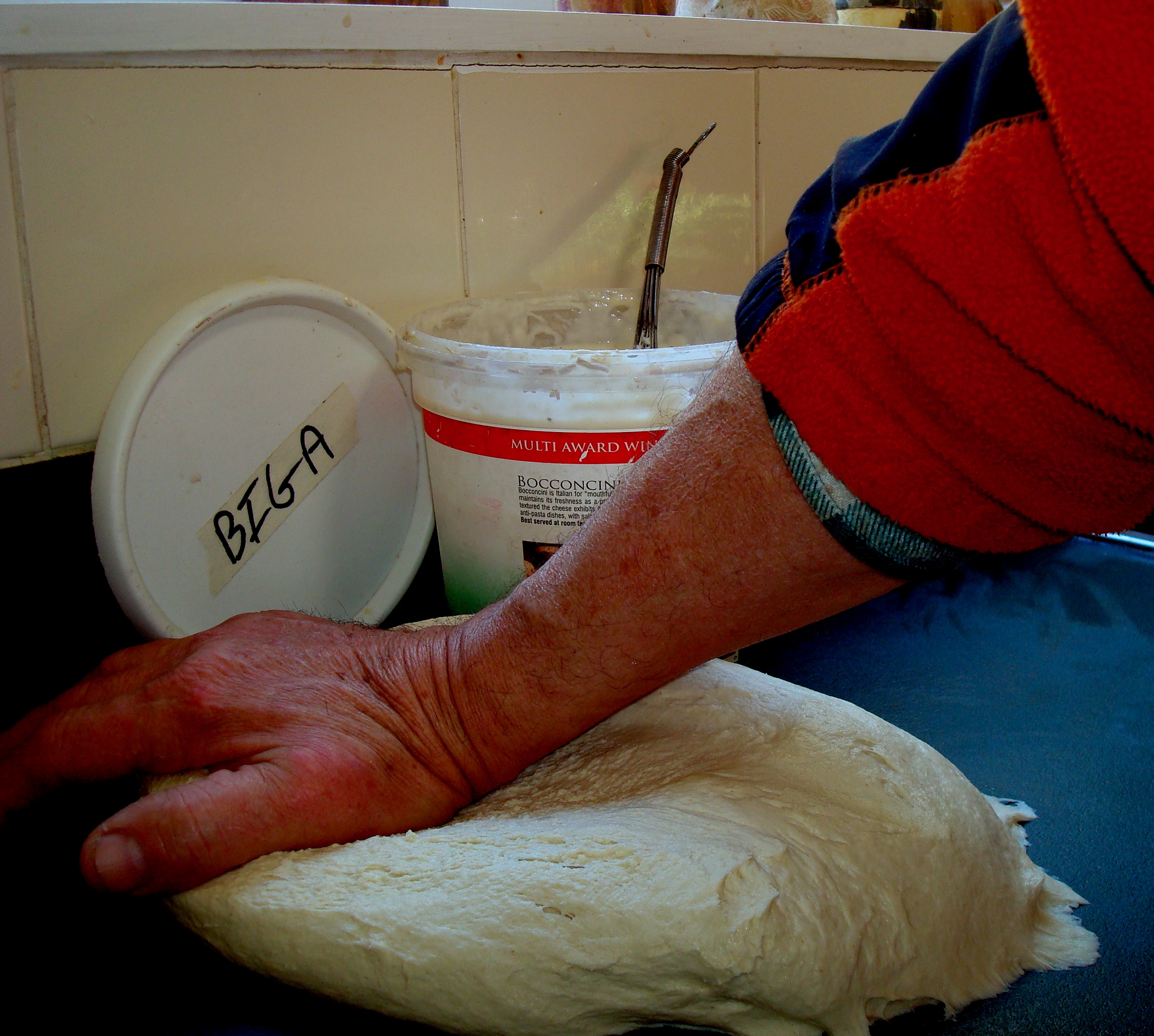
Hypothermic Biga

2014-05-16 - Cold Biga 1

The bread dough required some extra attention this morning to become soft, pliable and warm, as the Biga suffered from hypothermia being out of the fridge all night during May in Dunedin at minus 5 degrees this morning at 9.am.  😉


BRIE

2014-05-14 - Brie

I did some Bacteria and Mould ripened cheese today – Brie. This is one of my favorites, but is not easy to make. Heat 10 Litres of full cream Jersey milk to 30 C and ad your mother Flora Danica starter. Stir very well and let ripen for 15 minutes. While keeping the milk at 30 C add the 4 ml Rennet diluted in 50 ml distilled water. Stir with a up and down motion for one minute, then top stir for another minute. Leave it undisturbed for 3 hours while keeping the temperature at 30C.  All cheeses using little Rennet may be problematic, but trial and error is the only solution. By now the curds should have formed. Cut the curds in 12 mm cubes. The moulds to use for Brie are open on both sides, as to facilitate easy turning over. Fill the moulds and leave to draqin for 12 hours at about 20C (Room temperature). With a board on top and one at the bottom, flip the cheese over and let drain. The cheese should not break in this process. Repeat this flipping over every four hours for at least five times and let it drain all the time. Once the cheese is dry enough, approximately one day after filling the moulds, take it out of the mould and lay on a clean cloth. Now rub the top and sides with salt. After two hours, flip the cheese over again and rub the other side with salt. Let is rest for one hour and spray the white mould on all sides and store at 15 C for one week or until the white mould appears. Now store for 3 months at 13 C and 85 % humidity. The cheese should now be soft inside when pressed, slightly brownish on the surface and creamy and buttery when eaten.  If the cheese is cut before it is matures, it will not mature. A pure white coloured cheese has not matured yet and needs to be stored longer. ENJOY!!  Off coarse I made Ricotta with the Whey