HOMEMADE RICOTTA

2014-01-26 12.00.28

Home made Ricotta is fairly easy to make and can be eaten as is or as an ingredient in other dishes like beetroot tops pasta . Here is my recipe with some cheats to speed up the process a little.

1   liter fresh whole milk. If you can find raw milk the recipe is smoother and richer with an improved taste.

1   teaspoon salt

4  teaspoon lemon juice

3  tablespoons of home made yoghurt, or Greek style yoghurt with live culture in (read the label carefully)

Bring the milk, salt and lemon juice to the boil in a saucepan and simmer for 15 minutes. The curds will rise and float on top of the milk. When cooled down a bit mix in the yogurt, wait for 5 minutes for the curds to rise again and scoop out with a slotted spoon into a colander lined with muslin. Stand the colander in a bowl  that would catch the whey. Leave for 12 to 24 hours until the cheese is the right consistency.

Carrot Top Pesto tried, tasted, and will make again and again

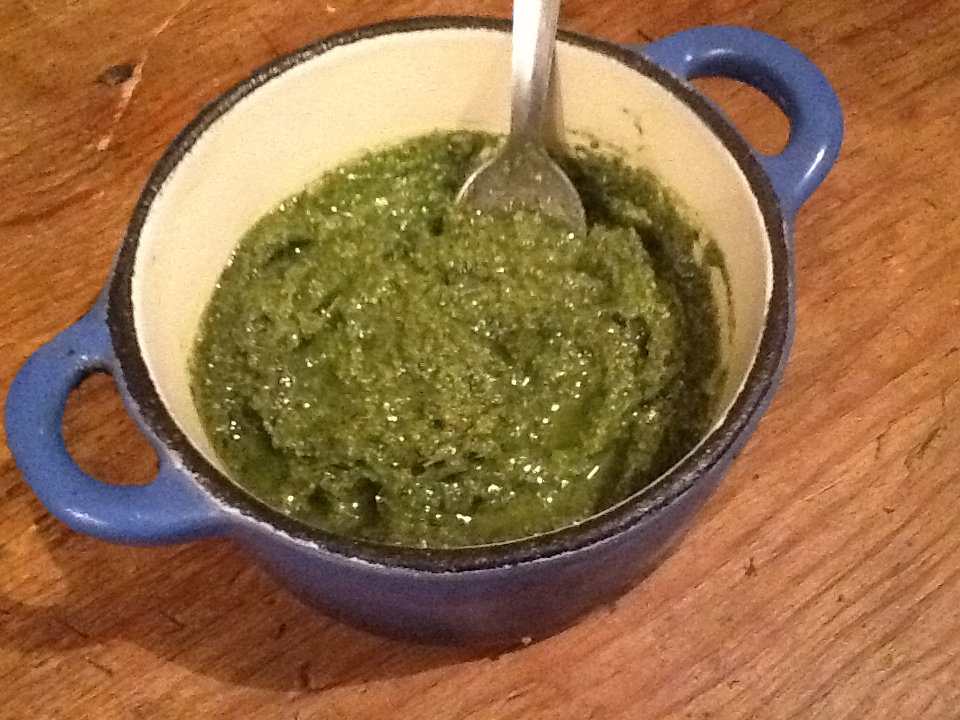
2014-01-25 22.17.33

 Carrot Top Pesto (Seriously Tasty)

I still love Basil Pesto but carrot tops will never be composted in my house again. Basil is hard to grow in Dunedin and costs a mint to buy. Carrot tops come FREE with your carrots and taste just as good as Basil. With our  zero waste policy we do have a problem scraping together enough kitchen scraps for the chickens and quails. ( They do have a few hours of free range a day, when I can guard my veg patch, so they are doing well). Rocket works equally well to replace either basil or carrot tops.

1      Bunch of carrot tops, washed. You can separate the leaves from the stems, but I processed the entire bunch

2       Large  garlic cloves

1/4    Cup grated parmigiano cheese

3/4    Cup of good Extra Virgin olive oil

3       Tablespoons of nuts (pine nuts, cashews, macadamia,  sunflower seeds all work well)

Salt and pepper to taste. (I do not use salt in pesto because the cheese is salty enough for me).

Put everything except the cheese in the food processor or blender and process. Do not make it into slush – keep a fine texture. You may need more olive oil to complete the job. Mix in the cheese and pulse a few more times.

Serve on fresh or toasted bread, dab on to meat, chicken, fish and vegetarian dishes, use as dip for carrots and other fresh veg, salad dressing, and of course as a pasta sauce. 

You will notice that I did not give exact quantities, as these would depend on what you want to achieve – more garlic, basil, cheese, etc.


FREE: Biga Bread Starter and Bread Making Recipe

2013-09-21 - Foto - Bread 017

FOLLOW OUR BLOG https://backyardfarmer.co.nz/ AND GET YOUR  FREE BIGA

If you follow our Blog and Email us that you want a FREE BIGA, you can either collect it or we shall mail it to you for the cost of postage only, which is $4.80 for New Zealand.

Here is the recipe for the Biga if you want to make it yourself.

La Biga  or Natural Wild Yeast Starter or Bread Mother Plant

Bidga is a natural yeast starter that adds so much character to the bread. When used, the crust will be crunchier, the crumb moister and the bread will be more flavourful with a longer shelf live. Above all, you save on the cost of buying yeast all the time. The idea is to introduce natural wild yeast spores and natural bacteria to ferment the simple, introduced sugars and encourage bubbling. The lactic acid from the bacteria strengthens the gluten elasticity and intensifies the flavours.

Method

Grate one apple and one pear and place in a glass jar with one litre of temperate tap water and leave for three days at room temperature. Strain the juices from the solids and discard solids. Add 150 g of plain flour and 200 g of temperate tap water to the juice and mix very well. Mix well every couple of hours during the day. On the morning of day two mix very well, then discard 250 g of the product and top up with 150 g of plain flour and 200 g of temperate tap water. Stir very well, and keep at room temperature. Always work very hygienically and clean to avoid any outside contamination.

Repeat the above process for 14 days in a row. Stir very well every so often. You should now have almost 1500 g of product as you add more every day than you discard. If the Biga is now smelling sour and is foamy it is almost ready to use in your  baking. When you have your Biga doubling in volume in about eight hours, start baking wonderful bread, focaccia, pizza and more!

Remember to start with a big enough container, preferably glass, as you will end up with a 1500g Biga that is expanding.

Making the Bread

700 g plain flour

700 g of your biga

200 g temperate tap water

60 g Extra Virgin Olive oil

20 g salt

If you were weighing accurately this should have the right consistency for your bread. Mix the above in a large bowl by stirring it slightly and then get your hands in and knead the dough until smooth  (10 – 15 minutes). If the dough is too soft ad flour and if too dry add water – the dough must just not stick to your hands. The best way to work the dough and get maximum air into it to make a light bread, is by flattening the dough out in a large square of about 400 mm by 400 mm. Now press holes into the dough with your fingers, fold it double, turn it 90 degrees and flatten it out to the original size again. Keep on repeating this for 10 to 20 times until dough is light, velvety and smooth. We call this process Colomba (dove) – it is like folding over the wings of a dove.

After you have used your 700 g Biga top the rest up with 300g plain flour and 400 g temperate tap water. Mix very well and leave at room temperature until it starts to bubble – depending on temperature it will take two to eight hours. Now put it in the fridge until 12 hours before the next baking, when you should take it out and allow it to become active before using. You can vary the 400 g water and 300 g flour so that the volume stays about the same, but always in the ratio of 4 : 3 :: water : flour. This will keep years if you treat it well and work clean at all times. Every so often you can re bottle to a clean sterilised bottle.

Back Yard Farmer

Tel – +64 211 34 14 52

byf@backyardfarmer.co.nz

www.facebook.com/backyardfarmernz

http://www.backyardfarmer.co.nz

Dunedin – New Zealand
Apricot Time

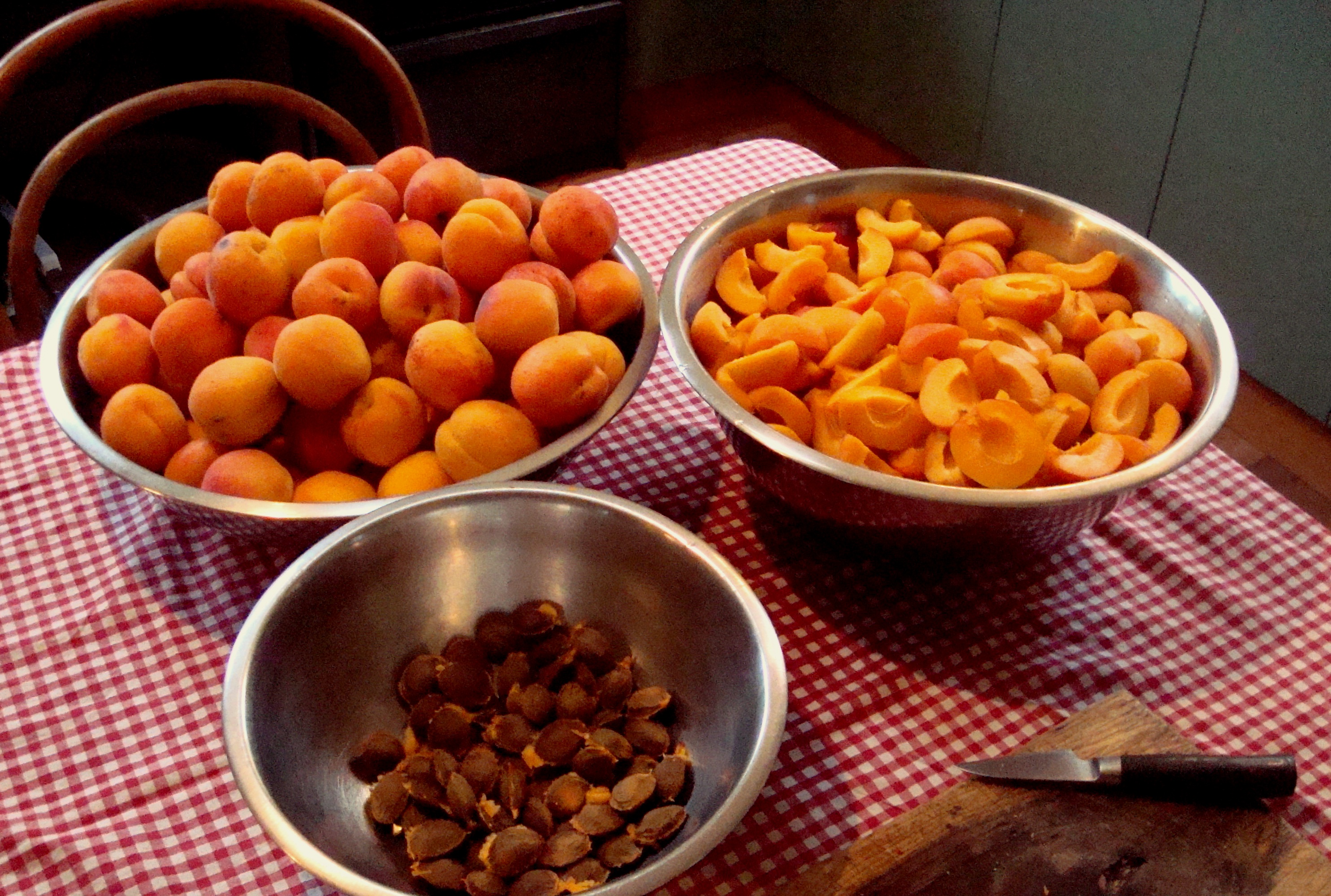
2014-01-19 - Apricots

The apricots are beautiful and sweet at this time of the year in Dunedin and I am preserving as many as possible.

APRICOT STONES

Never throw the kernels away as it is a wonderful flavoring for  Amaretti Biscotti, Amaretto Liqueur, Almond Extract for cooking and Almoncello ( a liqueur I make similar to Limoncello, but with Apricot Stones). Apricot kernels are used to intensify the flavor of almonds and have been used for hundreds of years. A little goes a long way. Yes they contain some cyanide, but are not dangerous unless a lot is consumed. Do not eat them as snacks like one would eat almonds for instance. There are a lot of unsubstantiated claims that it cures cancer as well. Recipes for cakes and drinks when I start using the kernels!

APRICOT JAM

Wash and quarter the apricots. Put 3 Kg Apricots, 2.5 Kg White Sugar and 200 ml Lemon Juice in a large pot and boil slowly. Do not add water. It may be difficult in the beginning, before the sugar has melted, to turn the mass over, but be careful and turn it over frequently without damaging the fruit or letting the sugar burn at the bottom. As soon as the sugar starts to melt it is easy to stir. It is easier to use a larger pot than a smaller one. Boil slowly for half an hour, stir frequently and skim off the scum. Turn off the heat and let it rest for at least 12 hours for the flavors to amalgamate and intensify. Boil again slowly while continuously skimming off the scum.  When the jam reaches the correct density using the Freezer Setting Test, turn off the heat. Bottle as soon as the jam is cooler and easier to handle. Seal the containers and sterilise with the Hot Bath Method.

Freezer Setting Test – Place a small plate in the freezer for a couple of minutes. When well cold remove from the freezer and put a teaspoon full of the jam onto it. If it is the correct consistency after a minute the jam is ready. If it is still too runny, simmer some more and repeat test later until jam is ready to be removed.

Hot Bath Method – Sterilise bottles of jam by submerging them into water in a large pot (bottles must be completely covered by water)  and boil for twenty minutes after the water and jam bottles commenced boiling. Remove and let cool.

Cavolo Nero

Cavolo Nero (Black Cabbage) is definitely my favorite cabbage and I plant a lot of it.  It seems to grow well at this time of the year in Dunedin, with the result that I can eat Tagliatelle al Cavolo Nero whenever I want to.

2007-01-03 00.02.09

See the nice Artichoke plant in the back ground.

The recipe is easy and quick and I off coarse eat this with fresh home made egg Tagliatelle. Take one large bunch of Cavolo Nero and blanch it in boiling water for five minutes – put aside and let dry well. In a large pan put one tablespoon of Extra Virgin Olive Oil and one tablespoon of Butter. Ad four cloves of finely chopped Garlic , one finely chopped red hot chili (or less to taste)  and six anchovy fillets.  Fry and stir well until anchovies are melted – about five minutes. Now coarsely cut and ad the Cavolo Nero and  two Tablespoons of Extra Virgin Olive Oil to the pan and fry and stir for another three minutes until the Cavolo is well mixed with the rest and warm. In the mean time you should have put the pasta in the boiling water to be ready at this stage – drain and mix well with the sauce. Serve with lots of grated Parmigiano Reggiano or Grana Padana cheese. Red wine to compliment.