DAILY BREAD

This image has an empty alt attribute; its file name is 2023-09-27-home-bread.jpg

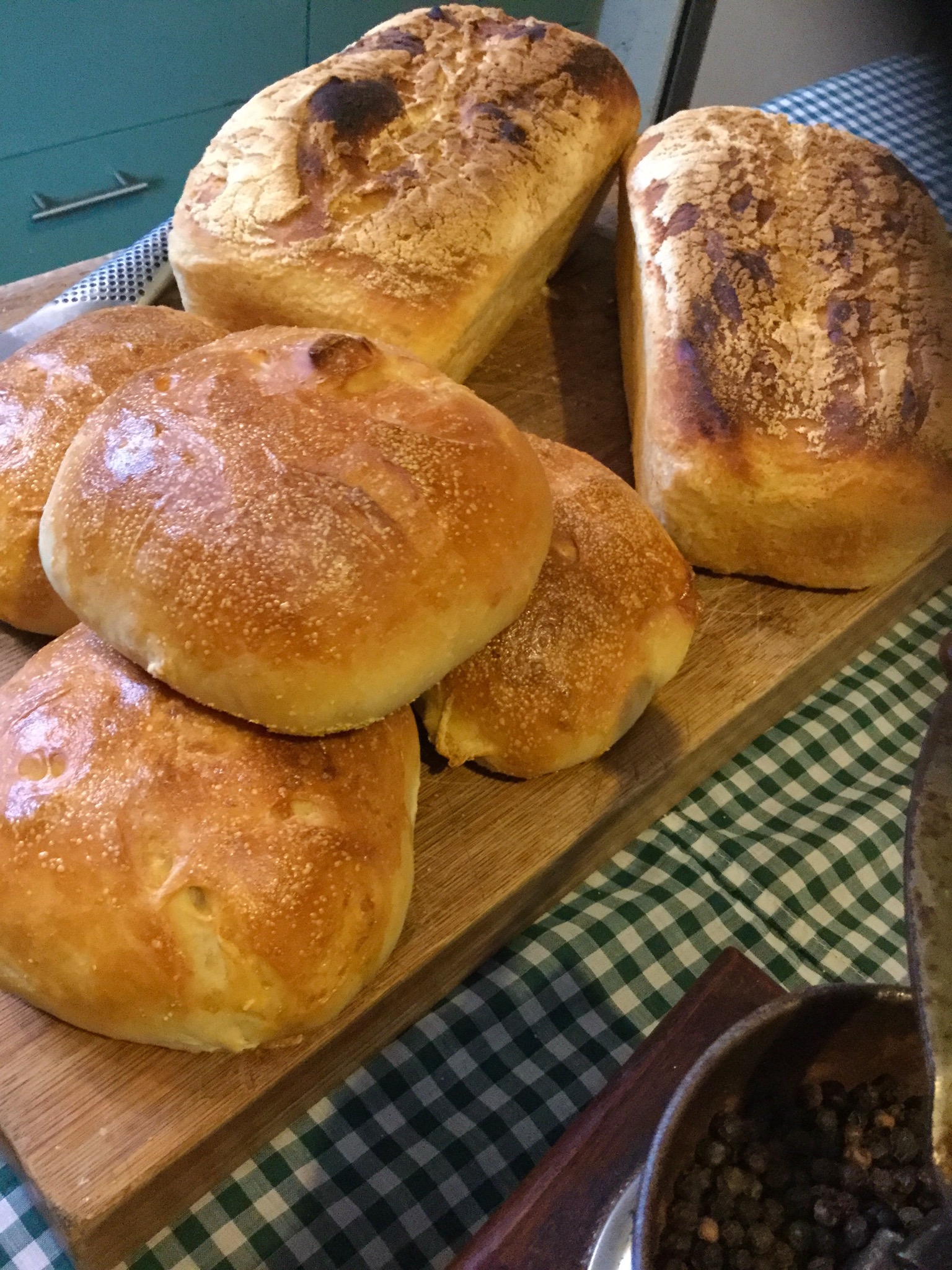
The recipe that my family likes most is a combination of organic Wholemeal Wheat Flour and ordinary White Sifted Wheat Flour. Even though I mill both these products, I only sell the Organic Wholemeal Wheat Flour as the white sifted is too slow and laborious to make for selling and there are many good nutritious and healthy recipes for 100 % Wholemeal Wheat Flour 

350 g Wholemeal Wheat Flour

350 g White Sifted Wheat Flour

Mix well

or

What I use for every day bread

100 g Coarse Semolina

300 g Wholmeal Wheat Flour

300 g White Sifted Flour

Mix well

Take 450 g Luke Warm water and dissolve 25 g SUREBAKE Yeast and 20 g honey or molasses or sugar in it – mix well with a fork. Let it proof in a warm place for about 10 minutes

Mix about 25% of the flour mix into the water and yeast mixture and mix well with a fork. Let it proof in a warm place until double in size – about 90 minute depending on temperature

Now mix all the flour into the water and yeast mixture and start kneading – either by hand or machine, whichever you prefer. While kneading add 10 g salt and 50 ml olive oil. Knead VERY WELL until very elastic – add more flour or water to get the consistency just right (silky soft and shiny), even though in most cases it should not be required. If mixing by machine, knead for about 7 – 8 minutes. If kneading by hand it will take longer depending on your ability

Oil two standard size bread pans and put the kneaded dough into the pans, score the dough with a sharp knife and sprinkle with flour or brush with water or brush with egg

Let it proof until 3 times the size – about 2 -3 hours depending on the temperature

Bake in oven at 225 C for 20 minutes, turn the pans and bake at 190 C for 20 minutes, turn the pans and bake at 190 C (bottom element only this time) for another 10 minutes (adjust the times that suit your specific oven)

ENJOY !!!!

Coturnix coturnix QUAILS ARE NOT MINIATURE PHEASANTS

Today I was called by an acquaintance who also “breeds quails” and was informed that he has lost over 150 quails this season dying mysteriously from whatever. My first question, as a animal nutritionist, was what he feeds the birds. I was appalled to hear that he gives them a commercial “Game and Quail Crumble” (A name invented by the reseller as the manufacturers does not even call it that) and supplements it with kibbled corn, peas and some “other seeds” and every so often they get some dog roll. This manufacturer also claims their product to be good for all stages of game birds, which is IMPOSSIBLE.

The mistake that many people make is to think that quails are just small pheasants. The feed companies that manufacture pheasant feeds, because there is a reasonable industry breeding and rearing pheasants for the hunting industry, want to jump onto the wagon and claim their feed is also good for quails as well, which is just not true. New Zealand is one of the few, if not only, developed countries in the world that does not have any animal feed regulations and / or legislation relating to feed analyses. This means the manufacturers can mix anything and claim anything and do not have to disclose any content nor analyses. It Is therefore difficult for anybody to comment on any feed, as very little is disclosed and no regulatory body oversee this industry

A quail hen of 220 g average body mass can lay up to 300 eggs of 11 g average (5 % of body mass), in a season. A total egg mass of 3,300 g, or 15 times the quail’s body mass

A pheasant hen of 1,300 g average can lay up to 80 eggs of 32 g average (2.4 % of body mass), in a season. A total egg mass of 2,560 g or 1.97 times the pheasant’s body mass

Quails are 760% more efficient egg producers than pheasants and they recommend feeding them the same?

So are there many other physiological and production differences between these two species of animals

I am an experienced and well qualified animal nutritionist who has been involved at all levels of animal nutrition in many countries of the world, and seldom, if ever, have I heard such misrepresentation of any animal feed.

If you want your QUAILS to be healthy, happy and efficient producers, feed them a series of well formulated QUAIL FEEDS that is specifically manufactured for every different stage of life and production

ITALIAN STAPLE DIET

SIMPLE NO KNEAD BREAD RECIPE

0B284FAD-FE09-4763-86E5-D5F1986ECA80.jpeg

It gives me great pleasure to bake different types of breads every few days. The one I am describing here is a low input, high success, bread that I “developed” when my Kitchen Aide broke down and I had to do ALL the kneading by hand

300 g Luke warm Water

24 g Dry Yeast (I use SUREBAKE)

1 Teaspoon of Honey

Wisk well

Cover and let it proof for 5 – 10 minutes until the yeast has formed some foam on the top

100 g Whole Wheat Bread Flour (Home milled) and mix with a spatula

Cover and let it proof for 1 hour

300 g Flour (Use either more Whole Wheat Flour or a combination of whole and refined Wheat Flour to suit your taste

2 level Teaspoons of Salt

3 Tablespoons of Extra Virgin Olive Oil

Mix very well with Spatula

Cover and let it proof for 1 hour

Mix well with Spatula, or hands, and form the bread, use extra flour to keep it from sticking to your hands and place it in pre oiled bread pans. Dust the bread with more flour, or paint with egg or water, whatever you prefer

Cover and let it proof for 1 hour

Preheat the oven to 250C and place the bread in oven. Bake for 20 minutes

Turn the heat down to 190C and bake for another 10 minutes or until it suits your preference

ENJOY !!!

IFRARED HEATED BROODERS

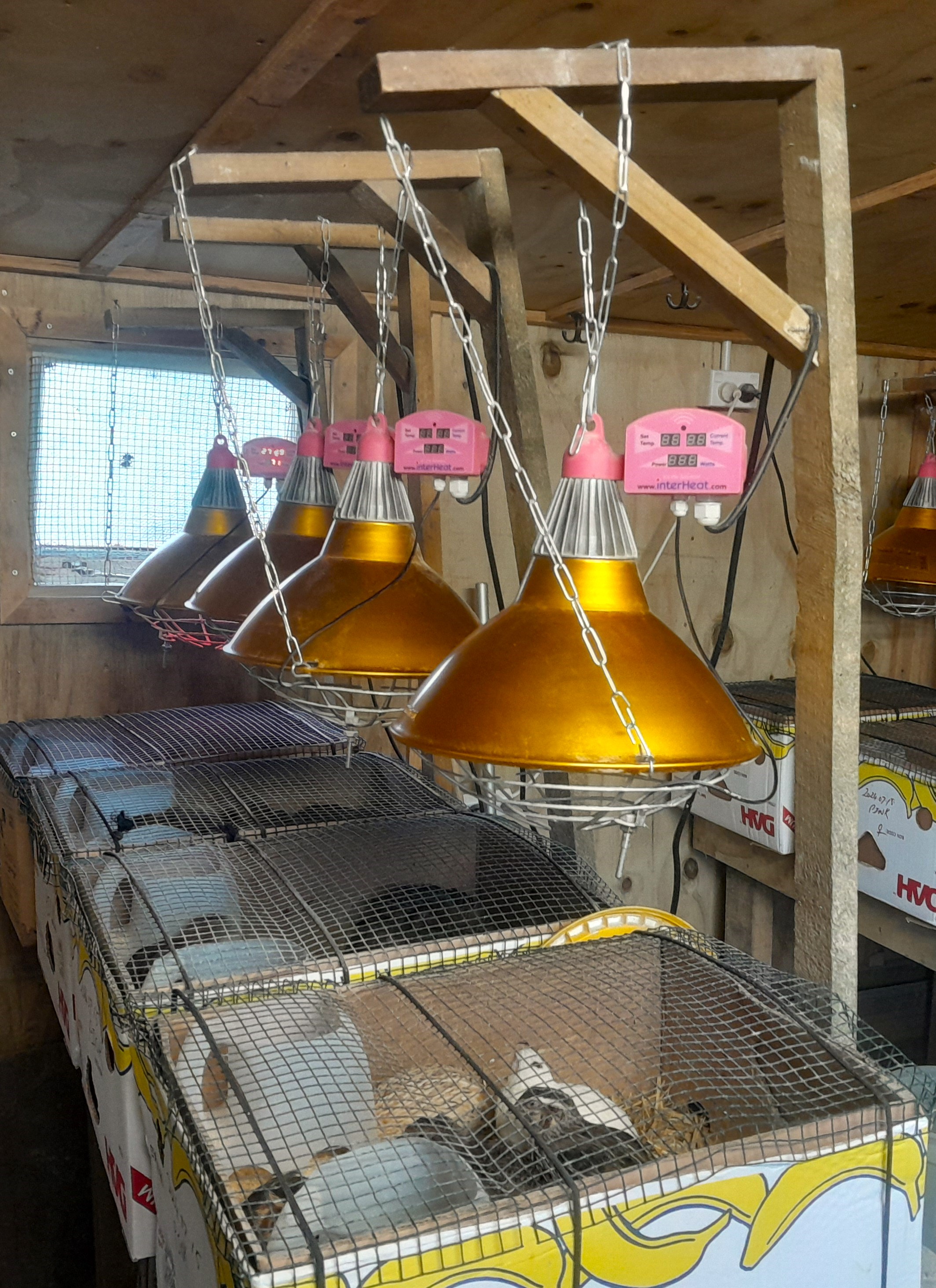
About a year ago, I introduced Remote Control Automated Infrared Heating in my quail brooder houses with excellent results. Mortality is down from already low values and growth rates are up, which partially may be as result of the selection pressure I constantly apply towards growth rates. Best of all is that my electricity usage is down as the heating is applied only when and how much is required all the time, compared to the previous system where heating was applied all the time and only adjusted manually every few days, neither were there any adjustments for ambient temperature fluctuations.

I have seven of these units – basically one for every age group as I hatch a batch every week and move them outside when 7 weeks old.

Pasta Finocchi e Acciughe (Pasta with Fennel and Anchovies)

Today the garden delivered a handful of parsley, a small fennel and a few spring onions, enough produce to inspire Mrs BYF to make lunch

Ingredients

1 small fennel or half of a big one thinly sliced

5 spring onions sliced, using the green leaves as well if  they are young

Pinch of flaked chilli

6 anchovies – chopped

2 cloves of garlic – crushed

100g toasted breadcrumbs 

50g chopped parsley 

6 tablespoons olive oil 

Boil the pasta water and add salt and pasta while making the sauce

Heat the oil in a large pan, big enough to contain the pasta and sauce. Cast iron is good for retaining the heat. Fry the onions until soft but not coloured, add the garlic. Add the sliced fennel and braise until slightly cooked, retaining some crunchy ness. Add the anchovy. When the pasta is cooked, sprinkle the chilli and parsley over the sauce, season with salt and pepper then add a few tablespoons of pasta water and stir.  Drain and tip the pasta in to the pan with the sauce and mix well. Sprinkle the breadcrumbs over the pasta. Stir to combine, serve with a generous helping of Parmigiano cheese.

ENJOY !

Do not forget to compliment it with some homemade red wine