LISTEN TO YOUR QUAILS

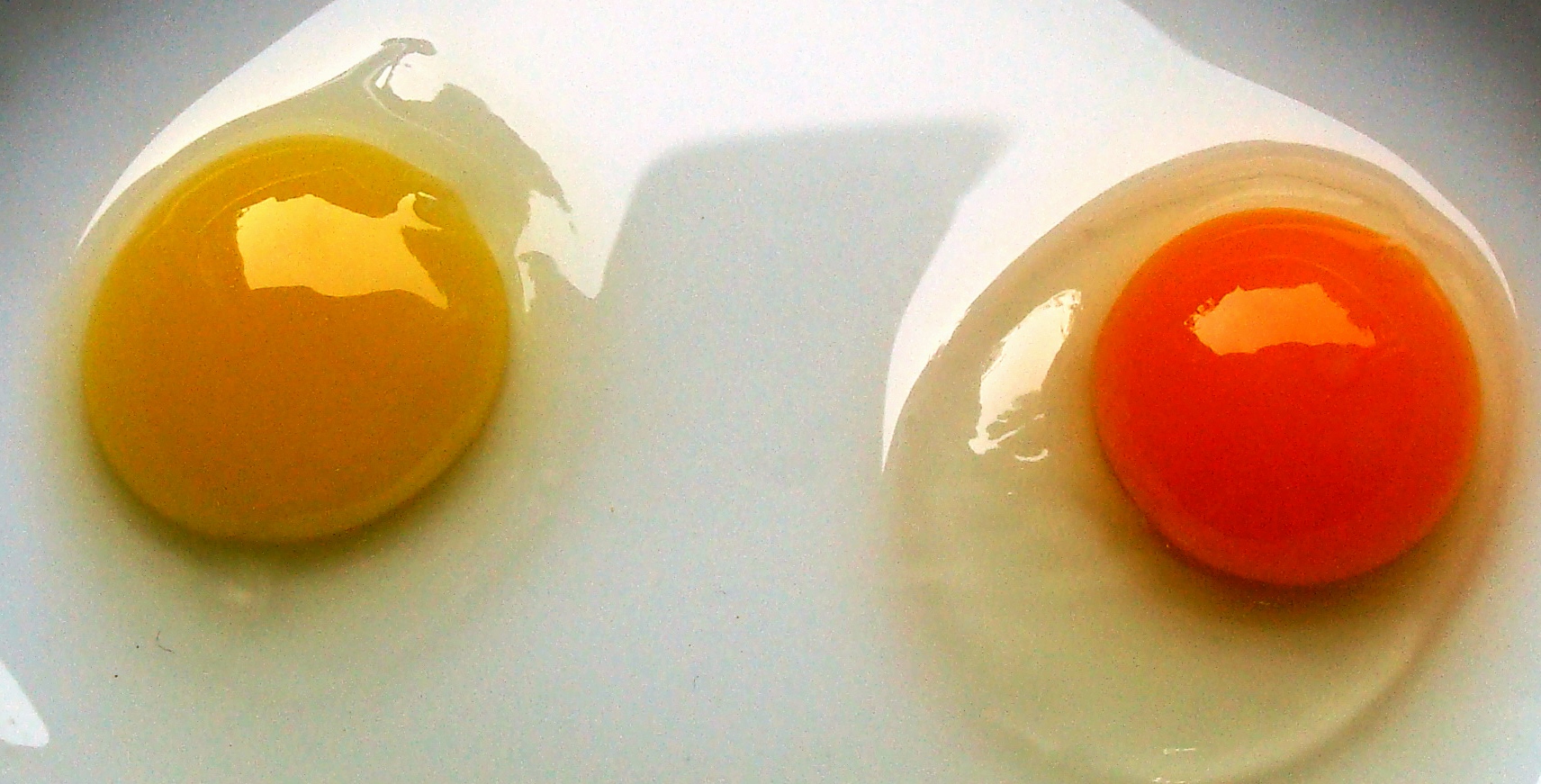
2014-02-17 - Eggs Quality 3

One egg was purchased from a customer claiming to feed a commercial All Mash to her quails plus the odd bit of table scraps, the other is from my layer unit where my birds are eating All Mash specially formulated for Quails. Not only is the yolk color vastly different pointing to a probable difference in vitamin and mineral absorption of the birds, but the albumin is also more firm and of better quality (this is where most of the protein in the egg is). The message is that the Quail receiving the correct nutrition that allows her to produce a better quality egg is most likely more happy, healthy and will live longer, producing more and healthier eggs for her Master.

QUAIL FEED – SPECIALLY FORMULATED FOR QUAILS – See –  https://backyardfarmer.co.nz/for-sale/ 

INCUBATING QUAIL EGGS

2014-02-16 - Hand with Eggs 1

I have often been asked to give the correct procedures for incubation of Coturnix coturnix Quail eggs

Storage of eggs should be at room temperature, preferable less than 20 C for a maximum of ten days following oviposition. Shipped eggs should rest for at least twelve hours before incubation commences and preferably with the small end up.

Incubator temperature should be 100 F (37.8C) for fanned incubators and 103F (39.4C) for incubators without a fan,  at all times.  Mark the eggs with a cross on the one side and a circle diagonally opposite, then connect the circle and cross with a line. Now set the eggs in the incubator and leave them without turning for three days. After three days of incubation turn the eggs at least twice per day and even up to four times per day. When turning the eggs, alternate with the cross upwards one time and the following time the circle facing upwards. Always turn the eggs in such a way the the connecting line is visible at all times (back and forth). This prevents the egg from being turned 360 degrees, which may cause the embryo to get entangled in the developing veins and membranes.

2014-02-16 - Egg circle 1 2014-02-16 - Egg circle 2 2014-02-16 - Egg circle 3

Try to minimise the opening times of the incubator to prevent temperature fluctuations and spread turning times evenly during any 24 hour period.  After 14 days of incubation stop turning and increase the humidity to about 60 % and leave the eggs untouched until hatching.

2014-02-16 19.33.59

When the chickens hatch, move them to a brooder as soon as they are dry.

INFECTIOUS CORYZA

RECENT CORRESPONDENCE BETWEEN ME AND A CUSTOMER

2014-02-15 - Infectious Coryza

Hi  Back Yard Farmer. I have lost some of my young birds to a sinus infection which causes their nostrils to be blocked and eyes to swell and they have a horrible smell? Lots seem to be fine and some get sick and recover but some have short time with breathing problems and then die quickly otherwise looking well. A neighbour has also had some trouble and lost half her birds but the vets didn’t diagnose it just gave her some very expensive a/b which seems to have done nothing. Do you know what this is – there seems so many possibilities on the net and what might treat and prevent it. I’m asking you first as you seem to have a similar approach to me ie natural mostly. Many thanks.

Mary – It sounds very much like Infectious Coryza, especially the smell which is definitely indicative of Coryza. It is an infectious respiratory disease and since the neighbour had it, wild birds, rodents and people carrying the bacterium has probably infected your stock as well. You could use Bytril (enrofloxicin) which is an expensive antibiotic or sulfadimethoxine or sulfamethazine – I think these are all prescription only. I would use Tylan 200 which is more readily available and much cheaper – maybe your local Coop. Inject 1 ml directly into the chest, but be careful not too deep, otherwise you will inject into the internal organs. All new birds must be vaccinated in future. The Vet should have told your neighbour if it was Coryza – ask her / him. I am new to NZ and not 100% sure what is available here. I order most of my medication online – much cheaper and no prescriptions required – Legal ? I dont know. Maybe a photo will help with diagnoses

Back Yard Farmer -Thanks for that. I’m not into vaccinations of any kind so will see what else I can find out but the diagnosis is very useful. I had seen that and thought it looked a strong possibility so great you confirmed it. I use homeopathy a lot but have struggled finding a good remedy for this.

Mary – It is a very aggressive bacterial infection and you either need to get the birds immune (vaccinate) or you have to not expose them to the bacterium at all. Natural immunity will exist in those birds that encountered the disease and survived, but unfortunately they remain carriers and will infect any new birds introduced.

Back Yard Farmer – Thanks for that info. I’ll find out if there is a homeopathic vaccination available.

http://earthmama24.blogspot.co.nz/2011/03/natural-treatment-of-infectious-coryza.html This is quite interesting. So do you think that those that get well naturally or from antibiotics are still carriers and therefore it is best to cull any sick birds? I’m feeling thankful that most of my breeding birds are in their own runs and the sick little ones are in one of the nursery pens so if I act quickly and sensibly we should contain it.

 Mary – Thanks for the mail. Yes it can be treated in many ways, even left to its own. Some birds will die some will survive – the better they are looked after the more will survive. Those that do survive will be carriers forever though and if you introduce new non vaccinated animals, you will have to go through the disease again and loose some again. Tough !!


Who needs the Waste?

2014-02-10 - Garbage2014-02-10 - Garbage 3

A WASTE REDUCTION PROGRAME (to be followed by all in New Zealand?)

The Council is supplying households with a YELLOW BIN and a BLUE BIN for paper and glass recycling respectively. Then you could either purchase black rubbish bags or rent a RED BIN for all your rubbish. This is for Dunedin, but probably similar elsewhere.

The object of garbage management in your household should be such that you should strive to have as little as possible to put in THE YELLOW, BLUE and RED BINS at all times. How do you achieve this? Firstly you keep an additional four containers under your sink (I keep 2 litre plastic buckets) and come into the habit when you work in the kitchen to have these bins readily available and sort offal into these in the sequence described underneath, as much as possible.

The BLUE BINS are used for unbroken glass bottles and jars

The YELLOW BINS are for paper and cardboard, clean rigid plastic, tins, cans, aluminium trays, foil, aerosol cans, plastic bottles, containers and lids

The other four bins are :

The GARDEN COMPOST BIN (If you do not make garden, it is now the time to start 😉 ) What goes into this bin?
• Citrus off cuts and peels
• Onion off cuts and skins
• Coffee Grinds
• Tea Bags
• Egg shells
• Newspapers and other light paper materials

The POULTRY BIN (Chickens are a delight!) – What goes into this bin?
• All off cuts and left overs that a human being will normally eat and benefit from if stranded in the desert and starving. Remember chickens love meat and meat products. Cut these in bite size bits for the chickens, ducks, quails or what ever.

The RABBIT BIN (Bunnies are so cute!) – What goes into this bin?
• The same principle applies as for chickens, but only the vegetarian foods – if you can eat it, so can the rabbits. Depending on rabbit and chicken numbers and animal preferences, divide food between these two groups.

The WORM BIN (Get worms ;-))
• Anything vegetarian that the chickens and rabbits wont eat or do not like, goes to the worms, like banana peels, apple cores, hard or wilted outer leaves of vegetables, poisonous plants for animals like rhubarb leaves, etc. Do not put meat into this bin as it attracts vermin

The GARDEN COMPOST BIN – You should have a compost bin already if you are a gardener
• Any product that will ferment in one to two months if composted and did not fit into any of the above. Do not put meat into this bin as it attracts vermin

The RED RUBBISH BIN – The odd product may go into this, which is unavoidable
• Bones
• Plastic Bags

The idea is to have as little as possible to put into BLUE, YELLOW and RED BINS.

For those of us who are fortunate enough to have a working vegetable and fruit tree garden the problem is so much smaller and easier to handle. Try to buy as little as possible processed, tinned and bottled food – buy fresh and unprocessed if you do not produce it yourself. Should we follow the above simple steps,  vast amounts of money will be saved, the human   carbon footprint will be dramatically reduced  with all the accompanying benefits. Last week was the National Day Against Waste in Italy. A project supported by the worldwide SLOWFOOD organisation.  If it is in Italian, click “TRANSLATE” on the top of the page for English


EVEN OBAMA EATS QUAIL

Caviar and Quail Eggs

Among the guests at Tuesday’s state dinner were diplomats and dignitaries from both governments, as well as leaders in the media and business.

Continue reading the main story

State Dinner Menu

At Tuesday’s state dinner, the first at the White House since 2011, guests were served:

First course: American Osetra Caviar, Fingerling Potato Veloute, Quail Eggs, Crisped Chive Potatoes

Second course: White House’s Winter Garden Salad

Main course: Rib Eye Beef, Blue Cheese, Charred Shallots, Oyster Mushrooms, Braised Chard

Dessert: Hawaiian Chocolate-Malted Ganache, Vanilla Ice Cream and Tangerines

2013-09-27 21.17.50

I had to post this after spotting the item on the BBC news!