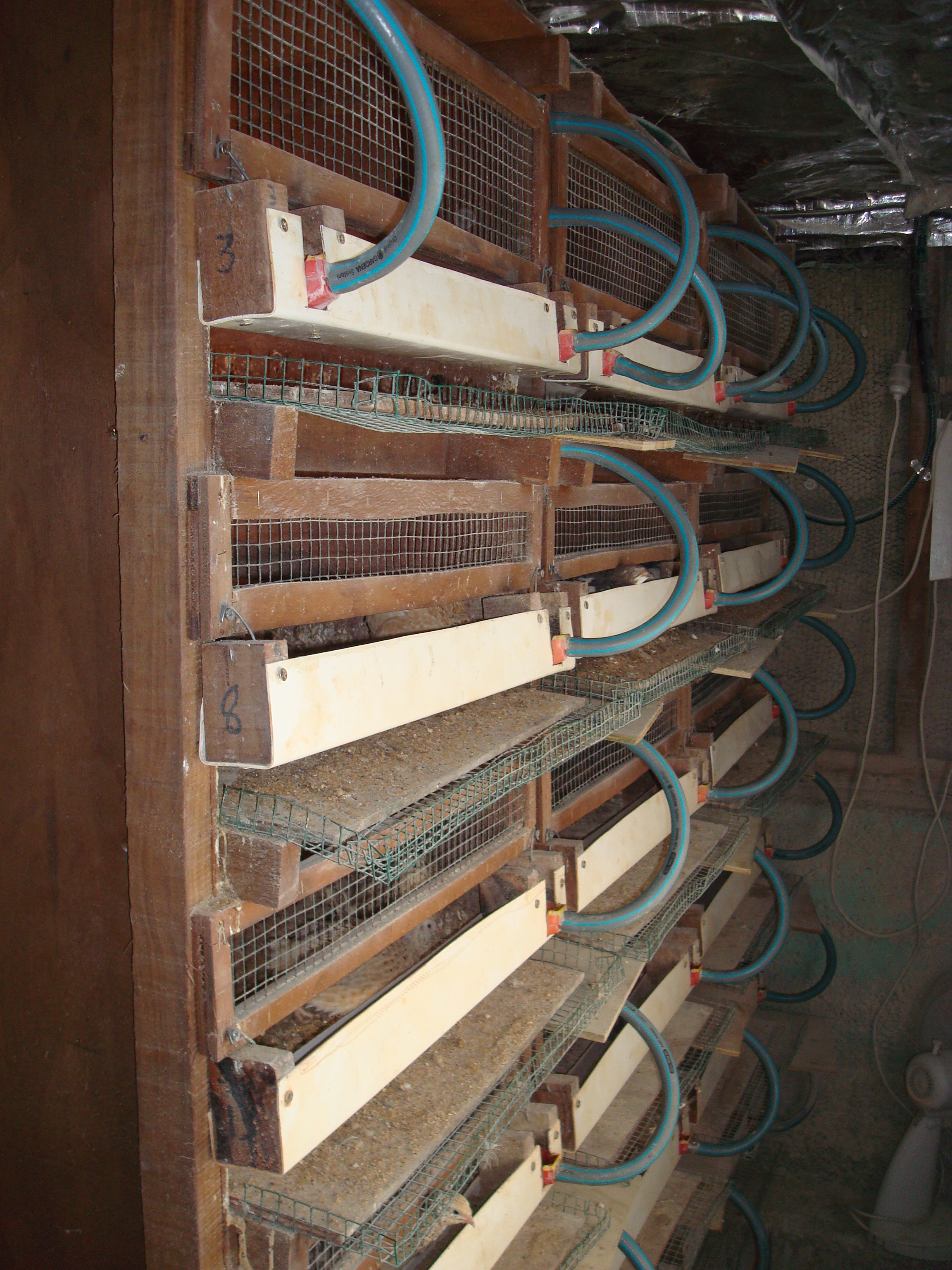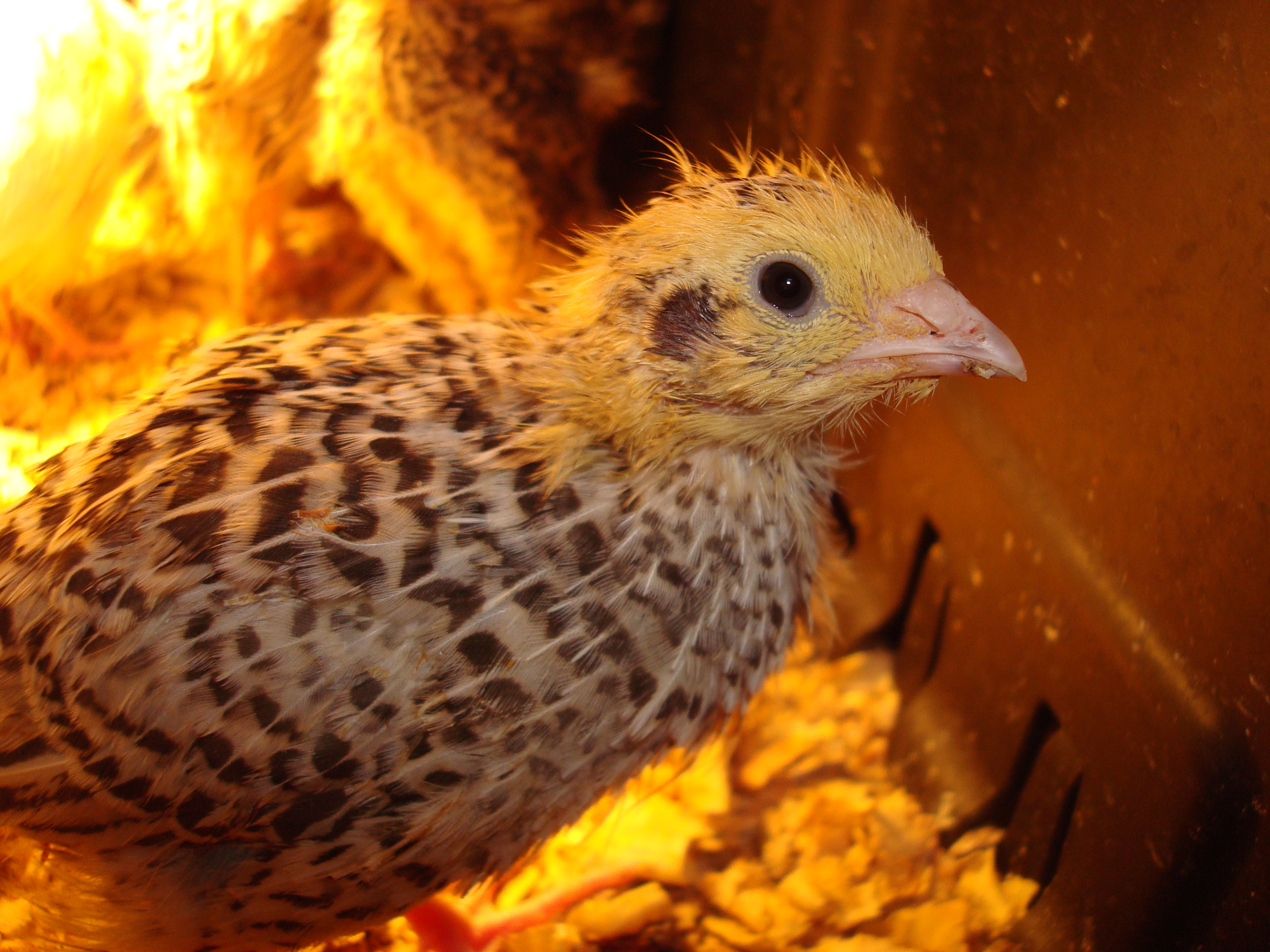
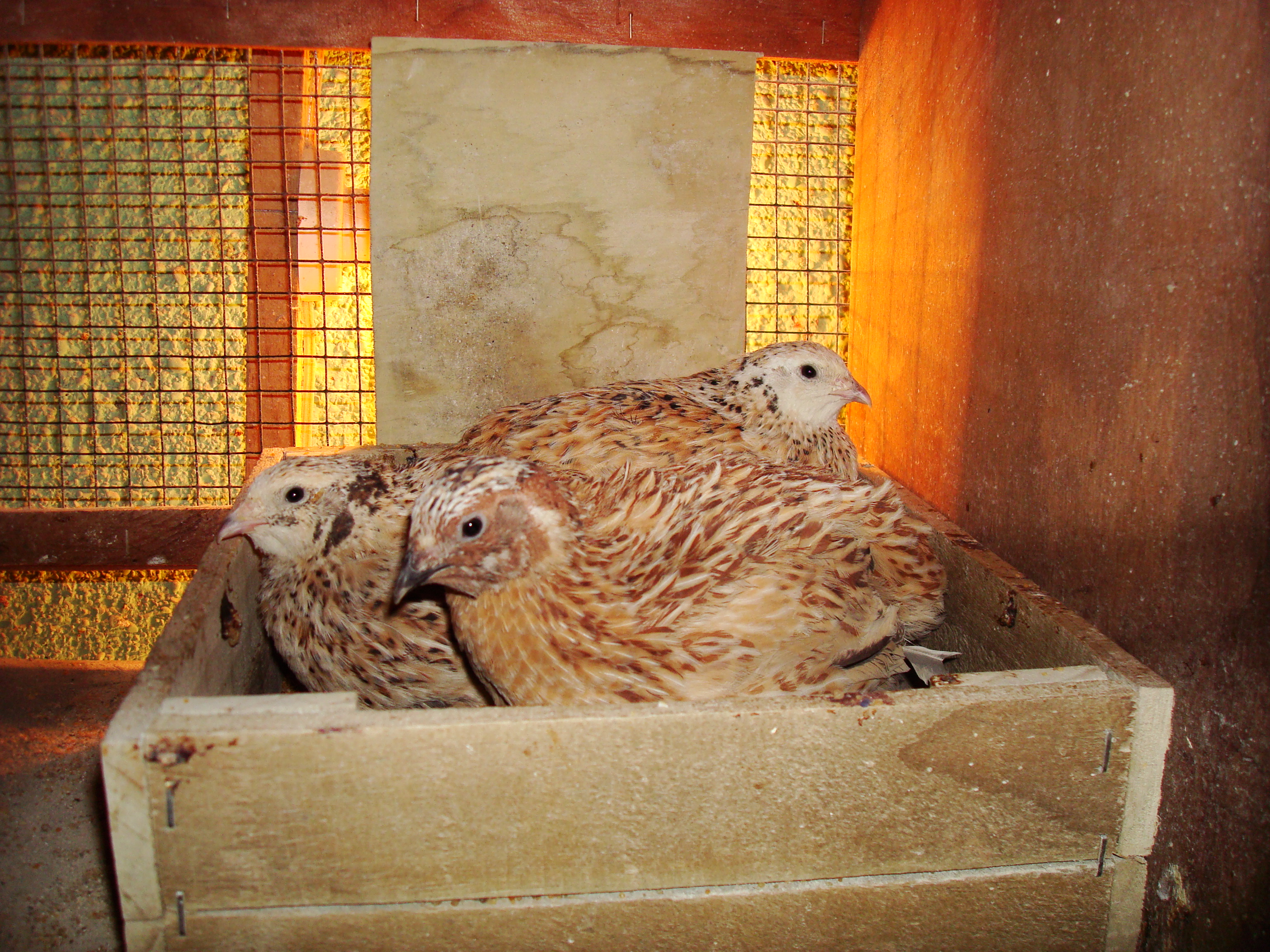
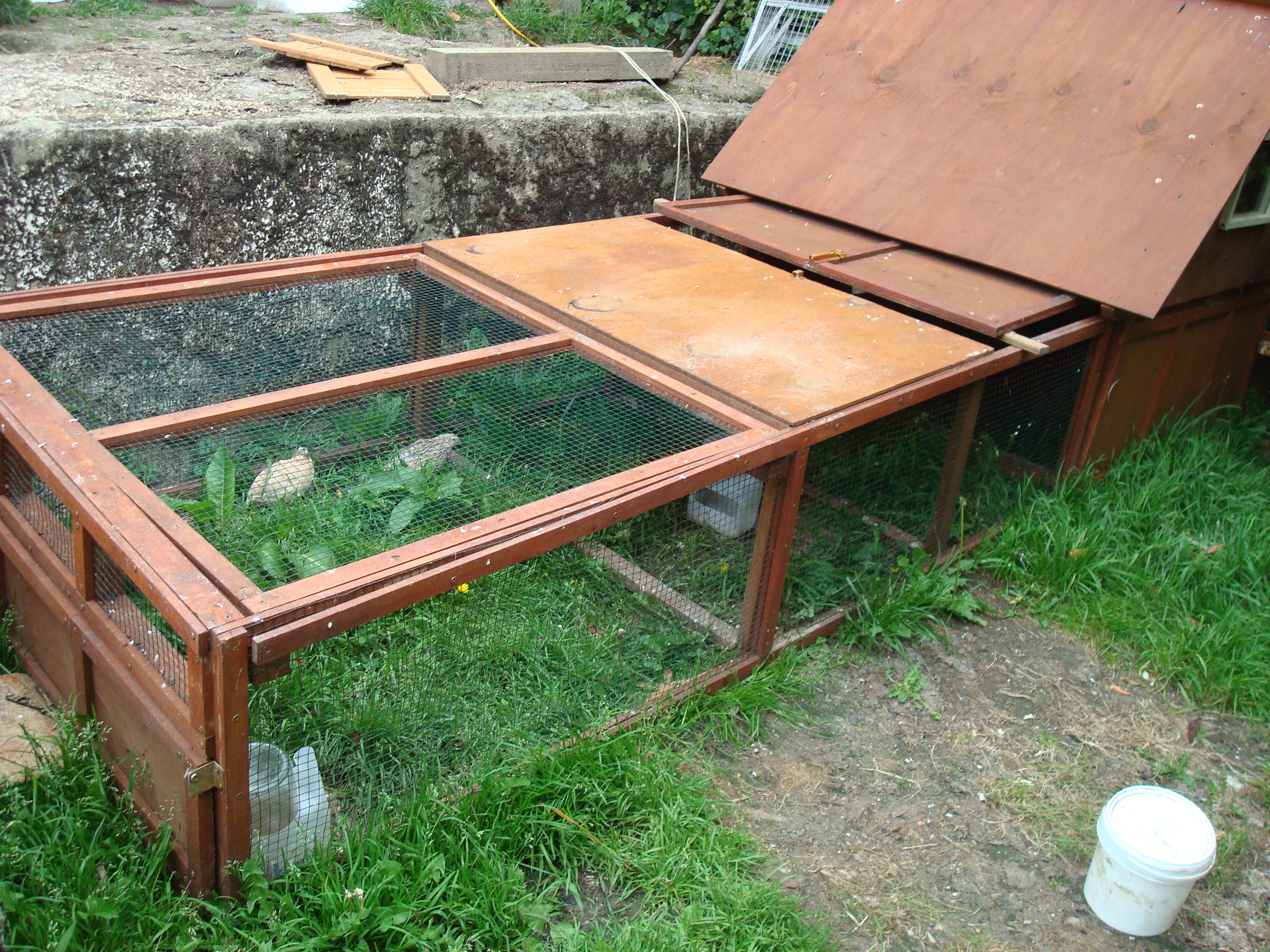
I consider both my housing systems for quails as very adequate, providing for the needs of the birds first and foremost. Even though I manufacture and sell both systems – i.e. Production Cages (“Batteries”) and Free Range Housing (Movable outside units), the birds are much happier and more calm and content in the inside cages than outside, irrespective of the fact that stocking densities are 14 Quails per 3 Meters Square outside and 7 Quails per 0.25 Meters Square (500 mm X 500 mm) inside. I provide fresh food and water ad lib as well as clean sand baths at all times in both systems. Both systems house Males and Females together. My housing design has been influenced by years of experience and very close observations and understanding of the Quails, as I have run commercial units in both systems for a long time. My observations are backed by the quail behavior and performance as they have higher production, lower mortality and better feed conversion in the inside cages compared to outside. Knowing Quails very well I can also confirm that they are much quieter, calmer and more content inside. This may be as result of a number of factors like fixed light intensity and duration, other controlled environmental factors such as no drafts, wet conditions and extreme temperatures inside as well as the absence of visible threads like large flying birds and other predators. Quails do not enjoy running around in search of shelter and food, so relative confined ares are more suitable for them.
Category Archives: Quail – All About
Coturnix coturnix
Defying Lethal Genes
Zabaglione
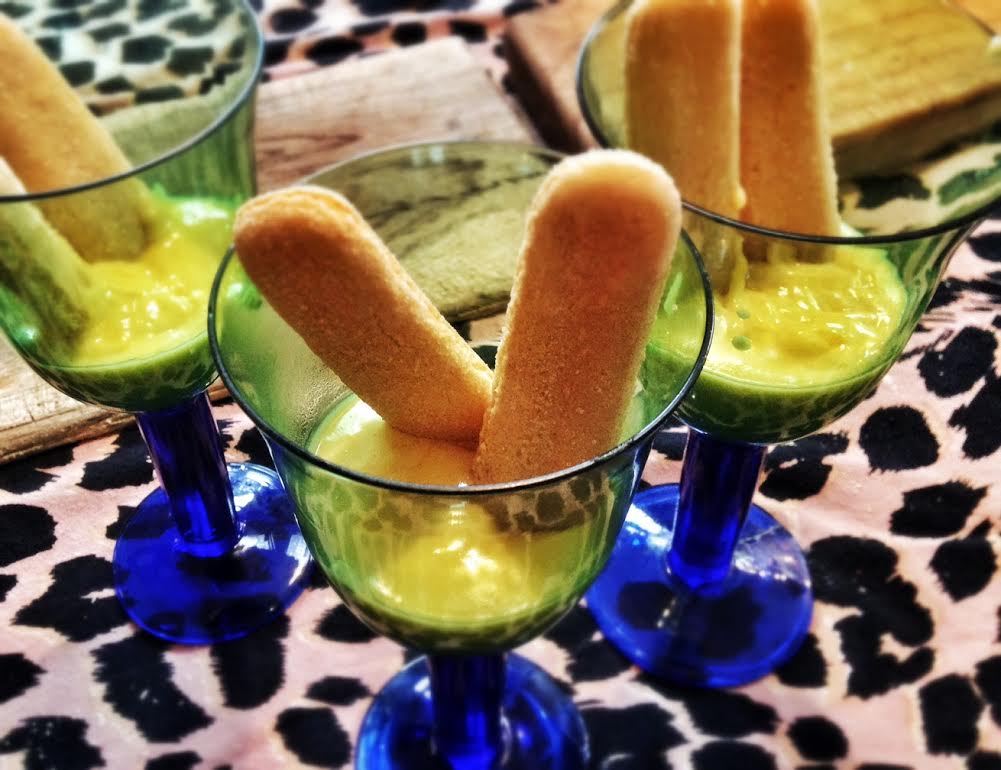
A very quick desert that is not only healthy but also delicious. I always weigh out all the ingredients before the guests arrive and then after everybody finished their meal, quickly make the Zabaglione. If your guests can watch you from the table, it makes an interesting conversation topic, especially when using Quail eggs. This recipe is enough for 4 polite dinner guest. If you are at all greedy, double it !
Zabaglione
4 chicken egg yolks or 16 quail egg yolks. Keep the egg whites for other things like an egg white frittata for lunch
65g castor sugar
120g Marsala (sherry is also good)
savoiardi biscuits (lady finger biscuits will do but only just)
Mix four chicken egg yolks and castor sugar in a double boiler. Over the boiling water, whisk the egg and sugar until all the sugar is dissolved and the mix is pale yellow and thick. Slowly add the Marsala while whisking continuously over the boiling water. Whisk until the zabaglione almost doubles in volume and thickens to such an extent that it will hold it’s shape in a spoon – this may take up to ten minutes. In the mean time place some savoiardi biscuits in a serving glasses pour in the zabaglione and serve immediately. Use an electric beater if you are not great at whisking.
The problem is always what to do with all the egg whites after the grandchildren became tired of meringue and amaretti. Eating a wonderful egg white fritata the following morning solves this problem.
Frittata Bianca (egg white frittata)
Since we have a lot of potatoes and I am determined to eat them all (;-) ) I used some in this frittata . Egg white fritata is very tasty, high protein, and low fat. Making it with Quail Eggs ads that extra dimension.
Frittata Bianca
6 egg whites
1 teaspoon finely chopped rosemary
1 clove garlic finely chopped (optional)
1 small potato sliced very thinly
1/2 teaspoon butter
Use a non stick pan. Melt the butter, add the garlic and rosemary. When the garlic has softened, add the potatoes in one layer. They can slightly overlap, but the idea is to brown and crisp a few bits. Pour the egg whites over the potato, no need to whisk them beforehand. Cook over a slow heat until the whites become opaque on the bottom but are still runny on top. Finish the frittata under the grill. Serve with fresh bread for breakfast or add a salad for lunch.
HOW TO “BUTTERFLY” A QUAIL BACKYARD FARMER STYLE ( not for the squeamish )
For various reasons I have to slaughter some quail from time to time. I may have too many males, it may be necessary to introduce new blood in to the breeding pens, hens may stop laying, and so on. My method of preparing quail for the pot has evolved through experience and may be useful to someone. I would like to know how others approach this fairly unpleasant task!
Line a 20 Liter bucket with a black garbage bag and after decapitating the quail with a meat cleaver, hold the bird over the open bag to let it bleed. Hold the wings to prevent them from fluttering and splashing blood. After about one minute tie a piece of soft wire around one leg and hook it over the side of the bucket, letting the bird hang inside the bucket, to let it bleed into the bag. Submerge the bird in scalding water for ten second then immediately pluck all the feathers until the carcass is clean. Cut the feet off by cutting through the shank close to the hock joint – (foot side of the joint). If you cut through the joint the meat retracts from the thigh when cooking and exposes the bone.
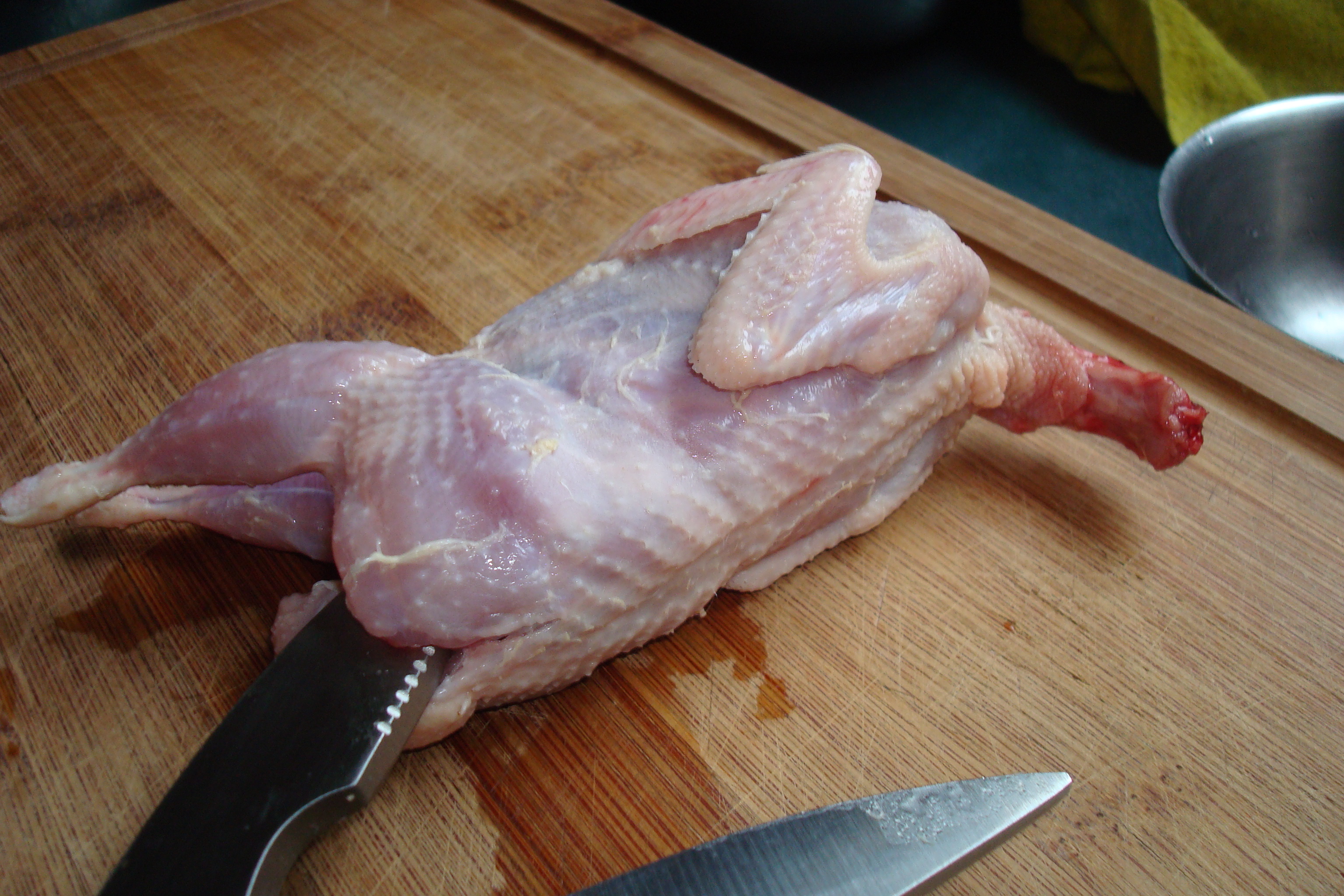
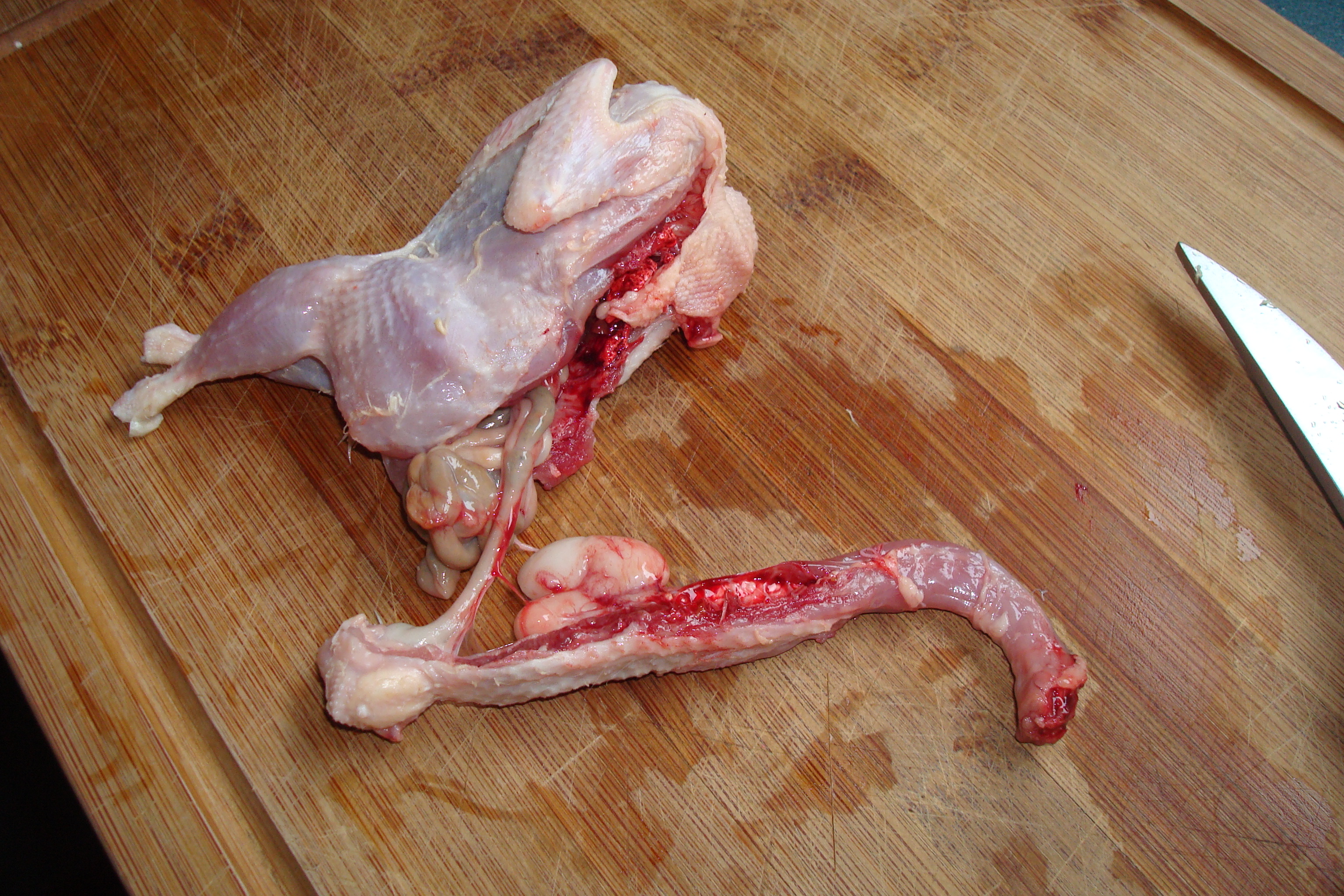
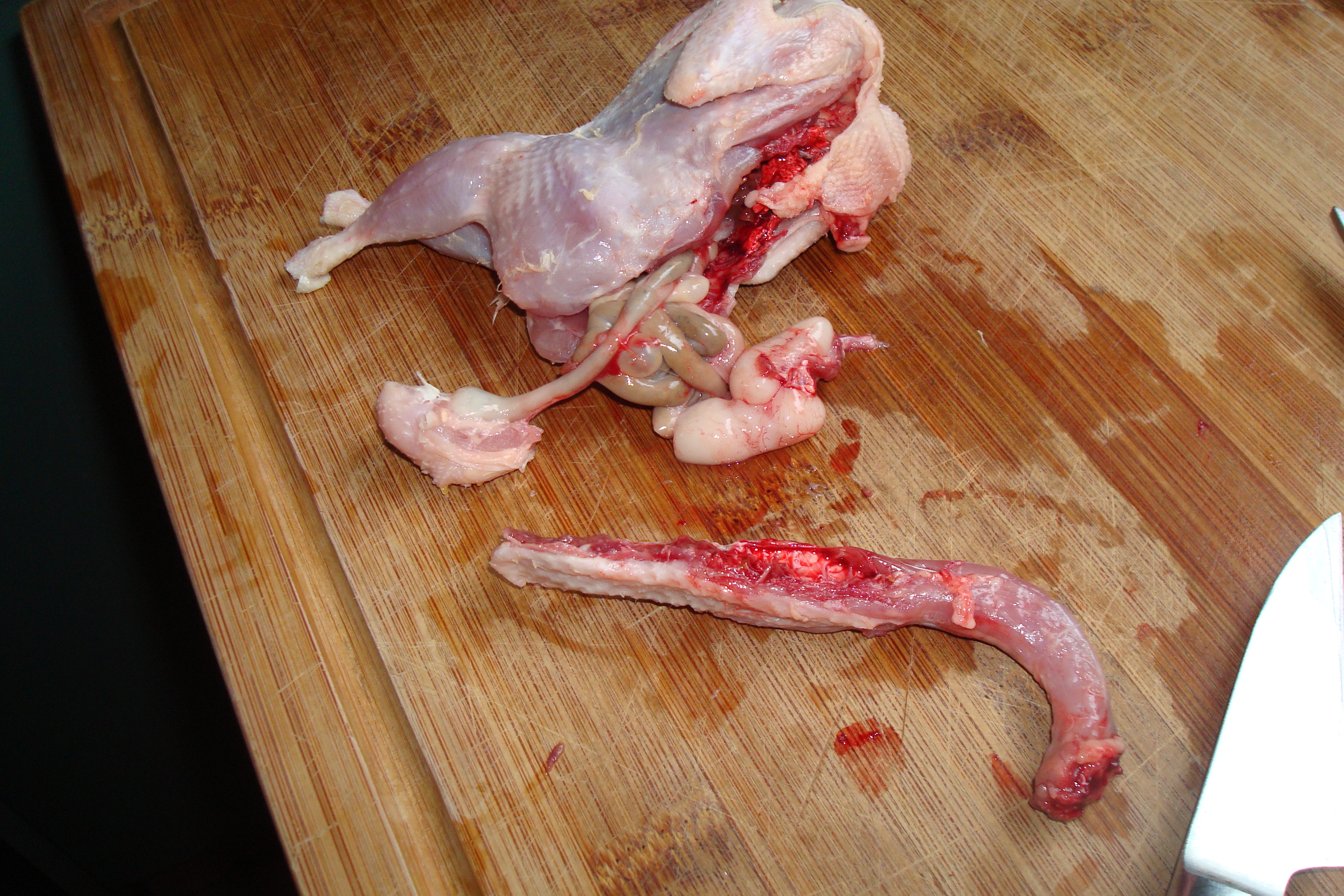
Take a meat shear and insert from the back hard up against the backbone. Cut all along the backbone, keeping the inside tip of the shears close to the top, until you have cut through right to the front. Do the same to the other side of the backbone. If you keep your shears against the inside top, you would have missed all the entrails.
It is now easy to lift the neck and backbone from the carcass, starting from the neck side
Cut through the backbone as close to the cloaca as possible. Also cut through the skin immediately below the cloaca. The backbone / neck sections goes straight into the dish holding all the parts to cook stock from. By inserting your middle finger underneath the entrails, starting from the back and moving your hand forward keeping your finger against the breastbone you will lift all the entrails out, intact without soiling the carcass.
The only parts that may still be attached are the lungs – scrape these out and put into the stock dish. Cut the neck skin short and ad this to the stock dish.Wash the carcass and leave to dry a bit.
Carefully remove the gizzard and put into a separate dish for cleaning later. Also cut loose the proventriculus and hart which goes into the third dish. Make sure you identify the gall bladder and cut it loose from the liver without spilling gall onto the liver.
The liver then goes with the proventriculus and hart and also add the gizzard after cleaning to make wonderful quail liver dishes like risotto .
Butterflying your quails in this described way instead of cutting through the breastbone (from the front instead of the described way from the back) you retain the moisture in the breast much better during cooking. No damage is done to any of the expensive cuts either. The backbone, which is always difficult to eat and does not have much meat makes great quail stock.
There are many wonderful Quail Recipes