Coturnix Breeding Program is making Progress

Should you have a sound breeding strategy and clear selection criteria results are due to follow, provided you have the numbers and ability and means to identify parameters. I have been incubating 150 – 200 eggs every two weeks for the past few months in execution of my breeding program and I think I have bred and identified two exceptional individuals. I normally, because of the sheer numbers of birds, do not give my Quails or Quail Lines names, but have decided to make an exception with these two – hence please meet Bill and Tri

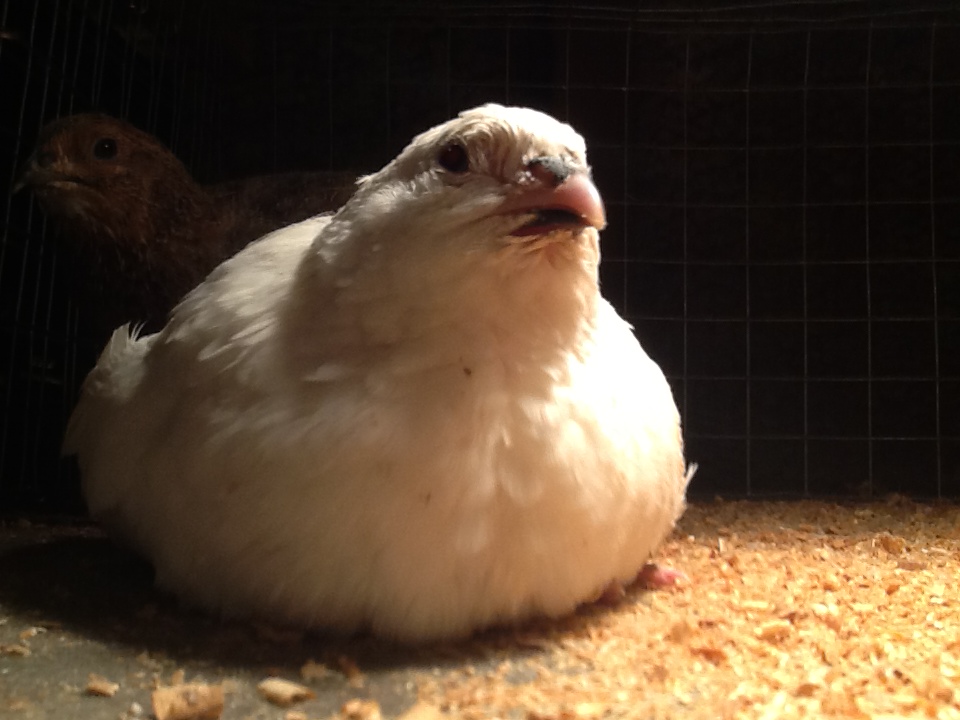
Bill is from my A & M Texan White Strain in which I have a number of excellent specimens. I have two lines available and after some line breeding and then out crossing I have bred Bill. Not only does he (at this stage) have an exceptional temperament (his dad, No 17,  is a very good male, good temperament and also gentle with the girls), very good conformation and strong constitution, he also weighed in at 201 grams at six weeks of age. I am not trying to breed bigger and bigger, but with the Whites being a “Dual Purpose” quail, I am delighted with the size and growth rate.

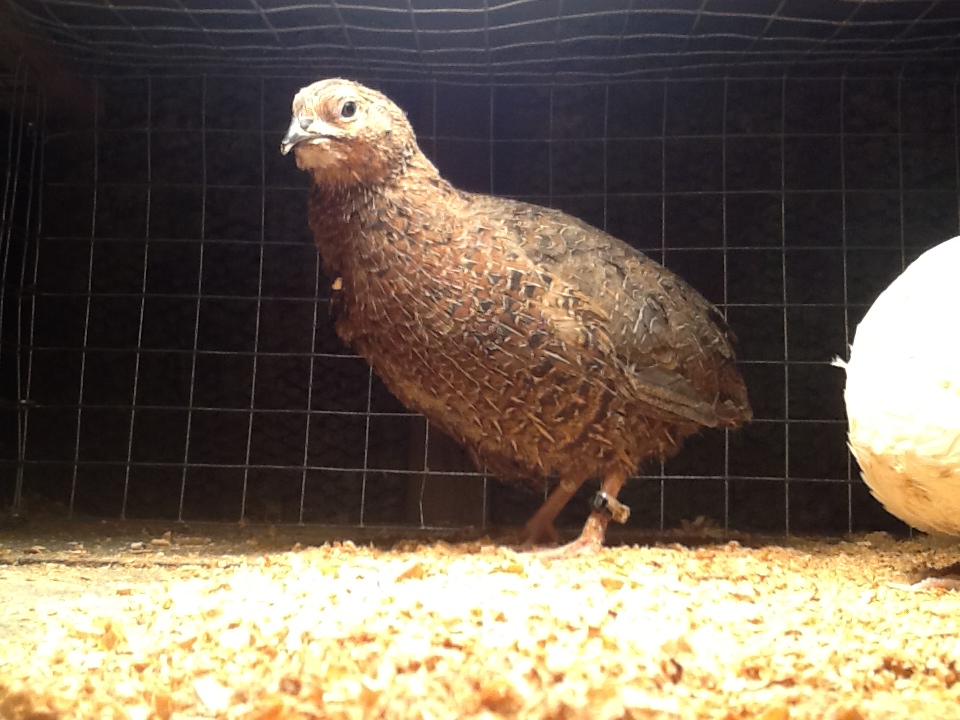
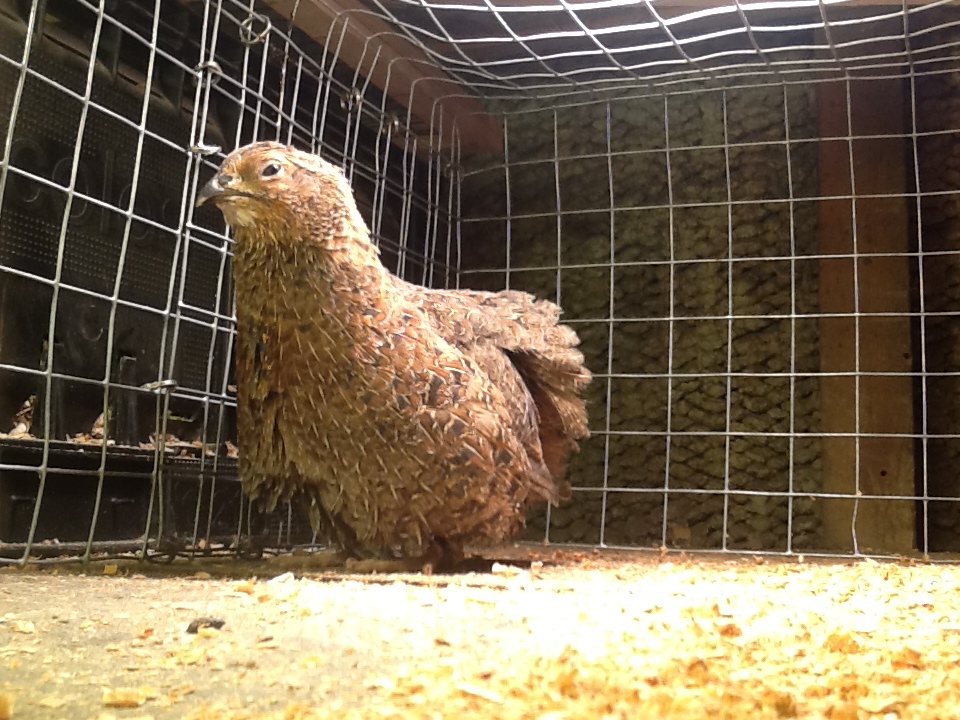
Tri is a Tibetan male. I find the Tibetans to be very aggressive, though well adapted to cage conditions. Tri is out of my most beautiful Male – No 33, and a hen which was part of a group of five that produced 165 eggs in 33 days (100%), then unfortunately one of the girls missed out. I have selected the most perfect female out of this group, which are all unrelated to No 33 to breed Tri, who weighed in at 179 Grams himself at six weeks of age. No 33 has one full sister who at present has done 69 eggs in 78 days.  She is presently with a male that is a Full Brother to Tri’s Mother.  Tri has all the qualities of an excellent bird being sound, strong and calm, but very dominant already among  his piers. The one negative trait of the Tibetans is that the Males are  not kind to the girls and I have to remove them  from time to time. I also give the Tibetan Males up to seven females to keep them busy, but that even seems to be too few.  The Italians and Whites are perfectly good even one Male with one Female (Perfect Gentlemen)

Needless to say 2013-12-26 10.26.54 2013-12-26 10.22.57 2013-12-26 10.18.27 2013-12-26 10.26.23Tri and Bill are going to be part of future breeding programs.
http://www.backyardfarmer.co.nz

Hatching Results for Coturnix

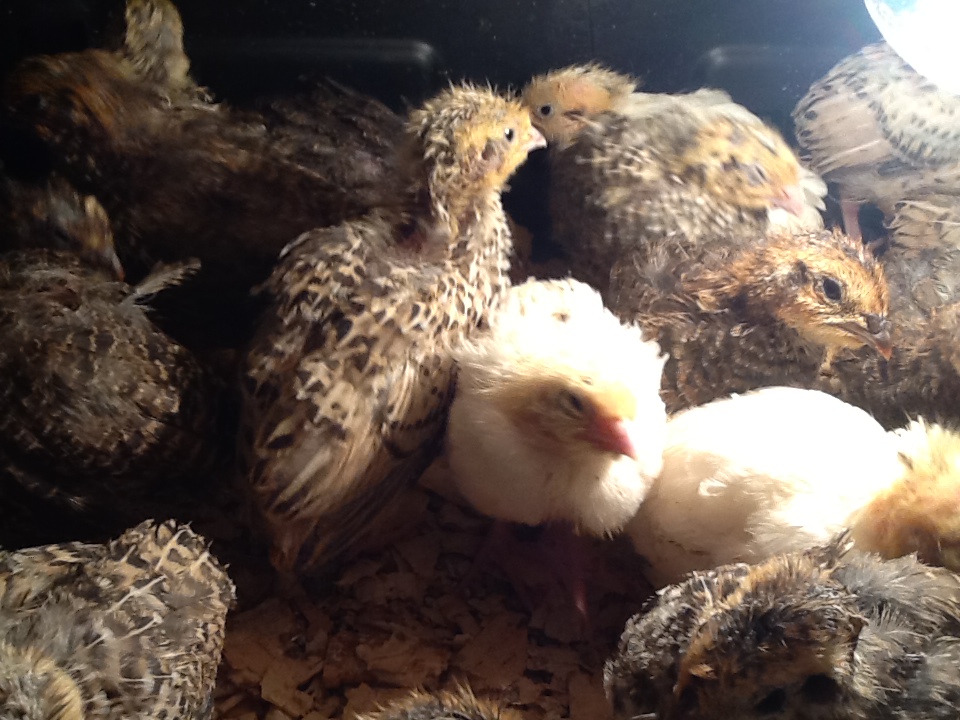
2013-10-24 - Italian Coturnix 9 Baby Quails 021

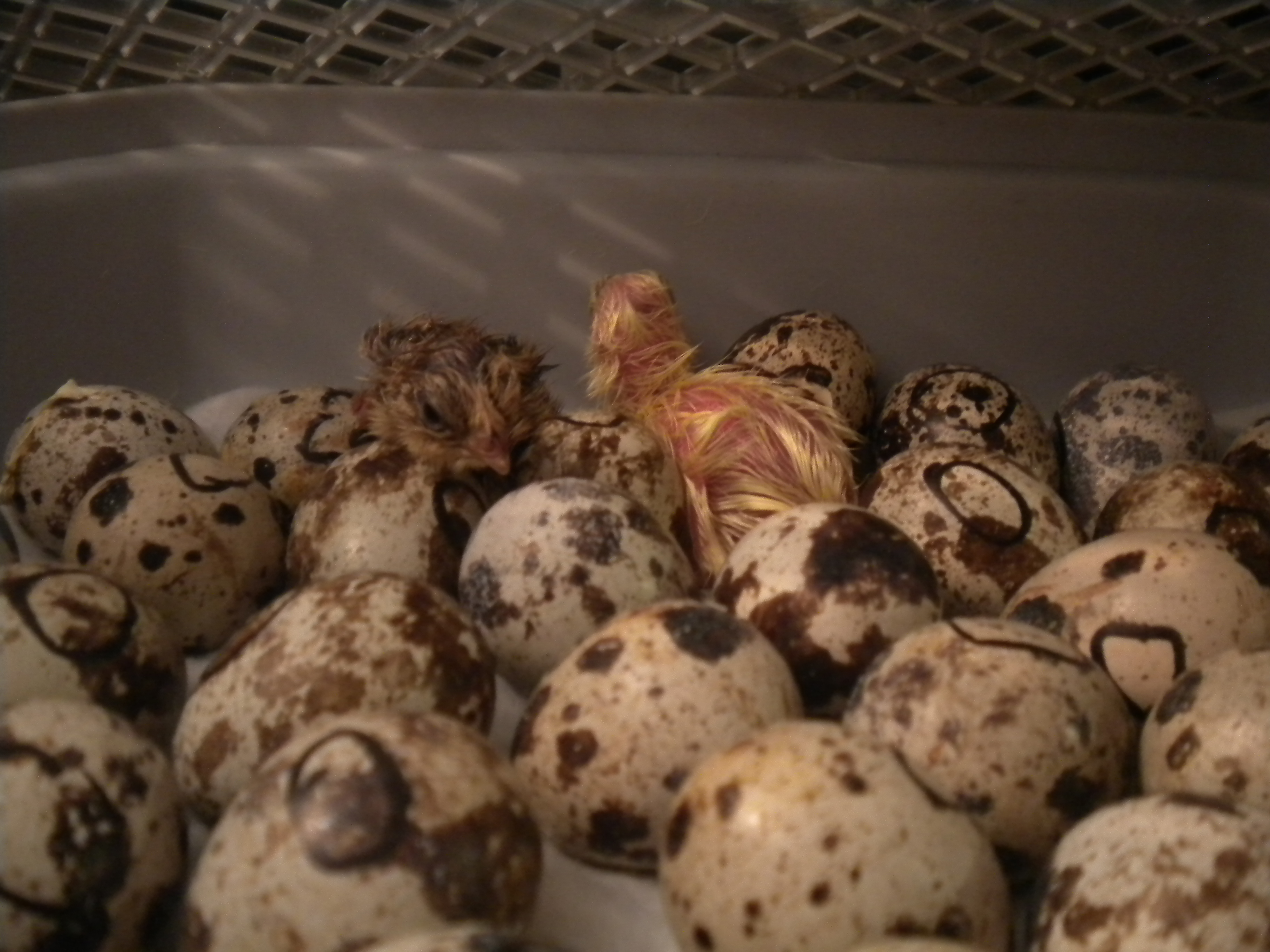
The results appears to be promising compared with those from the immediate past. Culling percentage is down from 29% to 16% after only three generations of intense selection and culling, applying the same standards. I know it is only one  set of results, but still promising though.  2013-12-14 – Quail Hatching Results

PHAROAH COTURNIX QUAIL

PHAROAH – COTURNIX QUAIL

I aim to develop purebred PHAROAH QUAIL BREEDING GROUPS  or  PHAROAH QUAIL HATCHING EGGS that I intend to introduce to NZ  breeders

(I also breed Golden Italian, White and Tibetan Coturnix Quail and have eggs and breeding groups on offer. )

The Pharoah Quail (Coturnix coturnix Japonica) has similar  characteristics and colour to the wild quail (Coturnix coturnix).  These birds are native to the Mediterranean, Asia and Africa. Migratory habits resulted in some birds landing in Egypt and this is where the initial domestication has happened. Since the twelfth century these birds have been raised in Japan for meat, eggs and as  pets (hey loved their singing). Coturnix Quails were introduced into the United States in 1870. Even though the Pharoah and Wild Quails are very closely related they normally to not naturally interbreed, even in Europe where wild flocks of both strains would be found in the same area.  They have yellow/ brown speckled plumage with a white stripe above the eye. Males have rusty brown breast feathers. The Pharoah colouring is exactly as for the Wild Quails. Birds are well adapted to cage conditions.

At present there are a few true breeding mutations of the Coturnix Quail, of which the PHAROAH is one.  It is my intention to keep this strain pure and not mix it with other strains such as the Golden Italian, Tibetans, and Whites all which I also breed.  Each of these strains has specific characteristics such as plumage, conformation and size, temperament, egg and meat production ability, etc. These characteristics I intend to maintain and develop for each strain within the limitations provided by the limited genetic material available. Careful responsible breeding and strenuous selection would result in birds with as low an inbreeding co-efficient as possible and hopefully a more disease resistant, highly fertile, healthy, happy, beautiful and productive quail at the end of the day.

2013-10-24 - Fharoah Coturnix 2 2013-10-24 18.09.15 2013-10-24 18.10.45 2013-10-24 18.12.08

With the project in its infancy it is not possible to guarantee 100 % true colouring from eggs., but I am confident that I will reach my goal with careful selecting.

WHITE COTURNIX – BREEDING GROUP

WHITE – COTURNIX QUAIL

It is now your opportunity to share in this development of purebred WHITE QUAIL BREEDING GROUPS  or  WHITE HATCHING EGGS.

I also breed Golden Italian, Faroah and Tibetan Coturnix Quail Eggs and Breeding Groups

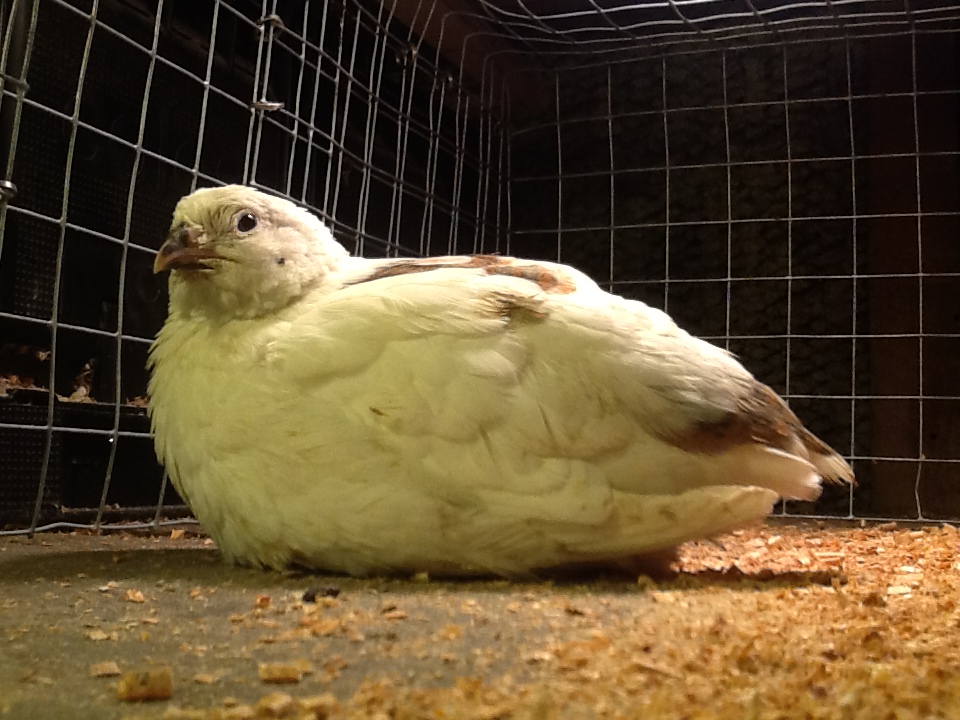
These birds are on average somewhat larger than the other Strains, but in New Zealand show a lot of variation and poor quality with many birds obviously highly inbred with resultant loss of vitality and size. White plumed with the odd dark spot. Birds are well adapted to cage conditions. The White Quail is both good for meat and egg production and has been developed at A & M 2013-10-24 - White Coturnix 12 2013-10-24 - White Coturnix 6 2013-10-24 - White Coturnix 13 2013-10-24 - White Coturnix 17Texas University as a real Dual Purpose bird. Also in the UK a White variant has been bred that is smaller than the USA variety. I suspect that initially both Strains were present in New Zealand, but due to small numbers have been crossed and highly inbred. These quail are poor flyers and has never been bred for release and hunting. I am selecting for uniformity, vitality and size at present, but unlike many International Breeders do not place too much emphasis on size only. I think it dangerous to go for larger and larger birds all the time like the American many a time do.

At present there are a few true breeding mutations of the Coturnix Quail, of which the WHITE is one.  It is my intention to keep this strain pure and not mix it with other strains such as the Golden Italian, Tibetans, and Faroahs (Wild Coloured Quail) all which I also breed.  Each of these strains has specific characteristics such as plumage, conformation and size, temperament, egg and meat production ability, etc. These characteristics I intend to maintain and develop for each strain within the limitations provided by the limited genetic material available. Careful responsible breeding and strenuous selection would result in birds with as low an inbreeding co-efficient as possible and hopefully a more disease resistant, highly fertile, healthy, happy, beautiful and productive quail at the end of the day.

With the project in its infancy it is not possible to guarantee 100 % true colouring from eggs. At present I am searching for more White Breeding Stock of good quality.