
If you are so cute and weigh 195 grams at 22 days of age, your destiny is definitely the breeding palaces of Back Yard Famer. http://www.backyardfarmer.co.nz
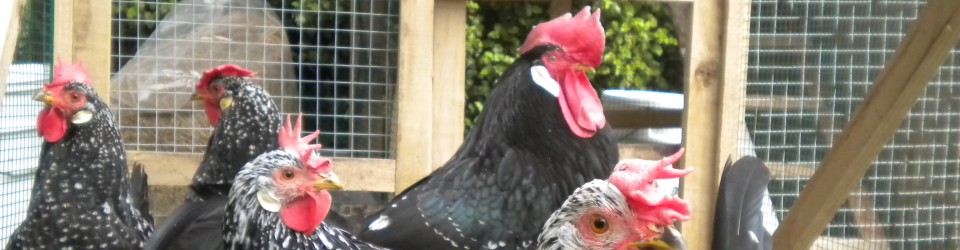
If you are so cute and weigh 195 grams at 22 days of age, your destiny is definitely the breeding palaces of Back Yard Famer. http://www.backyardfarmer.co.nz


Every so often in the farming industry you realise that progress is slower than expected, which is where I am at present with my Quail Breeding Project. I have made substantial progress over the past three years breeding Coturnix coturnix Quails in New Zealand, but find it more difficult to keep the coefficient of inbreeding low whilst applying the same selection pressure. One of the problems is small numbers of animals and the second being the lack of similar, or better, breeding animal availability in New Zealand.
To maintain progress, I have decided on a two pronged approach for the immediate future:
1) I am going to amalgamate the four breeds I presently have into only two breeds. I am going to join the Pharoas and Tibetans (Back Yard Specials as I have been calling them) and call this my Back Yard Dual Purpose Bird and apply the same selection pressure on both egg production and body mass. Then amalgamate the Italians and Whites and call them my Back Yard Egg Laying Bird. This will give me larger numbers to use in each breed and as I am not going to select for colour any more, progress will hopefully be faster. I suspect the two breeds will eventually be a darker coloured bird for the dual purpose breed and a lighter coloured bird for the egg laying breed.
2) I have had a very close look at the latest developments in animal nutrition and have incorporated some very exciting new elements into the feed. For details about the feed developments I have adopted, see my next post on this matter.
Hopefully these two changes that I have adopted will enhance progress in my project.
Raising Californian Quail in captivity has never been, and never will be easy. Their nervous character and wild instincts make them very unsuitable to captivity. Unfortunately, because of their disappearance from the wild in New Zealand, they will have to be multiplied in caged conditions, should we want to preserve this pretty little bird. The cavalier attitude of New Zealanders regarding nature will probably prevail and our efforts for conservation would have limited success – I know I am going to get a lot of criticism because of this statement, but with New Zealand and Australia being the number one countries in the world causing species loss, my argument is more or less proven.
Survival rates of Californian Quail during their first few weeks seem to be abnormally low, and I have adopted a number of strategies and designs to try and overcome this problem – all with varying levels of success, but none solving the problem entirely.
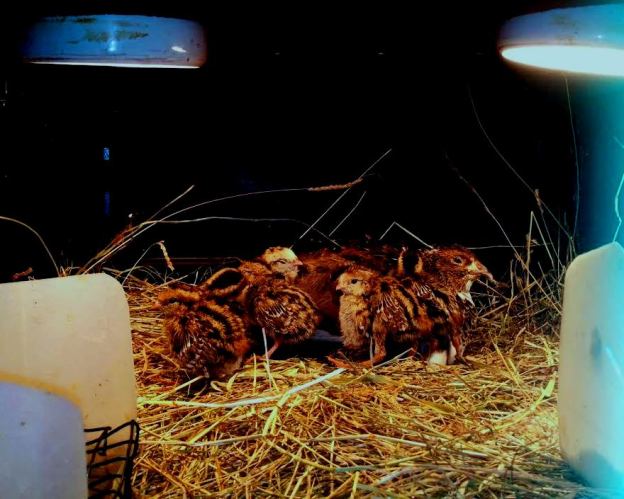
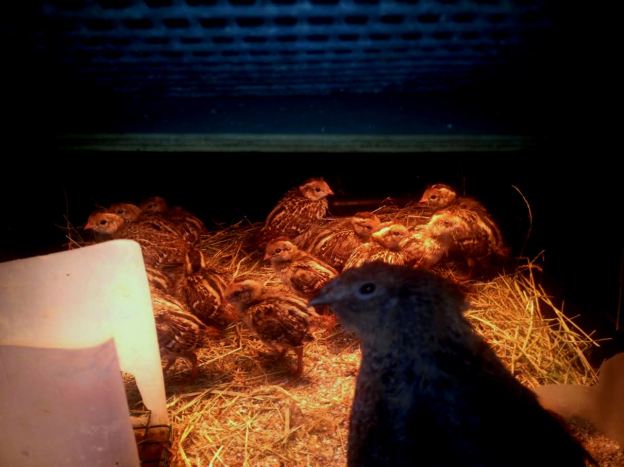
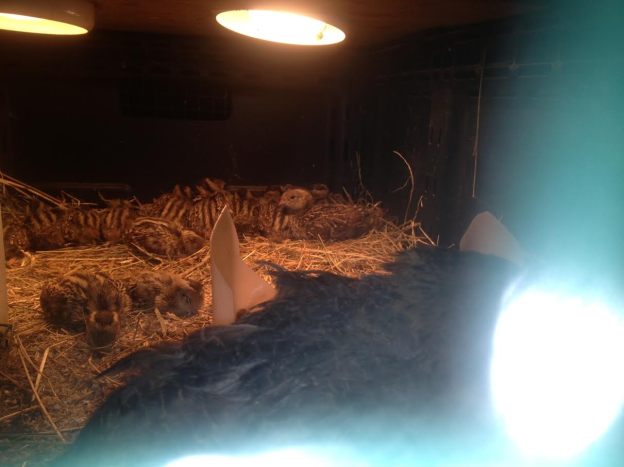
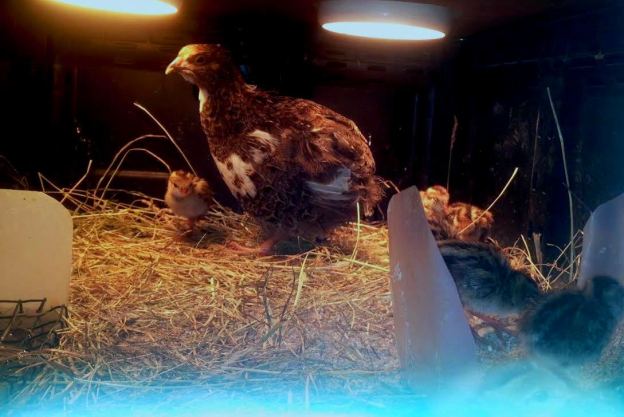
My latest survival strategy however seems to have addressed many of the problems. Instead of sending my old Coturnix coturnix quail hens to the stock pot, I selected a number the calm and motherly ones as foster mothers for the Californians. I put the mothers into the brooders a few days before the Californian chicks hatch so they can get acquainted with the environment and the warm conditions. When the chicks hatch I place them straight into the brooder with their new mother. Her presence seems to have multiple positive effects on the chicks – i.e. she teaches them to eat and drink immediately, calms them down and also broods them. The end result is that the little chicks have shelved their desire to become Kamikaze Pilots every time I want to change food or water. Everybody seems calm and happy and mortality for the last four groups, at five weeks of age, each with their own foster mother, has been almost zero (lost one).
There are a number of younger groups at present, each with their foster mothers and they are very calm and doing well. I do notice that some foster mothers are better at the job than others and will continue selecting the better ones, even though their has been no difference in mortality rate between the groups.
Going back to nature can teach us a lot!!

Single egg isolated on white background

A male California Quail stands on a rock overlooking his covey.

