

Attached find correspondence between me and a Customer, which I felt may have some value to other quail keepers and may also attract valuable input from others.
Hello Domenico,
I thought I had better update you on the eggs you sent, and perhaps learn a bit in the process.
You shipped 36 eggs, and after 24 hours rest at room temperature they were set along with around about 24 of mine..
Sadly I only managed to hatch 7 of your eggs and about 10 of mine, ending up with 13 viable chicks. They are now 40 days old and range from 155 to 180 grams.
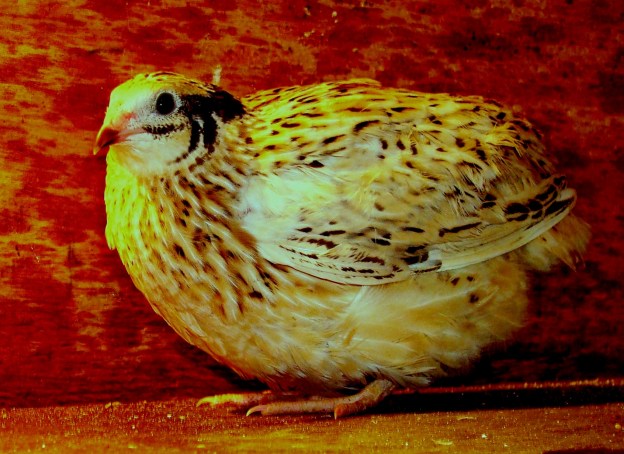
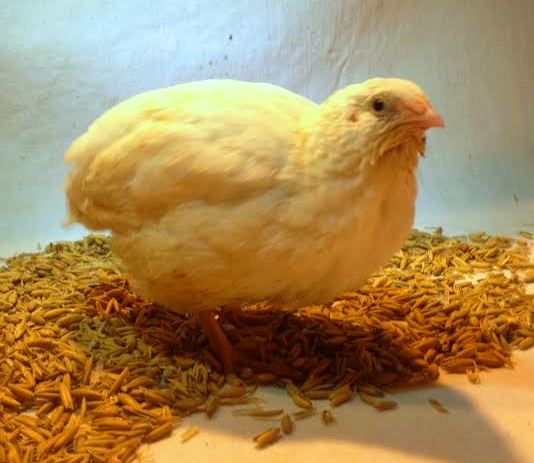
The heaviest birds are Tibetans – 165, 180, 180, 180 grams. There is also a Pharoah at 165, one at 160 and two at 155 grams. White and Italian Golds (4) 150 – 160 grams.
So I am guessing that the Tibetans and half the Pharoahs have come from your stock. (2 of the Tibs have a few white spots on their breast and they all appear to be hens!!) Have definitely one Pharoah cock bird.
So not a stunning result, but at least I have some stock to start with… and with them ready to start laying pretty soon, I should be able to lift numbers pretty quickly. Most of the eggs (yours) that did not hatch appear to have been fertile, but died early on – so I imagine the handling in the courier was a bit rough…but then I only managed a poor hatch of my eggs…so not sure where I have gone wrong. Am using a Brinslea 48 (chicken) egg, fan forced air incubator, auto turn, but not auto humidity. Was advised after two poor hatches with chickens that I had them too wet, and they were unable to fully develop adequately…so with our quail eggs I did a dry incubation until Lock Down and then added water to lift Rh for last 3-4 days. Have done another hatch just this last few days – 83 quail eggs, hatched 33 with 3 dead in shell. Balance 80% fertile, but failed to make the last few days. Also noted that hatch did not start until Day 18/19. Temps appear to be about 37.25, rather than 37.5 – 37.75°C.
So, would appreciate any ideas you may have, and also, does the weight of the Tibs and Pharoahs suggest to you that they are your stock?
Hope to hear from you soon,
Kind Regards,
Customer
Thanks for the Email and information. Yes 7 out of 36 is very bad even for shipped eggs, but then 10 out of 24 “fresh eggs”, (or 33 out of 83) is not good either, as you mentioned. First and foremost I am prepared to send you another three dozen totally free if you are interested – let me now. If they hatch late it probably points towards too low temperatures. Yes humidity is always a factor and depending on the environmental conditions you may or may not have to ad moisture. The point is that the research has been done and we more or less know what the humidity should be – so I would get a meter and manually keep it as close as possible. With the little information I have, it probably points more towards low temperature than too much humidity. Calibrate your incubator temperature, as ALL incubators are out to a certain degree, unless you want to trial and error until they hatch.
I have the various breeds that I breed and the more characteristics you select for in a breed, the slower overall progress is. For this reason I have a breed (call them Back Yard Specials) where I only select for functional efficiency and not for color at all. The result is that I have this group of birds that resemble Tibetans / Dark Rosettas with some patches of white in some of them. This group of birds constantly outperforms all the other on most of the production parameters and I suspect is the reason of your heavier “Tibetans”. I only weigh growing birds at 7, 21, 35 and 56 days, when I expect them to have reached about 95% of final body mass. The back Yard Specials are at about 200 g on 35 days and 260 at 56 days. The rest are between 10 and 20 g behind at 35 days and about 30 – 40 behind at 56 days. I do not have a cut off point for body mass at present as the mean mass varies and I always select the best animals as replacements to just keep my numbers up – the rest are either for sale of slaughter. These weights are for Females and the Males are always smaller. So I would say your 180 g at 40 days is on par, even though I would have liked one or two 200 g individuals, but with small numbers it is sometimes difficult. Yes the variation within the breeds are still huge and a lot more selection is required.
It is very tempting to terminate all the breeds and keep only one efficient breed of Quail. In this case progress will be even better as I shall have larger numbers of the breed.