We Slaughtered the Pig

IMG_0055

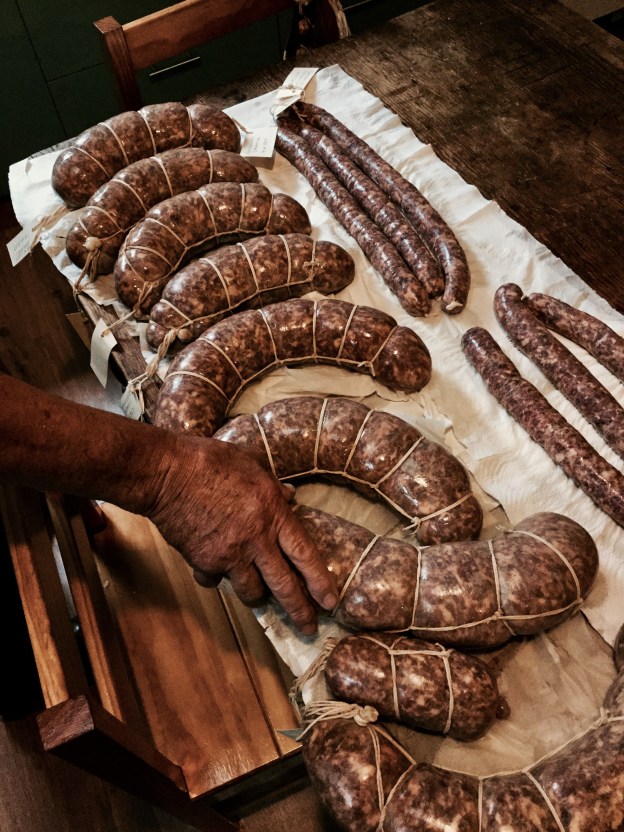
It is Italian tradition to slaughter at least one pig once per year so as to make all the salumi required for the rest of the year. I have made some pork liver salami and sausages (Salsiccia di Fegato di Maiale) on the day the pig was killed while waiting for the pig to cure for a week.  Today we made some Salami and Cacciatori sausages. Tomorrow it will be Pancetta, Coppa and Prosciutto. In the mean time we make stock from all the bones and rendered the fat from the skins and small off cuts to either use for cooking or to make soap with.

The Italians are very generous and seldom do your friends leave your home without some of your home produce for them to try at their own place. Likewise you never leave a friends home without more gifts than what you brought. Every Italian province, district and town have their own food and recipes. It goes so far that every family and family member has their own special way to prepare a dish, which obviously is better than anybody else can dream to make it. Food is often the main talking point around the table and when somebody asks you for a recipe, you know that they know you can prepare the specific dish better than what they can. You always oblige and provide them with the recipe, minus a few essential ingredients and omitting at least one of the important steps – this way you can stay as the master of that specific dish.

So please do not ask me for a sausage recipe!

Focaccia

Having two young men of four and six years old (grandchildren), visiting twice a week, who grew up enjoying some of Nonno’s best efforts in baking bread, and who are now considering themselves as experts, Nonno has to keep up the quality and deliver at least twice a week. Normally focaccia in this house has garlic and rosemary as toppings, which meet with the approval of the critics. Last week I tried a plain focaccia with olive oil and salt, which was instantly rejected as quality. This week I am trying my hand at tomato and garlic – let us wait on feedback from the experts.2017-03-12 - Focaccia 2

PANETTONE

Panettone is traditionally eaten throughout Italy and the world by Italians during the Christmas period. The origin of panettone is from Milan where we consume it all year round. It is a tedious and long process to make, but always worth the while.

PANETTONI

First kneading

150 g Sugar

15 g Natural Live Yeast

260 g Biga (50:50)

200 g Egg Yolks

340 g Flour

220 g Butter

1185 g TOTAL

Procedure

Dissolve the sugar and live yeast in the Biga, then add the egg yolks and flour and mix well until even. Ad the soft butter and mix well. Let it levitate 12 to 14 hours at 25°C or until triple in volume.

Second Kneading

200 g Flour

35 g Sugar

50 g Egg Yolks

50 g Butter

10 g Salt

3 g Vanilla Pods

200 g Sultanas pre-soaked and dried

180 g Candied Fruit

50 g Orange Peel

778 g TOTAL

1963 G GRAND TOTAL

Procedure

Knead the flour and first kneading until elastic. Add the sugar and the egg yolks and mix / knead thoroughly, then add the butter, salt and vanilla and mix until even. Lastly add the fruit and mix well.

Let the dough proof for one hour, then divide into portions and let it rest for another hour. Pirlare (to make the dough round) and place into moulds lined with baking paper.

Levitate at 30°C for 5 to 6 hours or until triple in volume. Bake at 160C for twenty minutes, rotate the moulds and bake another 40 minutes at 150 C (Approximately 60 minutes per kilogram for each mould). When taken from the oven, turn upside-down and rest for at least 3 hours, then put in bags and store.

For some time we every year imported a 10 Kg Albertengo Moscato Panettone from Albertnego in Italy.

2010-11-13 001


Coniglio a Porchetta (Rabbit with Wild Fennel)

In the Italian Viterbo area where this recipe stems from, the term “porchetta”, which means roasted pig, is applied to any dish that use wild fennel, being it fresh or dried flowers. The wild flowers should not be confused with fennel seeds.

I am fortunate to have access to hunting areas and friends that hunt rabbits with me. I also breed rabbits for the table on a regular basis. Last week, I could not make it to the hunt and my friend was good enough to bring the only Hare they shot for me to cook. I also have a good friend across the road that showed me the wild fennel growing in the old quarry across the road, so I had assembled all the ingredients for my dish of wild hare with wild fennel!

Wild Hare with Fennel

Ingredients

One large Hare, cleaned, gutted and washed
Heart, liver and kidneys of the Hare (Coratella) – Cleaned, washed and cubed or minced
Extra Virgin olive oil
Six large sage leaves
4 Garlic cloves – cleaned and crushed
1 Cup dry white wine (the best is  from Orvieto)
2 Medium potatoes peeled and cubed
2 Slices of Prosciutto or Pancetta (home made if possible)
1 handful of rosemary leaves
Half a handful of fresh Fennel Flowers
12 Black Olives – pitted
Salt and pepper

Heat the oven to 150C. Heat some olive oil in a heavy pan and ad the coratella, sage, half the garlic, salt and pepper. Brown the coratella, add the wine  that you have not drunk yet and allow it to evaporate. Ad the potatoes and mix through, then take it off the heat. Wrap the coratella mixture in the prosciuto. Stuff  the hare with the fennel, rosemary and wrapped coratella. Sow the rabbit up so the stuffing would not fall out. Put some olive oil in a heavy oven pan large enough to take the whole hare. Add the hare to he pan with the rest of the garlic, salt and pepper. Roast the hare about two hours. Halfway through the roasting process, add the olives  and the rest of the wine you have not drunk. Turn it once or twice and baste it every so often. If the rabbit legs look dry, wrap the leg ends in aluminium foil.

ENJOY!!

Do not forget the home made red wine!

MY HEART IS BLEEDING !!

http://www.odt.co.nz/news/dunedin/386052/farmer-buoyed-support

Raw Milk from the Loveliest Dairy Farm


2014-02-22 09.44.04

I have known Merral and Alex for some time now and they are probably some of the friendliest, kindest, intelligent and hard working people I have ever known. They came to New Zealand in 2000 and established the most wonderful dairy ever and did everything correctly by the book, working 16 – 18 hours per day for 16 years without a single day off. They provided many families with healthy, tasty and nutritious milk from their very well cared for and loved heard of Jersey cows, and made us all HAPPY. Now a possum infected a single heifer which has caused them to ABRUPTLY loose their LIVELIHOOD, INCOME AND DREAMS. A TB free New Zealand sounds very nice and taking conditions into consideration, it could probably not have been avoided, nor can anybody specifically be blamed, but it may just be time for the MPI to start WALKING THE WALK and stop TALKING THE TALK.