Combating food waste : My contribution

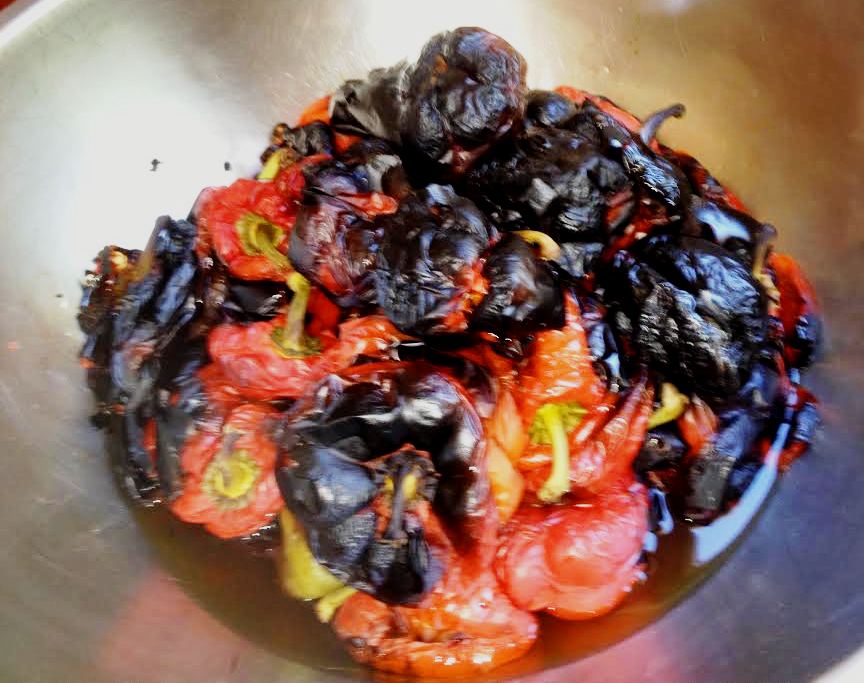
Pomodori alla Grilia2015-01-12 - Pomodori Secchi 2015-01-12- Cherry Time  2015-01-12 - Peperoni alla griglia


I love eating fresh produce in season and preserving all the excesses during the growing season for the rest of the year. Summer fruits and vegetables are expensive in winter and in summer there is a lot of glut and waste, especially at the small local green grocer who sells his fruit and vegetables fresh, in season and does not keep things in cool rooms for years. The supermarkets hold fresh foods over until they can hike the price so I avoid them. Why buy expensive bad produce, albeit blemish free if one can have uglier and tastier produce for less .
I do not have a glass house  ( green house? ) and find it impossible to grow the vegetables that are important for Italian food like capsicum and eggplant in Dunedin. My solution is to have a good relationship with the local shop and to buy fresh produce that he can not sell. A small blemish or spot of rot, a wrinkle here and there, a few tomatoes that are too ripe for locals but just ripe and soft enough for a great sauce can be had for very little money. The  shop keeper  gets in money he would not have had,  and it helps me to process things like eggplant, capsicum, tomatoes and a variety of fruits for use out of season without going bankrupt.  I prevent, in a small way the waste of good food and wish I could convince more people to do the same.

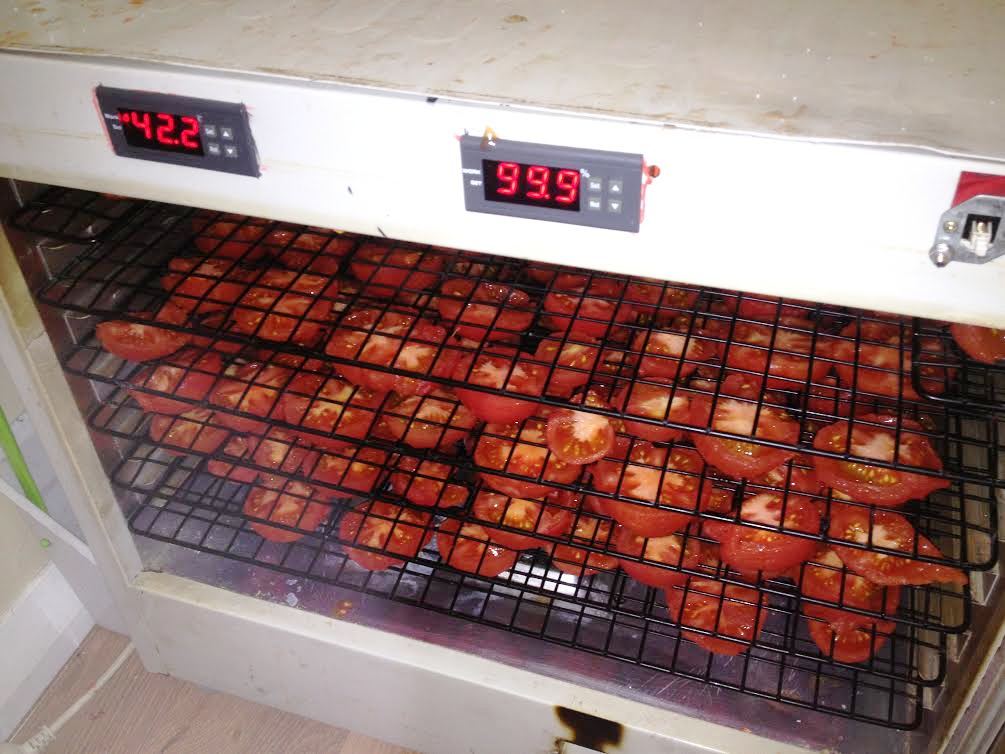
Vegetables can be  preserved in many ways, as sauce or ingredients for soups and stews or dried.  Fruits are made in to jam or pitted and vacuum sealed to bake in to pies and tarts. I always sort fruit and the best specimens are devoured by the troops before being processed.

We have been pretty busy. The worst thing to process are the delicious cherries. Every one has to be pipped before jam can be made or the can be pasteurised for baking.  I have a stiff shoulder and my arm and hand hurts. My hands and nails are stained purple and I have purple juice spots on my face. Keeping going is essential, though, because in dealing with this type of product ” time is of the essence “, seriously!

http://theplate.nationalgeographic.com/2015/01/06/stop-food-waste/?sf6758268=1

BACK YARD FARMER’S LUNCH

2015-01-15 - Italian Lunch

Cured olives (picked last year in Cromwell), dried tomatoes, garden salad, peperoni sott’ olio (capsicum under olive oil), peperoni grigliati (roasted capsicum), calabrese salame, pickled onions, provolone cheese, focaccia and, of course, dry wine (apple and black currant) – ALL HOME MADE. I am very happy with the result of all the hard work. A few more kilograms tomatoes, capsicums and eggplants processed should see us through the winter.

Summer at last in Dunedin and Poppys

2014-12-29 - Poppy 1

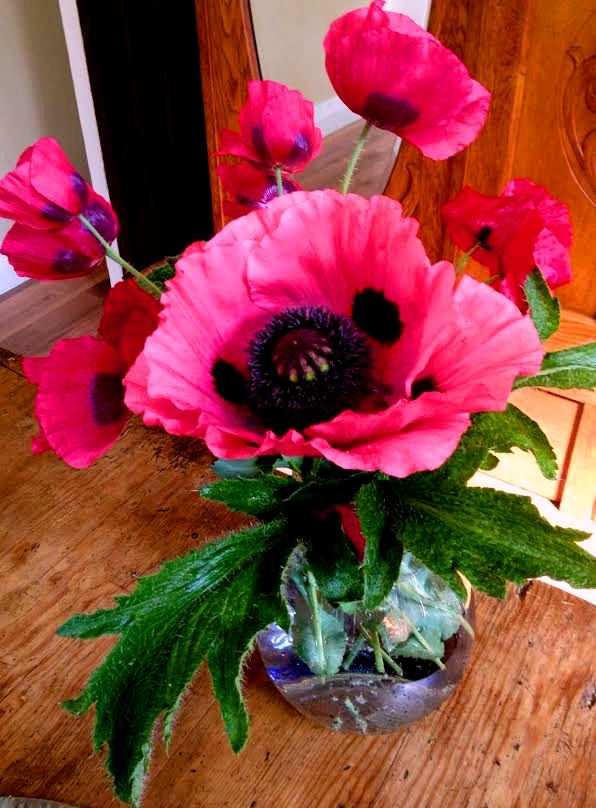
When one’s neighbour’s garden can only be described as amazing, it is pure pleasure to water it every morning while they are away. I found what I think must be the ‘biggest poppy in the world’ flowering beside the chicken coop this morning and got lots of brownie points for bringing it to Mrs BYF ! There are many more buds so there will be seeds for next year. The pictures shows the huge bloom in a jug with ordinary sized poppys.

Major victory for the bees

Major victory for the bees: Ontario moves to restrict neonicotinoids2014-11-30 - Bees

http://www.salon.com/2014/11/26/major_victory_for_the_bees_ontario_moves_to_restrict_neonicotinoids/

Passata di Pomodoro

2014-11-27 - Passata 12014-11-27 - Passata 2

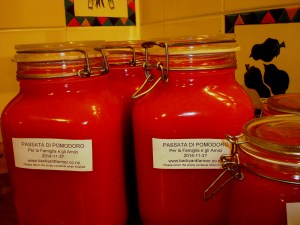
No good Italian can live without tomatoes, and plenty of it. So the annual Passata day always takes effect when tomatoes are in abundance, ripe, sweet and fresh. Making about 60 kilograms of Passata every year for our own needs, and some as gifts, has been a family tradition for many decades. It helps to be on a good footing with the local green grocer who is only too pleased to discount  the tomatoes that would be considered over ripe in New Zealand, but just right in Italy.

RECIPE

Wash and roughly cut up the tomatoes, and at the same time remove the odd bad or discolored spots. Now boil the tomatoes, without water, for about five to ten minutes, depending on the ripeness, until soft, but not cooked.

2014-11-27 - Passata 62014-11-27 - Passata 82014-11-27 - Passata 9

Passata making can be a huge job without the magical Passata Machine – a device that separates the skin and seeds from the flesh. This little machine can do in excess of 100 kilograms per hour and is wonderfully designed, easy to operate, durable and very quick to clean. No self respecting Italian household is without one! Within minutes I had processed 30 kilograms of tomatoes into 28.5 kilograms of Passata leaving 1.5  kilograms of seeds and skins to compost, or dry to plant next year.

Bottle the tomatoes in clean canning bottles – do not use the cheap screw on type of bottles, but a good strong bottle with lid that can seal properly. There is  no need to sterilise the clean bottles before hand, as it is going to happen after filling them. Put the filled and sealed bottles in a large enough pot that would totally cover the bottles when filled with water. It is good to have a tea towel or some screen in the bottom of the pot, so that the bottles do not stand directly on the heated surface. Now fill the pot with water of about the same temperature as the product is at this stage (prevent bottles from cracking).  Heat until the water is boiling and then boil for twenty minutes more. Immediately remove the bottles from the boiling water, if the water starts to cool, water may be sucked  into the product.

DSC03861

Cool and label.  PRONTO !!

2014-11-27 - Passata 4

While washing the tomatoes, select the ripest and firmest tomatoes for Bruschetta with tomato, basil, olive oil, salt, pepper and garlic. Mrs BYF cannot be beaten for making the best Bruschetta!  ENJOY!