Coturnix coturnix QUAILS ARE NOT MINIATURE PHEASANTS

Today I was called by an acquaintance who also “breeds quails” and was informed that he has lost over 150 quails this season dying mysteriously from whatever. My first question, as a animal nutritionist, was what he feeds the birds. I was appalled to hear that he gives them a commercial “Game and Quail Crumble” (A name invented by the reseller as the manufacturers does not even call it that) and supplements it with kibbled corn, peas and some “other seeds” and every so often they get some dog roll. This manufacturer also claims their product to be good for all stages of game birds, which is IMPOSSIBLE.

The mistake that many people make is to think that quails are just small pheasants. The feed companies that manufacture pheasant feeds, because there is a reasonable industry breeding and rearing pheasants for the hunting industry, want to jump onto the wagon and claim their feed is also good for quails as well, which is just not true. New Zealand is one of the few, if not only, developed countries in the world that does not have any animal feed regulations and / or legislation relating to feed analyses. This means the manufacturers can mix anything and claim anything and do not have to disclose any content nor analyses. It Is therefore difficult for anybody to comment on any feed, as very little is disclosed and no regulatory body oversee this industry

A quail hen of 220 g average body mass can lay up to 300 eggs of 11 g average (5 % of body mass), in a season. A total egg mass of 3,300 g, or 15 times the quail’s body mass

A pheasant hen of 1,300 g average can lay up to 80 eggs of 32 g average (2.4 % of body mass), in a season. A total egg mass of 2,560 g or 1.97 times the pheasant’s body mass

Quails are 760% more efficient egg producers than pheasants and they recommend feeding them the same?

So are there many other physiological and production differences between these two species of animals

I am an experienced and well qualified animal nutritionist who has been involved at all levels of animal nutrition in many countries of the world, and seldom, if ever, have I heard such misrepresentation of any animal feed.

If you want your QUAILS to be healthy, happy and efficient producers, feed them a series of well formulated QUAIL FEEDS that is specifically manufactured for every different stage of life and production

IFRARED HEATED BROODERS

About a year ago, I introduced Remote Control Automated Infrared Heating in my quail brooder houses with excellent results. Mortality is down from already low values and growth rates are up, which partially may be as result of the selection pressure I constantly apply towards growth rates. Best of all is that my electricity usage is down as the heating is applied only when and how much is required all the time, compared to the previous system where heating was applied all the time and only adjusted manually every few days, neither were there any adjustments for ambient temperature fluctuations.

I have seven of these units – basically one for every age group as I hatch a batch every week and move them outside when 7 weeks old.

QUALIGIE ALLA GRIGLIA (Pan fried Quails)

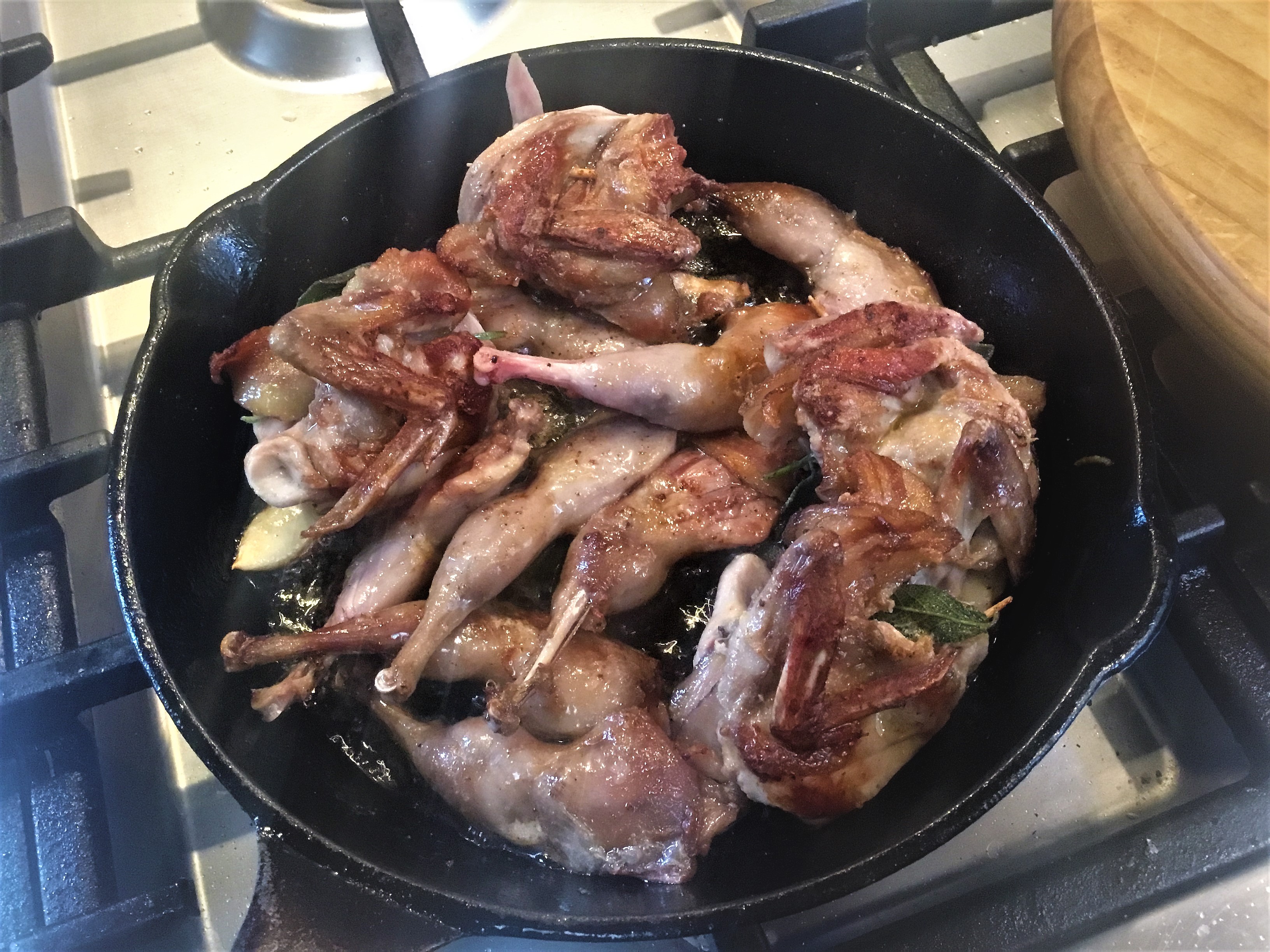
Mr BYF regularly has to cull young male quail. They are tender and very tasty without adding any flavouring to the meat. Mrs BYF tried something new and it is good enough to share. 

4 Very young (seven weeks old) fresh cleaned and deboned quails. Salted a few hours before cooking

2 Tablespoons of butter 

2 Cloves of crushed garlic

4 Large fresh sage leaves

4 Strips of pancetta (bacon can do)

Pepper

Extra salt if needed as the pancetta is slightly salty

Stuff a sage leaf and a strip of pancetta into the body cavity and close with a toothpick. Add pepper to taste. Use a pan that fits all the stuffed birds all in one layer, melt the butter and fry the garlic until light brown. Add the quails to the pan and fry for about 5 min per side until golden brown.

We served the dish with fresh salad from the garden and roasted new potatoes from our neighbour’s garden. For vegetables we had a friend of a friend’s pumpkin, roasted with garlic, cumin and chilli. 

ENJOY and do not forget a glass of home made red wine !!!

THE EFFECT OF AGE OF BIRD AND STORAGE LENGHT OF QUAIL EGGS ON HATCHABILITY

The two question most frequently asked by potential fertile eggs buyers is “what is the fertility of the eggs you are selling” and “would the eggs withstand the long trip with a courier”

As I hatch quail eggs on a regular basis and monitor various parameters to not only better understand my quail breeding project, but also to provide me with factual information I can use as selection tools. Following analyses of the results from hatching about 800 eggs over the past 9 months, the following results were found

HATCHABILITY PARAMETERSYOUNG BIRDS – 92 Days oldOLD BIRDS – 611 Days OldEGG STORAGE – 3 DAYSEGG STORAGE – 8 DAYSEGG STORAGE – 13 DAYSEGG STORAGE – 18 DAYS
Infertile Eggs6.7%14.2%6.7%7.2%6.9%6.1%
Hatchability of eggs set (%)86.5%72.8%86.5%87.2%81.0%71.7%
Hatchability of fertile eggs (%)92.7%84.8%92.7%94.0%87.0%76.4%

The most significant conclusions are that hatchability deteriorate with aging birds and also decline with storage of eggs in excess of 13 days

Amalgamating Breeds of Coturnix coturnix

I have amalgamated all my quail breeds for very good reasons. As a result of the very small gene pool in NZ and no importations aloud, all quails in NZ are inbred and related. I am in NZ for 6 years now and made great progress breeding four different breeds of Coturnix, but progress has flattened off as I have to have limited numbers and equally good genetic material is not available in NZ. My solution was to amalgamate all the breeds and only breed a Back Yard Special, resulting in 4 times as many birds to select from and one less selection parameter – colour. This allowed me to make some progress again. I am retired and do this as a hobby – my working background is in animal genetics